
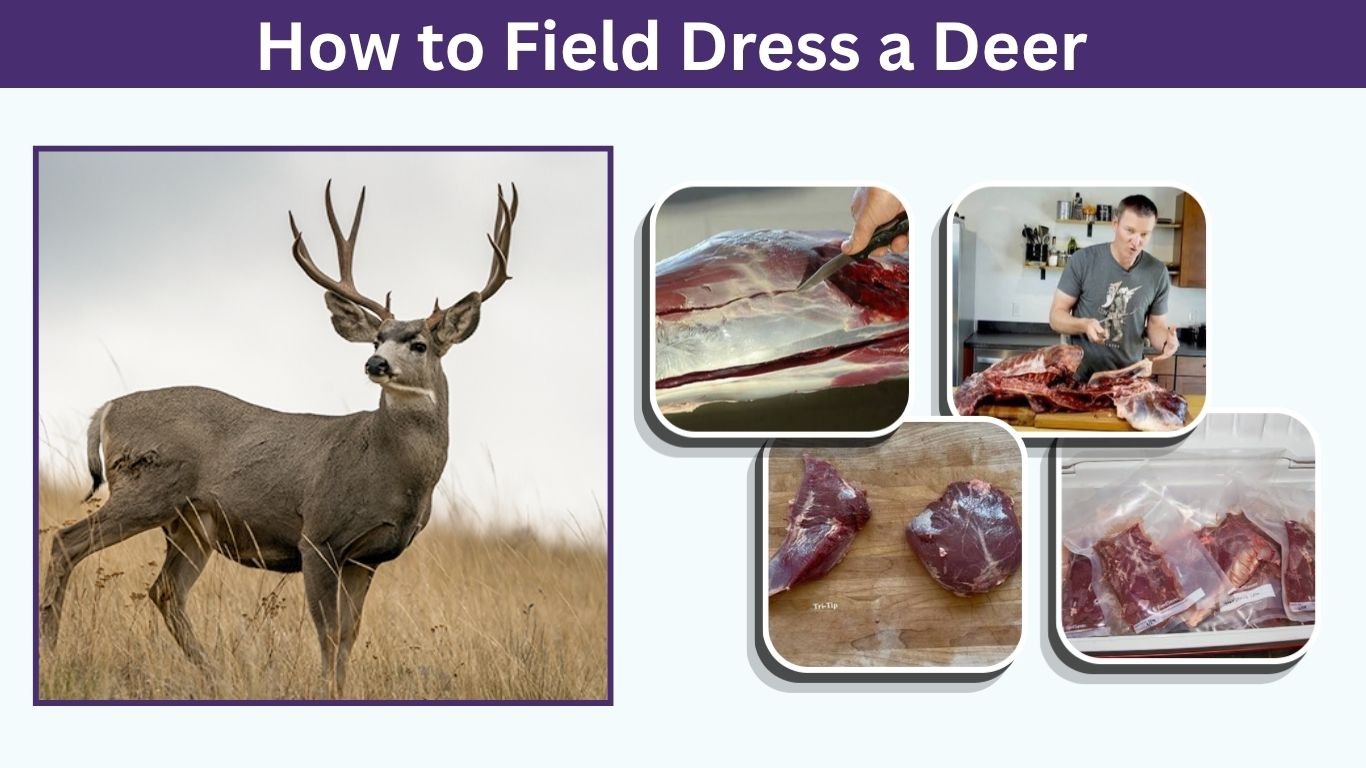
Learning how to quarter a deer is an essential skill for hunters who want to process venison efficiently and preserve meat quality. Whether you’re working in the field or at home, proper quartering makes transporting, storing, and butchering deer easier. The process involves separating the front shoulders, hindquarters, backstraps, and other usable meat without unnecessary bone cutting. Understanding the correct techniques also helps reduce waste and contamination. This guide explains how to quarter a deer step by step, including field quartering, the gutless method, and hindquarter processing.
What Do You Need to Quarter a Deer?
Before quartering a deer, gather the necessary equipment and prepare a clean working area. Proper tools make it easier to separate muscle groups, remove bones, and preserve valuable venison. Most deer can be quartered using a sharp knife without specialized butchering machinery.
Essential Tools for Quartering a Deer
- Sharp hunting knife: Separates muscles, joints, and connective tissue.
- Boning knife: Helps remove meat from bones.
- Gambrel and hoist: Securely suspend the deer during processing.
- Protective gloves: Help maintain hygiene while handling meat.
- Game bags: Protect quartered venison from dirt and insects.
- Clean cutting surface: Prevents unnecessary meat contamination.
- Cooler with ice: Keeps processed meat cold.
- Knife sharpener: Maintains cutting performance.
Preparing the Deer Before Quartering
For traditional quartering, field dress the deer and remove its hide. Place the carcass on a clean surface or hang it securely using a gambrel.
Inspect the meat for dirt, hair, or damaged tissue. Clean your equipment before beginning and keep the carcass cool throughout processing.
How to Quarter a Deer Step by Step
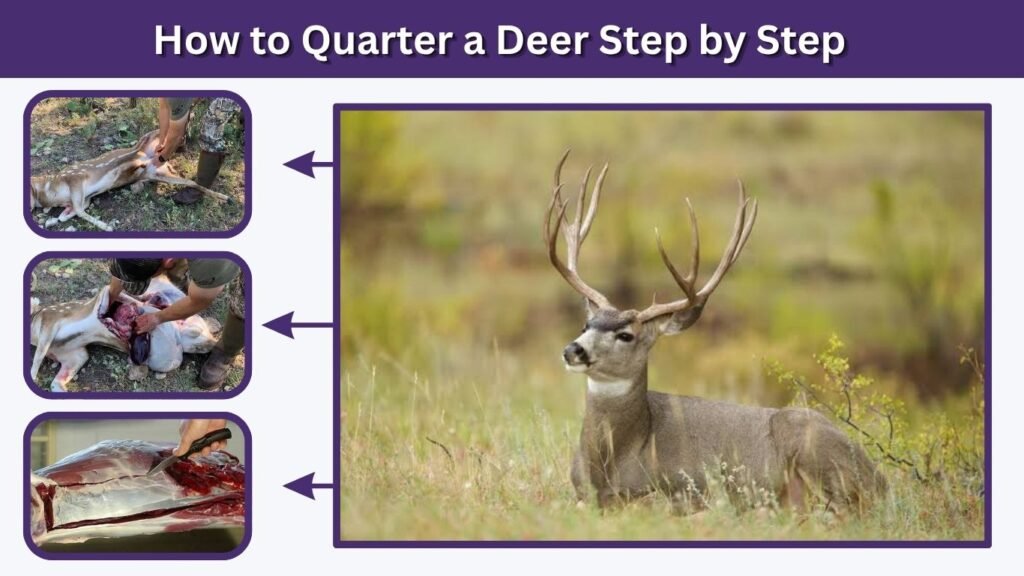
Quartering a deer involves separating its four legs into individual meat sections while preserving additional cuts from the body. Most hunters begin with the front shoulders because they are attached by muscle rather than a bony joint. The hindquarters require more careful cutting around the pelvis.
Step-by-Step Deer Quartering Process
- Position the deer: Place the carcass on a clean cutting surface or hang it securely at a comfortable working height.
- Remove the first front shoulder: Pull the front leg outward and cut through the muscles connecting the shoulder to the ribcage.
- Remove the second front shoulder: Repeat the process on the opposite side, following the natural muscle seams.
- Separate the first hindquarter: Cut along the pelvis, locate the hip joint, and carefully release the connective tissue surrounding it.
- Remove the second hindquarter: Support the leg while separating the remaining muscles and hip joint.
- Remove the backstraps: Cut along both sides of the backbone and carefully separate these long muscles from the ribs.
- Collect the tenderloins: Remove the smaller muscles from inside the body cavity along the underside of the backbone.
- Recover remaining meat: Trim usable neck, rib, and other muscle meat before chilling.
What to Do After Quartering
Place the separated quarters in clean game bags or food-safe containers. Avoid stacking warm quarters tightly because trapped heat slows cooling.
Transfer the venison into refrigeration or an ice-filled cooler promptly. Keep the meat from direct contact with melted ice water.
How to Quarter a Deer in the Field
Field quartering is particularly useful when hunting in remote locations where transporting an entire deer is difficult. Instead of dragging the full carcass, hunters can divide it into manageable sections. Two common techniques include traditional quartering and the gutless method.
Traditional Field Quartering Method
Traditional field quartering begins with removing the internal organs and exposing the meat by skinning the carcass.
The hunter then separates both front shoulders and hindquarters using a sharp knife. After removing the main quarters, the backstraps, tenderloins, and other usable portions are collected.
This approach works well when the carcass can be positioned securely and there is enough room for processing.
How to Quarter a Deer Without Gutting
The gutless method allows hunters to recover meat without fully opening the abdominal cavity.
Lay the deer on its side and carefully remove the hide from the exposed portion. Separate the front shoulder, then locate and release the hindquarter at the hip joint.
Remove the backstrap and recover available neck and rib meat before turning the animal over. Repeat on the opposite side.
Finally, carefully access the tenderloins from behind the last ribs without puncturing the digestive organs.
How to Cut Up and Debone a Deer Hind Quarter
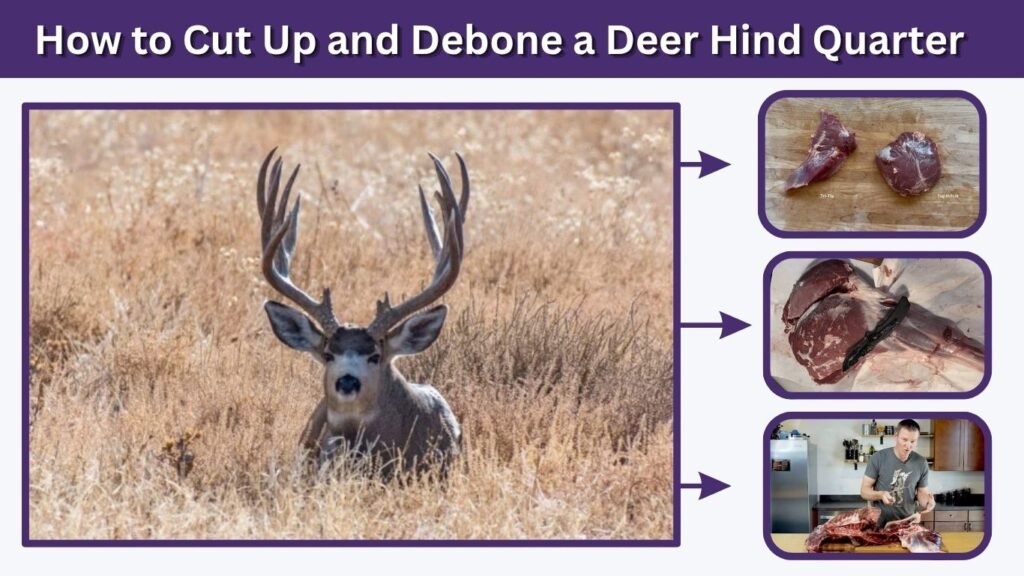
A deer hindquarter contains several large muscles suitable for steaks, roasts, and stew meat. Learning how to break down these sections helps hunters maximize their harvest. The easiest technique involves following natural muscle seams rather than cutting randomly through the leg.
How to Debone a Deer Hind Quarter
Place the hindquarter on a clean cutting table with its inner surface facing upward.
Locate the femur and carefully cut along both sides of the bone. Use your knife to separate the attached meat while following the bone’s shape.
Continue working around the joints until the main bones can be removed. Separate the exposed muscle groups by following their connective tissue seams.
Main Cuts From a Deer Hind Quarter
- Top round: Lean muscle suitable for steaks and roasts.
- Bottom round: Commonly used for roasting and slow cooking.
- Eye of round: Long, narrow muscle suitable for thin steaks.
- Sirloin tip: Useful for roasting, grilling, or stew meat.
- Shank: Contains connective tissue and benefits from slow cooking.
Remove unwanted silver skin, fat, and connective tissue before packaging the meat.
How to Butcher a Deer Front Quarter
The front quarter contains shoulder and upper-leg muscles with varying amounts of connective tissue. Although these cuts are often less tender than hindquarter steaks, they provide excellent meat for roasting, grinding, and slow cooking.
Breaking Down the Front Shoulder
Place the front quarter on a stable cutting surface and identify the shoulder blade.
Carefully follow the bone with your knife, separating the surrounding muscles. Continue along the upper leg bone until the larger sections are released.
Trim connective tissue and divide the meat according to its intended use. Larger muscles can become roasts, while smaller pieces work well for stew or ground venison.
How to Store Deer Quarters After Processing
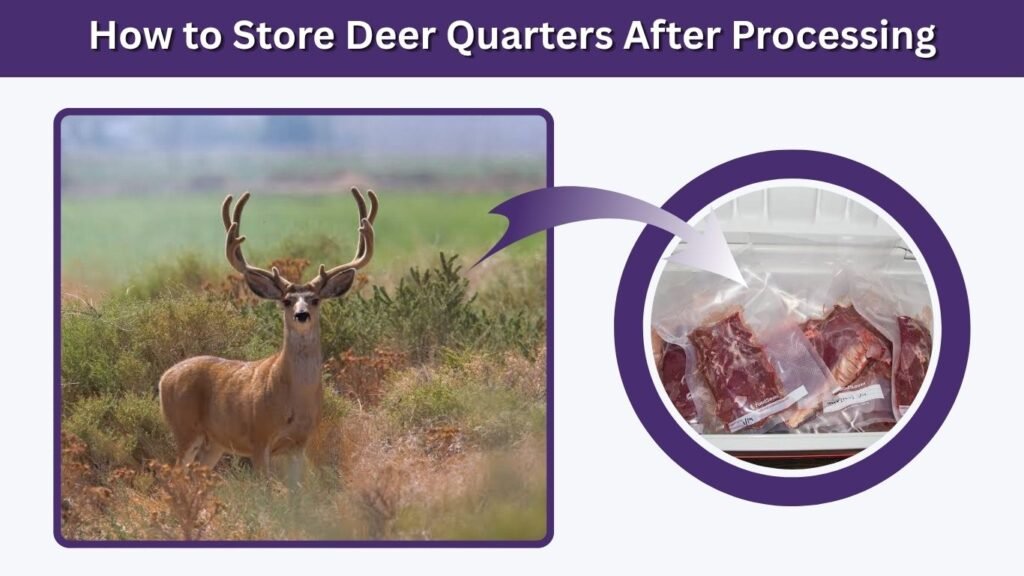
Proper storage is essential for preserving venison freshness and preventing bacterial growth. Once quartering is complete, cool the meat as quickly as possible. Avoid leaving large pieces of venison exposed to warm temperatures while completing the remaining processing work.
Essential Deer Meat Storage Tips
- Cool quickly: Reduce the meat temperature to approximately 35–40°F (2–4°C).
- Use clean game bags: Protect exposed meat from insects and dirt.
- Allow airflow: Avoid tightly stacking warm quarters.
- Keep meat dry: Prevent prolonged contact with melted ice water.
- Refrigerate promptly: Store fresh venison at 40°F (4°C) or below.
- Freeze properly: Use airtight freezer packaging for longer storage.
In areas affected by chronic wasting disease, follow local testing requirements and never eat meat from a deer that tests positive.
FAQs
How Long Does It Take to Quarter a Deer?
Quartering a deer typically takes around 30–90 minutes, depending on the animal’s size, available equipment, and the hunter’s experience. Beginners may need more time to identify joints and separate muscles carefully without damaging the meat.
Can You Quarter a Deer Without Gutting It?
Yes, the gutless method allows hunters to remove quarters, backstraps, and other usable meat without fully opening the abdominal cavity. However, careful cutting is necessary to avoid puncturing digestive organs, and hunters must follow applicable meat recovery regulations.
How Do You Cut a Deer Hind Quarter Into Steaks?
First, remove the bones and separate the major muscles along their natural seams. Trim unwanted connective tissue, then slice suitable muscles across the grain into steaks. The top round and sirloin tip are popular choices.
Can You Quarter a Deer on the Ground?
Yes, deer can be quartered on the ground using a clean tarp or the animal’s hide as a protective barrier. Work carefully to keep exposed meat away from soil, vegetation, and other potential sources of contamination.
Do You Need a Bone Saw to Quarter a Deer?
No, a bone saw is generally unnecessary for basic deer quartering. A sharp knife can separate the front shoulders through muscle tissue and release the hindquarters at their joints without cutting through major bones.
