

Hunting is an exciting outdoor activity that requires preparation, patience, and responsible decision-making. Whether you are hunting deer, ducks, turkeys, or small game, understanding essential hunting safety tips can help prevent serious accidents. Safe firearm handling, proper equipment, protective clothing, and awareness of your surroundings are important for every hunter. Beginners and experienced hunters should follow established safety rules before and during each trip. This guide explains 20 practical hunting safety tips, including firearm precautions, tree stand safety, bow hunting practices, and emergency preparation.
Why Is Hunting Safety Important?
Hunting involves firearms, sharp equipment, unpredictable weather, and potentially dangerous terrain. Without proper precautions, minor mistakes can result in serious injuries. Following hunting safety guidelines protects hunters, companions, and other people using nearby outdoor areas.
Developing safe habits also improves confidence and decision-making. Responsible hunters recognize potential hazards, respect wildlife, and understand when conditions are too dangerous to continue.
20 Essential Hunting Safety Tips

Every hunter should understand basic safety rules before entering the field. These precautions help prevent firearm accidents, falls, equipment failures, and other hunting-related injuries. The following 20 safety tips cover important practices for beginners and experienced hunters.
Basic Firearm Safety Rules
- Treat every firearm as loaded: Always assume a firearm is loaded until you personally verify otherwise.
- Point the muzzle safely: Never point your firearm toward another person or anything you do not intend to shoot.
- Keep your finger off the trigger: Maintain trigger discipline until you are ready to fire.
- Identify your target: Never shoot at unexplained sounds, shadows, or movements.
- Check beyond your target: Make sure the area behind your target is clear of people, buildings, and other hazards.
Personal Safety and Preparation
- Wear visible clothing: Use blaze-orange clothing whenever required or appropriate during hunting season.
- Inspect your equipment: Examine firearms, bows, ammunition, and protective gear before hunting.
- Check weather forecasts: Prepare for rain, snow, extreme temperatures, and sudden weather changes.
- Carry emergency supplies: Bring first-aid equipment, navigation tools, drinking water, and communication devices.
- Share your hunting plans: Tell someone where you are going and when you expect to return.
Safe Hunting Practices
- Unload firearms before crossing obstacles: Never climb fences, cross difficult terrain, or enter tree stands with a loaded firearm.
- Maintain safe shooting zones: Know where hunting companions are positioned before firing.
- Avoid alcohol and impairing drugs: Never hunt when your judgment, coordination, or reaction time is affected.
- Stay aware of your surroundings: Watch for other hunters, hikers, vehicles, and unexpected obstacles.
- Follow local hunting regulations: Understand licensing requirements, hunting seasons, and legal shooting hours.
Additional Hunter Safety Precautions
- Use tree stand protection: Wear a full-body fall-arrest harness with a suitable lifeline when hunting from an elevated stand.
- Handle hunting knives carefully: Keep blades sharp, covered when not in use, and directed away from your body.
- Practice before hunting: Improve accuracy and equipment handling at an appropriate shooting range.
- Know your physical limits: Avoid dangerous terrain, excessive fatigue, and unnecessary risks.
- Prepare for emergencies: Learn basic first aid and know how to contact emergency services.
Deer Hunting Safety Tips
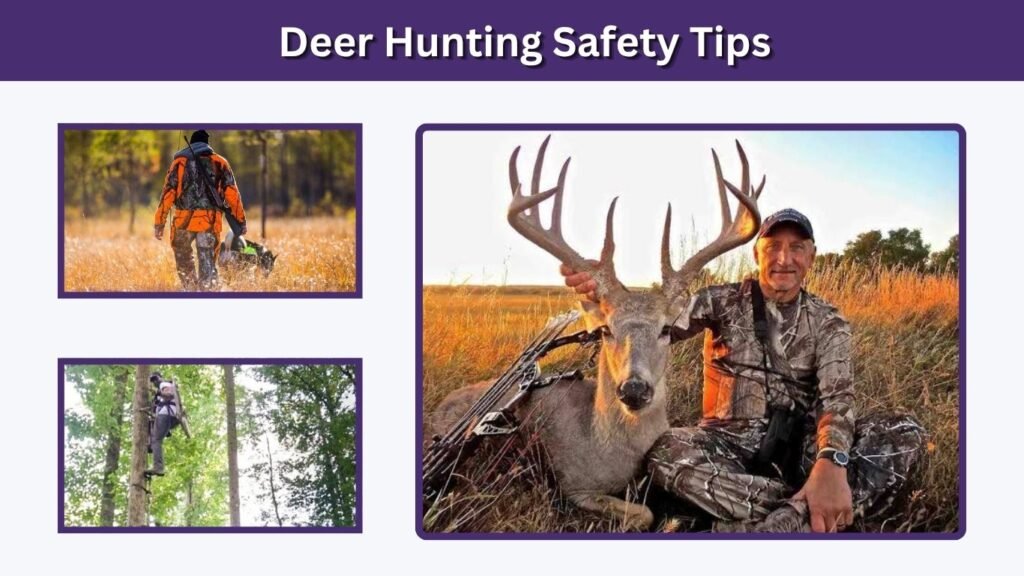
Deer hunting often takes place in wooded environments where visibility can be limited. Hunters may also use elevated stands, which introduce additional fall hazards. Understanding these risks helps hunters make safer decisions throughout the hunting season.
Wear Appropriate Hunting Clothing
Blaze-orange clothing helps other hunters recognize your presence during firearm hunting seasons. Requirements vary depending on location and hunting method, so always check local regulations.
Avoid wearing clothing that blends completely into the surroundings when visibility is required. When encountering another hunter, identify yourself clearly without making sudden movements.
Practice Tree Stand Safety
Tree stand falls can cause severe injuries. Always inspect the stand, ladder, attachment straps, and supporting tree before climbing.
Use a properly fitted full-body fall-arrest harness and remain connected to a suitable lifeline while climbing, hunting, and descending. Maintain three points of contact on ladders.
Raise and lower an unloaded firearm or bow using a haul line. Never carry a loaded firearm while climbing.
Bow Hunting and Crossbow Safety Tips
Bow hunting requires careful equipment handling and controlled shooting techniques. Damaged arrows, worn strings, and improper crossbow handling can create dangerous situations.
Inspect Your Archery Equipment
Before hunting, examine your bowstring, cables, limbs, and arrows for damage. Never use cracked arrows or equipment showing signs of serious wear.
Keep broadheads protected inside a quiver, and never dry-fire a bow. Crossbow users should keep their fingers away from the string’s travel path.
Choose Safe Shooting Positions
Always identify your target and the area beyond it before releasing an arrow. Avoid shooting toward roads, buildings, or unfamiliar locations.
Practice shooting from positions similar to those you expect to encounter while hunting. If your shooting angle, visibility, or equipment condition is uncertain, do not take the shot.
Duck, Dove, and Turkey Hunting Safety Tips
Bird hunting presents unique challenges because hunters may move through fields, wetlands, and dense vegetation. Group hunting also requires constant communication to prevent accidents.
Duck and Waterfowl Hunting Safety
When hunting ducks from a boat, wear a properly fitted life jacket and avoid overloading the vessel. Keep equipment balanced to reduce the risk of capsizing.
Unload firearms before boarding or leaving a boat. Establish safe shooting directions and avoid firing across other hunters.
Cold water creates additional hazards, making weather awareness and emergency preparation essential.
Dove and Pheasant Hunting Safety
Dove and pheasant hunters should establish clear shooting zones before hunting begins. Never swing a firearm across another hunter or shoot toward people and hunting dogs.
Maintain communication when moving through fields. Avoid firing at low-flying birds when other hunters or animals could be in the shot’s path.
Turkey Hunting Safety
Never approach an unidentified turkey call because another hunter may be producing the sound.
Avoid wearing red, white, or blue clothing that resembles a turkey’s head. Identify the complete bird before considering a shot, and keep harvested birds covered when transporting them.
Hunting Safety Tips for Different Weather Conditions
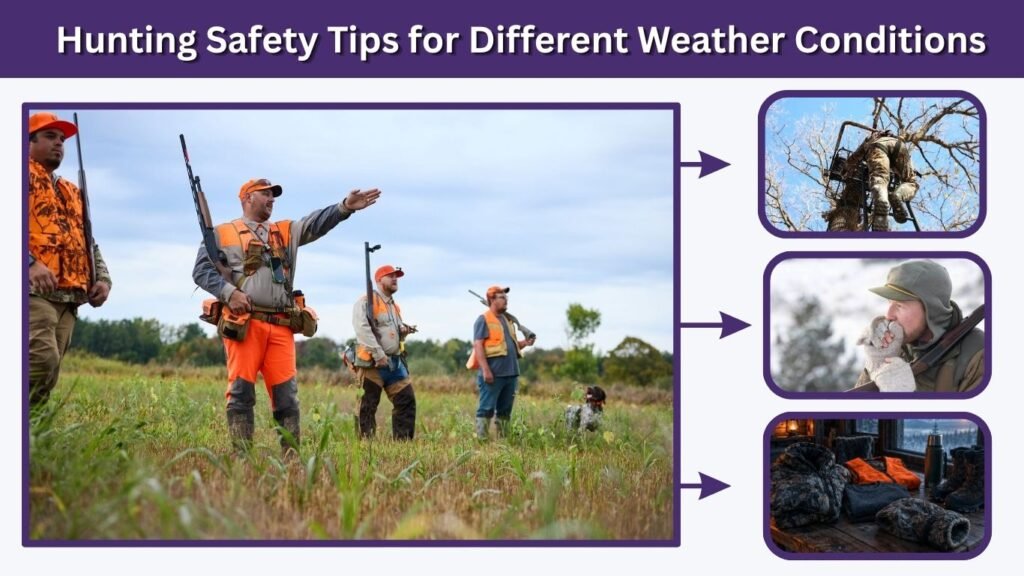
Weather can significantly affect hunting safety. Heavy rain, snowfall, extreme heat, and strong winds can reduce visibility, limit mobility, and increase the risk of injury.
Winter Hunting Safety
Wear insulated, moisture-resistant clothing and appropriate footwear during cold-weather hunting. Carry additional dry layers when traveling through wet or snowy environments.
Watch for symptoms of hypothermia, including uncontrolled shivering, confusion, and poor coordination. Avoid crossing frozen water unless its safety has been professionally assessed.
Warm Weather Hunting Safety
Hot weather increases the risk of dehydration and heat-related illness. Drink water regularly and take breaks in shaded areas.
Wear breathable clothing while maintaining appropriate visibility. Hunters accompanied by dogs should monitor their animals for overheating and provide frequent access to drinking water.
Hunting Safety Tips for Beginners and Kids
Beginners should complete an approved hunter education course before participating in hunting activities. These courses explain firearm handling, wildlife identification, hunting regulations, and ethical hunting practices.
Young hunters require close adult supervision and age-appropriate instruction. Adults should demonstrate safe equipment handling and explain the importance of following every safety rule.
Practicing at a shooting range and learning from an experienced mentor can help beginners develop responsible habits.
What Should You Do During a Hunting Emergency?
If an accident occurs, first make the immediate area safe and prevent additional injuries. Contact emergency services as soon as possible.
For serious bleeding, apply firm direct pressure using a suitable dressing. A properly applied tourniquet may be necessary for life-threatening bleeding from an arm or leg.
If you become lost, stop moving, assess your location, and use your communication or navigation equipment to request assistance. Avoid entering unfamiliar terrain without a clear plan.
FAQs
1. What Are the Three Most Important Hunting Safety Rules?
Always point firearms in a safe direction, keep your finger outside the trigger guard until ready to shoot, and identify your target along with everything beyond it. Following these basic rules helps prevent many serious firearm-related hunting accidents.
2. What Safety Equipment Should Every Hunter Carry?
Hunters should carry first-aid supplies, navigation equipment, a communication device, weather-appropriate clothing, and adequate drinking water. Additional equipment depends on the hunting environment. Tree stand hunters should also use a properly fitted full-body fall-arrest harness and appropriate attachment system.
3. Why Is Blaze Orange Important During Hunting?
Blaze-orange clothing makes hunters more visible to other people in the field, especially during firearm hunting seasons. Increased visibility reduces the risk of mistaken identity. However, clothing requirements vary by location, hunting season, and type of game.
4. How Can Beginners Practice Hunting Safety?
Beginners should complete hunter education training, practice firearm handling under qualified supervision, and learn local hunting regulations. Hunting with an experienced mentor also helps new hunters recognize unsafe situations and develop responsible equipment-handling habits before entering the field.
5. Is It Safe to Go Hunting Alone?
Hunting alone involves additional risks because immediate assistance may not be available during emergencies. Solo hunters should communicate their location and return time, carry emergency supplies, and avoid unnecessary hazards. Reliable communication equipment is particularly important in remote areas.
