

Hunter safety rules are essential for preventing accidents, protecting wildlife, and ensuring responsible hunting practices. Whether you are a beginner or an experienced hunter, understanding proper firearm handling, safe shooting techniques, and outdoor precautions can significantly reduce hunting-related risks. Many hunting incidents occur because hunters overlook basic safety procedures or make poor decisions in the field. Following established hunter education guidelines helps protect everyone involved. This guide explains the four primary rules of firearm safety, common safety violations, essential hunting precautions, and practical safety practices every hunter should follow.
What Are Hunter Safety Rules?
Hunter safety rules are established guidelines designed to prevent accidents and encourage responsible behavior during hunting activities. They cover firearm handling, target identification, equipment maintenance, communication, and outdoor awareness.
These rules are taught through hunter education programs and apply to different hunting methods, including deer hunting, bird hunting, and bow hunting. Understanding them helps hunters recognize dangerous situations and make safer decisions.
Why Are Hunting Safety Rules Important?
Hunting involves potentially dangerous equipment and unpredictable outdoor environments. A single careless decision can lead to serious injuries or fatalities.
Following safety rules reduces risks associated with accidental firearm discharges, mistaken target identification, falls, and improper equipment handling. Responsible hunting also protects other people who share forests, fields, and public hunting areas.
Four Primary Rules of Firearm Safety
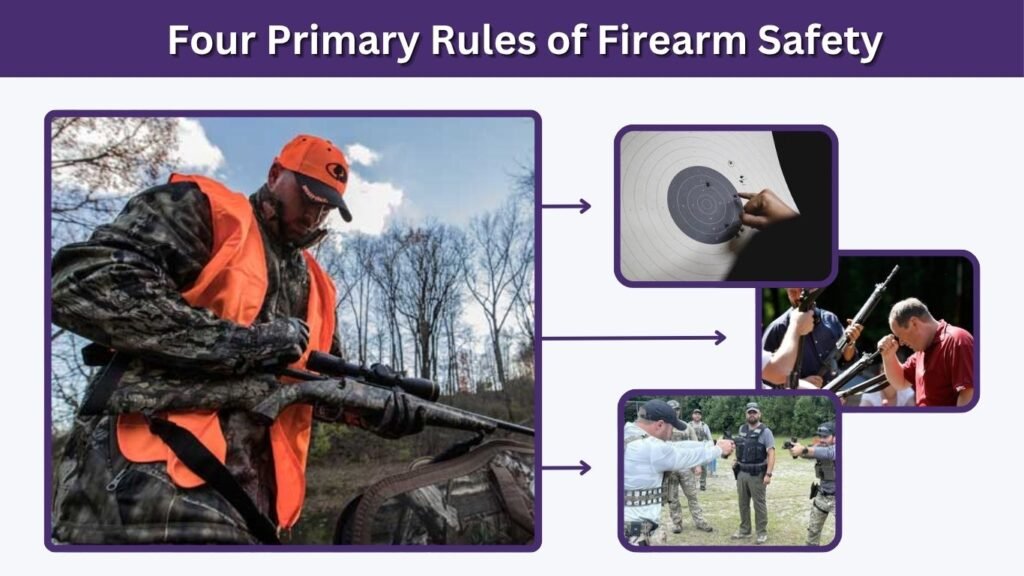
The four primary rules of firearm safety form the foundation of hunter education. These principles apply to rifles, shotguns, and other hunting firearms. Every hunter should memorize and practice them consistently, regardless of experience.
The Four Basic Firearm Safety Rules
- Treat every firearm as loaded: Never assume a firearm is unloaded. Always handle it carefully and personally verify its condition.
- Keep the muzzle pointed in a safe direction: Never point a firearm toward yourself, another person, or anything you do not intend to shoot.
- Keep your finger off the trigger: Place your finger outside the trigger guard until you are ready to fire.
- Identify your target and what lies beyond: Confirm the entire target and ensure that people, buildings, and other hazards are outside the shooting area.
These four principles should become automatic habits whenever hunters handle firearms.
10 Basic Hunter Safety Rules
Beyond the four primary firearm safety rules, hunters must follow additional precautions to prevent accidents. These guidelines address equipment handling, visibility, communication, and responsible decision-making.
Essential Rules for Safe Hunting
- Wear appropriate safety clothing: Use blaze-orange clothing when required or appropriate to improve visibility.
- Inspect hunting equipment: Examine firearms, ammunition, bows, and protective equipment before every trip.
- Unload firearms before crossing obstacles: Never climb fences, cross difficult terrain, or enter vehicles with loaded firearms.
- Know your surroundings: Identify nearby roads, buildings, other hunters, and restricted areas.
- Follow local hunting regulations: Understand licensing requirements, legal hunting seasons, and shooting restrictions.
- Communicate with hunting partners: Establish safe shooting zones and maintain awareness of everyone’s location.
- Avoid alcohol and impairing drugs: Never hunt when your judgment, coordination, or reaction time is affected.
- Carry emergency equipment: Bring first-aid supplies, navigation tools, and reliable communication devices.
- Practice safe shooting: Use proper shooting techniques and avoid firing when visibility or target identification is uncertain.
- Respect other outdoor users: Remain alert for hikers, campers, farmers, and other people sharing the area.
How Can Safety Rule Violations Cause Hunting Incidents?
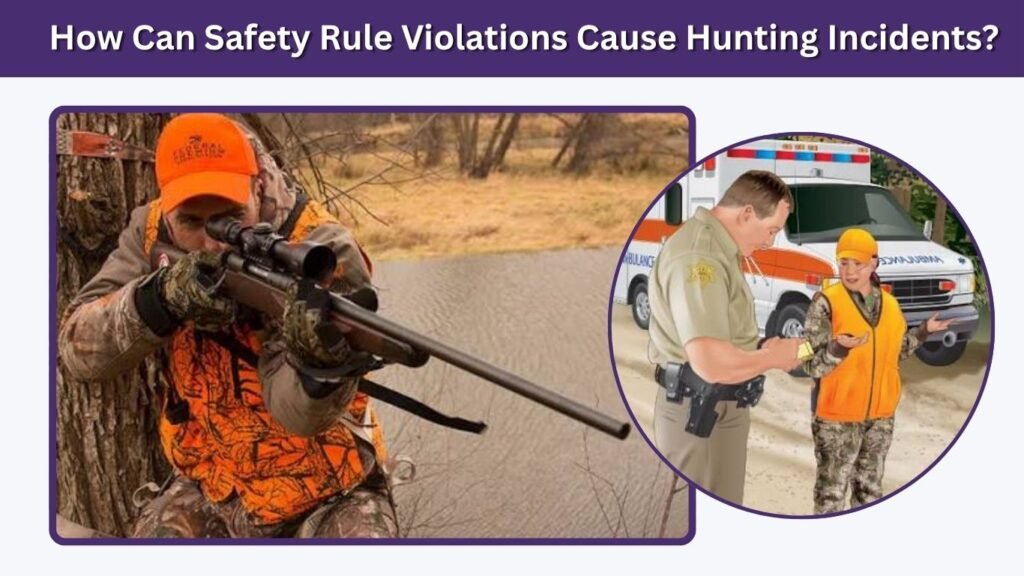
Safety rule violations can cause hunting incidents when firearms are handled carelessly or hunters fail to recognize hazards. Many preventable accidents involve improper muzzle control, poor target identification, or unsafe movement through hunting areas.
Understanding common violations helps hunters avoid repeating dangerous mistakes.
Common Hunter Safety Violations
- Improper muzzle direction: Pointing a firearm toward another person creates an immediate danger.
- Failure to identify the target: Shooting at sounds or movement may result in mistaken-identity incidents.
- Careless trigger handling: Keeping a finger on the trigger increases the risk of unintended discharge.
- Unsafe obstacle crossing: Carrying a loaded firearm over fences or difficult terrain can cause accidents.
- Ignoring shooting boundaries: Firing outside an established safe zone can endanger other hunters.
Hunters should immediately correct unsafe behavior and stop hunting whenever conditions prevent safe firearm handling.
Deer Hunting and Tree Stand Safety Rules
Deer hunting presents additional risks because hunters frequently operate in dense forests, low-light conditions, and elevated positions. Proper preparation and equipment handling are essential for avoiding injuries.
Safe Deer Hunting Practices
Before shooting, clearly identify the animal and confirm that the background provides a safe shooting direction. Never fire toward movement or sounds without complete visual identification.
Wear required visibility clothing and remain aware of nearby hunters. Avoid entering unfamiliar hunting areas without understanding property boundaries and local restrictions.
Tree Stand Safety Rules
Tree stand hunters should inspect ladders, platforms, straps, and supporting trees before climbing.
Always wear a properly fitted full-body fall-arrest harness and stay connected to an appropriate lifeline while ascending, hunting, and descending.
Use a haul line to raise or lower an unloaded firearm or bow. Never climb with loaded equipment.
Bow Hunting and Crossbow Safety Rules
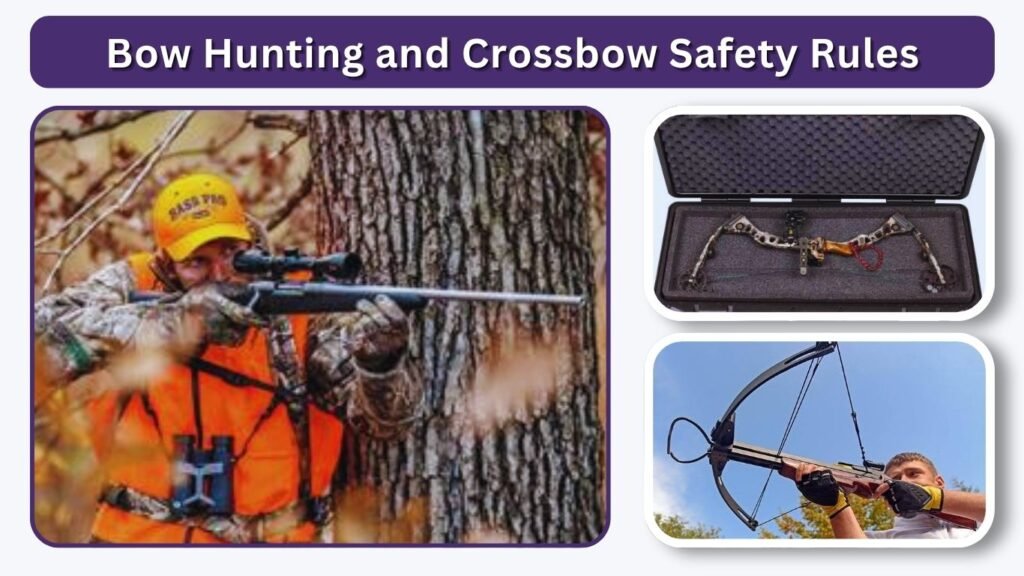
Bow hunting requires careful equipment inspection and controlled shooting. Although archery equipment differs from firearms, improper handling can still cause severe injuries.
Safe Bow and Crossbow Handling
Inspect bowstrings, cables, limbs, and arrows before hunting. Never shoot damaged arrows or use equipment showing serious wear.
Keep broadheads covered inside a protective quiver. Never dry-fire a bow, and keep fingers away from the crossbow string’s travel path.
Always identify your target and confirm that the shooting area is safe before releasing an arrow.
Hunting Safety Rules for Boats and Group Hunts
Group hunting requires communication and clearly established shooting zones. Hunters should know where companions are positioned and avoid firing across another person’s shooting area.
Boat and Waterfowl Hunting Safety
When hunting ducks or other waterfowl from a boat, wear a properly fitted life jacket and maintain balanced equipment placement.
Keep firearms unloaded while boarding, leaving, or moving in a boat. Never shoot across another hunter or from an unstable position.
Cold water, strong winds, and changing weather conditions require additional caution.
Hunter Safety Course Rules and Education Requirements

Hunter education programs teach essential firearm safety, wildlife identification, ethical hunting, and outdoor survival practices. Many jurisdictions require hunters to complete an approved course, depending on age and other eligibility conditions.
What Do Hunter Safety Courses Teach?
Courses explain firearm handling, ammunition safety, hunting regulations, responsible shooting, and emergency preparation.
Students may also learn about wildlife conservation, safe hunting distances, and proper equipment maintenance.
Requirements vary by state or country. Hunters should verify local certification rules before purchasing licenses or participating in hunting activities.
FAQs
1. What Is the Number One Hunter Safety Rule?
Keeping the firearm muzzle pointed in a safe direction is often considered the most important hunter safety rule. This precaution helps prevent serious injuries if an unintended discharge occurs. Hunters must also follow the other three primary firearm safety rules.
2. What Are the Four Primary Rules of Firearm Safety?
The four primary rules are treating every firearm as loaded, keeping the muzzle pointed safely, keeping your finger outside the trigger guard until ready to shoot, and positively identifying your target and what lies beyond it.
3. What Are the Three Basic Hunting Safety Rules?
Three fundamental hunting safety practices are controlling your firearm’s muzzle, positively identifying your target and background, and keeping your finger off the trigger until ready to shoot. However, hunters must follow all four primary firearm safety rules.
4. Can Safety Rule Violations Cause Hunting Accidents?
Yes. Safety rule violations can cause serious hunting incidents, including unintended firearm discharges, mistaken-target shootings, and injuries during obstacle crossings. Proper training, careful equipment handling, and consistent attention to surroundings help reduce these preventable risks.
5. Do All Hunters Need a Hunter Safety Course?
Hunter education requirements depend on local laws, age, and licensing conditions. Many states require approved hunter safety certification for certain hunters. Even when training is not legally required, completing a hunter education course is strongly recommended for safe and responsible hunting.
