
The best weather for deer hunting is not defined by one perfect temperature, pressure reading, or forecast. Whitetail movement is strongly influenced by time of day, season, rut stage, habitat, food, and hunting pressure, while weather can modify those patterns. Cool conditions, manageable wind, and breaks after unpleasant weather can create comfortable hunting opportunities, but research shows deer may still move during rain, wind, and warmer temperatures. Understanding how each weather factor affects deer can help you choose better days without relying on hunting myths.
What Is the Best Weather for Deer Hunting?
Many hunters picture a cold, calm autumn morning as ideal deer weather. Those conditions can certainly be comfortable and productive, but scientific tracking studies show that whitetail movement is more complicated. Deer move every day to feed, rest, and reproduce, and major biological factors such as the rut can matter more than small changes in temperature or barometric pressure.
Good Deer Hunting Conditions
A promising hunting day may include:
- Cooler or seasonably comfortable temperatures
- A steady wind that allows predictable scent management
- Little or moderate precipitation
- Improving conditions after severe weather
- Dawn or dusk during normal movement periods
- Active rut conditions during breeding season
- Limited hunting pressure in the area
These are useful starting points rather than guarantees. Actual deer locations, feeding patterns, and bedding cover remain important.
Weather Is Only Part of the Pattern
GPS-collar research from Mississippi State found that bucks move every day during both daylight and nighttime hours. Movement increases substantially during the breeding season, with a larger percentage occurring in daylight.
This means an ordinary weather day during peak rut may provide better opportunities than seemingly “perfect” weather at another time of the year.
Is Cold Weather Best for Deer Hunting?
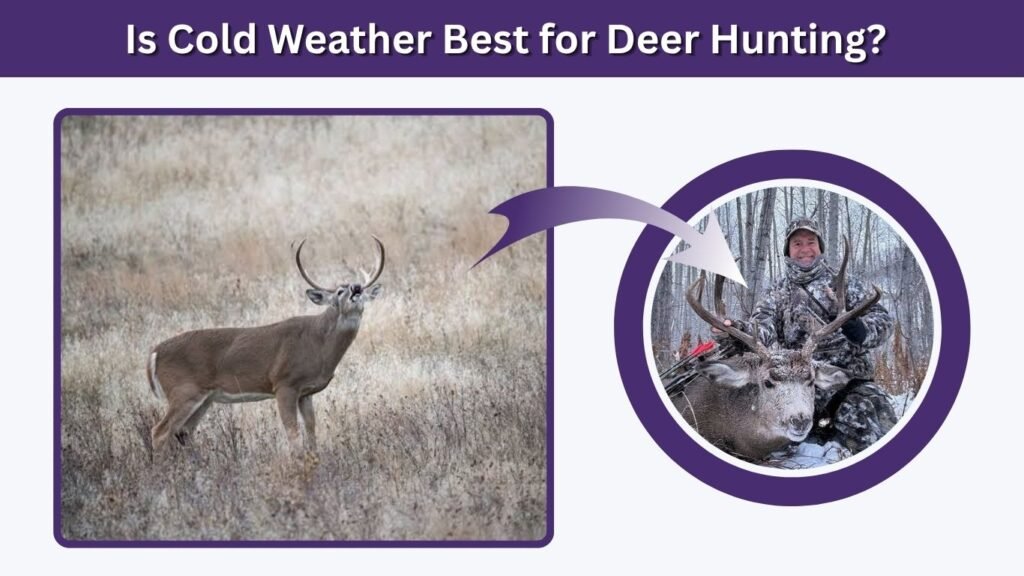
Cold weather has a strong reputation among deer hunters, especially when a sharp temperature drop follows several warm days. Cooler conditions can make hunters more comfortable and may change feeding behavior, particularly during late season. However, available research does not support a simple rule that colder temperatures always cause dramatically greater deer movement.
Temperature and Deer Movement
A Penn State analysis of GPS-collared deer found that temperature explained only a small portion of variation in daily movement during one study period. Surprisingly, deer in that dataset actually moved slightly farther on warmer days, although temperature explained only about 3% of overall variation.
That finding demonstrates why temperature alone is a weak hunting predictor.
What About a Cold Front?
Hunters frequently report increased sightings around cold fronts, but separating temperature from changes in wind, precipitation, season, rut activity, and feeding conditions is difficult.
Mississippi State researchers have continued studying the effects of weather on buck movement while controlling for factors such as time of day and rut phase, emphasizing that weather effects must be interpreted alongside these stronger behavioral influences.
Late-Season Cold
Late in the season, food becomes particularly important because deer must maintain energy reserves.
Cold conditions can make dependable feeding areas worth watching, particularly near afternoon and evening movement. Still, scouting current food sources is more useful than choosing a hunt solely because the thermometer has dropped.
What Wind Is Best for Deer Hunting?
Wind affects both deer behavior and a hunter’s ability to remain undetected. From a practical hunting perspective, the most useful wind is often a steady, predictable breeze blowing your scent away from expected deer travel. Interestingly, research has challenged the widespread belief that deer simply stop moving whenever conditions become windy.
Wind Conditions to Consider
When planning around wind:
- Check wind direction, not only speed.
- Keep your scent away from expected travel routes.
- Prefer predictable wind over constantly swirling air.
- Reconsider a stand when wind pushes scent toward bedding cover.
- Use terrain carefully because hills and valleys can alter airflow.
- Do not automatically cancel a hunt because the forecast is breezy.
A location with favorable wind can be more useful than a traditionally excellent stand with poor scent conditions.
Do Deer Move in Strong Wind?
Penn State researchers examining GPS-collared whitetails found surprising results. In their datasets, bucks sometimes increased daytime movement as wind increased rather than remaining bedded.
In later observations, bucks moved more with gentle winds and also showed increased movement during stronger winds, while they responded differently. The researchers emphasized that these were observational results, but they clearly challenge the idea that windy weather automatically eliminates deer activity.
Wind Direction Matters More to the Hunter
Even when deer are moving, a poor wind can ruin a setup.
Whitetails depend heavily on scent for detecting danger. Therefore, the best weather for deer hunting usually includes a wind direction that allows entry, hunting, and exit without pushing human scent into areas where deer are expected.
Is Rain Good for Deer Hunting?
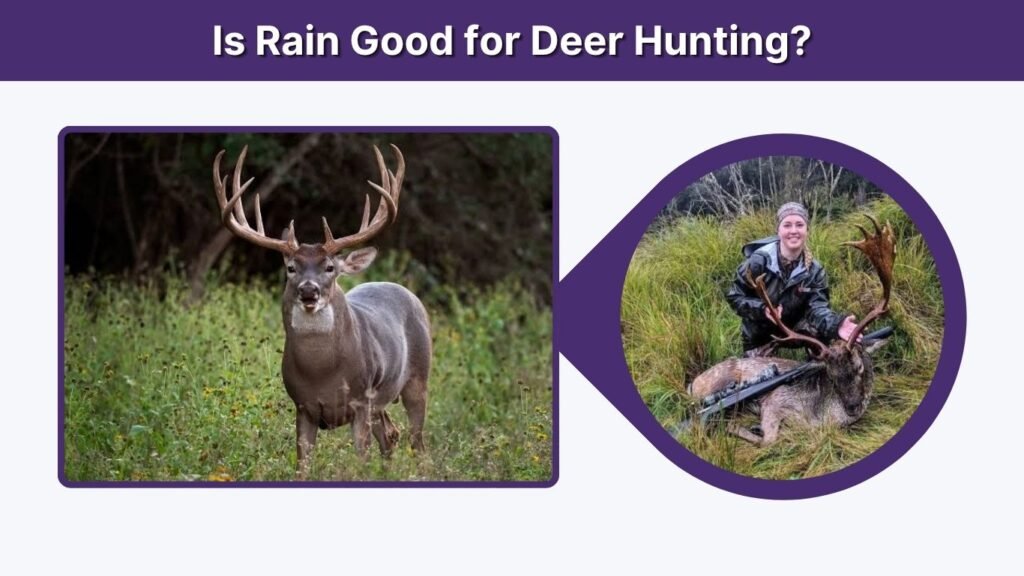
Rain does not automatically mean deer remain motionless. Light rain can still provide hunting opportunities, while prolonged heavy rain may change how deer and hunters use the landscape. Research also suggests males and females may respond differently, which makes simplistic statements such as “deer never move in rain” unreliable.
Light Rain
Light rain may be workable when visibility and safety remain good. It can also reduce some human noise while moving through vegetation.
Penn State research found little or no effect of rain on female deer movement in one dataset. Male deer, however, traveled less during rainy periods in some analyses.
Wind and Rain Together
Weather factors do not always work independently.
A later Penn State analysis found that bucks generally moved less during rain when wind was light, but their response changed when stronger wind accompanied the rain. This illustrates why individual weather variables should not be treated as simple on/off switches for movement.
After Heavy Rain or Storms
Improving weather after a long period of severe rain can be worth watching because deer still need to feed and travel.
However, the best approach is to combine the forecast with actual knowledge of feeding areas, bedding locations, fresh sign, and the time of year rather than assuming every post-storm period will produce exceptional movement.
Is Barometric Pressure Important for Deer Hunting?
Barometric pressure is heavily discussed in hunting forecasts, and many apps rate deer activity using rising or falling pressure. However, pressure should not be treated as a precise predictor of whether a buck will move past a stand. Weather variables often change together, making it difficult to separate pressure from temperature, wind, clouds, and approaching fronts.
Is There a Perfect Deer Hunting Pressure?
There is no scientifically established single barometric-pressure number that guarantees ideal whitetail movement.
Mississippi State researchers note that hunters commonly attribute changes in deer activity to factors including temperature, pressure, wind, and moon phase, but rigorous GPS studies are needed to separate those effects from rut stage and normal daily behavior.
Use Pressure as Context
A rising or falling barometer can tell you that a weather system is changing, but it should be considered alongside other information.
Recent trail-camera observations, fresh tracks, food availability, rut timing, hunting pressure, sunrise and sunset movement, and wind direction are generally more actionable than selecting a stand solely because of a pressure reading.
Best Weather During Different Parts of Deer Season
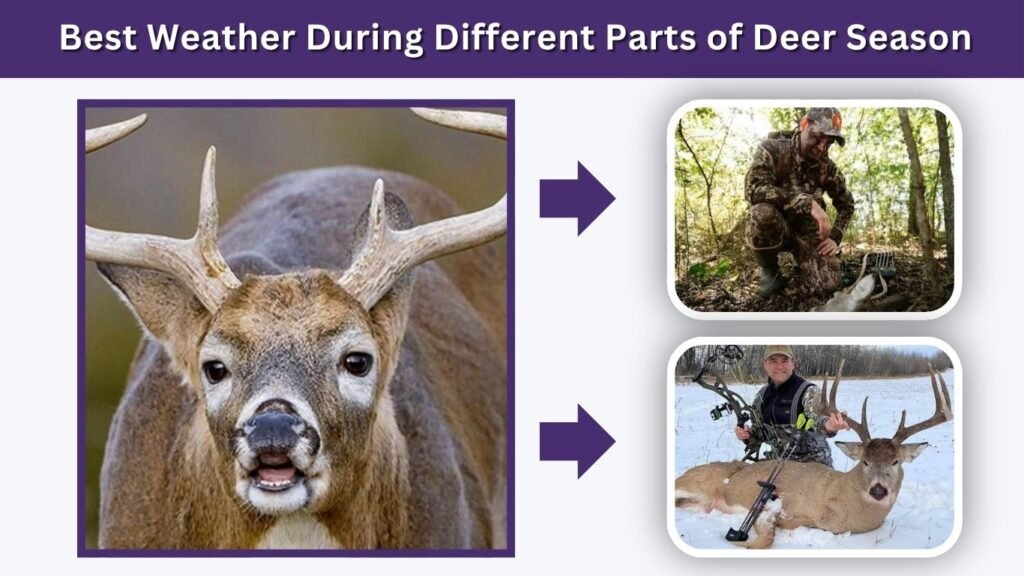
The same weather can have different importance depending on when you hunt. Early-season deer often follow feeding and bedding routines, rutting bucks dramatically increase travel, and late-season animals become heavily focused on recovering energy. Weather therefore works within seasonal behavior rather than replacing it.
Early Season
Warm early-season weather does not mean deer stop moving. Instead, much movement may remain concentrated around dawn, dusk, and nighttime.
Evening hunts near dependable food sources can be productive, especially when access does not disturb bedding areas.
Pre-Rut and Rut
During the rut, weather becomes less important than breeding behavior in many situations.
Mississippi State GPS research found that buck movement increased during early and peak rut. Daylight movement also increased, and bucks traveled farther while searching for receptive does.
This is why hunters should not automatically stay home because conditions are warmer or windier than expected during peak breeding activity.
Late Season
As breeding activity declines, food becomes increasingly important.
Cold late-season conditions can make concentrated food sources especially relevant, but hunters should also consider access routes and hunting pressure. Deer exposed repeatedly to hunters may alter where they spend time rather than simply stop moving altogether.
Best Weather vs. Best Time of Day
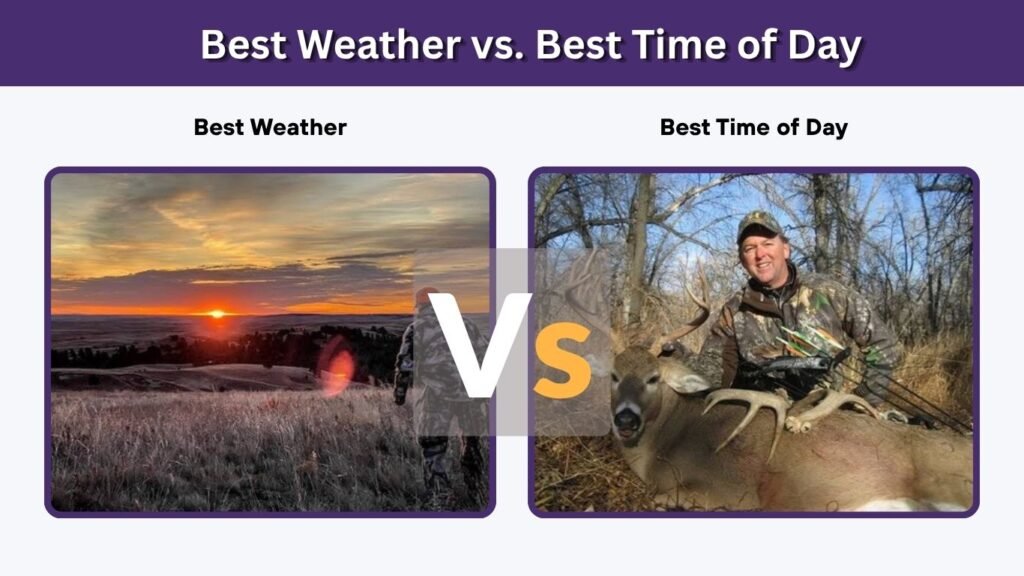
Weather should always be considered alongside daily movement rhythms. Whitetail deer are crepuscular, meaning their activity tends to peak around dawn and dusk. Mississippi State GPS research found that adult bucks displayed their strongest hourly movement rates around sunrise and sunset, although movement continued during other parts of the day.
Dawn and Dusk
For most of the season, dawn and dusk remain dependable starting points regardless of whether the weather forecast appears perfect.
If favorable weather and twilight movement overlap, conditions may be especially appealing.
Midday During the Rut
Peak breeding periods are an important exception to focusing heavily on twilight.
Bucks may travel through late morning or afternoon while searching for does. During the rut, staying out longer can therefore be more valuable than trying to identify a narrow weather window.
FAQs
The best weather conditions for deer hunting depend on more than temperature alone. Wind direction, precipitation, time of day, rut stage, food, habitat, and hunting pressure all interact. Research shows that deer continue moving under a surprisingly wide range of conditions, so weather is best used as one piece of a larger hunting strategy.
1. What is the best weather for deer hunting?
Cool or seasonable temperatures, manageable steady wind, limited severe precipitation, and favorable scent conditions can make a hunt comfortable and practical. However, rut stage and daily movement patterns can be stronger predictors than weather alone.
2. Is cold weather always better for deer hunting?
No. Research has not shown that colder temperatures universally create greater deer movement. Temperature may affect behavior, but its effect can be relatively small compared with rut activity, time of day, habitat, and hunting pressure.
3. Is windy weather bad for deer hunting?
Not necessarily. Penn State GPS research found that bucks sometimes increased movement during windy daytime conditions. The bigger practical concern is whether the wind direction carries your scent toward deer.
4. Do deer move when it rains?
Yes. Deer can remain active during rain. Penn State studies found relatively little rain effect on does, while buck movement sometimes decreased during rainy conditions. Responses also changed when rain and wind occurred together.
5. What barometric pressure is best for deer hunting?
There is no proven universal pressure reading that guarantees increased deer movement. Treat barometric pressure as one weather clue rather than a stand-alone predictor, and give greater weight to wind, current deer sign, rut stage, and normal dawn-and-dusk activity.
