
Deer hunting in the rain can be surprisingly productive when you understand how wet weather changes deer movement, bedding behavior, scent conditions, and visibility. Light or steady rain may encourage whitetails to continue normal activity while helping hunters move through the woods more quietly. Heavy rain, however, can reduce deer movement and make tracking more difficult. Knowing when to hunt, where to set up, and how to adjust your approach can turn a rainy hunting day into an excellent opportunity.
Is Deer Hunting in the Rain Good?
Deer hunting in the rain can be good, particularly during light rain or intermittent showers. Deer still need to feed, travel, and interact during wet weather, especially during the rut. Rain can also reduce hunting pressure and soften noisy leaves. However, rainfall intensity, temperature, wind, season, and hunting location all influence whether deer remain active.
How Rain Affects Deer Movement
Light rain usually does not stop deer from moving. Whitetails may continue traveling between bedding and feeding areas, especially around dawn and dusk.
Moderate rain can sometimes extend movement because cloudy conditions create darker, cooler surroundings. During warm periods, the lower temperatures associated with rain can make deer more comfortable.
Heavy downpours often have the opposite effect. Deer commonly seek protected bedding cover and reduce unnecessary movement until conditions improve.
Advantages of Hunting Deer in Rain
Rain provides hunters with several useful advantages:
- Quieter movement: Wet leaves and vegetation reduce footstep noise.
- Reduced human scent: Moist conditions may help keep airborne scent closer to the ground.
- Less hunting pressure: Many hunters stay home during uncomfortable weather.
- Better stalking conditions: Soft ground makes still-hunting more practical.
- Potential post-rain movement: Deer may become especially active after severe rain ends.
These advantages can make a rainy day worth hunting when conditions remain safe.
When Rain Can Make Hunting Difficult
Heavy rain reduces visibility and can make optics difficult to use. It can also wash away blood, tracks, hair, and other signs that hunters depend on while recovering deer.
For bowhunters in particular, poor blood-trail conditions deserve serious consideration. If rainfall is extremely heavy, waiting for conditions to improve may be more responsible than taking a marginal shot.
Best Rain Conditions for Deer Hunting
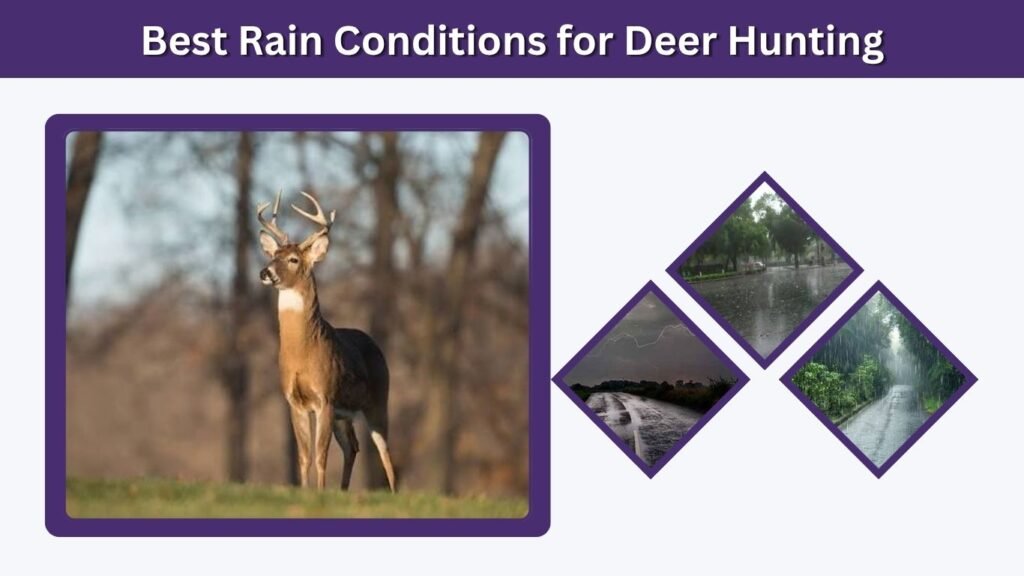
Not every rainy day provides the same hunting opportunity. Rainfall intensity is usually more important than simply whether rain is falling. Light showers, drizzle, and temporary weather systems generally offer better hunting conditions than thunderstorms or prolonged downpours. Wind and temperature should also be considered because they can significantly change deer behavior.
Light Rain and Drizzle
Light rain is often one of the best conditions for hunting whitetail deer.
Deer can continue feeding and traveling normally while the wet vegetation helps hunters move quietly. Overcast conditions can also encourage deer to leave bedding cover slightly earlier in the afternoon.
If temperatures are comfortable and wind is moderate, staying in your stand during drizzle can be worthwhile.
Moderate Rain
Steady moderate rain can still produce deer activity, particularly during the rut.
Hunters should concentrate on predictable travel corridors, sheltered food sources, and areas between bedding and feeding cover. Visibility may decrease, so hunting locations with shorter shooting distances often become more practical.
Heavy Rain and Storms
During intense rainfall, deer frequently reduce their movement and seek sheltered cover.
Good areas to watch include:
- Dense evergreen cover
- Thick creek bottoms
- Protected hillsides
- Mature timber
- Brushy bedding areas
- Areas protected from strong winds
Once the heavy rain begins to weaken, deer may stand and start moving again.
Where to Hunt Deer in the Rain
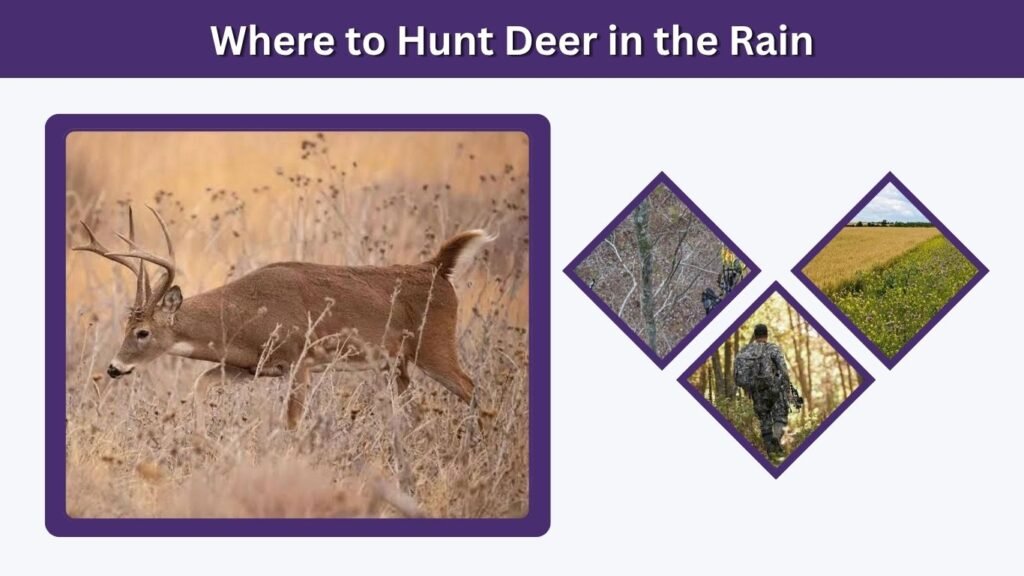
Choosing the right location becomes especially important when deer hunting in wet weather. Deer naturally seek areas offering protection from wind and heavy precipitation, but they may continue traveling normally during lighter rain. Understanding nearby bedding cover, food sources, terrain, and weather direction can help you predict where deer are likely to appear.
Protected Bedding Areas
Thick vegetation provides deer with protection during unpleasant weather. Cedar stands, conifer cover, brush, young timber, and sheltered slopes can therefore become productive areas.
Avoid walking directly into bedding cover. Instead, hunt travel routes leading between these protected areas and nearby feeding locations.
Field Edges and Food Sources
Agricultural fields and food plots remain useful during light rain.
Whitetails may enter open feeding areas earlier when the sky is dark and overcast. Setting up along a field edge near thick cover allows hunters to intercept deer shortly after they leave their bedding area.
During severe rain, however, deer may wait until conditions improve before entering exposed fields.
Creek Bottoms and Low Travel Corridors
Creek bottoms often provide natural travel corridors with nearby cover. Terrain can also shield deer from strong winds.
Look for crossings, funnels, trails, rubs, tracks, and transitions between mature woods and thick cover. These locations can become especially productive during moderate rain.
How to Hunt Deer in the Rain
Successful rainy-weather hunting requires adapting normal strategies to wet conditions. Hunters should pay particular attention to wind direction, visibility, waterproof clothing, shot placement, and recovery planning. Rain can help conceal movement, but it can also remove tracking evidence very quickly after the shot.
Use Rain to Move Quietly
Wet leaves can dramatically reduce noise.
This makes rain particularly useful for still-hunting. Move slowly, stop frequently, and carefully scan ahead before taking another step. Deer may also have difficulty detecting some sounds because falling rain creates continuous background noise.
Still, never depend entirely on rainfall for concealment. Deer retain excellent hearing and awareness.
Watch the Wind
Rain does not eliminate human scent.
Always position yourself downwind or crosswind from expected deer movement whenever possible. Avoid letting your scent blow directly toward bedding areas, trails, or feeding locations.
Checking wind direction regularly is especially important when storms cause shifting air currents.
Prepare Your Equipment
Wet-weather hunting equipment should include:
- Waterproof hunting jacket
- Waterproof or water-resistant pants
- Quality hunting boots
- Hat or waterproof hood
- Dry gloves
- Optics protection
- Backpack rain cover
- Dry storage for electronics
- Extra clothing when temperatures are cold
Remaining dry improves comfort and makes it easier to stay in position during productive hunting periods.
Whitetail Deer Hunting in the Rain
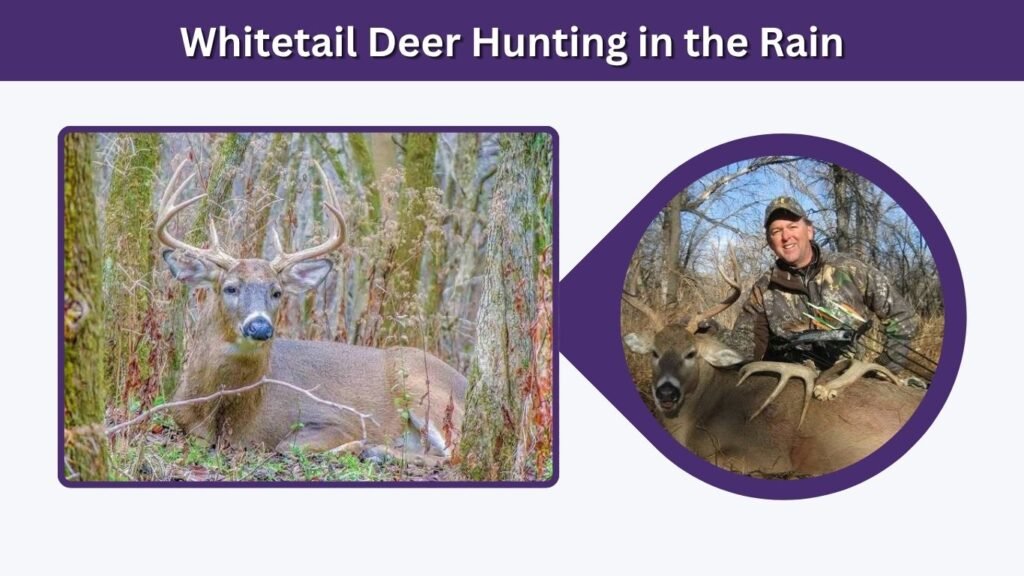
Whitetail deer can remain surprisingly active during rain, especially when precipitation is light. Their behavior is still heavily influenced by food, security cover, temperature, hunting pressure, and breeding activity. Hunters who understand these influences can often find opportunities even when poor weather keeps other hunters away.
Hunting During the Rut
Deer hunting in the rain during the rut can be productive because bucks are strongly motivated to search for receptive does.
Light and moderate rain may not stop rutting activity. Bucks can still travel funnels, creek crossings, field edges, ridgelines, and routes between doe bedding areas.
A productive strategy is to remain near known doe travel corridors and wait for cruising bucks.
Early-Season Rain Hunts
Warm early-season weather can suppress daytime deer movement.
Rain associated with cooler temperatures may create more favorable conditions. Focus on evening routes between secure bedding areas and food sources such as agricultural crops, browse, mast-producing trees, and food plots.
Late-Season Rain
During late season, food and energy conservation become increasingly important.
Cold rain can be uncomfortable for both deer and hunters. Deer may remain bedded during severe conditions before moving toward concentrated food sources when precipitation slows.
Watching a weather transition can therefore be more productive than hunting during the strongest portion of the storm.
Bow Hunting Deer in the Rain
Bow hunting deer in the rain requires additional consideration because tracking becomes especially important after the shot. Rain can quickly dilute or remove blood from leaves and vegetation. For this reason, hunters should be selective about shot opportunities and confident about both distance and deer position before releasing an arrow.
Keep Shooting Distances Comfortable
Rain, low light, and wet equipment can make precise shooting more difficult. Limit shots to distances where you are consistently accurate.
A broadside or slightly quartering-away deer normally provides a better opportunity for effective shot placement than difficult angles.
Mark the Shot Location
Immediately identify where the deer was standing and where it entered cover.
Use memorable trees, rocks, trails, or vegetation as visual references. GPS mapping can also help preserve important locations when rain begins removing physical evidence.
Start Recovery Carefully
When tracking conditions are poor, pay close attention to:
- Hair at the impact location
- Blood on protected vegetation
- Tracks in soft soil
- Broken branches
- Disturbed leaves
- Known deer trails
- The direction the deer traveled
The ethical priority should always be recovering the animal rather than rushing the tracking process.
Deer Hunting in Wind and Rain
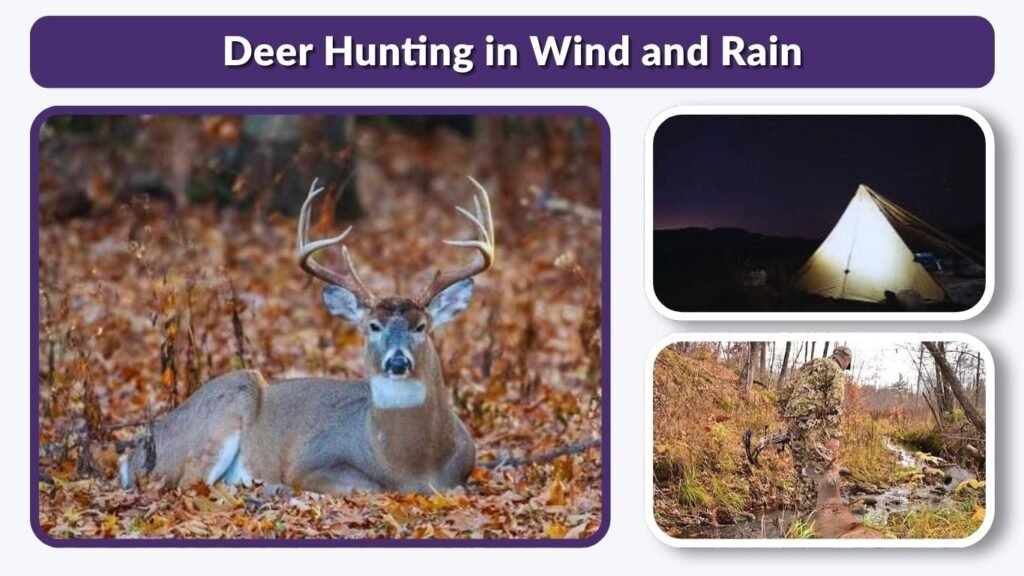
Rain combined with strong wind can change deer behavior more dramatically than rain alone. Strong gusts make it harder for deer to hear and identify threats, sometimes causing them to remain closer to secure cover. Hunters should focus on protected terrain rather than exposed ridges or open areas.
Hunt the Sheltered Side
The leeward side of ridges can provide relief from strong wind.
Deer may also favor valleys, creek bottoms, dense woods, and low areas where vegetation provides protection. Examining the terrain can help identify these sheltered pockets before entering the hunting area.
Consider Weather Transitions
The period immediately before or after a significant weather system can produce excellent movement.
If heavy rain has kept deer bedded for several hours, improving weather may encourage them to stand, feed, and travel. Being positioned before the transition occurs can improve your chances of seeing deer.
Tips for Deer Hunting in the Rain
Rainy hunts can become uncomfortable quickly, but good preparation improves both effectiveness and safety. The goal is to remain dry, protect important equipment, reduce unnecessary movement, and select locations where deer are most likely to travel under current conditions.
Important Rain-Hunting Tips
- Hunt during light or moderate rainfall when possible.
- Focus on sheltered travel corridors during stronger storms.
- Keep your firearm, bow, and optics protected from moisture.
- Carry waterproof clothing and dry backup layers.
- Hunt near bedding-to-feeding travel routes.
- Watch for increased movement when heavy rainfall stops.
- Reduce shot distance when visibility is poor.
- Remember that rain can quickly erase a blood trail.
- Keep wind direction in mind throughout the hunt.
- Leave the woods during lightning or other dangerous weather.
Is Deer Hunting in the Rain Worth It?
For many hunters, deer hunting in the rain is absolutely worth considering. Light rain can reduce noise, lower hunting pressure, and allow deer to maintain relatively normal movement. Rain during the rut may also have limited effect on determined bucks searching for does.
Heavy rain is different. Visibility decreases, tracking becomes challenging, and safety concerns increase. Instead of assuming all rainy conditions are productive, evaluate precipitation intensity, wind, temperature, season, and expected deer movement before deciding whether to hunt.
FAQs
Can You Hunt Deer in the Rain?
Yes. Deer can be hunted successfully during rain, particularly when precipitation is light or moderate. Deer still need to feed and move between bedding areas and food sources. Rain also softens noisy ground conditions, although hunters should be cautious because heavy rainfall can make recovering a wounded deer much more difficult.
Is It Better to Hunt Deer Before or After Rain?
Both periods can be productive, but the period after prolonged heavy rain can be particularly promising. Deer that have remained bedded may begin feeding or traveling once conditions improve. Before an approaching storm, falling temperatures and changing atmospheric conditions may also encourage deer movement, depending on season and local conditions.
Do Whitetail Deer Move During Heavy Rain?
Whitetail deer can move during heavy rain, but activity often decreases during severe downpours. Many deer seek thick vegetation, mature timber, sheltered terrain, or other protected areas. When intense rain begins slowing, movement may increase rapidly as deer return to feeding areas or resume normal travel patterns.
Is Bow Hunting Deer in the Rain a Good Idea?
Bow hunting in light rain can be productive, but hunters should consider recovery conditions carefully. Rain can quickly wash away blood trails, making tracking difficult. Take high-confidence shots at comfortable distances, clearly mark the impact location, and pay close attention to the direction the deer travels after the shot.
What Is the Best Place to Hunt Deer in the Rain?
Productive locations include protected creek bottoms, thick timber, sheltered hillsides, bedding-to-feeding travel corridors, and field edges near heavy cover. During light rain, traditional trails and food sources may remain active. During stronger weather, concentrate on areas protected from both heavy precipitation and strong wind.
