
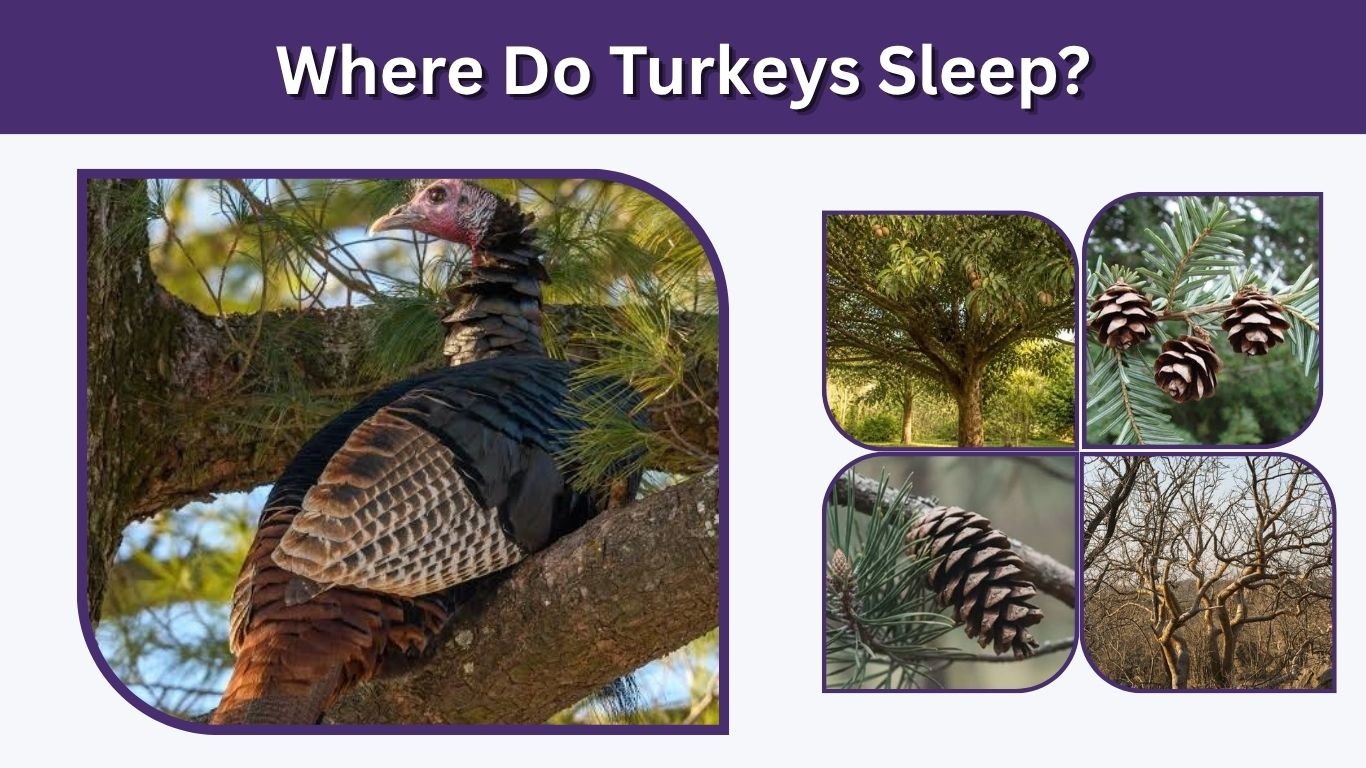
Turkeys spend most of their daytime searching for food, walking through forests, and exploring open fields. However, their sleeping habits are surprisingly different from their daytime behavior. So, where do turkeys sleep when darkness arrives? Wild turkeys usually sleep high in trees, where they are safer from predators. Their preferred sleeping locations depend on weather, habitat, age, and environmental conditions. Understanding where wild turkeys sleep at night reveals how these fascinating birds survive in forests, grasslands, and even areas near human settlements.
Where Do Wild Turkeys Sleep?
Wild turkeys primarily sleep in trees, a behavior known as roosting. Although these large birds spend much of their lives on the ground, they can fly into trees when evening approaches. Sleeping above the ground protects them from many nighttime predators. Their choice of roosting trees depends on available habitat, branch structure, and surrounding conditions.
Wild Turkeys Sleep in Tall Trees
Wild turkeys prefer mature trees with strong, relatively horizontal branches capable of supporting their weight. Oak, pine, cottonwood, and other large trees often provide suitable resting locations.
They generally select elevated branches where they can rest comfortably without being easily reached by ground predators. Their exact roosting height varies depending on the tree and habitat.
Unlike many smaller birds, turkeys require substantial perching space because of their relatively large bodies. They also benefit from trees surrounded by enough open space to fly upward and descend safely.
Where Do Turkeys Sleep in the Wild?
In natural environments, wild turkeys commonly sleep in mature forests, wooded hillsides, and trees near streams or rivers.
Their sleeping locations often depend on the surrounding landscape. Turkeys living in eastern forests may prefer mature hardwood trees, while those inhabiting western regions frequently use large trees along waterways.
A suitable roosting site usually provides safety, convenient access to feeding areas, and protection from unfavorable weather.
Where Do Turkeys Sleep at Night?
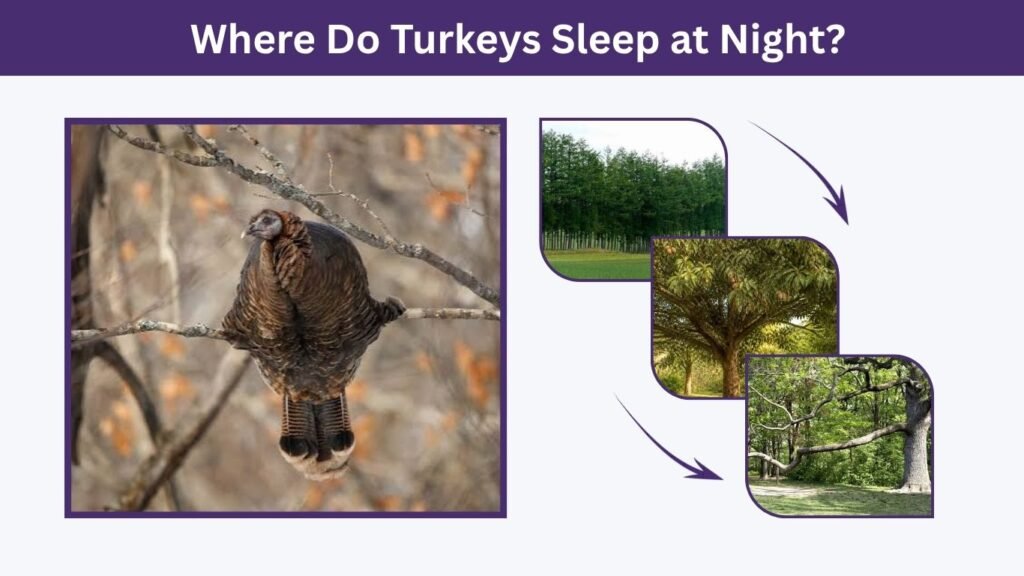
Wild turkeys usually begin preparing for sleep around sunset. They move toward suitable roosting areas before darkness makes navigation more difficult. Once they reach their chosen trees, they fly upward, settle onto sturdy branches, and remain there through the night. Their nighttime routine is an important survival behavior.
How Turkeys Choose Their Sleeping Spots
Several environmental features influence where wild turkeys sleep at night.
- Strong branches: Large horizontal branches provide stable resting places.
- Elevated positions: Height helps reduce exposure to ground predators.
- Nearby open areas: Clear spaces make flying into and out of trees easier.
- Protective vegetation: Surrounding trees can provide shelter from wind and weather.
- Suitable surroundings: Turkeys often choose locations within reach of daytime feeding habitats.
These features help turkeys find dependable sleeping locations while reducing unnecessary exposure to danger.
Why Do Turkeys Sleep in Trees?
The primary reason wild turkeys sleep in trees is protection from predators.
Foxes, coyotes, bobcats, and other animals can threaten turkeys resting on the ground. Elevated branches make nighttime attacks more difficult.
Roosting also allows turkeys to remain relatively undisturbed during darkness. Although they may wake or adjust their position, they generally remain in the tree until morning.
Their ability to fly into trees is especially important because wild turkeys spend so much of their daytime activity on the ground.
Where Do Turkeys Sleep in the Winter?
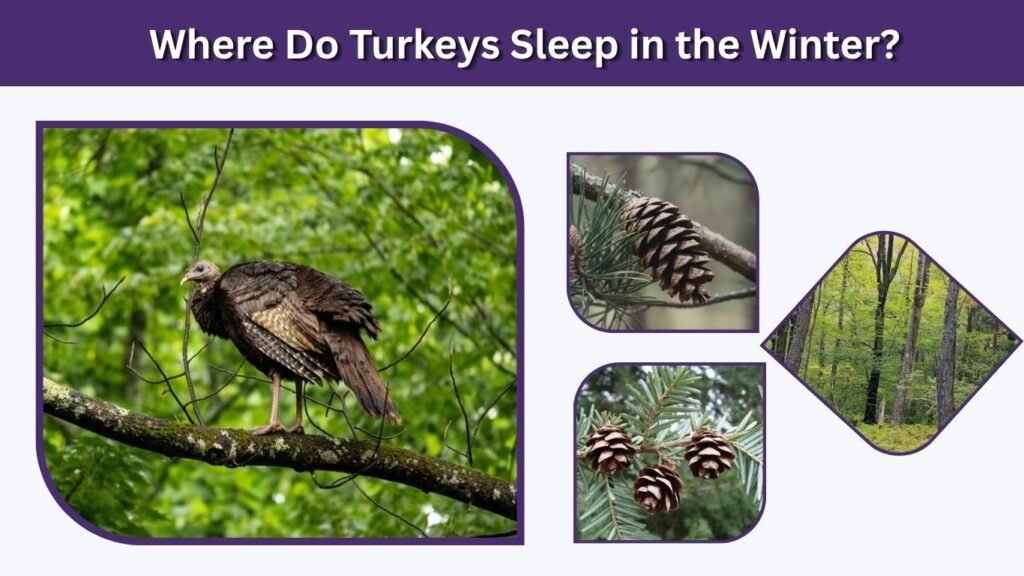
Winter creates additional challenges for wild turkeys because colder temperatures, snow, and strong winds can affect their resting conditions. Nevertheless, wild turkeys typically continue sleeping in trees throughout winter. They may change their preferred roosting locations to find better protection from unfavorable weather and conserve body heat.
Preferred Winter Roosting Locations
Wild turkeys frequently use protected woodland areas during cold weather. Common winter roosting choices include:
- Pine trees: Evergreen branches offer some protection against wind and precipitation.
- Hemlock trees: Dense foliage provides shelter during harsh winter conditions.
- Mature hardwoods: Large branches remain suitable when surrounding weather conditions are favorable.
- Sheltered hillsides: Trees positioned away from prevailing winds can offer more comfortable roosting conditions.
The availability of these locations varies across different regions.
Do Turkeys Sleep in Snow?
Yes, wild turkeys continue roosting during snowy weather.
Rather than routinely sleeping directly on snow-covered ground, adults generally use trees for nighttime protection. Their feathers provide insulation, while sheltered branches can reduce exposure to wind.
During severe winter conditions, turkeys may select different roosting sites than those used during warmer seasons.
Where Do Turkeys Sleep When It Rains?
Rainy weather can influence the sleeping locations of wild turkeys. Although their feathers offer protection against moisture, prolonged rain and strong winds may encourage them to seek more sheltered areas. They generally continue roosting in trees rather than abandoning their usual elevated sleeping behavior.
Sleeping During Heavy Rain
During rainy conditions, turkeys may choose trees with dense foliage or locations protected from prevailing winds.
Evergreen trees can provide additional overhead cover, while sheltered valleys and wooded slopes may reduce wind exposure.
However, turkeys do not necessarily change their sleeping location whenever rain begins. Their decisions depend on storm intensity, surrounding habitat, and available shelter.
Where Do Baby Turkeys Sleep?
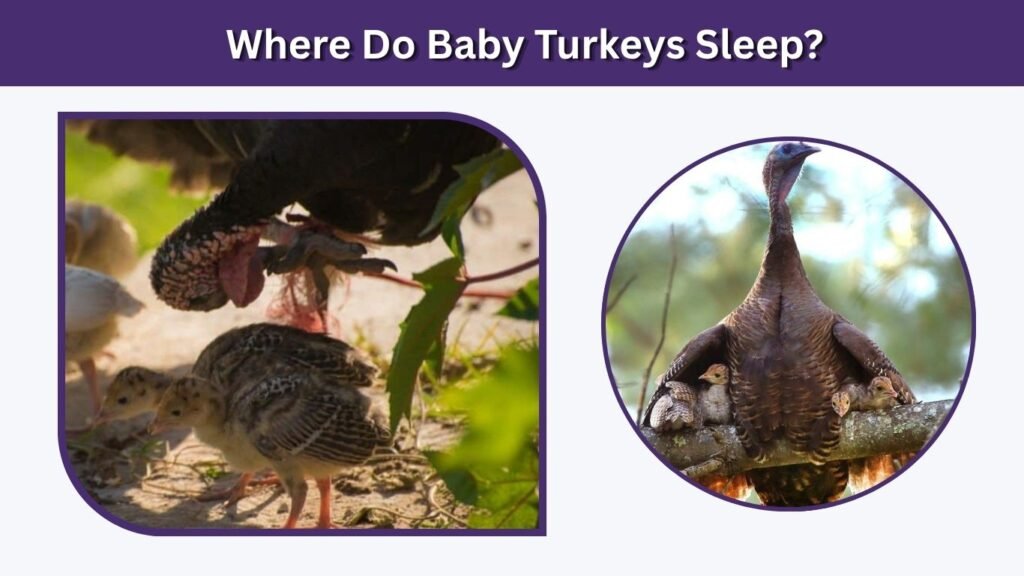
Baby wild turkeys, commonly called poults, have different sleeping habits from adults. Newly hatched poults cannot immediately fly into tall trees, making ground-level shelter essential during their earliest days. Their mothers provide protection while the young birds gradually develop the strength and flight ability needed for elevated roosting.
Where Do Baby Wild Turkeys Sleep?
Young poults initially sleep on the ground, usually beneath or close to their mother.
The hen selects sheltered locations with vegetation that helps conceal the family from predators. Her body also provides warmth and protection during cooler nights.
This ground-roosting period is particularly vulnerable because young poults are exposed to predators and unfavorable weather.
When Do Baby Turkeys Start Sleeping in Trees?
Wild turkey poults typically begin roosting in trees at approximately two to four weeks of age.
The timing depends on their development, environmental conditions, and ability to fly.
Once they can reach suitable branches, the young birds begin accompanying their mother to elevated nighttime roosting locations.
Where Do Domestic and Farm Turkeys Sleep?
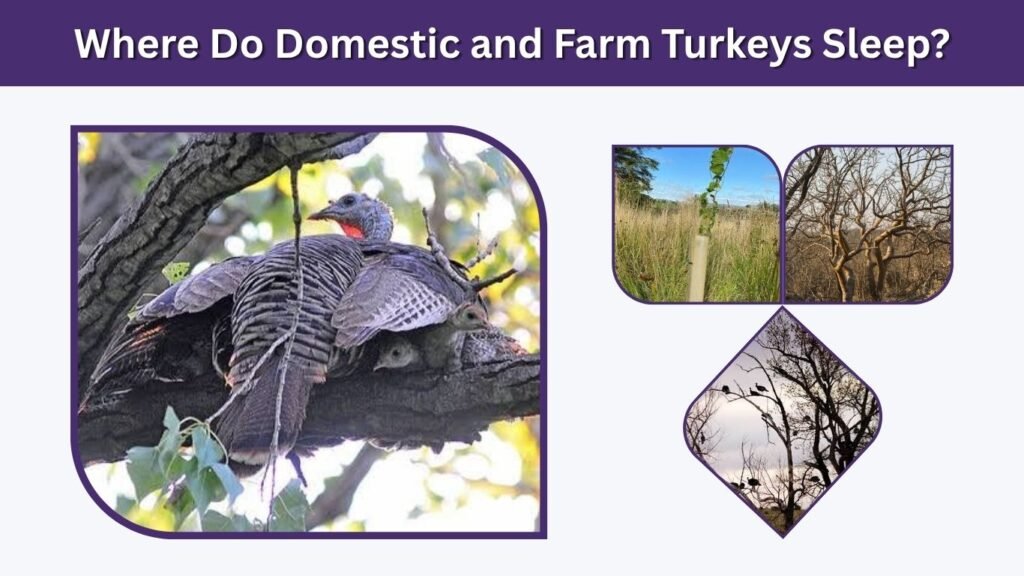
Domestic turkeys have sleeping habits influenced by their breed, body size, and housing environment. Unlike wild turkeys, farm-raised birds may spend their nights inside barns, poultry houses, or specially designed shelters. Their sleeping arrangements should provide appropriate ventilation, protection from predators, and comfortable resting surfaces.
Where Do Pet Turkeys Sleep?
Pet turkeys commonly sleep inside secure poultry shelters. Some heritage breeds naturally prefer raised roosting bars, while heavier domestic varieties may be more comfortable resting on suitable floor bedding.
An appropriate sleeping area should provide:
- Secure shelter: Protection against predators and severe weather.
- Dry bedding: Clean, comfortable flooring that reduces moisture buildup.
- Suitable perches: Stable, accessible roosting structures for birds capable of perching safely.
- Ventilation: Fresh airflow without excessive drafts.
- Adequate space: Sufficient room for birds to move and rest comfortably.
Do Farm Turkeys Sleep in Trees?
Some free-ranging heritage turkeys can fly into trees and may attempt to roost there at night.
However, heavy commercial turkey breeds often have limited flight abilities and typically rest inside poultry housing.
Even when domestic turkeys can fly, secure nighttime shelter is generally safer than allowing them to sleep in unprotected outdoor trees.
Do Wild Turkeys Sleep in the Same Tree Every Night?
Wild turkeys sometimes return to familiar roosting areas, particularly when suitable trees are limited. However, they do not necessarily sleep in the exact same tree every night. Their sleeping locations may change according to seasonal conditions, food availability, disturbances, and predator activity.
How Turkeys Select New Roosting Sites
A flock may use several suitable trees across its home range instead of relying on one permanent location.
If a familiar sleeping area becomes disturbed, turkeys may move to another location that offers better protection.
In regions with abundant mature forests, finding alternative roosts can be relatively easy. In landscapes with fewer suitable trees, particular roosting areas may receive repeated use.
FAQs
1. Do Turkeys Sleep on the Ground or in Trees?
Adult wild turkeys generally sleep in trees, while newly hatched poults initially sleep on the ground. Some heavy domestic turkeys also rest on bedding inside sheltered poultry houses.
2. How High Do Wild Turkeys Sleep?
Wild turkeys may roost at various heights, depending on the surrounding trees. They generally prefer elevated, sturdy branches that provide stability and protection from ground predators.
3. Do Wild Turkeys Sleep Alone?
Wild turkeys frequently roost near other members of their flock. However, individual birds may occupy separate branches or nearby trees depending on flock composition and available space.
4. Where Do Turkey Vultures Sleep?
Turkey vultures are different birds from wild turkeys. They generally roost in trees, on rocky locations, or other elevated sites, often gathering in communal nighttime roosts.
5. Where Do Australian Brush Turkeys Sleep?
Australian brush turkeys usually sleep in trees at night despite spending much of their daytime on the ground. Unlike North American wild turkeys, they belong to a different bird family.
