
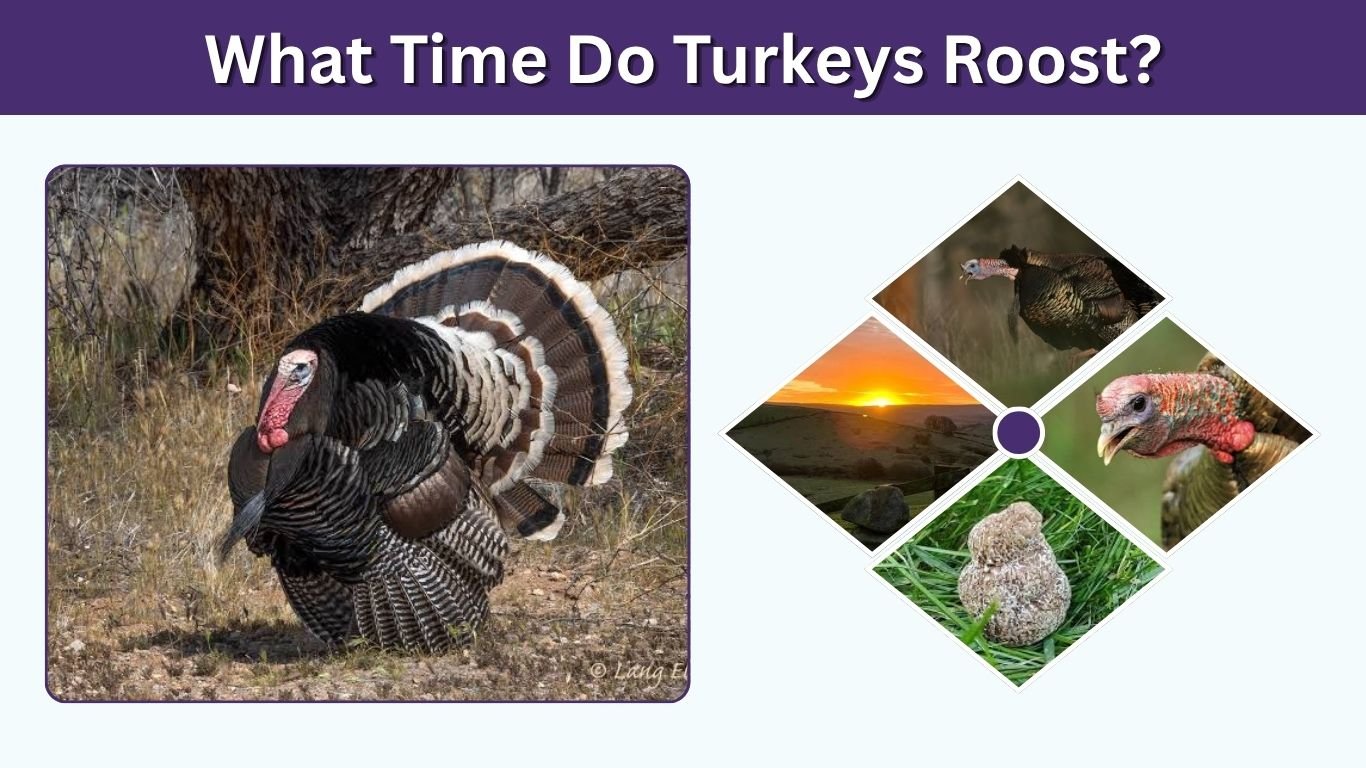
Wild turkeys follow a daily routine that revolves around sunlight, feeding, and finding safe places to rest. But what time do turkeys roost, and when do they leave their sleeping trees? Most wild turkeys fly into trees around sunset and return to the ground near sunrise. However, their exact timing varies with seasons, weather conditions, and surrounding disturbances. Understanding when turkeys go to roost and fly down in the morning can help wildlife enthusiasts and hunters better understand their natural behavior.
What Time Do Turkeys Go to Roost?
Wild turkeys generally go to roost around sunset, when daylight begins disappearing from the landscape. They usually approach their preferred roosting locations during the late evening before flying into tall trees. Although their behavior follows a predictable daily pattern, there is no exact universal roosting time because sunset changes throughout the year and across different geographical locations.
What Time Do Turkeys Fly Up to Roost?
Most wild turkeys fly into their sleeping trees at or near sunset. Some birds settle into their roosting positions shortly before sunset, while others may fly up during the remaining twilight.
Their evening activities often include feeding, walking toward wooded areas, and gathering near suitable trees.
After selecting a resting location, turkeys use their powerful wings to reach elevated branches. They generally remain there until the following morning.
Do Turkeys Roost Before or After Sunset?
Turkeys can roost either shortly before or just after sunset, depending on their surroundings.
For example, when sunset occurs at 6:30 PM, turkeys may begin approaching suitable roosting trees beforehand. However, the actual fly-up time is not guaranteed to occur at any particular minute.
Available daylight, habitat conditions, and perceived threats can affect when individual birds settle for the night.
What Time Do Turkeys Come Off the Roost?
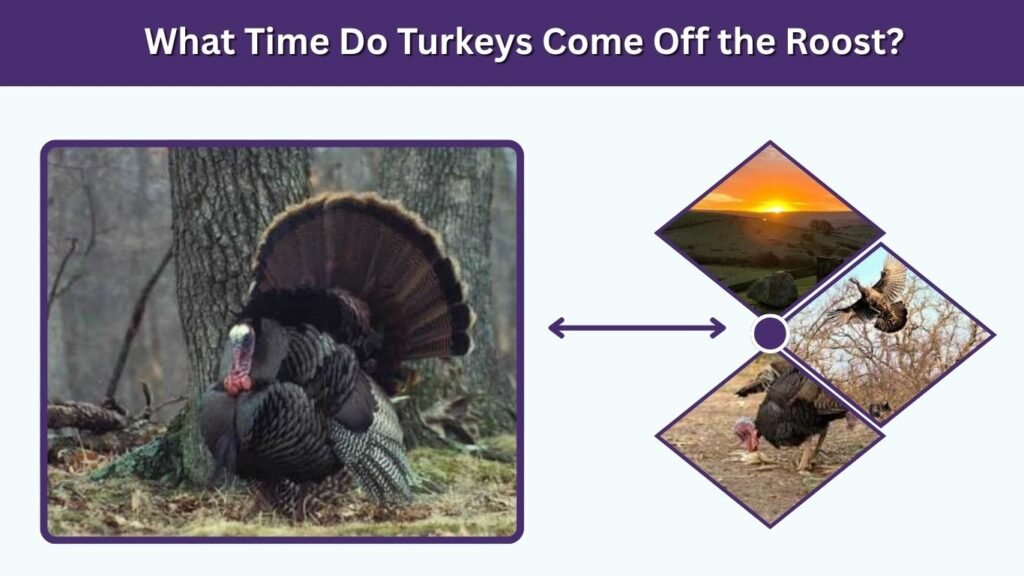
Wild turkeys usually leave their roosting trees around dawn or shortly after sunrise. As morning light increases, they become more active and prepare to return to the ground. Their departure often depends on visibility, weather conditions, and nearby activity. Some turkeys leave relatively early, while others remain perched until conditions are favorable for flying down safely.
What Time Do Turkeys Fly Down From Roost?
Wild turkeys typically fly down around sunrise, although their exact departure time varies.
Some birds may leave their roosts during early morning twilight, while others wait until the sun has risen.
Once they reach the ground, they usually begin searching for food, moving through familiar habitats, or participating in social activities.
Springtime males may also begin displaying and interacting with females shortly after leaving their roosting locations.
Do Turkeys Gobble Before Leaving the Roost?
Male wild turkeys frequently gobble from their roosting trees during the spring breeding season.
Gobbling helps males announce their presence, attract females, and communicate with competing males.
These vocalizations may begin before sunrise and continue after the birds reach the ground.
However, not every turkey gobbles before leaving its roost. Weather, season, individual behavior, and surrounding disturbances can influence vocal activity.
Understanding the Daily Turkey Roosting Schedule
Wild turkeys spend their days moving across feeding areas and suitable habitats before returning to elevated sleeping locations. Their roosting schedule is closely connected to natural light rather than fixed clock times. Understanding the general sequence of activities makes it easier to recognize how turkeys transition between daytime feeding, nighttime resting, and early morning activity.
| Time of day | Typical turkey activity |
| Before sunrise | Remain in roost trees; some males begin gobbling |
| Around sunrise | Fly down from roosting trees |
| Morning | Search for food and move through feeding areas |
| Afternoon | Continue feeding, resting, and other activities |
| Late evening | Move toward suitable roosting areas |
| Around sunset | Fly into trees and settle for the night |
| Nighttime | Remain perched in trees until morning |
Do Turkeys Roost During the Day?
Wild turkeys normally roost at night rather than during daylight hours.
During the day, they spend considerable time walking, feeding, dust bathing, and resting on the ground.
Although turkeys may occasionally perch in trees during daylight, extended daytime roosting is not their usual routine.
Their nighttime roosting behavior primarily helps protect them from ground-dwelling predators.
What Factors Affect Turkey Roosting Time?
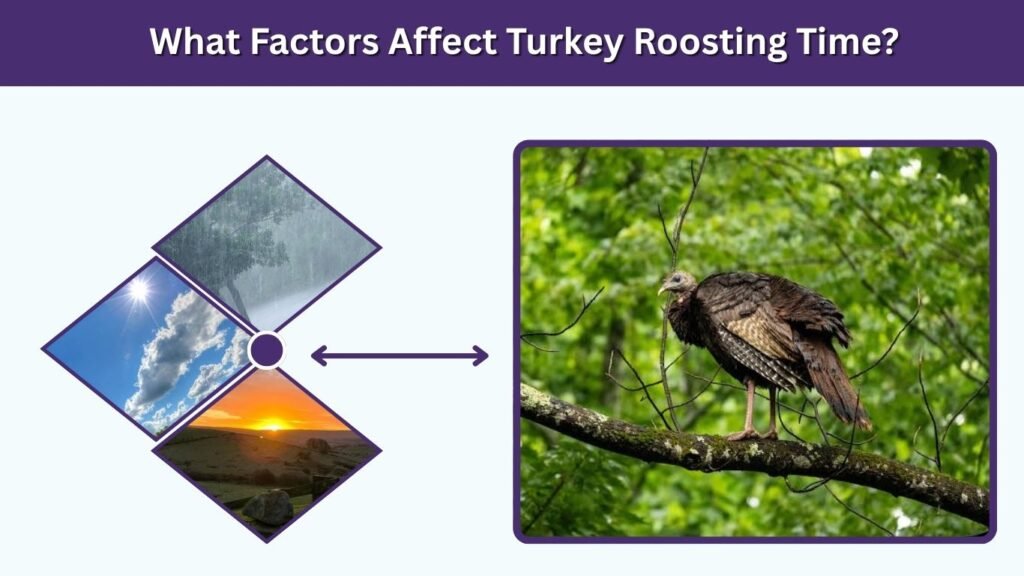
Several environmental conditions can influence when wild turkeys enter or leave their roosts. Although sunlight remains the most important factor, weather conditions, seasonal daylight changes, and disturbances may alter their behavior. These influences explain why turkeys do not always follow an identical schedule, even when using familiar roosting locations within the same habitat.
Environmental Factors That Influence Roosting
The following factors can affect turkey roosting behavior:
- Sunset and sunrise: Changing daylight hours influence evening fly-up and morning fly-down.
- Weather conditions: Heavy rain, strong winds, and poor visibility may affect their movements.
- Seasonal changes: Longer summer days and shorter winter days shift roosting schedules.
- Predator activity: Nearby predators or other disturbances may cause turkeys to change locations or delay movement.
- Habitat structure: Suitable roost trees and surrounding open spaces influence access to sleeping locations.
These factors work together to shape the daily routine of wild turkey flocks.
What Time Do Turkeys Roost in Spring, Fall, and Winter?
Turkey roosting times change throughout the year because daylight duration varies between seasons. During spring and summer, longer days generally allow turkeys to remain active later into the evening. In fall and winter, earlier sunsets result in earlier evening roosting times. However, the underlying pattern of entering trees around sunset and leaving near sunrise generally remains consistent.
What Time Do Turkeys Roost in Spring?
During spring, wild turkeys usually fly into their roosting trees around the local sunset.
As daylight gradually increases, their evening roosting time becomes later.
Spring is also the breeding season, when male turkeys frequently gobble from elevated branches during early morning hours.
These vocalizations are especially noticeable near sunrise, although they can occur at other times.
What Time Do Turkeys Roost in Fall and Winter?
During fall and winter, wild turkeys generally roost earlier in the evening because the sun sets earlier.
Cold weather does not necessarily cause turkeys to enter their sleeping trees hours before sunset.
Instead, they continue responding primarily to available daylight while sometimes choosing more protected roosting locations.
Winter flocks may gather in suitable woodland areas where mature trees provide shelter from wind and unfavorable weather.
How to Tell When Turkeys Have Gone to Roost
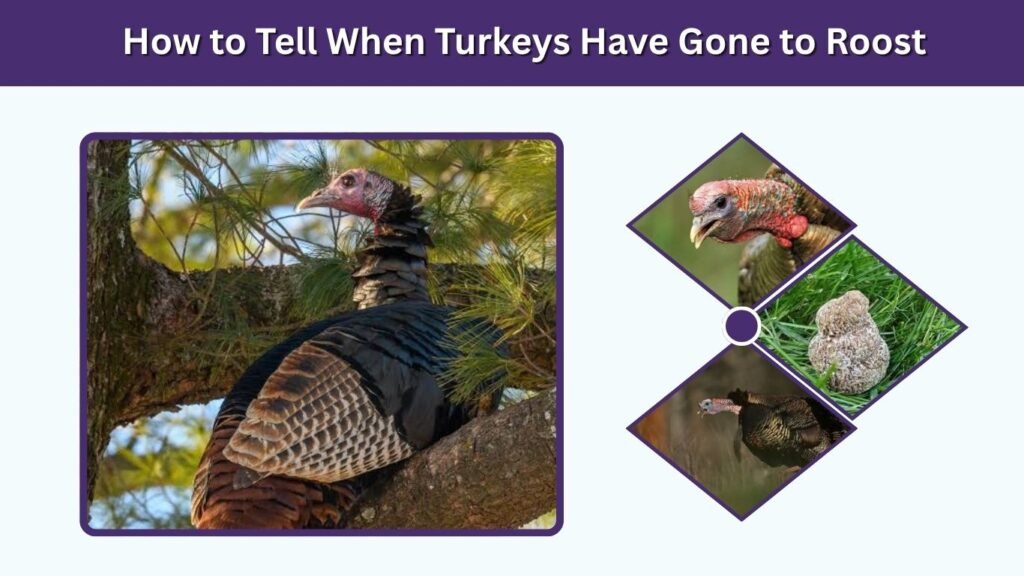
Identifying turkey roosting activity requires observing their behavior during the transition from daylight to darkness. Wild turkeys often move toward wooded areas before settling into trees. Although their precise movements vary, certain sounds and environmental clues can indicate that a flock is approaching or occupying a nighttime roosting location.
Signs That Turkeys Are Roosting Nearby
Several clues may indicate nearby roosting activity:
- Wingbeats: Loud flapping sounds can occur when turkeys fly into branches.
- Evening calls: Soft yelps, clucks, or occasional gobbles may be heard near roosting areas.
- Tree movement: Large birds landing on branches can create noticeable movement.
- Droppings beneath trees: Accumulated droppings may indicate frequently used roosting locations.
- Feathers: Shed feathers beneath large trees sometimes indicate repeated turkey activity.
Observing from a distance helps avoid disturbing birds as they settle for the night.
Do Turkeys Use the Same Roost Every Night?
Wild turkeys sometimes return to familiar roosting locations, especially when suitable trees are limited.
However, they do not necessarily use the same individual tree every night.
Their roosting choices can change because of weather, food availability, predator activity, and other disturbances.
Some forested locations may serve as regular roosting areas for several different birds.
FAQs
1. What Time Do Turkeys Usually Go to Roost?
Wild turkeys generally fly into their roosting trees around sunset. The exact timing depends on local daylight conditions, weather, and surrounding disturbances.
2. What Time Do Turkeys Usually Fly Down From Roost?
Wild turkeys commonly leave their roosts around dawn or shortly after sunrise. Some birds descend earlier than others depending on visibility and environmental conditions.
3. What Time Do Turkeys Start Gobbling on the Roost?
Male turkeys often begin gobbling before sunrise during spring. However, gobbling intensity and timing vary, and some birds may remain quiet throughout the morning.
4. Do Turkeys Roost Earlier When It Rains?
Rain does not automatically cause turkeys to roost earlier. Heavy precipitation, strong winds, and reduced visibility may influence their movements, but daylight remains an important factor.
5. What Time Do Turkeys Go to Roost in Michigan?
Wild turkeys in Michigan generally go to roost around local sunset. During summer, they may roost later in the evening, while shorter winter days cause earlier roosting times.
