
Turkey hunting requires patience, careful preparation, and a good understanding of wild turkey behavior. Whether you are hunting during spring breeding season, exploring public land, or trying to locate birds on a rainy afternoon, the right approach can improve your experience. Wild turkeys have excellent eyesight and unpredictable movement patterns, making them challenging game birds. These 15 practical turkey hunting tips cover scouting, calling, seasonal strategies, and safety techniques to help beginners and experienced hunters make better decisions in the field.
Essential Turkey Hunting Tips Before the Hunt
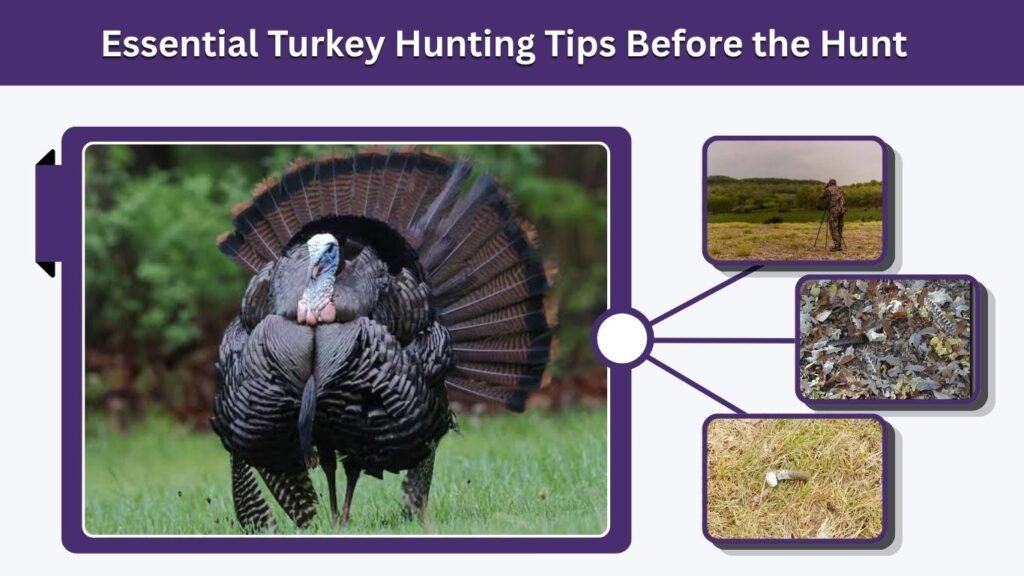
A productive turkey hunt often begins several days before the season opens. Understanding where turkeys feed, roost, and travel helps hunters identify promising locations without disturbing birds. Equipment preparation, calling practice, and familiarity with local regulations are equally important. The following tips establish a foundation for more effective and responsible hunting.
1. Scout Turkey Hunting Areas Early
Preseason scouting helps identify areas where wild turkeys regularly travel. Look for tracks, feathers, droppings, scratched leaves, and suitable roosting trees.
Woodland edges, open fields, agricultural areas, and forest trails often provide useful observation locations.
Use binoculars to observe birds from a distance. Record where they appear during mornings and afternoons so you can recognize recurring movement patterns.
2. Learn Basic Turkey Calling Techniques
Successful turkey calling depends more on realistic sounds than constant calling. Beginners should practice a few common vocalizations before entering the woods.
- Yelps: Common hen communication sounds.
- Clucks: Short contact calls that can reassure nearby birds.
- Purrs: Soft sounds frequently associated with relaxed turkeys.
- Cutting: Faster, excited clucking often heard during social interactions.
Start with a box or slate call and practice the natural rhythm of each sound. Adjust calling volume based on the situation rather than relying on one sequence throughout the hunt.
3. Choose a Safe Hunting Position
A good hunting location offers visibility, concealment, and enough space to identify an approaching turkey.
Sit against a tree wider than your shoulders when practical. Avoid areas where vegetation prevents you from clearly identifying your target and its surroundings.
Remain aware of nearby hunters and never assume that a turkey sound comes from an actual bird.
Spring Turkey Hunting Tips and Tactics
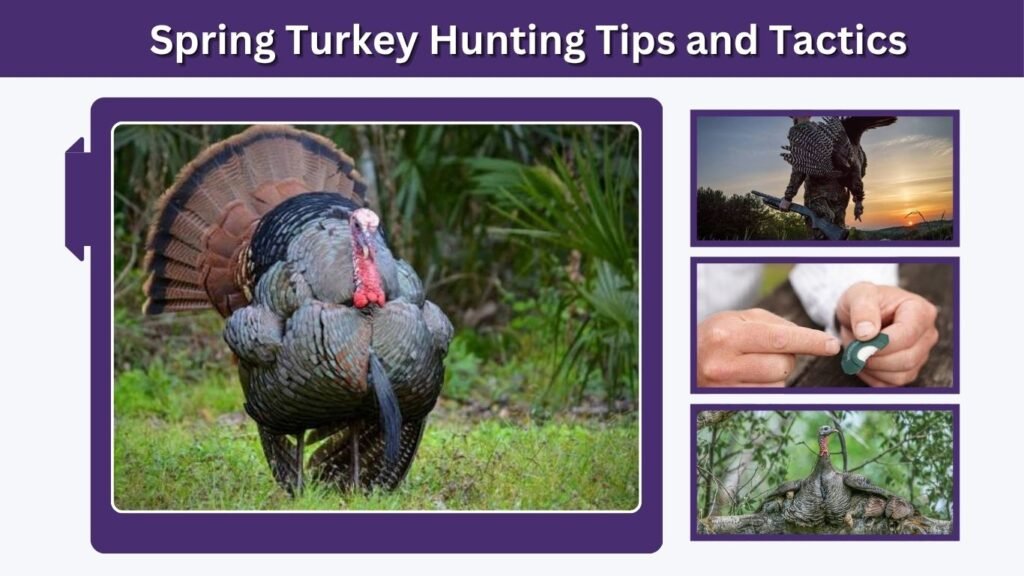
Spring turkey hunting revolves around breeding behavior. Male turkeys often gobble to announce their presence and attract hens. However, their willingness to respond changes as breeding progresses and hunting pressure increases. Understanding these seasonal changes helps hunters adjust their calling, scouting, and positioning throughout spring.
4. Start With Early Morning Hunting
Early mornings can be particularly productive because turkeys begin moving away from their nighttime roosts around daylight.
Scout roosting areas beforehand, then choose a legal and safe hunting location along a likely travel route.
Listen carefully for natural gobbling and avoid unnecessary movement. Allow birds time to leave their roosts without disturbance.
Remember that hunting hours differ by jurisdiction, and some states restrict hunting to certain parts of the day.
5. Adjust Calling During Early Spring
Early spring turkeys may be relatively vocal as flocks reorganize and breeding activity increases.
Listen to the birds before deciding how frequently to call. When hens are vocal, more energetic yelping may sound natural. If nearby birds are quiet, softer calls can be more appropriate.
Avoid assuming that louder calling always works better. Observe each bird’s response and allow sufficient time between calling sequences.
6. Change Your Strategy During Late Spring
Late-season turkey hunting tips often emphasize patience and adapting to changing breeding behavior.
As more hens begin nesting, some gobblers spend additional time traveling independently. These birds may respond to calls during midmorning or afternoon.
Concentrate on feeding areas, shaded woodland edges, and established turkey routes. Use natural calling and avoid unnecessary movement when approaching birds that are difficult to see.
Afternoon and Evening Turkey Hunting Tips
Although morning hunts receive considerable attention, afternoon and evening periods can also offer opportunities where hunting is legal. As temperatures and feeding activity change, turkeys may move through different habitats. Successful hunters recognize these daily patterns and adjust their approach rather than abandoning an area when gobbling activity decreases.
7. Focus on Feeding Areas During Afternoon Hunts
Afternoon turkey hunting tips often focus on identifying places where birds feed or rest.
Warm conditions may push turkeys toward shaded areas, while cooler weather can encourage more daytime movement.
Look for established feeding locations, forest openings, and travel corridors. Quietly observe these areas and wait for natural bird activity.
Afternoon turkeys may be less vocal, so avoid relying entirely on gobbling sounds to locate them.
8. Plan Evening Hunts Around Turkey Movements
Evening turkey hunting requires understanding how birds return toward their roosting areas.
Turkeys often feed before moving toward suitable nighttime trees. Watching travel corridors from a safe distance can reveal useful patterns.
When evening hunting is legal, select a location away from the roost itself to reduce unnecessary disturbance.
Never assume shooting is permitted until sunset; many jurisdictions end legal shooting hours earlier.
9. Adapt Your Approach During Rainy Weather
Rain can change turkey behavior, visibility, and communication.
During light or moderate rainfall, birds may spend more time in open fields, pastures, or woodland openings, although their behavior varies by location.
Consider these rainy-day turkey hunting tips:
- Wear waterproof clothing and suitable boots.
- Observe field edges and accessible open areas.
- Listen carefully because rainfall can make distant calls harder to hear.
- Protect equipment and keep a dry change of clothing available.
- Stop hunting when lightning or other dangerous weather develops.
Wet conditions are not automatically unproductive, but safety should always come first.
Fall Turkey Hunting Tips for Better Results
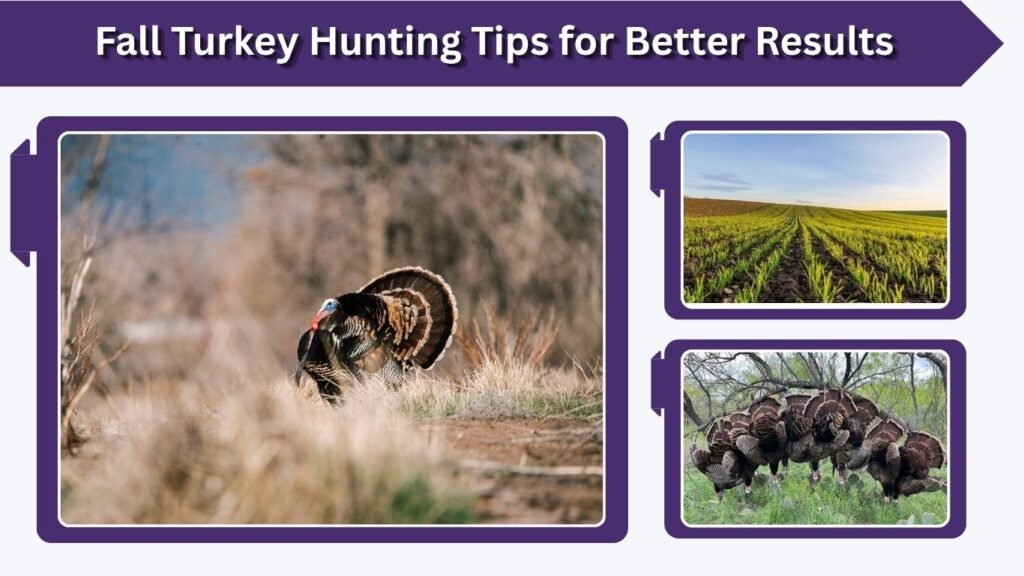
Fall turkey hunting differs from spring hunting because breeding activity is no longer the main influence on bird behavior. Wild turkeys commonly gather in flocks and concentrate on finding food. Hunters must therefore pay closer attention to food availability, changing travel routes, and flock communication instead of depending primarily on gobbling.
10. Find Reliable Fall Food Sources
During fall, turkeys search for acorns, seeds, fruits, insects, and agricultural leftovers.
These food sources can influence where flocks gather and how frequently they visit particular locations.
Examine oak forests, harvested fields, and natural feeding areas for signs of repeated activity. Fresh scratching and tracks can indicate recent turkey movement.
Continue scouting throughout the season because flock locations may change as food availability shifts.
11. Learn Fall Turkey Calling Patterns
Fall turkeys often communicate through flock-related sounds rather than the breeding-focused exchanges common in spring.
Younger birds may produce kee-kee calls, while hens use yelps and clucks to maintain contact.
Listen carefully to determine which sounds nearby birds are making before attempting a response.
Understanding these vocalizations helps hunters recognize flock activity and avoid making calls that do not fit the situation.
Public Land and Archery Turkey Hunting Tips
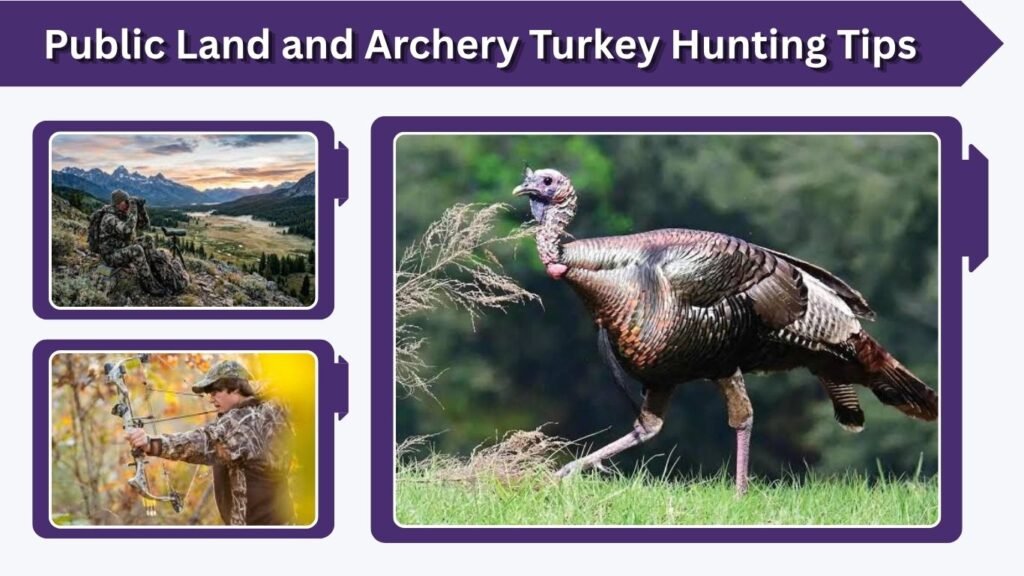
Public land and archery hunting introduce additional challenges involving hunting pressure, access, equipment preparation, and shot accuracy. Hunters may encounter other people or birds that have already experienced repeated calling. Thoughtful preparation and responsible decision-making are particularly important in these situations.
12. Explore Less Crowded Public Hunting Areas
Public land turkey hunting tips frequently emphasize scouting multiple locations rather than relying on one familiar spot.
Popular access points may receive significant hunting pressure, especially during opening weekends.
Consider visiting during less crowded weekdays and observing areas farther from heavily used trails, where access and physical ability permit.
Always respect property boundaries and remain particularly cautious when other hunters may be nearby.
13. Prepare Carefully for Bow Hunting
Bow hunting turkeys require precise shot placement and consistent shooting ability.
Practice regularly using appropriate equipment and targets designed for turkey anatomy.
Select legal, compatible arrow tips or broadheads suited to your bow and hunting regulations. Practice with your hunting setup to understand its performance.
A ground blind may help conceal the movement involved in drawing a bow, but it does not replace accurate shooting and careful target identification.
14. Use Decoys Carefully
Turkey decoys can attract attention, especially during the spring breeding season.
However, their effectiveness depends on turkey behavior, location, and hunting pressure.
Place decoys only where they can be used safely and legally. Avoid locations where other hunters might mistake realistic decoys for live birds.
Transport decoys are completely covered, and never carry an exposed turkey decoy in a way that could be mistaken for a real bird.
15. Always Prioritize Turkey Hunting Safety
No hunting tactic is more important than maintaining safe firearm or archery practices.
Follow these essential safety rules:
- Positively identify the entire bird before considering a shot.
- Know what is in front of and beyond your target.
- Never stalk turkey sounds or movement.
- Avoid exposed red, white, and blue clothing that resembles turkey coloration.
- Keep firearms pointed in a safe direction and fingers off triggers until ready to shoot.
- Wear required hunter orange when moving or transporting harvested birds.
- Follow hunting licenses, seasons, bag limits, and reporting requirements.
If another hunter approaches, announce your presence clearly without sudden movements. Safety must remain the priority regardless of hunting conditions.
FAQs
1. What are the best turkey hunting tips for beginners?
Beginners should focus on preseason scouting, learning basic turkey calls, selecting safe hunting positions, and practicing patience. Understanding bird behavior is generally more valuable than investing in expensive equipment.
2. What is the best time of day to hunt turkeys?
Early mornings are often productive during spring because gobblers may become vocal around daylight. Midmorning and afternoon can also offer opportunities, depending on seasonal behavior and legal hunting hours.
3. How do you hunt turkeys during the late season?
Late-season hunters should scout regularly, watch for changes in feeding activity, and adjust calling techniques. Patience can be especially helpful when turkeys become less responsive after repeated hunting pressure.
4. Is turkey hunting good during rainy weather?
Light rain does not necessarily prevent successful turkey hunting. Turkeys may visit open areas during wet conditions, making scouting and observation useful. Heavy storms and lightning are reasons to stop hunting.
5. What is the biggest mistake turkey hunters make?
One common mistake is moving or calling too frequently without understanding nearby turkey behavior. Another serious mistake is failing to positively identify a target. Patience, careful observation, and safe hunting practices help prevent these problems.
