
Turkey hunting for beginners can feel challenging, especially when you are unfamiliar with wild turkey behavior, calling techniques, and hunting equipment. However, learning a few basic skills can make your first hunting experience safer and more rewarding. From choosing the right gear to understanding spring and fall hunting strategies, proper preparation makes a significant difference. This beginner-friendly guide explains how to hunt wild turkeys, locate promising hunting areas, use basic calls, and avoid common mistakes.
Understanding the Basics of Turkey Hunting
Turkey hunting involves locating wild turkeys, understanding their movements, and using appropriate hunting methods to create a safe, legal opportunity. Unlike some other game animals, turkeys have excellent eyesight and quickly notice unusual movement. Beginners should learn their habitat preferences, daily activities, and seasonal behavior before planning their first hunting trip.
Understanding Wild Turkey Behavior
Wild turkeys generally spend their nights roosting in trees and move to the ground around daylight. During the day, they search for food, travel through wooded areas, and visit open fields.
Male turkeys, called toms or gobblers, become especially vocal during the spring breeding season. Their gobbling helps hunters locate them.
Best Time to Hunt Turkeys
Spring is particularly popular because breeding males respond to turkey calls. Early mornings are often productive as birds leave their roosting areas.
Fall hunting is different because turkeys spend more time traveling in flocks and searching for food.
Exact hunting seasons and permitted hours depend on local regulations.
How to Prepare for Your First Turkey Hunt
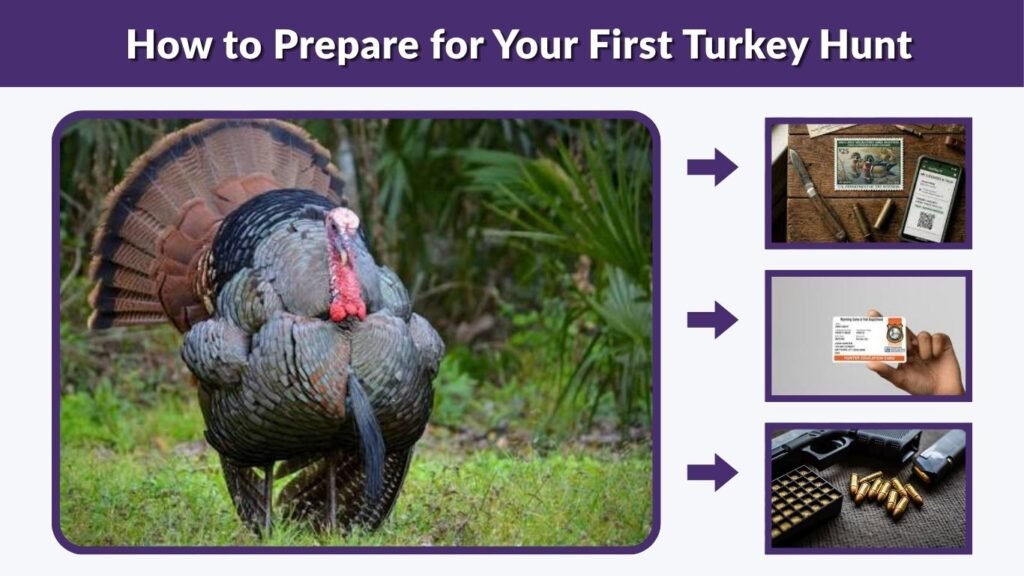
Successful turkey hunting begins before entering the woods. Beginners should understand hunting regulations, scout suitable areas, and practice the skills needed for a safe experience. Preparing ahead of time also helps reduce unnecessary movement and confusion during an actual hunt.
Check Hunting Licenses and Regulations
Before hunting, review the regulations published by your state wildlife agency.
Important requirements may include:
- A valid hunting license and turkey permit.
- Hunter education certification when required.
- Legal hunting dates and shooting hours.
- Permitted weapons and ammunition.
- Bag limits and legal turkey identification.
- Landowner permission for private property.
- Harvest tagging and reporting requirements.
Regulations vary considerably by location, so never assume rules from another state apply.
Scout Turkey Hunting Locations
Scouting involves observing turkey activity before hunting season. Look for tracks, droppings, scratched leaves, feathers, and locations where turkeys regularly feed.
Woodland edges, agricultural fields, and established travel routes can be useful scouting locations.
Visit potential hunting areas from a distance and observe bird movements without disturbing them. Learning where turkeys naturally travel can make hunting more productive.
Essential Turkey Hunting Gear for Beginners
You do not need expensive equipment to begin turkey hunting. A few reliable tools, appropriate clothing, and good preparation are more valuable than purchasing every available accessory. Choose equipment suited to the hunting environment, weather conditions, and legal hunting method.
Beginner Turkey Hunting Equipment Checklist
- Legal hunting equipment: An appropriate shotgun or bow, with compatible ammunition or arrows.
- Camouflage clothing: Clothing that blends into the surrounding habitat.
- Turkey calls: A beginner-friendly box call or slate call.
- Comfortable hunting boots: Suitable footwear for walking through forests and uneven ground.
- Safety equipment: Eye and hearing protection, plus required safety clothing.
- Hunting backpack: Storage for water, snacks, permits, and essential supplies.
- Navigation equipment: A map, compass, or offline GPS application.
- First-aid kit: Basic supplies for unexpected injuries.
Choosing Hunting Equipment
Beginners using shotguns should receive professional instruction and practice at an approved range before hunting. Patterning a suitable legal setup helps establish a reliable, ethical shooting distance.
Bow hunters need additional practice because accurate shot placement is particularly demanding.
Never take a shot beyond your demonstrated effective range.
Turkey Hunting Calls for Beginners
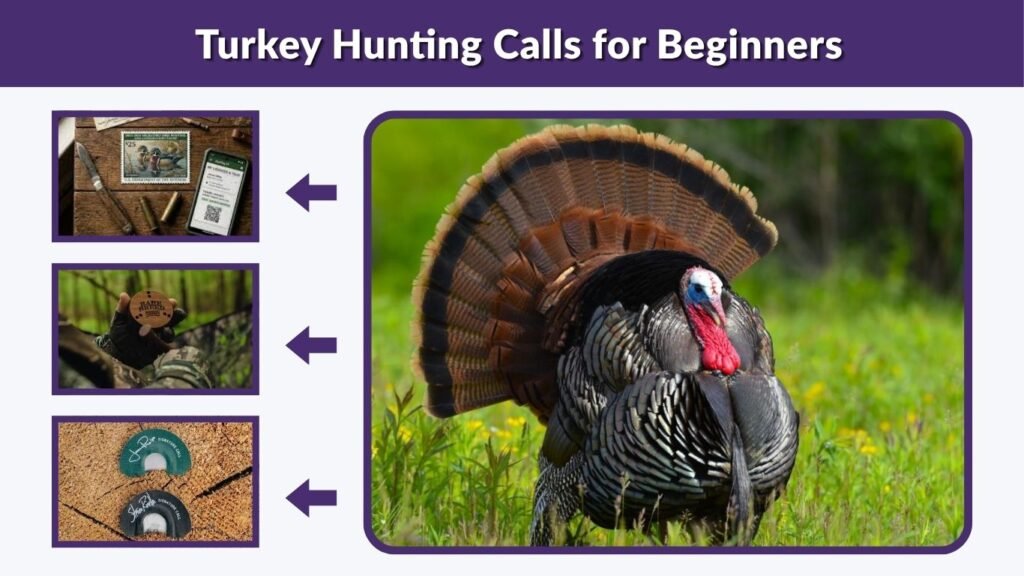
Turkey calls imitate the natural sounds wild turkeys use to communicate. Learning basic calling techniques is an important part of spring turkey hunting because hunters often imitate hens to attract male turkeys. Beginners should focus on producing realistic sounds instead of attempting complicated calling sequences.
Types of Turkey Calls
Box Call
A box call produces turkey sounds by sliding a wooden paddle across a wooden box. It is generally easy for beginners to learn.
Slate Call
Also called a pot call, this tool uses a striker against a friction surface. It can produce soft yelps, clucks, and purrs.
Diaphragm Call
A diaphragm or mouth call allows hands-free calling but requires more practice to control sound and rhythm.
Basic Calling Techniques
Begin by learning three common turkey vocalizations.
- Yelp: A series of notes frequently used by hens to communicate.
- Cluck: A short, simple contact sound.
- Purr: A soft sound commonly associated with relaxed birds.
Practice listening to real turkey vocalizations before attempting to imitate them. Start with quiet calls and avoid calling constantly. The National Wild Turkey Federation also identifies excessive calling as a common hunting mistake.
Best Turkey Hunting Tactics for Beginners
Effective turkey hunting tactics change with the season, weather, hunting pressure, and bird activity. Instead of relying on one method, beginners should learn how turkeys respond to calls, how to select safe hunting positions, and when patience is more useful than movement.
Spring Turkey Hunting Tips for Beginners
During spring, male turkeys frequently gobble and respond to hens. Hunters commonly listen for gobbling before choosing a suitable location.
Find a safe position with a substantial tree behind you, establish clear visibility, and remain still.
Soft calling may attract a nearby gobbler, but repeated loud calling is not always productive. Be patient because birds sometimes approach quietly.
Avoid following gobbling sounds through thick vegetation, where another hunter could be calling.
Fall Turkey Hunting Tips for Beginners
Fall turkey hunting focuses more on flock movements and feeding behavior than spring breeding activity.
Look for turkey tracks, feeding signs, and flocks traveling through hardwood forests or agricultural areas.
Calls that imitate flock communication, including yelps and kee-kee sounds, can be useful.
Fall turkey hunting requires flexibility because flock locations and travel patterns can change depending on available food.
Bow Hunting Turkey for Beginners
Bow hunting requires excellent accuracy, patience, and familiarity with turkey anatomy.
A ground blind can help conceal the movement involved in drawing a bow. Practice from realistic shooting positions and use suitable legal archery equipment.
Beginners should establish their effective shooting range before hunting rather than relying on estimates.
How to Turkey Hunt for Beginners: Step-by-Step Guide
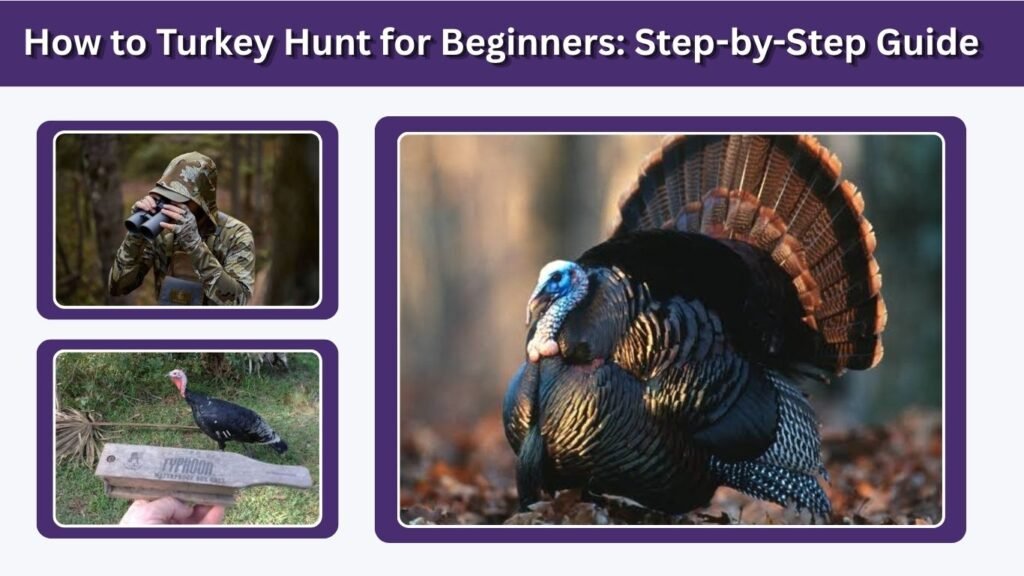
Your first turkey hunt should follow a simple, organized plan. Establish a legal hunting location, practice your calls, and prepare equipment before the trip. A careful approach reduces unnecessary disturbance and helps you focus on the experience.
- Choose a hunting area: Select accessible land where turkey hunting is permitted.
- Scout before hunting: Observe feeding areas, travel routes, and roosting activity.
- Prepare your equipment: Check your gear, navigation tools, and required documentation.
- Arrive early: Reach your selected location carefully, following permitted hunting hours.
- Set up safely: Choose a position with a clear field of view and a suitable backstop for your body.
- Call patiently: Use natural turkey vocalizations and listen for responses.
- Identify your target: Verify the entire bird, its legal status, and what lies beyond it before considering any shot.
- Follow harvest rules: Properly tag, report, and handle harvested turkeys as required.
Common Turkey Hunting Mistakes and Safety Tips
Mistakes are part of learning, but turkey hunting requires particular attention to safety. Because hunters use camouflage and imitate bird sounds, another hunter may be closer than expected. Understanding basic safety principles is essential for anyone entering turkey habitat.
Mistakes Beginners Should Avoid
- Calling continuously without listening for approaching birds.
- Moving frequently instead of waiting patiently.
- Skipping preseason scouting.
- Using unfamiliar equipment without sufficient practice.
- Overlooking weather changes and navigation planning.
- Attempting shots beyond their proven effective range.
Essential Turkey Hunting Safety Rules
Always keep firearms pointed in a safe direction and treat them as loaded. Never shoot at movement, sound, or an unidentified shape.
Do not stalk turkey calls, and avoid wearing exposed red, white, or blue clothing that could resemble a gobbler’s head.
If you encounter another hunter, announce your presence clearly rather than waving or making sudden movements.
Follow all applicable hunter-orange requirements and exercise extra caution when carrying decoys.
FAQs
1. Is turkey hunting difficult for beginners?
Turkey hunting can be challenging because wild turkeys detect movement easily and behave unpredictably. However, scouting, patience, calling practice, and guidance from experienced hunters can make the learning process easier.
2. What is the best turkey call for beginners?
A box call is often the easiest choice because it produces recognizable turkey sounds with relatively little practice. Slate calls are another beginner-friendly option.
3. What is the best time of day for turkey hunting?
Early morning is often productive, particularly during spring when male turkeys become vocal around daylight. Local hunting hours and turkey activity ultimately determine suitable opportunities.
4. Can beginners hunt turkeys without decoys?
Yes. Decoys are optional in many hunting situations. Hunters can attract turkeys through calling and positioning without using additional visual equipment.
5. Should beginners start turkey hunting in spring or fall?
Spring is often a suitable starting point because gobbling males can be easier to locate by sound. Fall offers valuable opportunities to learn flock behavior and feeding patterns.
