
A successful turkey hunt begins long before you enter the woods. Whether you’re preparing for spring gobblers or planning a fall hunting trip, having the right equipment makes the experience safer, more comfortable, and better organized. From camouflage clothing and turkey calls to hunting licenses and emergency supplies, every item serves a purpose. This complete turkey hunting checklist covers essential gear, seasonal preparations, archery equipment, and practical tips to help you get ready for your next adventure.
Essential Turkey Hunting Gear Checklist
Having the proper turkey hunting equipment helps you stay prepared for different weather conditions, hunting locations, and unexpected situations. While experienced hunters may prefer lightweight setups, beginners benefit from carrying a few additional essentials. Before heading outdoors, organize your equipment into clothing, hunting tools, communication devices, and safety supplies to ensure nothing important gets left behind.
Hunting Licenses and Legal Requirements
Before your hunt, confirm that you have the necessary documents and understand the regulations in your hunting area.
- Valid hunting license
- Turkey hunting permit or tag, if required
- Hunter education certification, if applicable
- Property access permission
- Current hunting regulations
Check season dates, legal hunting hours, permitted equipment, bag limits, and harvest reporting requirements. Regulations vary significantly between states and hunting zones.
Camouflage Clothing and Footwear
Wild turkeys have excellent eyesight and can detect movement quickly. Suitable clothing helps conceal your presence while protecting you against changing outdoor conditions.
- Camouflage jacket and pants
- Camouflage face mask
- Lightweight hunting gloves
- Waterproof hunting boots
- Moisture-wicking socks
- Rain jacket or waterproof outerwear
- Hunter-orange clothing for travel or when required
Choose quiet, comfortable fabrics that match your surroundings. Avoid exposed red, white, or blue accessories that could resemble a turkey’s head.
Hunting Weapons and Accessories
Your turkey hunting gear checklist should include properly maintained equipment suited to your chosen hunting method.
- Legal shotgun or hunting bow
- Appropriate ammunition or arrows
- Compatible shotgun choke, if applicable
- Hearing and eye protection
- Protective firearm or bow case
- Basic maintenance supplies
Pattern-test your shotgun with its intended ammunition and choke before hunting. Bowhunters should check their equipment and practice under realistic field conditions.
Always follow firearm safety procedures and maintain control of your equipment.
Turkey Calls, Decoys, and Field Equipment
Turkey calls and decoys can be useful tools, particularly during spring hunting.
- Box, slate, or diaphragm turkey call
- Turkey decoys, where permitted
- Turkey hunting vest or backpack
- Comfortable seat cushion
- Binoculars
- Water and snacks
- Insect repellent and tick protection
Beginners may find box calls easier to operate, while experienced hunters often carry several call types. Keep equipment organized so you can access it without unnecessary movement.
Spring Turkey Hunting Checklist
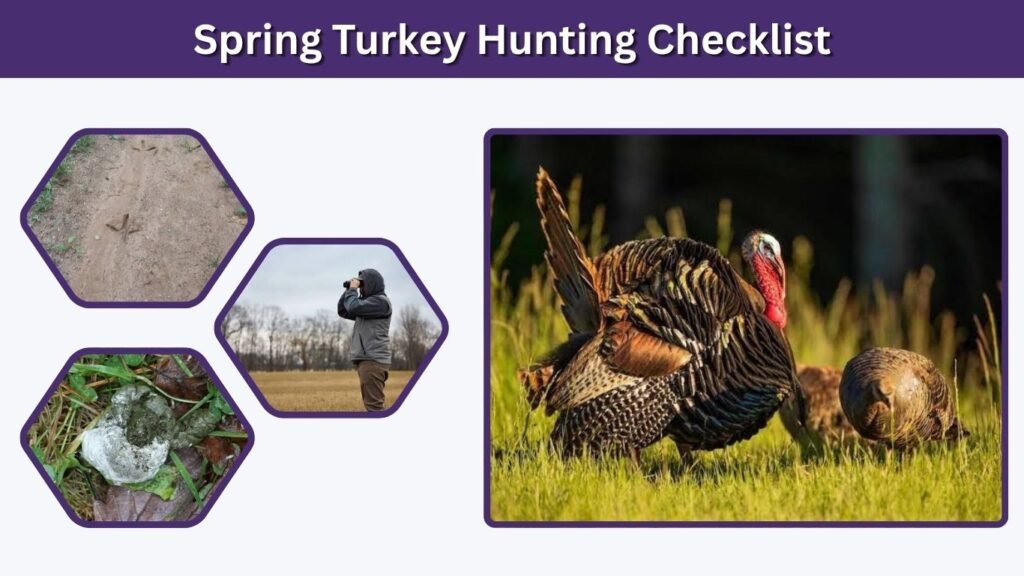
Spring turkey hunting generally focuses on the breeding season, when male turkeys become more vocal and display courtship behavior. Preparation should emphasize scouting, comfortable concealment, reliable calls, and equipment suitable for unpredictable spring weather. Because hunting opportunities and legal restrictions vary by location, review the latest wildlife agency regulations before finalizing your spring hunting checklist.
Preseason Scouting and Equipment Preparation
Start scouting several weeks before opening day. Look for turkey tracks, droppings, feathers, roosting areas, and feeding locations. Observe birds from a safe distance without disturbing their normal activities.
Inspect your shotgun or bow, test your equipment, and practice using your turkey calls.
Spring temperatures can change quickly, so carry layered clothing and waterproof protection. Inspect hunting boots, check flashlight batteries, and make sure navigation equipment works properly.
Opening Morning Preparation
Pack your hunting vest the night before. Keep your license, calls, water, and essential equipment in accessible compartments.
Plan your route, confirm legal hunting hours, and check weather forecasts.
Arrive early enough to reach your designated location safely without rushing. Avoid unnecessary movement near other hunters, and never approach a turkey sound without positively identifying its source.
Patience, careful observation, and responsible behavior are more important than carrying excessive equipment.
Fall Turkey Hunting Checklist
Fall turkey hunting requires a slightly different approach because birds often gather in flocks and spend considerable time searching for food. Hunters may encounter cooler temperatures, fallen leaves, and changing feeding patterns. A fall turkey hunting checklist should prioritize weather-appropriate clothing, scouting tools, and safety equipment, especially where deer and turkey seasons overlap.
Fall Clothing and Equipment
Pack insulated layers, weather-resistant outerwear, sturdy boots, and gloves appropriate for the forecast.
A lightweight backpack can carry snacks, drinking water, binoculars, emergency supplies, and additional clothing.
In many regions, hunter-orange requirements become especially important during overlapping hunting seasons. Check local rules rather than assuming the same clothing regulations apply throughout the year.
Scouting and Fall Hunting Preparation
Look for turkey activity near hardwood forests, agricultural fields, and natural feeding areas. Fresh scratching in leaf litter, tracks, and droppings can indicate recent flock activity.
Fall birds may travel farther between feeding locations than spring gobblers, making scouting especially valuable.
Carry suitable turkey calls and study local restrictions concerning decoys, legal birds, hunting methods, and seasonal access.
Archery Turkey Hunting Checklist

Archery turkey hunting requires specialized preparation because drawing a bow involves more movement than preparing a shotgun. Hunters need reliable equipment, suitable concealment, and confidence in their shooting ability. Whether using a compound bow or another legal archery setup, practice from realistic hunting positions and inspect every component before entering the field.
Essential Bowhunting Equipment
An archery turkey hunting checklist should include a properly tuned bow, compatible arrows, legal broadheads, a release aid when appropriate, and a secure quiver.
Inspect bowstrings, sights, arrow shafts, and other components for damage.
Practice shooting from seated positions and confirm that your equipment operates safely. Never use damaged arrows or equipment that has not been properly inspected.
Ground Blind and Concealment
A portable ground blind can help conceal the movement necessary to draw a bow.
Before hunting, practice positioning yourself comfortably inside the blind and check that your bow has adequate clearance.
If using turkey decoys, follow local regulations and position them with other hunters’ safety in mind. Transport decoys fully covered to prevent dangerous misunderstandings.
Turkey Hunting Trip Checklist
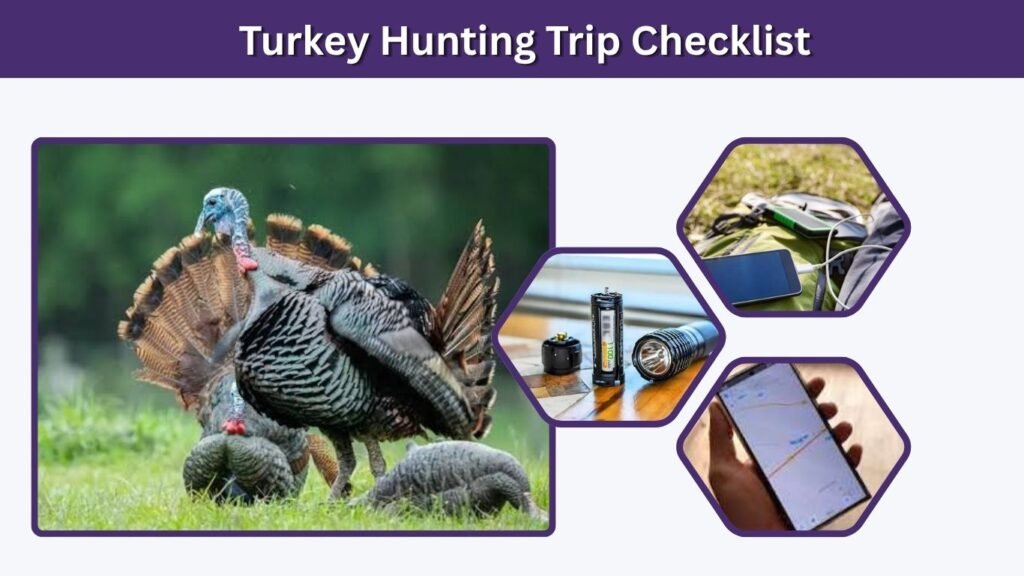
A well-organized turkey hunting trip involves more than choosing the right gear. Transportation, weather conditions, property boundaries, communication, and emergency preparedness all deserve attention. Reviewing these details before leaving home reduces the risk of forgotten supplies and unnecessary complications, especially when traveling to unfamiliar hunting areas or planning an extended outdoor trip.
Navigation and Emergency Supplies
Carry a charged phone, offline maps or GPS device, flashlight, spare batteries, first-aid kit, and emergency whistle.
Bring sufficient drinking water and food for the expected duration of your trip.
Tell a trusted person where you will be hunting and when you expect to return. Consider carrying a portable charger and extra clothing when visiting remote locations.
Safety and Harvest Preparation
Always identify your target and what lies beyond it before taking a shot. Never shoot toward unexplained sounds or movement.
Remain aware of other hunters, and use a clear human voice to announce your presence when necessary.
Carry appropriate supplies for safely transporting a harvested turkey. Follow local tagging and reporting procedures, and cool harvested meat promptly.
Quick Turkey Hunting Packing Checklist
Before leaving home, complete one final equipment inspection. A simple packing review helps prevent forgotten documents, missing accessories, and avoidable delays. Adjust this checklist according to your season, hunting method, and expected weather conditions. You may not need every accessory, but legal documents, safe equipment, navigation tools, and basic emergency supplies should always receive priority.
- Hunting license and required permits
- Legal hunting weapon and accessories
- Camouflage clothing and boots
- Turkey calls and permitted decoys
- Hunting vest or backpack
- Drinking water and snacks
- GPS device or offline maps
- First-aid kit and flashlight
- Weather protection
- Phone and emergency contacts
- Harvest tagging and transport supplies
- Final equipment and safety inspection
FAQs
What Equipment Do I Need for My First Turkey Hunt?
Beginners generally need a hunting license, legal hunting weapon, suitable ammunition or arrows, camouflage clothing, comfortable boots, turkey calls, and basic safety supplies. A hunting vest and seat cushion can improve comfort.
What Should Be on a Spring Turkey Hunting Checklist?
Include turkey calls, camouflage clothing, appropriate hunting equipment, insect protection, rain gear, scouting information, and required licenses. Test your equipment and check local spring hunting regulations before opening day.
Do I Need Turkey Decoys for Hunting?
No. Turkey decoys are optional. They may help attract birds in certain situations, but hunters can also hunt successfully without them. Always verify local decoy regulations and follow appropriate safety precautions.
What Should I Pack for a Fall Turkey Hunt?
Pack weather-resistant clothing, warm layers, sturdy boots, binoculars, turkey calls, navigation equipment, and emergency supplies. Check whether hunter-orange clothing is required during overlapping hunting seasons.
How Do I Prepare My Turkey Hunting Gear Before a Trip?
Inspect your equipment, practice with your hunting weapon and turkey calls, check weather forecasts, charge electronic devices, and organize your supplies. Confirm licenses, hunting dates, and property access before traveling.
