
Texas offers duck hunting across coastal marshes, inland wetlands, lakes, reservoirs, and managed public hunting areas. However, season dates differ among the High Plains Mallard Management Unit, North Zone, and South Zone. Hunters must also carry the correct licenses, endorsements, certifications, and stamps. This guide covers the official 2026–2027 Texas duck hunting season dates, bag limits, public-land options, legal equipment, and essential rules.
Texas Duck Hunting Season Dates for 2026–2027
The regular Texas duck season is divided into zones, with each zone having its own opening dates and midseason closure. Texas also provides special waterfowl hunting days for eligible youths, veterans, and active-duty military personnel.
| Season and zone | Official dates |
| September teal season—statewide | September 19–27, 2026 |
| High Plains regular duck season | October 24–25 and October 30, 2026–January 31, 2027 |
| North Zone regular duck season | November 14–29 and December 5, 2026–January 31, 2027 |
| South Zone regular duck season | November 7–29 and December 12, 2026–January 31, 2027 |
| High Plains youth/veterans season | October 17–18, 2026 |
| North Zone youth/veterans season | November 7–8, 2026 |
| South Zone youth/veterans season | October 31–November 1, 2026 |
These dates were published by the Texas Parks and Wildlife Department for the 2026–2027 season. Hunters should check the Outdoor Annual again before traveling because individual public properties may have shorter schedules, designated hunting days, or temporary closures.
Understanding the Texas Duck Hunting Zones
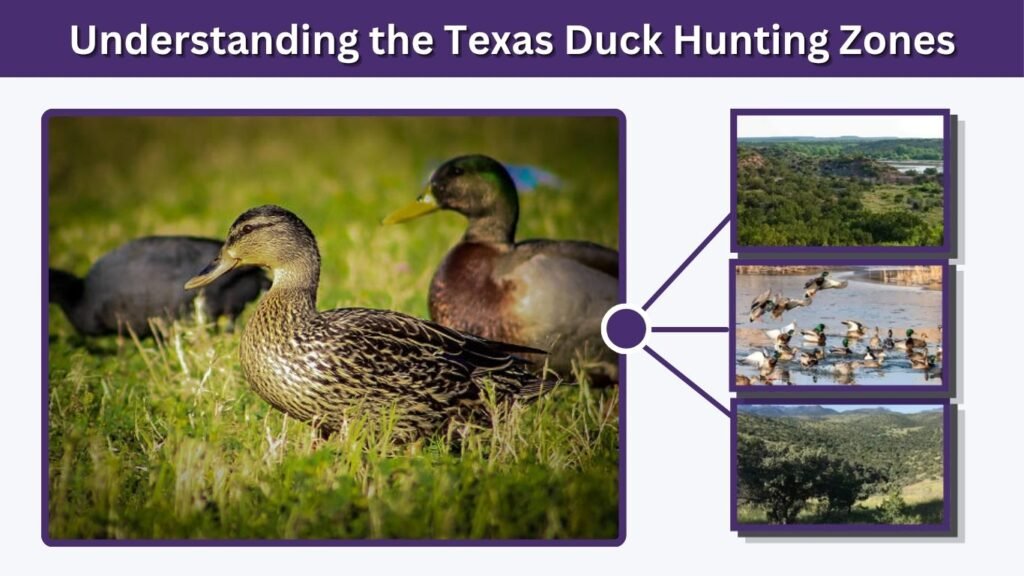
Texas uses three duck zones to provide season structures suited to different regions. Your zone is determined by the location where you hunt, not your home address.
High Plains Mallard Management Unit
This unit covers much of western Texas. Its eastern boundary generally follows highways running from Del Rio through Abilene, Albany, and Vernon before reaching the Oklahoma border.
The High Plains season begins earlier than the North and South zones and includes a short opening segment followed by the main season.
South Zone
The South Zone is generally south of a boundary running from Del Rio along U.S. Highway 90 to San Antonio and then east along Interstate 10 to Louisiana.
This zone includes many coastal duck-hunting destinations and Gulf Coast marshes.
North Zone
The North Zone consists of the portion of Texas outside the High Plains unit and South Zone. Because some counties lie near zone boundaries, hunters should use the official county lookup or zone map before choosing their dates.
What License Do You Need to Hunt Ducks in Texas?

Duck hunters must satisfy both state and federal requirements. A normal hunting license alone is not enough for most adult waterfowl hunters.
Texas Duck Hunting License Checklist
Before hunting, confirm that you have:
- A valid Texas resident or nonresident hunting license
- Texas Migratory Game Bird Endorsement if age 17 or older
- Harvest Information Program certification
- Federal Duck Stamp if age 16 or older
- Annual Public Hunting Permit or another property-specific permit when required
- Proof of hunter education or an approved deferral when applicable
The letters HIP should appear on your license to confirm Harvest Information Program certification. Federal Duck Stamps displayed on qualifying paper or digital Texas licenses satisfy the carrying requirement for the season. A separately purchased physical stamp must be signed and carried as required.
Texas licenses for the 2026–2027 season go on sale on August 15, 2026. Licenses are generally valid until August 31 following purchase unless the license states otherwise.
Hunter Education Requirements
Every Texas hunter, including a nonresident, born on or after September 2, 1971, must complete an approved hunter education course unless legally accompanied under an applicable youth provision or adult deferral.
Hunters must carry printed or electronic proof of certification or deferral while hunting. Certain military personnel, veterans, and qualifying law-enforcement officers may be exempt.
Texas Duck Bag Limits
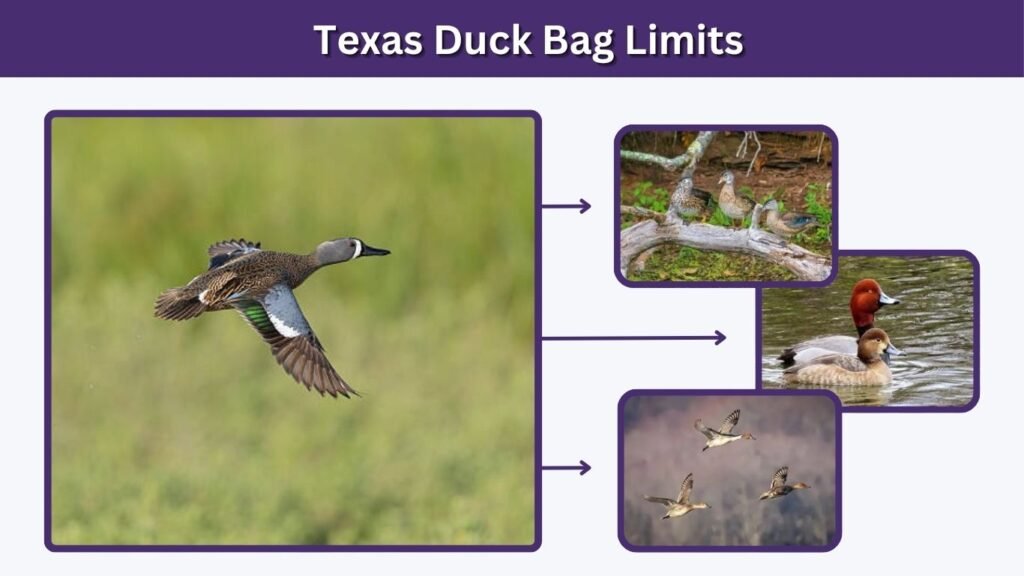
During the regular duck season, the daily limit is six ducks in the aggregate, including mergansers. However, restrictions apply to individual species.
A daily bag may include no more than:
- Five mallards, including no more than two hens
- Three wood ducks
- Three pintails
- Two redheads
- Two canvasbacks
- One scaup
- One dusky duck
- Six of other unrestricted duck species
The term “dusky duck” includes mottled ducks, Mexican ducks, black ducks, and their hybrids. Dusky duck hunting is closed during the first five days of the regular season in each zone. The possession limit is three times the daily bag limit.
The September teal season has a daily limit of six teal in the aggregate. Hunters must identify birds carefully because the early season is limited to teal.
Texas Duck Hunting Hours and Equipment Rules
Legal shooting hours for ducks and teal run from one-half hour before sunrise until sunset. Hunters should calculate sunrise for their exact hunting location rather than relying on the time for a distant city.
Shotgun Requirements
A shotgun is the only legal firearm for migratory game bird hunting in Texas. It must:
- Be no larger than 10 gauge
- Be fired from the shoulder
- Hold no more than three shells
- Have an approved plug when its normal capacity exceeds three shells
Lawful archery equipment, falconry, dogs, artificial decoys, and manual or mouth-operated calls may also be used where permitted.
Nontoxic Shot
Waterfowl hunters cannot possess shells loaded with lead shot while hunting. Approved nontoxic materials include steel, bismuth-tin, tungsten-based loads, and other materials approved by the U.S. Fish and Wildlife Service.
Boats and Baiting
Hunters may shoot from a floating craft only after all movement caused by the motor or sail has stopped. The motor must be turned off and sails furled before shooting.
Hunting ducks over bait is illegal. Hunters are responsible for determining whether an area has been baited, even when someone else placed the grain or feed. A previously baited location remains prohibited until the required waiting conditions have been met.
Public Duck Hunting in Texas
Texas provides public waterfowl opportunities through wildlife management areas, state parks, leased properties, and lands managed with other agencies. Access requirements vary by property.
Annual Public Hunting Permit
Many walk-in public hunting areas require an Annual Public Hunting Permit in addition to a valid hunting license, endorsements, HIP certification, and Federal Duck Stamp.
Some properties issue positions through:
- Online drawings
- E-postcard drawings
- On-site lotteries
- First-come, first-served registration
- Regular daily permits
A permit does not guarantee access every day. Each area can establish its own check-in time, hunting days, compartment limits, and equipment restrictions.
Public Gulf Coast Hunting Areas
Several managed coastal properties offer notable public duck hunting opportunities:
Mad Island WMA near Matagorda contains freshwater and saline wetland habitats. Hunting positions may be distributed through an early-morning drawing.
Justin Hurst WMA offers marshes, wetland impoundments, coastal prairie, and numerous designated hunting locations.
Guadalupe Delta WMA near Victoria includes freshwater and brackish marsh units. Depending on the unit and date, access may be handled through self-registration, staffed check stations, or first-come availability.
Public schedules can change annually, so hunters should consult the newest Public Hunting Lands Map Booklet rather than relying on information from a previous season.
Guided Hunts, Clubs, and Private Leases
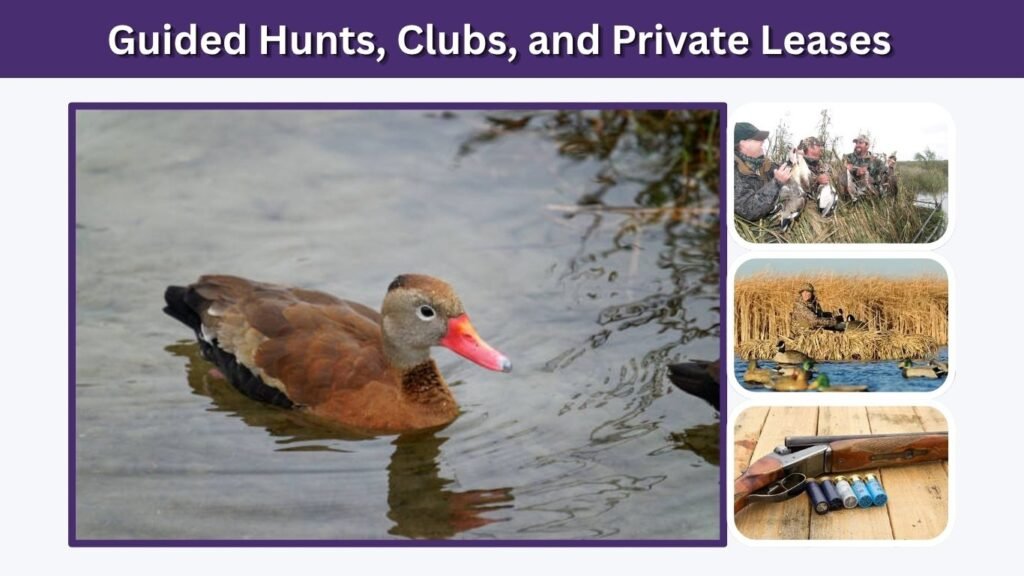
Guided Texas duck hunts can be useful for beginners, visitors, and hunters who do not own decoys, boats, trained dogs, or access to suitable land. Outfitters operate in regions such as the Gulf Coast, North Texas, East Texas, and the Panhandle.
Before booking, ask whether the price includes:
- Private-land access
- Guide service
- Decoys and blinds
- Transportation within the property
- Bird cleaning
- Lodging or meals
- Shotgun or ammunition
- Cancellation policies
A private lease can provide greater scheduling freedom but usually requires a larger financial commitment. Confirm that the person offering the lease has authority to grant hunting access and obtain the boundaries and rules in writing.
Best Time to Hunt Ducks in Texas
Early teal season provides warm-weather hunting and opportunities for blue-winged teal moving through Texas. The regular season brings a wider variety of ducks as migration progresses.
Cold fronts, changing winds, rainfall, wetland conditions, and hunting pressure can affect bird movement. Scouting before the hunt is often more valuable than returning automatically to a location that produced ducks earlier in the season.
FAQs
When does Texas duck hunting season start?
The first statewide opportunity is the September teal-only season, beginning September 19, 2026. Regular duck hunting starts October 24 in the High Plains unit, November 14 in the North Zone, and November 7 in the South Zone.
How many ducks can you shoot in Texas?
The regular daily bag limit is six ducks in the aggregate, but individual species restrictions apply. For example, the limit allows no more than five mallards, three pintails, two canvasbacks, and one scaup.
Do I need a Federal Duck Stamp in Texas?
Waterfowl hunters age 16 or older generally need a valid Federal Duck Stamp. Hunters must also have a Texas hunting license, HIP certification, and the state migratory game bird endorsement when the age requirement applies.
Can I hunt ducks on public land in Texas?
Yes. Texas offers waterfowl hunting on designated wildlife management areas and other public or leased properties. Many locations require an Annual Public Hunting Permit, registration, an on-site drawing, or a property-specific permit.
Can you use lead shot for duck hunting in Texas?
No. Hunters cannot possess lead-shot shells while hunting waterfowl in Texas. They must use federally approved nontoxic shot, such as steel, bismuth-tin, or an approved tungsten-based alternative.
