
Duck hunting on the Mississippi River offers access to backwater marshes, wooded islands, shallow sloughs, and broad areas of open water. These varied habitats attract both dabbling and diving ducks during fall migration. However, success requires more than placing decoys beside the nearest shoreline. Hunters must understand state boundaries, refuge restrictions, changing water levels, river currents, boat safety, and the daily movements of pressured birds.
Why the Mississippi River Is Popular for Duck Hunting
The Mississippi River lies at the center of one of North America’s major waterfowl migration routes. Approximately 40% of North American waterfowl migrate through the Mississippi Flyway, with many birds stopping in river backwaters to rest and feed.
The Upper Mississippi River National Wildlife and Fish Refuge alone extends for 261 river miles from Wabasha, Minnesota, to Rock Island, Illinois. It protects more than 240,000 acres of floodplain containing islands, marshes, channels, wooded bottoms, and open water.
Hunters may encounter:
- Mallards
- Wood ducks
- Green-winged and blue-winged teal
- Gadwalls
- American wigeon
- Northern pintails
- Northern shovelers
- Canvasbacks
- Lesser scaup
- Ring-necked ducks
- Goldeneyes and buffleheads
Dabbling ducks generally concentrate in shallow backwaters, while diving ducks often gather over deeper, more open water.
Can You Duck Hunt Anywhere on the Mississippi River?
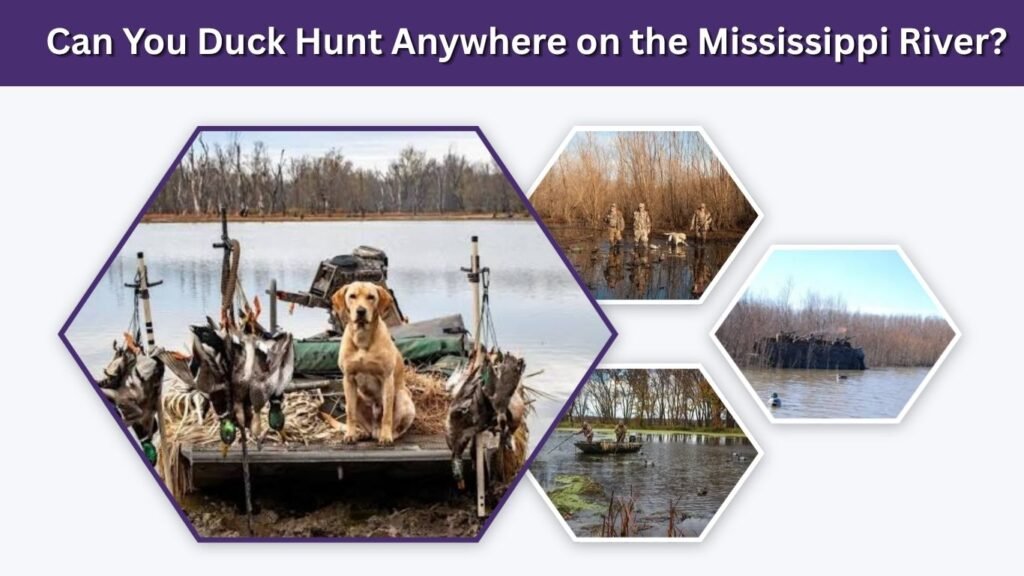
No. The Mississippi River is not automatically open to duck hunting everywhere.
The river passes through or borders multiple states, and hunters must obey the rules of the state in which they are physically hunting. State lines may pass through the river rather than following the shoreline. In much of the Wisconsin–Minnesota boundary area, for example, the commercial navigation channel generally marks the state line.
Check These Requirements Before Hunting
| Requirement | What to verify |
| Hunting location | Which state’s water you are occupying |
| Public access | Whether the shoreline, island or backwater is public |
| Season dates | Current duck zone and season |
| Licenses and stamps | State license, HIP registration and required stamps |
| Refuge restrictions | Closed areas, avoidance zones and special rules |
| Boat hunting rules | Anchoring and shoreline-distance requirements |
| Local ordinances | Firearm-discharge restrictions near developed areas |
Waterfowl hunters generally need a state hunting license and Federal Duck Stamp. Depending on the state, a state waterfowl stamp, HIP registration and additional permits may also be required.
Refuge hunting generally follows state seasons, but individual areas can be closed or restricted to protect migrating birds and public safety. The most restrictive applicable federal, state or local rule applies within the Upper Mississippi River refuge.
Finding the Best River Duck Hunting Locations
The most productive location can change considerably as water levels, wind, food availability, hunting pressure and migration conditions change.
Backwater Sloughs
Protected sloughs provide shallow feeding and resting habitat for mallards, teal, gadwalls, shovelers and wood ducks. Look for aquatic plants, flooded vegetation, exposed mud, acorns and sheltered pockets away from heavy boat traffic.
Island Points and Current Seams
An island point can produce a slower seam where fast water meets a protected pocket. Ducks may follow these edges while moving between feeding and resting areas. Set the landing pocket on the calmer side rather than directly in the strongest current.
Main-Channel Bays
Canvasbacks, scaup, goldeneyes and other diving ducks may use deeper water, especially later in the season. These locations require heavier anchors, reliable boats and extra caution around wind, current and commercial traffic.
Pools 7, 8 and 9
Wisconsin DNR identifies the Mississippi River area from Trempealeau to Lynxville, including Pools 7, 8 and 9, as having abundant waterfowl food and large numbers of ducks. These pools also receive substantial hunting pressure, making scouting particularly important.
How to Scout River Ducks
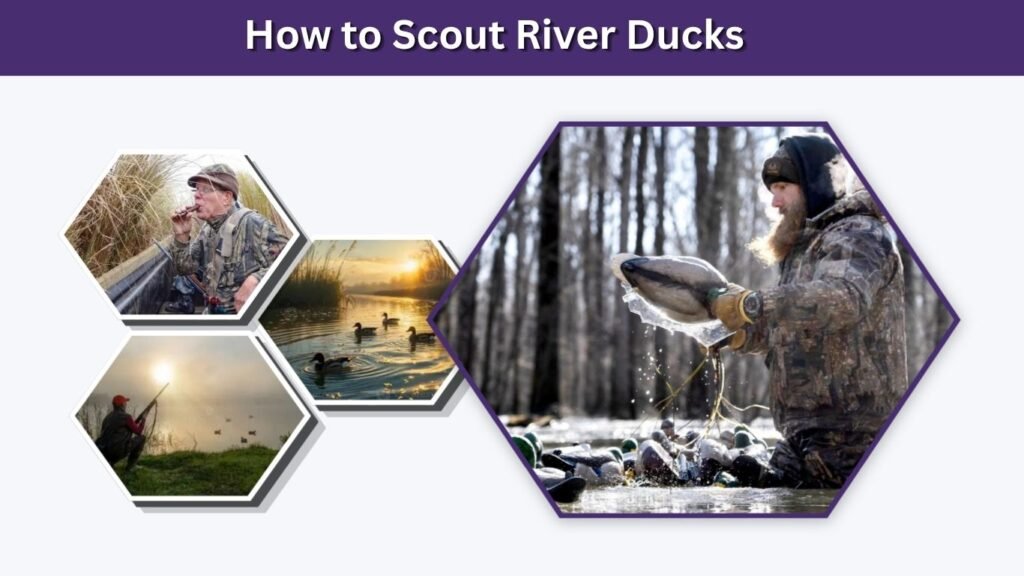
Begin scouting several days before the planned hunt rather than relying on last season’s location.
Observe where birds:
- Enter a backwater after sunrise
- Rest during the middle of the day
- Feed during the afternoon
- Cross island points or narrow channels
- Move when boats disturb nearby areas
Mark safe boat routes in daylight. Note submerged timber, wing dams, sandbars, shallow cuts and floating debris. Water levels can expose hazards that were submerged during an earlier visit.
Avoid repeatedly driving through resting flocks. Excessive disturbance may push ducks away from the entire section of river.
River Duck Decoy Spreads
A successful spread should match the species, current and amount of available water.
| Hunting situation | Suggested approach |
| Small backwater | 12–24 dabbling-duck decoys with an open pocket |
| Island point | Compact J-shaped spread beside the current seam |
| Main-channel divers | Long lines with strong clips and heavy anchors |
| Flooded timber | 6–12 decoys placed in natural openings |
| Heavily pressured area | Smaller, widely spaced and realistic spread |
Position the Landing Pocket Correctly
Ducks normally finish into the wind, so position the blind downwind or slightly crosswind from the open landing pocket. Leave enough space for birds to approach without crossing tightly packed decoys.
Use Sufficient Anchor Weight
Ordinary pond weights may drag in river current. Test every line before legal shooting time and avoid placing loose lines where they could reach the propeller.
Motion can help on calm mornings, but excessive artificial movement may appear unnatural in protected backwaters. Current usually provides enough movement to floating decoys.
Calling and Concealment
River ducks frequently experience considerable hunting pressure. Aggressive calling may attract distant birds but cause cautious flocks to circle without committing.
Begin with a few greeting notes or feeding sounds. Reduce calling when ducks turn toward the spread. Whistles can be useful when targeting teal, pintails, gadwalls and wigeon.
Conceal the boat with vegetation matching the immediate shoreline. Cover straight edges, shiny metal, motors and light-colored faces. Do not cut prohibited vegetation or construct an illegal permanent blind. Refuge rules permit certain temporary or natural-material blinds but prohibit permanent structures and require man-made materials to be removed after the hunt.
Essential Mississippi River Duck Hunting Gear
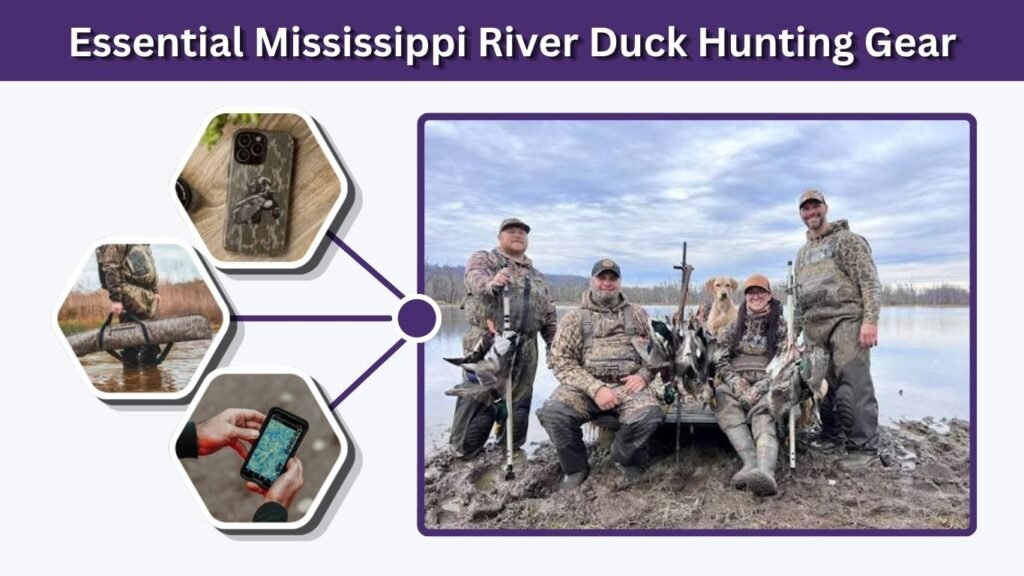
A practical river-hunting kit includes:
- Current hunting licenses, stamps and HIP confirmation
- Approved nontoxic ammunition
- Properly fitted life jackets for hunters and dogs
- Navigation lights and a dependable flashlight
- GPS or offline navigation map
- Charged phone in a waterproof case
- Spare fuel and basic motor tools
- Heavy decoy anchors and replacement line
- Dry clothing in a waterproof bag
- First-aid kit and emergency signaling device
- Duck identification guide
- Reliable method for retrieving downed birds
Carry only what the boat can safely handle. Decoys, hunters, dogs, fuel, batteries and harvested birds can add substantial weight.
Mississippi River Duck Hunting Safety
Large river hunting can become dangerous quickly because of cold water, wind, current, fog, submerged trees and commercial traffic.
Every recreational boat must carry a properly sized, Coast Guard-approved wearable flotation device for each person. Wearing it is much safer than storing it under hunting equipment.
Never overload the boat, keep weight low and evenly distributed, and establish safe shooting zones before loading firearms. Hunters should also watch for rocks, stumps, sandbars, floating debris and sudden weather changes.
Travel slowly before daylight and use required navigation lights. Share your launch location, hunting area and expected return time with someone who is not on the trip.
FAQs
Is duck hunting allowed on the Mississippi River?
Duck hunting is permitted in many areas during open seasons, but not everywhere. State boundaries, private property, wildlife refuges, closed resting areas and local firearm ordinances can restrict access. Confirm the exact hunting location through current state regulations and official refuge maps.
Can I hunt from a boat on the Mississippi River?
Boat hunting is allowed in many sections, but positioning requirements differ. Minnesota’s published rules, for example, allow hunting from an anchored boat on a defined section south of Hastings when the boat is no more than 100 feet from a shoreline, including islands. Hunters must check the latest regulations before relying on this rule.
What is the best time to hunt Mississippi River ducks?
Early mornings commonly provide feeding movement, while late afternoons can be productive when ducks return to resting areas. Cold fronts, strong migration days, changing river levels and hunting pressure can alter the pattern. Scout actual bird movements rather than selecting a location based only on time.
What decoy spread works best for river duck hunting?
A compact J-shaped or hook-shaped spread works well along protected current seams. Use a visible group upwind and leave an open landing pocket near the blind. For diving ducks on open water, long-line spreads with heavier anchors are generally more practical.
Do I need a special Mississippi River hunting permit?
There is no single permit covering the entire Mississippi River. Requirements depend on the state, refuge, wildlife management area and hunting unit. You may need a state license, Federal Duck Stamp, state waterfowl stamp, HIP registration or an area-specific permit.
