
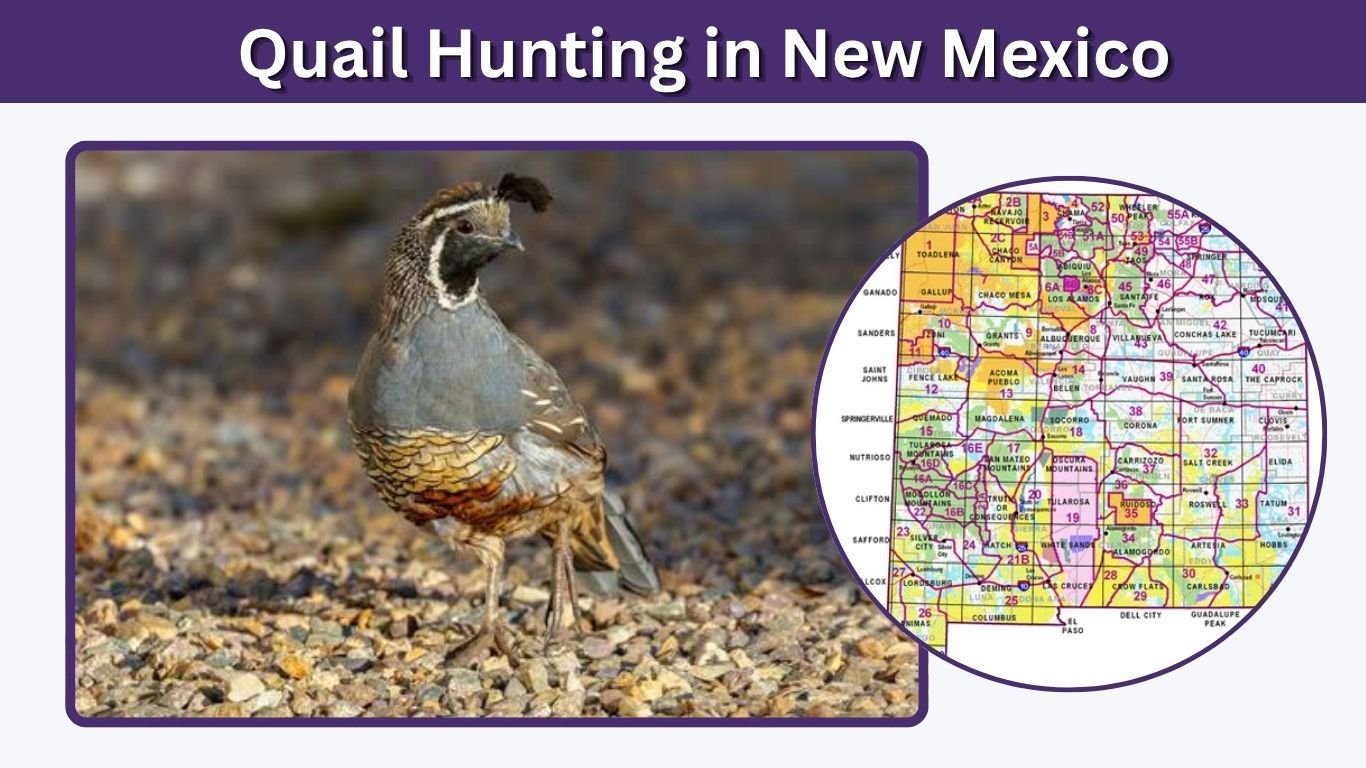
Quail hunting in New Mexico offers exciting opportunities across desert grasslands, rugged foothills, and mountain habitats. The state supports four huntable quail species, including scaled, Gambel’s, Montezuma, and northern bobwhite quail. Whether you’re exploring public hunting lands near Roswell or searching for Mearns quail in southwestern mountains, understanding the right locations, seasons, and hunting techniques is essential. New Mexico also provides extensive public-land access and guided hunting opportunities. This guide covers the 2026–2027 quail hunting season, licensing requirements, productive hunting regions, and practical field tips.
Types of Quail Found in New Mexico
New Mexico is one of the few states where hunters can pursue four different species of quail. Each species occupies particular habitats, ranging from dry desert plains to wooded mountain slopes. Identifying the birds and understanding their preferred environments helps hunters choose suitable locations. Seasonal rainfall significantly influences reproduction and population numbers.
Scaled Quail and Gambel’s Quail
Scaled quail, often called blue quail, are widespread across New Mexico’s open grasslands and semi-arid rangelands. They have distinctive scaled-looking breast feathers and a small head crest.
Gambel’s quail are particularly common in southwestern desert habitats. Their curved head plumes, gray bodies, and reddish-brown markings make them recognizable. They often shelter around brushy washes, mesquite, and desert vegetation.
Montezuma and Northern Bobwhite Quail
Montezuma quail, also called Mearns quail, generally inhabit mountain grasslands and open pine-oak woodlands. These secretive birds often remain concealed in thick grass.
Northern bobwhite quail occur primarily in eastern New Mexico, particularly where native grasses and brushy cover provide suitable nesting habitat.
Best Places for Quail Hunting in New Mexico
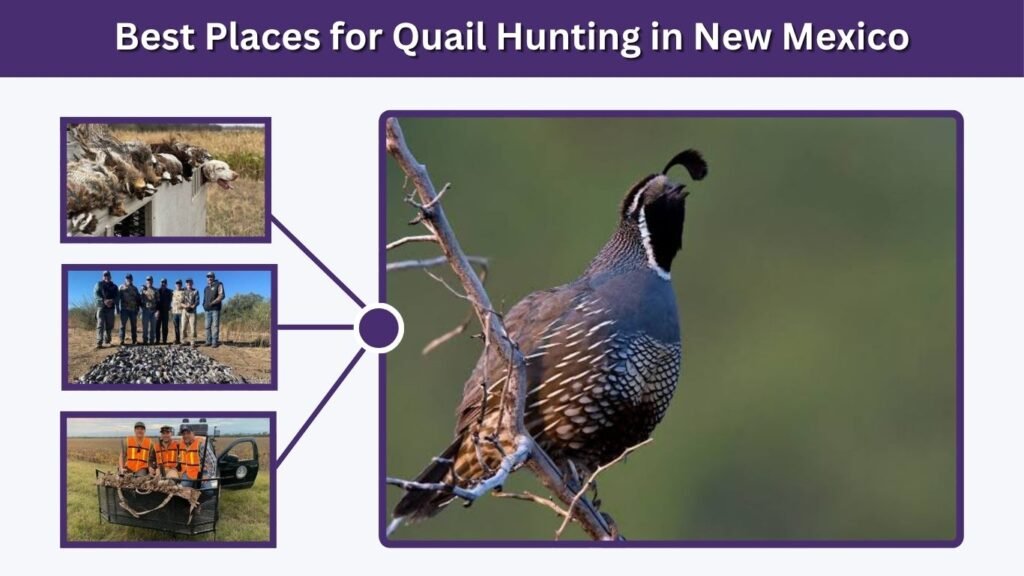
The best quail hunting locations depend on the species being pursued, rainfall patterns, and available public access. Southwestern deserts are generally better suited to Gambel’s quail, while eastern plains offer opportunities for scaled quail and bobwhites. Mountain habitats support Montezuma quail. Hunters should study distribution maps and confirm land ownership before visiting any location.
Southern New Mexico Quail Hunting
Southern New Mexico offers desert landscapes containing mesquite, scattered shrubs, and dry washes. The countryside around Las Cruces and Deming provides useful starting regions when researching Gambel’s quail habitat.
Look for areas where native vegetation offers food, cover, and protection. Productive habitat can change considerably after seasonal rainfall, making current conditions important.
Eastern and Southeastern New Mexico
The plains around Roswell and Carlsbad offer potential scaled quail habitat. Open grasslands mixed with scattered shrubs, prickly pear cactus, and natural drainages are particularly relevant.
Some southeastern locations also support northern bobwhite populations. However, bobwhites are relatively localized, so hunters should not assume they are abundant throughout the region.
Southwestern Mountain Quail Hunting
Mountain areas around Silver City and the broader southwestern region provide potential habitat for Montezuma quail.
These birds favor grassy slopes, oak woodland, and open pine-oak environments. Hunters should focus on suitable vegetation rather than expecting consistent bird numbers across entire mountain ranges.
New Mexico Quail Hunting Season 2026–2027
New Mexico establishes statewide hunting seasons and bag limits to help conserve upland game populations. The regulations cover scaled quail, Gambel’s quail, northern bobwhite, and Montezuma quail. Hunters must understand applicable limits, license requirements, and shooting hours before entering the field. Certain wildlife management areas also have additional restrictions.
New Mexico Quail Hunting Season Dates
The published 2026–2027 season regulations are:
- Opening date: November 15, 2026.
- Closing date: February 15, 2027.
- Hunt area: Statewide, where hunting access is legally permitted.
- Daily bag limit: 15 quail, individually or combined across species.
- Montezuma quail restriction: Maximum five Montezuma quail daily within the overall limit.
- Possession limit: 30 quail total, including no more than 10 Montezuma quail.
General upland-game shooting hours are from 30 minutes before sunrise until 30 minutes after sunset. Certain wildlife management areas have shorter shooting hours.
Best Time to Hunt Quail in New Mexico
Late fall and winter generally offer suitable conditions for quail hunting. Cooler temperatures can make walking desert habitats more comfortable for hunters and dogs.
Early mornings are useful for locating active birds, while later feeding periods may also provide opportunities. However, local weather and habitat conditions influence daily activity.
New Mexico Quail Hunting License and Regulations

Quail hunters must obtain the appropriate license before hunting in New Mexico. Licensing requirements can differ according to age, residency, and the type of land being accessed. Federal lands may require an additional habitat stamp, while private property requires lawful access. Reviewing official regulations helps prevent violations and ensures responsible hunting practices.
What License Is Required to Hunt Quail?
Hunters generally need a valid New Mexico Game Hunting License or qualifying combination license.
Additional requirements include:
- Habitat Management and Access Validation: Required for most hunters aged 18 and older, subject to exemptions.
- Habitat Stamp: Required when hunting on applicable Bureau of Land Management or U.S. Forest Service lands, unless exempt.
- Hunter education: Applicable age-based requirements must be satisfied.
- Private-land access: Obtain required permission before hunting or crossing private property.
New Mexico Quail Hunting Regulations
Hunters must follow approved seasons, bag limits, shooting hours, and lawful hunting methods.
Some public wildlife areas have special restrictions on access, ammunition, or hunting times. Always consult the current New Mexico Department of Wildlife regulations before planning a hunt.
Public Land Quail Hunting in New Mexico
New Mexico contains extensive federally managed landscapes, including Bureau of Land Management property and national forests. However, not every public parcel is open to hunting, and some areas have special restrictions. Public land is also frequently interspersed with privately owned property. Careful mapping and access verification are essential before beginning a hunt.
BLM and National Forest Hunting Areas
BLM-managed lands offer potential opportunities for hunters interested in desert and grassland quail species. National forest areas may provide access to higher-elevation habitats.
Before visiting, check:
- Property ownership and legal public access.
- Seasonal closures and special-use restrictions.
- Habitat Stamp requirements.
- Vehicle access and designated roads.
- Current wildlife distribution and habitat conditions.
- Applicable firearm discharge restrictions.
Guided Quail Hunts in New Mexico
Guided hunts can benefit beginners and visitors unfamiliar with New Mexico’s terrain. Experienced outfitters may provide habitat knowledge, trained hunting dogs, and logistical assistance.
Before booking, verify the outfitter’s registration with the New Mexico Department of Wildlife. Commercial operations on federal land may require additional agency authorization.
Quail Hunting Tips for New Mexico
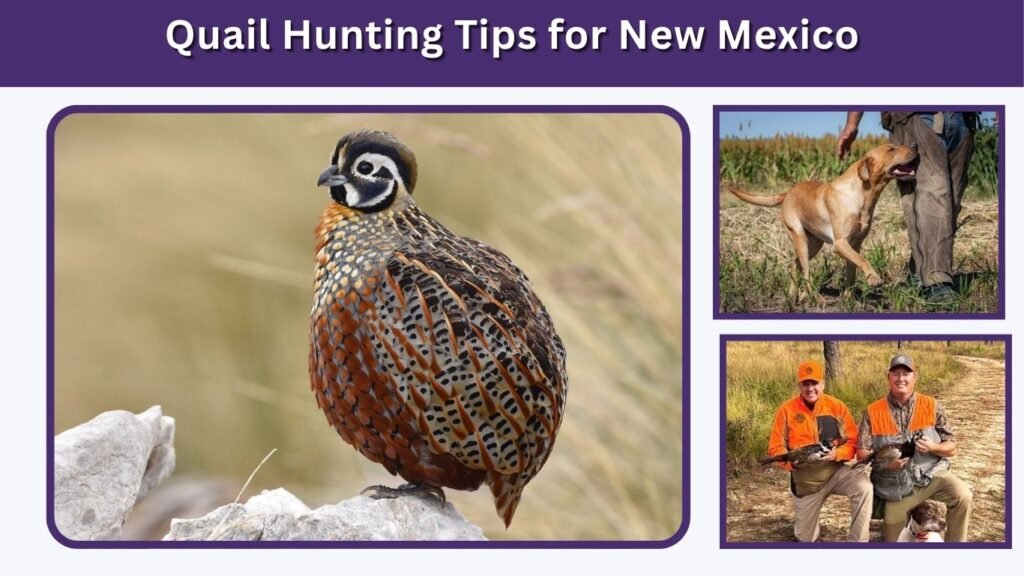
Successful quail hunting depends on locating suitable habitat, understanding bird behavior, and preparing for challenging terrain. Desert conditions can include sharp vegetation, rocky slopes, and significant temperature changes. Hunting dogs can help locate concealed birds, but hunters without dogs can also enjoy productive outings through careful observation and patient searching.
Hunting Quail With Dogs
Pointing dogs such as English Pointers, Brittanys, and German Shorthaired Pointers are popular choices for upland quail hunting.
A trained dog can locate hidden coveys and help recover birds. Maintain control throughout the hunt and regularly check paws for cactus spines, cuts, and other injuries.
Hunting Quail Without Dogs
Hunters without dogs should concentrate on vegetation edges, natural cover, and areas containing appropriate food sources.
Move carefully through suitable habitat, observing tracks and other signs of bird activity. Frequent pauses can help detect movement that might otherwise go unnoticed.
Essential Hunting Safety Tips
Preparation is particularly important in remote New Mexico hunting areas.
- Carry sufficient drinking water for yourself and your dog.
- Wear protective footwear suited to rocky and thorny terrain.
- Bring navigation equipment and offline maps.
- Monitor weather forecasts and changing temperatures.
- Watch for rattlesnakes, cactus, and other environmental hazards.
- Identify your target and ensure a safe background before shooting.
New Mexico Quail Hunting Forecast and Trip Planning
Quail populations fluctuate considerably because reproduction depends on rainfall and habitat conditions. A productive region during one season may experience fewer birds the following year. Checking recent population reports and discussing conditions with local wildlife professionals can help set realistic expectations.
New Mexico Quail Hunting Forecast for 2026
The 2026 Quail Forever forecast anticipates approximately average hunting prospects for scaled and Gambel’s quail, with slightly below-average expectations for Montezuma quail.
Southeastern and western portions of the state experienced some favorable precipitation. However, quail populations remain uneven, and recent breeding conditions have affected different species differently.
Planning Your New Mexico Quail Hunt
Begin by selecting the species you want to pursue and identifying suitable habitats within its range. Then review official distribution maps and determine which properties allow public access.
Check the latest season rules, purchase the required license and validations, and prepare for local weather. If hiring an outfitter, confirm its credentials and discuss hunting arrangements in advance.
FAQs
1. When Does Quail Hunting Season Open in New Mexico?
The 2026–2027 New Mexico quail season opens November 15, 2026, and closes February 15, 2027. The statewide season covers scaled, Gambel’s, northern bobwhite, and Montezuma quail, subject to applicable regulations.
2. Where Is the Best Quail Hunting in New Mexico?
Southern desert habitats offer opportunities for Gambel’s quail, while eastern grasslands are important for scaled quail. Southwestern mountain environments support Montezuma quail. The best location depends on the species, recent rainfall, and legal access.
3. Can You Hunt Quail on Public Land in New Mexico?
Yes. Quail hunting is permitted on many BLM and national forest lands where hunting is legally authorized. Hunters need the appropriate license, applicable habitat stamp, and permission to cross private land when necessary.
4. Do You Need a Dog for Quail Hunting in New Mexico?
No. Hunters can pursue quail without dogs by carefully exploring suitable habitat. However, trained pointing and retrieving dogs can improve bird detection and recovery, especially where vegetation makes quail difficult to locate.
5. What Quail Species Are Found in New Mexico?
New Mexico supports four huntable quail species: scaled quail, Gambel’s quail, northern bobwhite, and Montezuma quail. Each species occupies different habitats and regions, making proper identification and habitat knowledge important.
