
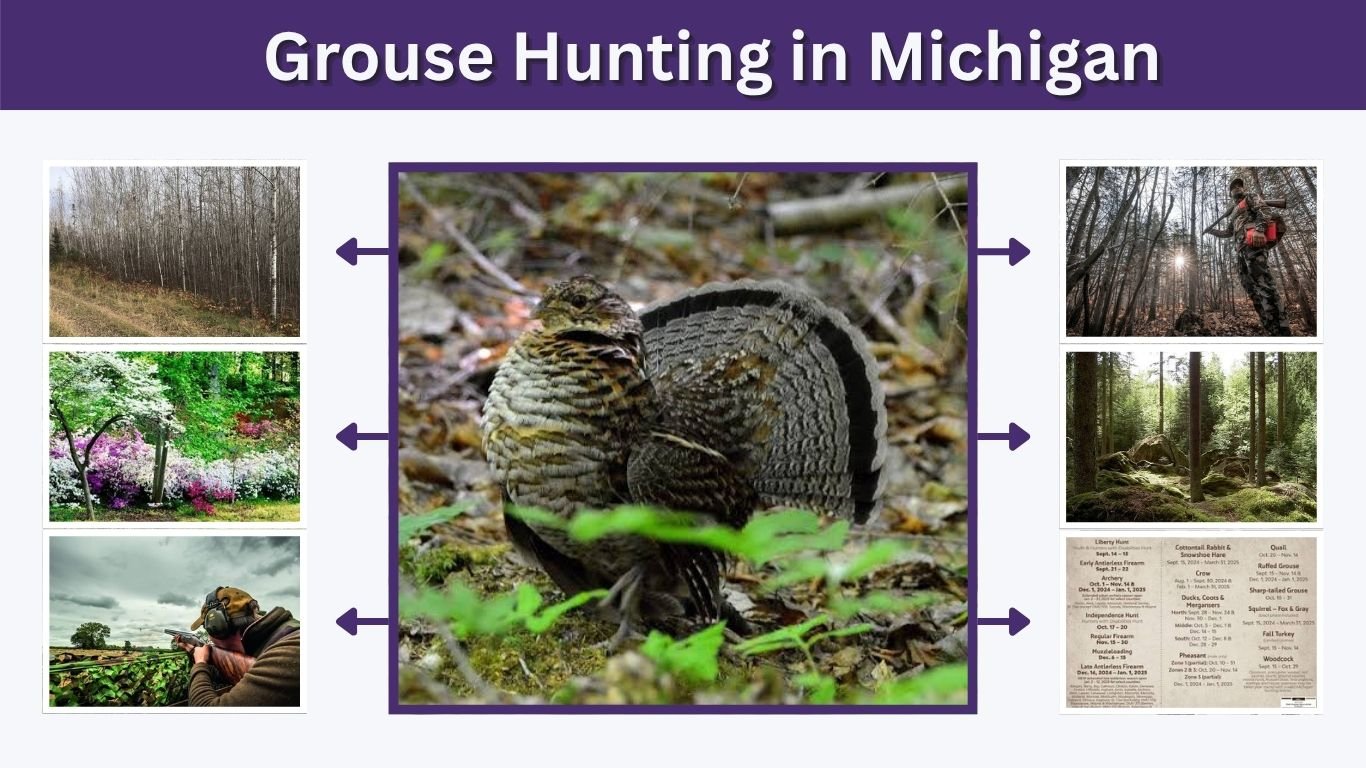
Michigan is one of the most popular destinations for ruffed grouse hunting in the United States. Its extensive forests, public hunting lands, and diverse wildlife habitats provide excellent opportunities for hunters. Both the Upper Peninsula and Northern Lower Peninsula offer places to find grouse, particularly in young aspen forests and areas with thick vegetation.
However, successful grouse hunting in Michigan requires more than choosing a location. Understanding hunting seasons, regulations, habitat preferences, and bird behavior can significantly improve your experience. Whether you are planning your first hunt or exploring new hunting areas, this guide covers where to go, when to hunt, and how to prepare.
Why Is Michigan Good for Grouse Hunting?
Michigan offers extensive forest habitat suitable for ruffed grouse. The state contains a mixture of young aspen stands, hardwood forests, brushy openings, and wooded wetlands.
Ruffed grouse are particularly associated with young forests that provide food and protection from predators.
Several features make Michigan attractive to grouse hunters:
- Extensive public land: State and national forests provide numerous hunting opportunities.
- Suitable habitat: Aspen regeneration and mixed hardwood forests support grouse populations.
- Accessible hunting areas: Designated GEMS locations provide trails and parking.
- Long hunting season: Hunters can participate during fall and early winter.
- Woodcock opportunities: Some habitats support both grouse and American woodcock.
Grouse numbers vary depending on habitat conditions, weather, and natural population fluctuations. Even within productive hunting regions, finding suitable forest cover is essential.
Best Places for Grouse Hunting in Michigan
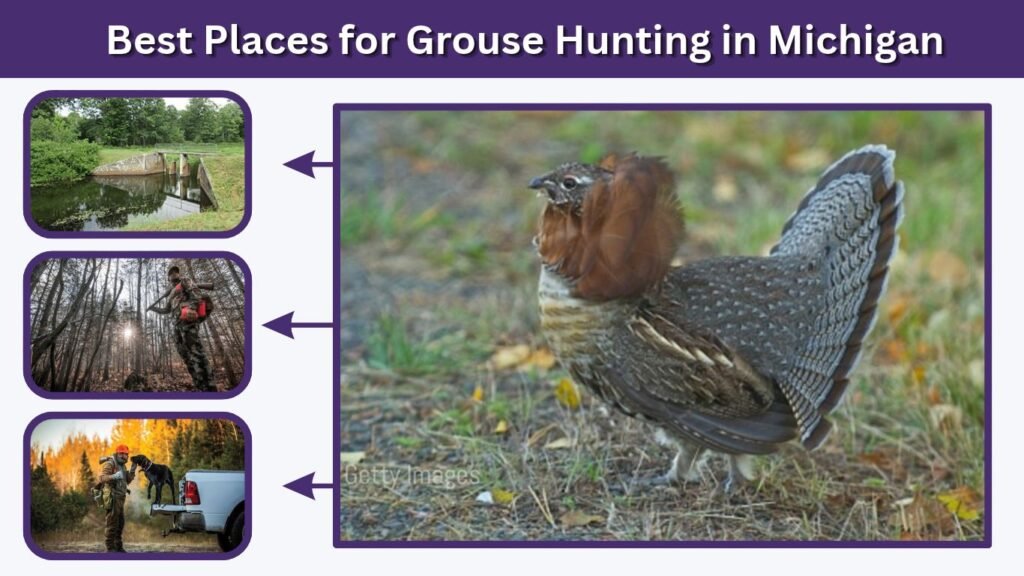
The Upper Peninsula and northern parts of the Lower Peninsula generally offer the most promising grouse hunting habitat.
1. Upper Peninsula Grouse Hunting
The Upper Peninsula is a popular destination for Michigan ruffed grouse hunting because of its large forests and relatively extensive public hunting lands.
Areas around Marquette, Newberry, and other forested parts of the peninsula provide starting points for exploring potential hunting locations.
Look for:
- Young aspen stands with dense regeneration.
- Edges between mature timber and younger forest.
- Brushy logging roads and woodland trails.
- Mixed hardwood areas containing shrubs and berry-producing plants.
The best grouse hunting in Michigan’s Upper Peninsula often depends on locating recent forest regeneration rather than simply visiting a particular county.
2. Northern Lower Peninsula
Northern Michigan also provides good opportunities for ruffed grouse hunting.
Forested areas around Grayling, Mio, Roscommon, and nearby communities are worth investigating.
Much of this region contains state forest land, including areas managed to encourage forest regeneration and wildlife habitat.
Hunters should focus on young aspen, brushy edges, and transitions between different forest age classes.
3. Grouse Enhanced Management Sites
Michigan’s Grouse Enhanced Management Sites, commonly called GEMS, are designed to improve upland bird hunting opportunities.
Examples include:
- Backus Creek GEMS in Roscommon County.
- Lame Duck Foot Access Area in Gladwin County.
- Little Betsie GEMS in the Wexford County area.
- Mark Knee Memorial GEMS in Osceola County.
These sites offer designated access features, including walking trails and parking areas. They are particularly useful for hunters unfamiliar with the surrounding forest.
Michigan Grouse Hunting Season and Regulations
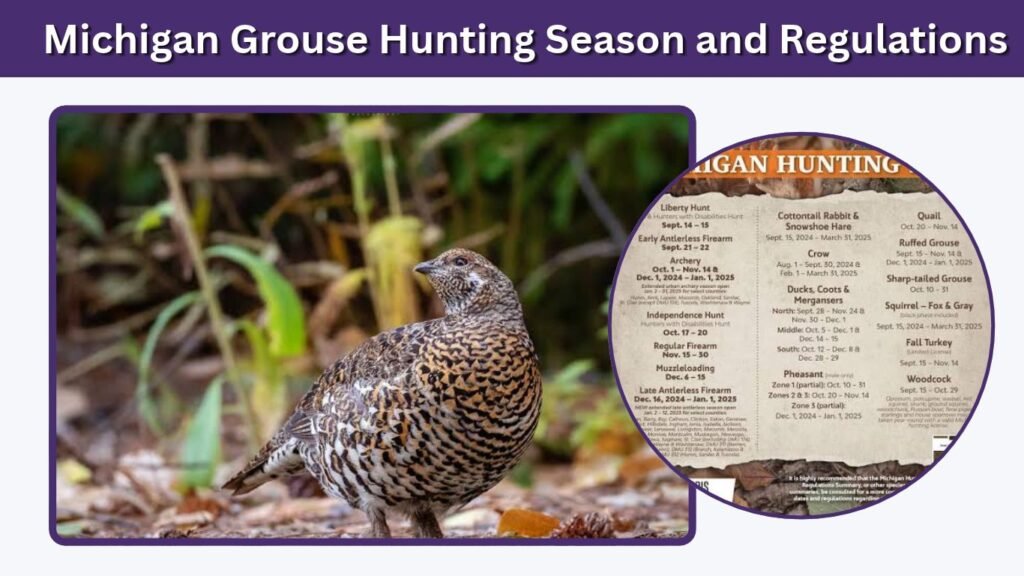
Michigan establishes specific hunting dates and bag limits for ruffed grouse.
For the 2026–2027 hunting season, the Michigan Department of Natural Resources lists the following dates:
| Hunting period | Season dates |
| Early season | September 15 – November 14, 2026 |
| Late season | December 1, 2026 – January 1, 2027 |
Michigan Ruffed Grouse Bag Limits
| Hunting zone | Daily limit | Possession limit |
| Zone 1 | 5 | 10 |
| Zone 2 | 5 | 10 |
| Zone 3 | 3 | 6 |
Hunters must follow the limits for their hunting zones.
Because regulations may change, always consult the current Michigan DNR small-game regulations before hunting.
Best Time to Hunt Grouse in Michigan
Although the season begins in September, October is often a favorite month for grouse hunters.
As autumn progresses, falling leaves improve visibility through dense vegetation.
September Grouse Hunting
Early-season hunting can be challenging because forests still contain thick foliage.
However, grouse frequently use young forest cover and brushy areas with abundant food.
Hunters should expect limited visibility and relatively short opportunities to observe birds.
October Grouse Hunting
October often provides a good balance between accessible hunting conditions and suitable forest cover.
As leaves fall, locating and identifying flushing birds becomes easier.
Cooler weather also makes walking through thick vegetation more comfortable.
Late-Season Grouse Hunting
December hunting presents different challenges.
Snow, cold temperatures, and changing food availability can influence where grouse spend their time.
Hunters may need to search more carefully around appropriate winter cover and available food sources.
How to Find Grouse Habitat in Michigan
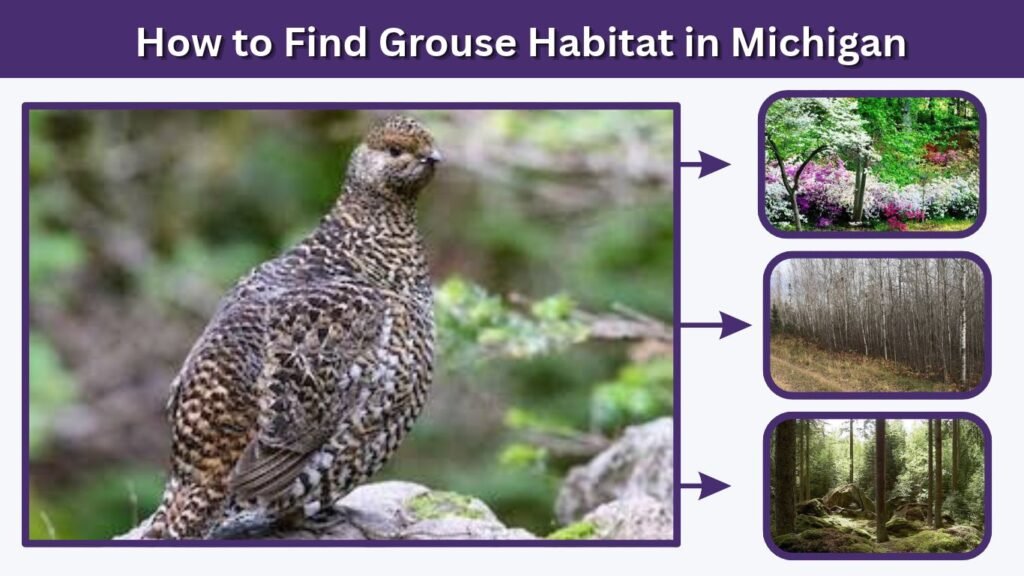
Finding the right habitat is one of the most important parts of successful Michigan grouse hunting.
Ruffed grouse use several forest types, but young woodland habitats are especially valuable.
Young Aspen Forests
Aspen regeneration creates dense cover that offers protection and food.
Look for relatively young stands containing closely spaced trees and surrounding shrubs.
Forest Edges
Transitions between young trees, mature hardwoods, and small openings can provide useful habitat.
These areas may contain several food sources within a relatively short distance.
Brushy Trails and Logging Roads
Old logging roads can provide access to promising habitat.
However, open roads alone do not guarantee grouse activity. The surrounding vegetation matters more.
Mixed Hardwood Forests
Grouse also use hardwood habitats containing suitable understory vegetation and seasonal food.
Look for places combining food sources, escape cover, and protected resting areas.
Michigan Grouse Hunting Maps and Public Land
Finding legal access is an important step when planning a grouse hunting trip.
Michigan DNR provides an interactive mapping service called MiHunt, which helps hunters explore potential hunting locations.
MiHunt includes information about:
- Public hunting land boundaries.
- Forest cover types.
- State-managed hunting areas.
- Grouse Enhanced Management Sites.
- Hunting Access Program properties.
- Nearby trails and access features.
Hunters can use forest-cover information to identify areas worth scouting.
However, map boundaries are approximate. Confirm current land ownership, hunting permissions, and local restrictions before entering a property.
Michigan’s GEMS locations can also be viewed through MiHunt, making it easier to identify designated grouse hunting areas.
How to Hunt Ruffed Grouse in Michigan
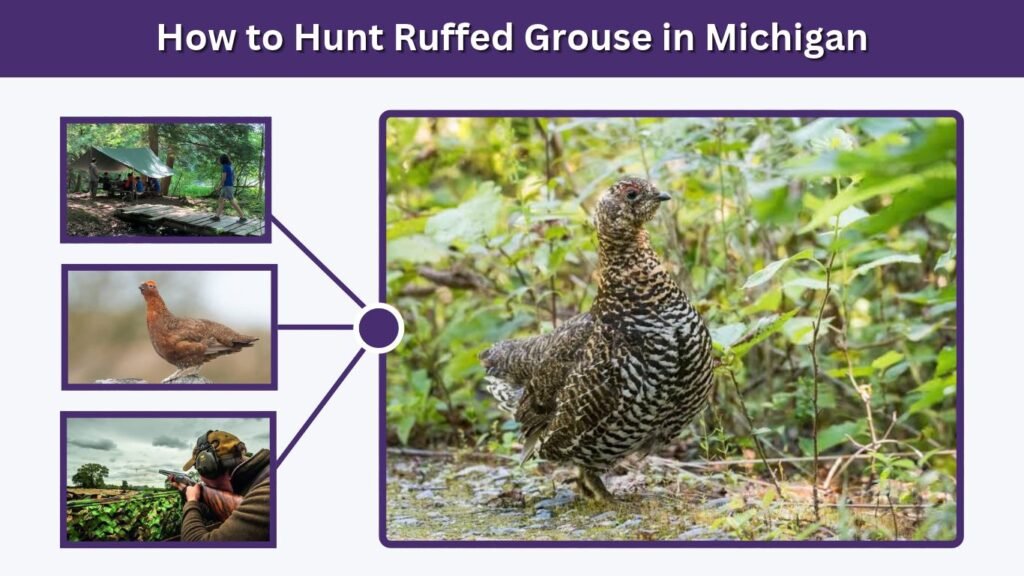
Grouse hunting usually involves walking through suitable forest habitat while watching and listening for birds.
Ruffed grouse often remain concealed until disturbed, when they may suddenly fly away through the trees.
The following approaches can help hunters prepare:
- Scout suitable habitat: Identify young aspen stands, brushy forest edges, and accessible trails.
- Check land access: Confirm that hunting is permitted before entering.
- Move carefully: Walk at a manageable pace and pay attention to surrounding cover.
- Watch for flushing birds: Grouse can emerge unexpectedly from dense vegetation.
- Consider a trained hunting dog: A properly trained flushing or pointing dog may help locate birds.
- Prioritize safe shooting: Positively identify the bird and ensure a clear, safe shooting direction.
Many grouse hunters prefer a shotgun because birds often flush suddenly through wooded cover.
Regardless of equipment, hunters must follow Michigan’s applicable firearm and hunting regulations.
Michigan Grouse Hunting License Requirements
Most hunters need a valid Michigan base hunting license to hunt ruffed grouse.
The base license generally authorizes small-game hunting during applicable open seasons.
Nonresidents may also have options for limited-duration small-game licenses.
Other important rules include:
- Follow the designated season dates and bag limits.
- Wear hunter orange as required by Michigan regulations.
- Obtain permission before hunting private property.
- Follow applicable firearm restrictions.
- Observe legal hunting hours.
Michigan requires hunter orange as the outermost visible garment for most small-game hunting during the grouse season.
Importantly, spruce grouse are protected in Michigan and cannot legally be hunted. Hunters should learn to distinguish them from ruffed grouse before entering the field.
Grouse and Woodcock Hunting in Michigan
Michigan hunters sometimes pursue ruffed grouse and American woodcock during the same trip.
Both birds can occur in wooded habitats, although their habitat preferences and behaviors differ.
Woodcock commonly use moist soil habitats where they search for earthworms.
The 2026 Michigan woodcock hunting season runs from September 15 through October 29.
Woodcock hunters need a valid hunting license and the required woodcock stamp, which includes federal Harvest Information Program registration.
Woodcock also have separate hunting hours, daily limits, and shotgun restrictions.
Hunters planning to pursue both species should review the regulations for each bird.
FAQs
1. Where is the best grouse hunting in Michigan?
The Upper Peninsula and Northern Lower Peninsula are popular grouse hunting regions. Look for young aspen forests and suitable mixed woodland habitat. Michigan’s GEMS locations are useful starting points for public-land hunting.
2. What month is best for grouse hunting in Michigan?
October is often considered an excellent month because cooler weather and falling leaves can improve hunting conditions. September and December also offer opportunities during their respective open seasons.
3. Can you hunt spruce grouse in Michigan?
No. Spruce grouse are classified as protected wildlife in Michigan. Hunters cannot legally harvest them. Learn the identifying differences between spruce grouse and ruffed grouse before hunting.
4. Can you hunt grouse with a .22 rifle in Michigan?
A .22 rimfire rifle may be legal for small-game hunting under applicable Michigan regulations. However, equipment restrictions and seasonal rules must be checked before hunting. Shotguns are generally preferred for flying grouse.
5. Do you need a special license to hunt grouse in Michigan?
A valid Michigan base hunting license generally covers ruffed grouse. Eligible nonresidents may use designated short-duration small-game licenses. Different requirements apply to woodcock and sharp-tailed grouse.
