
Deer hunting gear can make the difference between a comfortable, safe hunt and a frustrating day in the woods. Whether you are chasing whitetail from a tree stand, glassing mule deer in open country, or preparing for cold-weather rifle season, the right gear helps you stay quiet, hidden, warm, and organized. This deer hunting gear checklist covers the essentials for beginners and experienced hunters, including clothing, safety items, packs, optics, rain gear, cold-weather gear, and field-dressing tools.
Basic Deer Hunting Gear Every Hunter Needs
A good deer hunting setup starts with the basics. You do not need the most expensive gear to hunt successfully, but you do need reliable equipment that matches your hunting style, season, weather, and local laws. Before buying anything, check your state wildlife agency rules for licenses, legal hunting methods, hunter education, blaze orange, tagging, and season dates.
| Gear Category | Essential Items | Why It Matters |
| Legal documents | License, tags, permits, hunter education card | Keeps your hunt legal |
| Clothing | Camo, base layers, boots, gloves, hat | Helps with comfort and concealment |
| Safety gear | Blaze orange, harness, first aid kit | Reduces accident risk |
| Navigation | Phone, GPS, map, compass | Helps prevent getting lost |
| Field tools | Knife, gloves, game bags, drag rope | Needed after harvest |
License, Tags, and Local Regulations
The first items on any deer hunting gear list are your hunting license, deer tag, required permits, and proof of hunter education if your state requires it. Hunting regulations usually cover who can hunt, what species can be hunted, legal seasons, bag limits, approved methods, and where hunting is allowed. Requirements vary by state, so always confirm current rules before opening day.
Legal Hunting Equipment
Your main hunting equipment depends on the season and your local laws. Some hunters use a rifle or shotgun during firearm season, while others use a bow or crossbow during archery season. The most important rule is to use only legal equipment for your area and practice enough to make safe, ethical shots.
Hunting Pack
A deer hunting gear bag should carry your essentials without being too bulky. For short whitetail sits, a small daypack may be enough. For mule deer or backcountry hunts, choose a larger pack with room for layers, water, food, optics, survival gear, and meat-hauling support.
Deer Hunting Clothing and Camo Gear
Clothing is one of the most searched parts of deer hunting gear because comfort matters during long sits and changing weather. The best deer hunting clothing is quiet, weather-appropriate, and layered. Camo pattern matters less than staying still, reducing shine, and matching your general environment.
Base Layers
A moisture-wicking base layer keeps sweat away from your skin. This is especially important in cold weather because damp clothing can make you chill quickly after walking to your stand. Merino wool and synthetic base layers are both common choices.
Insulating Layers
Mid-layers trap heat. Fleece, wool, and synthetic insulated jackets work well depending on temperature. Cold weather deer hunting gear should focus on layering instead of one heavy coat, because layering lets you adjust as conditions change.
Outer Layer
Your outer layer should be quiet and weather-resistant. For early season, lightweight camo may be enough. For late season, choose a heavier jacket and pants that block wind. If you hunt in wet areas, deer hunting rain gear becomes more important than heavy insulation.
Boots and Socks
Boots should match your terrain. Rubber boots help with scent control and wet ground. Insulated boots are useful for cold stand hunting. Lightweight hiking-style boots are better for mule deer hunts where you may walk long distances. Always pair them with quality socks to prevent blisters.
Safety Gear for Deer Hunting
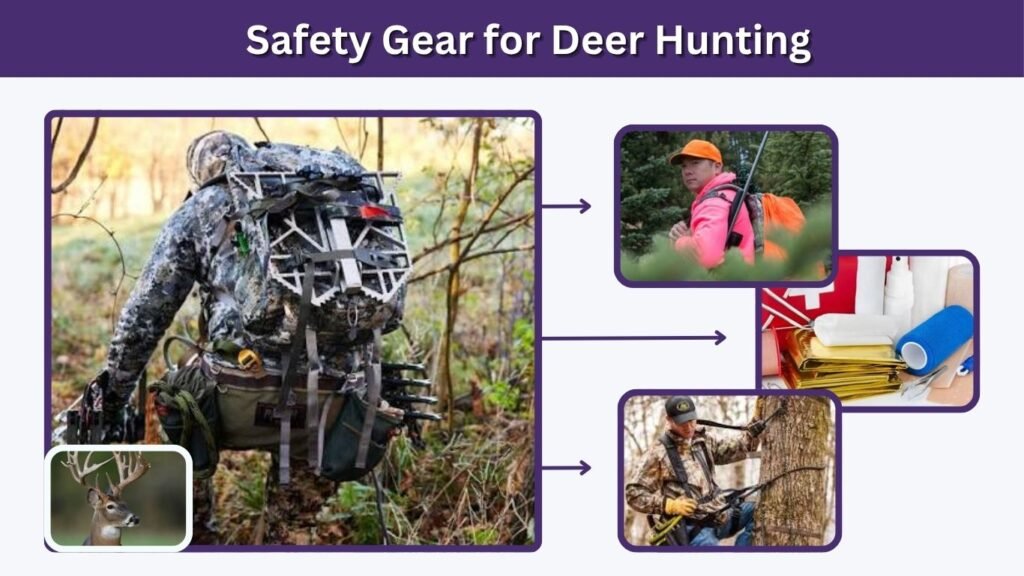
Safety gear is not optional. Deer hunting often involves low light, elevated stands, remote areas, sharp tools, and changing weather. A simple safety kit can protect you from accidents and help others find you if something goes wrong.
Blaze Orange
Many states require blaze orange or fluorescent pink during firearm deer seasons. The exact amount and placement vary by state, so check your local regulation book before hunting. Blaze orange helps other hunters see you without preventing deer hunting success, because deer do not see color the same way humans do.
Tree Stand Harness
If you hunt from an elevated stand, use a full-body fall-arrest harness and stay attached from the ground, during the climb, throughout the hunt, and back down. Hunter education safety guidance recommends wearing a full-body harness and practicing with your fall-arrest system before hunting from a stand.
First Aid and Emergency Items
Carry a compact first aid kit, emergency whistle, lighter or fire starter, headlamp, extra batteries, and a small emergency blanket. A power bank is also useful if you rely on your phone for maps or communication.
Optics, Calls, and Scouting Gear
Optics and scouting tools help you find deer, understand movement, and make better decisions. You do not need every gadget, but a few useful items can improve your hunt.
Binoculars
Binoculars are essential for mule deer hunting and useful for whitetail hunting too. They help you identify movement, check antlers safely, and scan edges, fields, ridges, and bedding cover without walking too much.
Rangefinder
A rangefinder is especially helpful for bowhunters because distance judgment is critical. Rifle hunters can also benefit from knowing exact distances across fields, clear cuts, and western terrain.
Trail Cameras
Trail cameras help identify deer movement, travel routes, and time patterns. Use them where legal, and check your state rules because some areas restrict cellular trail cameras or camera use during certain seasons.
Deer Calls and Scent Control
Grunt calls, bleat cans, and rattling antlers can work during the rut, but they should be used carefully. Overcalling can alert pressured deer. Scent-control sprays, wind-check powder, and rubber boots can help, but hunting the wind is still more important than any scent product.
Whitetail Deer Hunting Gear List
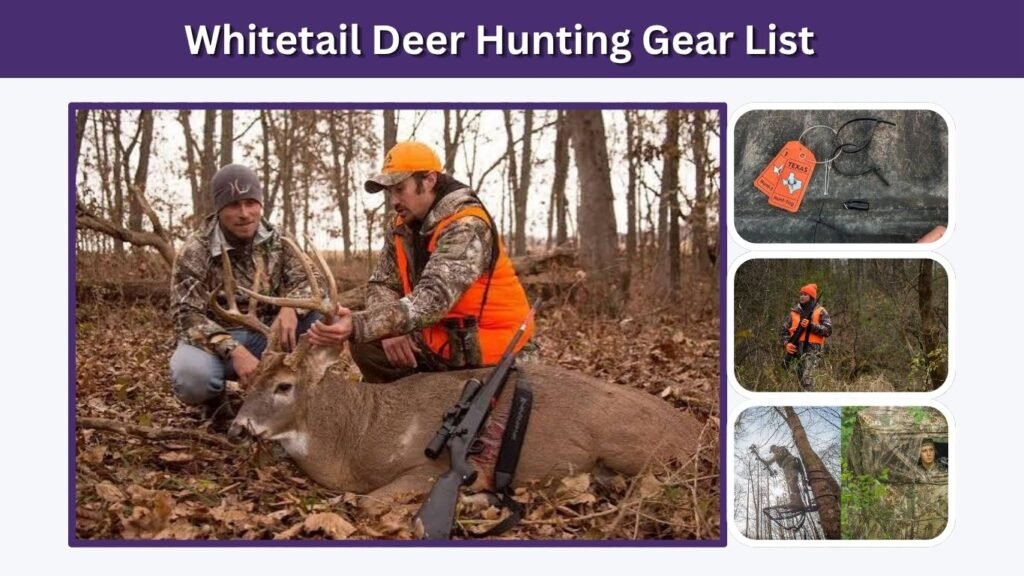
Whitetail deer hunting usually involves tree stands, ground blinds, food sources, bedding areas, funnels, and travel corridors. Your gear should help you sit quietly, stay comfortable, and avoid being seen or smelled.
Essential Whitetail Gear
- Hunting license and deer tags
- Camo clothing suited to the season
- Blaze orange where required
- Tree stand or ground blind
- Full-body safety harness for elevated stands
- Binoculars and rangefinder
- Headlamp with extra batteries
- Knife, gloves, and drag rope
- Wind checker and basic calls
- Warm seat cushion for long sits
A whitetail deer hunting gear list should stay simple for beginners. Focus first on safety, quiet clothing, good boots, and knowing where deer travel. Expensive gear will not replace scouting and patience.
Mule Deer Hunting Gear List
Mule deer hunting often means more walking, glassing, and dealing with open terrain. Compared with many whitetail hunts, mule deer hunting gear usually needs to be lighter, more mobile, and better suited for long distances.
Essential Mule Deer Gear
- Lightweight hunting pack
- Quality binoculars
- Spotting scope if hunting open country
- Rangefinder
- Durable hiking boots
- Layered clothing for temperature swings
- Rain jacket or wind shell
- Extra water and snacks
- Map, GPS, or offline phone maps
- Game bags for meat care
Backcountry mule deer hunting gear should also include survival basics, water filtration, a compact repair kit, and enough insulation for sudden weather changes.
Cold Weather Deer Hunting Gear
Cold weather deer hunting gear is all about staying warm without sweating on the walk in. The best system uses layers, wind protection, and insulation for your hands, feet, and head. Many hunters can handle a cold jacket but fail because their toes or fingers get cold.
| Cold Weather Item | Best Use |
| Merino or synthetic base layer | Controls moisture |
| Insulated jacket and bibs | Keeps core warm |
| Neck gaiter or face mask | Blocks wind |
| Hand muff and warm gloves | Keeps fingers useful |
| Insulated boots | Protects feet during long sits |
| Seat cushion | Reduces cold from metal stands |
Hands, Feet, and Head
Your hands, feet, and head lose comfort quickly in cold weather. Use warm socks, insulated boots, a beanie, gloves, and a hand muff. Chemical warmers can help during long sits, but avoid overheating while walking.
Late-Season Stand Hunting
For late-season whitetail hunting, pack your heavy outer layers and put them on after reaching your stand. This helps prevent sweat, which can make you cold later. A quiet, windproof outer layer is often more valuable than a bulky jacket that makes noise.
Deer Hunting Rain Gear
Rain gear for deer hunting should keep you dry without being loud. A waterproof jacket and pants are useful in wet climates, river bottoms, mountain hunts, and early-season storms. Breathability matters because cheap plastic-like rain gear can trap sweat.
What to Look For in Rain Gear
Choose rain gear that is quiet, packable, and sized to fit over your layers. A hood with good visibility, sealed seams, and waterproof zippers are helpful. For warm weather, lightweight rain gear is better. For cold rain, use waterproof outerwear over insulation.
Field Dressing and Meat Care Gear
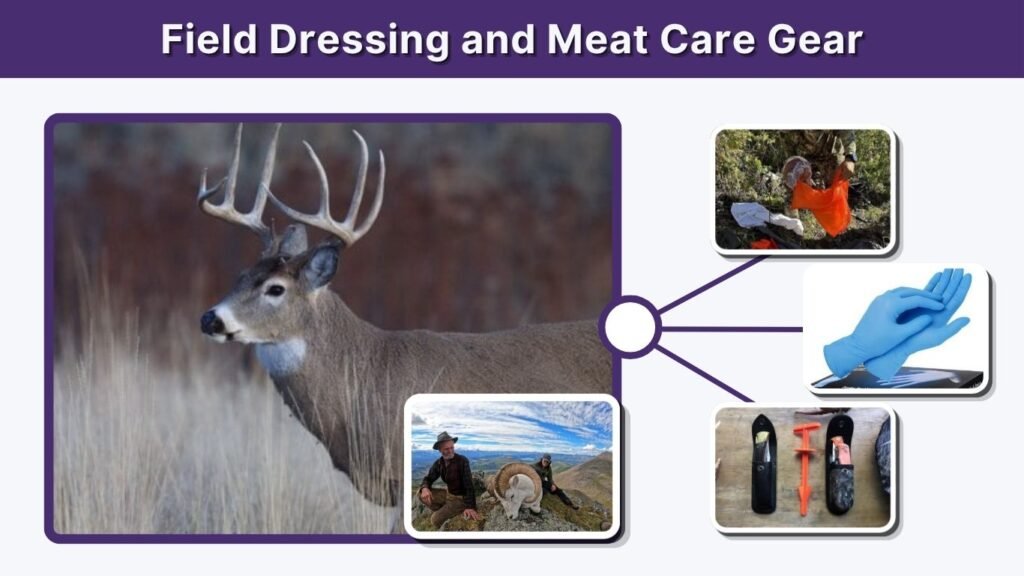
Field-dressing gear is one of the most important parts of a deer hunting gear checklist. Once a deer is harvested, you need to cool and protect the meat quickly. In areas with chronic wasting disease concerns, the CDC advises hunters not to eat meat from animals that test positive and recommends wearing rubber or latex gloves when field dressing or handling meat.
Field Dressing Checklist
- Sharp hunting knife
- Replaceable blade knife or sharpener
- Disposable gloves
- Game bags
- Paracord or drag rope
- Headlamp
- Wet wipes or paper towels
- Cooler with ice
- Zip bags for small items
- Tagging materials required by law
Good meat care starts immediately. Keep the meat clean, cool, and protected from dirt, insects, and heat. If you hunt far from the truck, game bags and a meat-hauling pack are more useful than a simple drag rope.
Beginner Deer Hunting Gear: What to Buy First
Beginner deer hunting gear should be practical, not overwhelming. Start with legal requirements, safety equipment, boots, clothing, a pack, a knife, and basic navigation. Add optics, calls, blinds, and premium clothing later as you learn your hunting style.
Best First Purchases
- License, tags, and regulation booklet
- Blaze orange clothing if required
- Comfortable boots
- Weather-appropriate layers
- Headlamp
- Knife and gloves
- Small hunting pack
- First aid kit
- Binoculars
- Safety harness if using a tree stand
Cheap deer hunting gear can work if it is safe and reliable. Spend more on boots, safety gear, and clothing that keeps you warm and dry. Save money on accessories until you know what you actually use.
Deer Hunting Gear Must-Haves by Season
Different seasons require different gear. Early season is often warm, buggy, and scent-sensitive. Rut hunting may involve all-day sits, calls, and cold mornings. Late season requires warmth, food-source scouting, and weather protection.
Early Season Gear
Early season deer hunting gear should include lightweight camo, bug spray, water, breathable boots, and scent-control basics. The CDC recommends EPA-registered repellents such as DEET, picaridin, IR3535, oil of lemon eucalyptus, PMD, or 2-undecanone for tick prevention, following label directions.
Rut Hunting Gear
During the rut, pack calls, rattling tools where legal, extra snacks, water, and enough clothing for longer sits. Bucks may move at any time of day, so comfort becomes important.
Late Season Gear
Late season gear should focus on warmth, wind protection, insulated boots, hand warmers, and food-source scouting. A thermos, seat cushion, and extra gloves can make long cold sits easier.
How to Choose the Best Deer Hunting Gear
The best deer hunting gear is the gear that fits your hunting location, weather, budget, and experience level. Brand names like Sitka, Kuiu, Nomad, Drake, and Chêne appear often in commercial searches, but hunters should compare materials, noise, fit, warmth, waterproofing, durability, and return policy before buying.
Do not build your kit around hype. A beginner with good boots, legal gear, safe habits, and solid scouting can hunt more effectively than someone carrying expensive gear they do not know how to use. Start simple, upgrade slowly, and keep your pack organized so every item has a purpose.
FAQs
What gear do I need for deer hunting?
You need a license, deer tags, legal hunting equipment, weather-appropriate clothing, boots, blaze orange where required, a knife, gloves, headlamp, first aid kit, navigation tools, and a hunting pack. If you hunt from a tree stand, a full-body safety harness is essential.
What is the best deer hunting gear for beginners?
The best beginner deer hunting gear includes comfortable boots, layered clothing, a small pack, headlamp, knife, gloves, safety gear, binoculars, and required legal documents. Beginners should focus on safety, comfort, and scouting before buying expensive accessories.
What should be in a deer hunting gear checklist?
A good deer hunting gear checklist should include legal documents, clothing, boots, safety gear, navigation, optics, food, water, first aid, field-dressing tools, and weather protection. Adjust the checklist for whitetail, mule deer, early season, cold weather, or rain.
What gear is needed for cold weather deer hunting?
Cold weather deer hunting gear includes moisture-wicking base layers, insulating layers, windproof outerwear, insulated boots, warm socks, gloves, beanie, neck gaiter, hand muff, and a seat cushion. Pack heavy layers and put them on after walking to avoid sweating.
Is expensive deer hunting gear worth it?
Expensive deer hunting gear can be worth it if it improves warmth, comfort, waterproofing, durability, or pack weight. However, beginners do not need premium gear right away. Spend first on safety items, boots, basic clothing, and essential tools.
