
Deer hunting from the ground offers a practical alternative to tree stands, especially in wooded areas without suitable climbing trees. It also allows hunters to adapt quickly to changing winds, deer movement, and terrain. However, staying at eye level with a whitetail means scent, sound, and small movements become more noticeable. Whether you use a bow, crossbow, rifle, or natural cover, careful preparation makes a difference. This guide explains how to choose a location, stay concealed, hunt without a blind, and make responsible decisions in the field.
Where to Hunt Deer From the Ground
Choosing the right location is one of the most important parts of successful ground hunting. Unlike elevated hunters, those sitting at ground level have limited visibility and must work harder to remain concealed. Understanding deer travel patterns, wind direction, and natural cover helps you select a position where deer may pass without noticing your presence.
Look for Signs of Deer Activity
Before selecting a hunting location, scout areas where deer regularly travel, feed, or rest.
- Deer trails: Look for frequently used paths connecting feeding and bedding areas.
- Fresh tracks: Identify tracks in mud, soft soil, or snow to understand recent activity.
- Rub marks: Check trees for bark damage caused by bucks rubbing their antlers.
- Scrapes: Examine disturbed soil beneath overhanging branches for signs of deer activity.
- Food sources: Identify oak trees, agricultural fields, and other seasonal feeding areas.
- Natural funnels: Look for narrow passages that guide deer between larger areas of cover.
Consider Wind Direction
Deer depend heavily on their sense of smell to detect danger. When hunting from the ground, position yourself where the wind carries your scent away from expected deer movement.
Crosswinds can provide useful opportunities, especially near trails and feeding areas. However, changing temperatures, valleys, and hillsides can affect airflow throughout the day.
Choose Natural Cover
Thick vegetation, fallen trees, brush piles, and large tree trunks can help conceal your position.
Select an area with a dark background that breaks up your silhouette. Avoid sitting directly against an open skyline or in an exposed location where deer can easily identify your movements.
How to Hunt Deer From the Ground Without a Blind
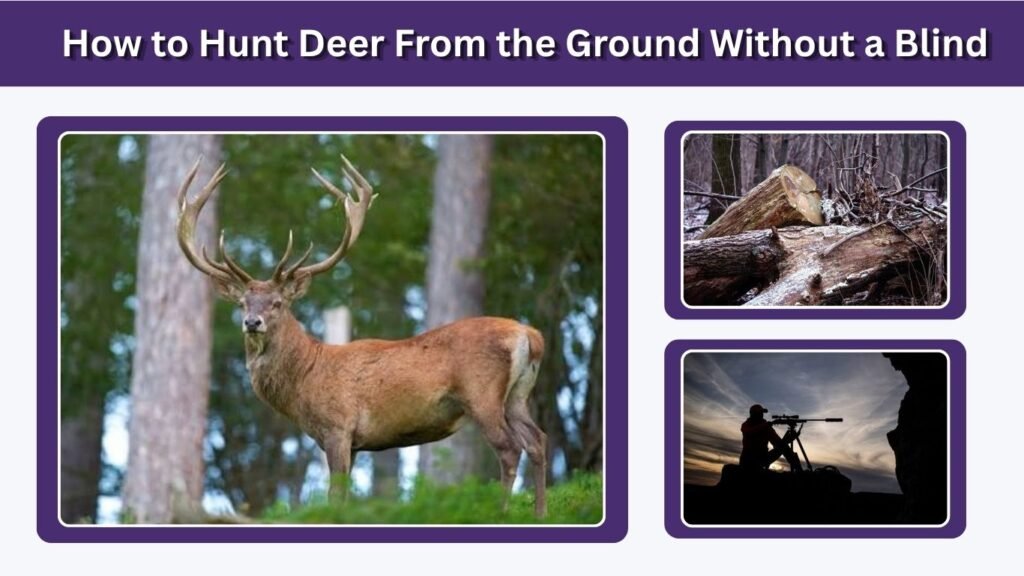
Hunting deer from the ground without a blind requires patience, careful positioning, and awareness of your surroundings. Instead of relying on manufactured camouflage structures, hunters use natural vegetation and terrain to remain hidden. This approach offers flexibility, allowing you to change locations according to wind conditions and deer activity without carrying additional equipment.
Use Natural Concealment
or dense patch of vegetation can provide excellent visual concealment.
Sit with natural cover behind you and maintain a clear view of the area where deer may appear. Avoid excessive vegetation removal, particularly on public land where cutting branches may be prohibited.
Stay Quiet and Control Movement
Deer can notice sudden movements, especially when hunters are positioned at eye level.
Settle into a comfortable position before deer arrive. Keep essential equipment nearby and avoid unnecessary adjustments.
When observing approaching deer, move slowly and avoid turning your entire body. Remaining motionless is often more important than wearing elaborate camouflage.
Essential Tips for Hunting Without a Blind
Several simple practices can improve your ground-hunting experience.
- Wear suitable camouflage: Choose clothing that blends with surrounding vegetation while following hunter-orange requirements.
- Use a comfortable seat: A low hunting stool or cushion can reduce unnecessary movement.
- Control noise: Secure loose equipment and avoid clothing that produces excessive rustling.
- Monitor the wind: Check local airflow before settling into a position.
- Prepare your position: Ensure you can observe deer without constantly shifting.
- Remain patient: Give deer time to move naturally through the area.
Bow, Crossbow, and Rifle Hunting From the Ground
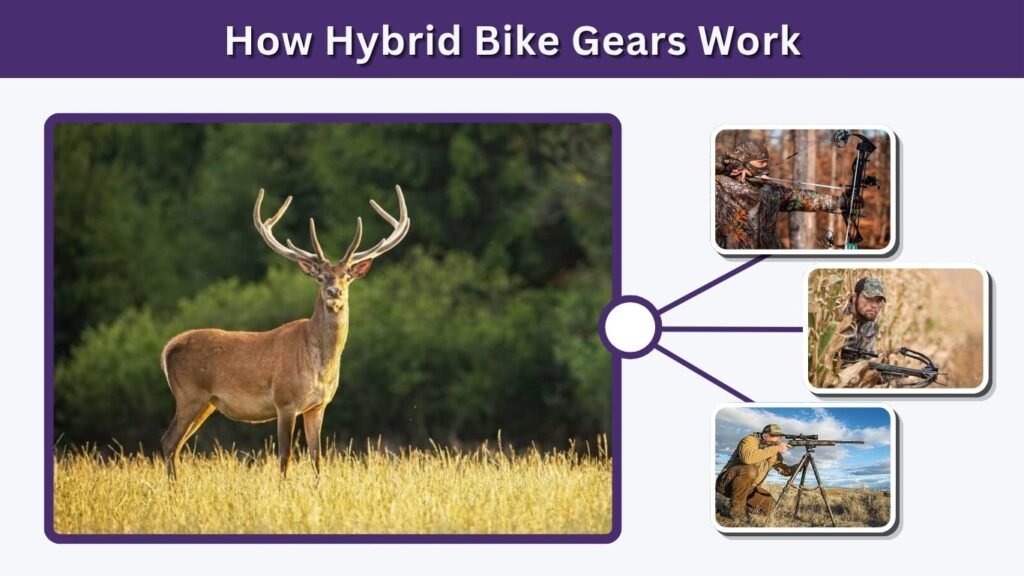
Different hunting equipment creates different challenges when hunting at ground level. Bowhunters generally require closer encounters and greater freedom of movement, while rifle hunters must pay particular attention to safe shooting backgrounds. Crossbows offer another option but have their own handling requirements. Understanding these differences helps hunters prepare appropriately and avoid preventable mistakes.
Bow Hunting Deer From the Ground
Bow hunting deer from the ground without a blind can be challenging because drawing a bow requires noticeable movement.
Choose a concealed location with adequate room for your bow. Practice drawing and aiming from seated or kneeling positions before hunting.
Avoid drawing when deer are watching your location. Only consider a shot when the animal is clearly identified, the path is unobstructed, and an ethical opportunity exists.
Crossbow Hunting Deer From the Ground
Crossbows allow hunters to remain relatively stationary while preparing for a shot. However, branches, vegetation, and nearby objects can interfere with their operation.
Maintain sufficient clearance around the limbs and follow the manufacturer’s handling instructions.
Crossbow hunting regulations vary by location, so confirm that your equipment is permitted during the applicable season.
Deer Hunting From the Ground With a Rifle
Rifle hunting from the ground provides a different perspective compared with elevated hunting positions.
Visibility may be limited by vegetation and uneven terrain. More importantly, shots taken from ground level may lack the natural downward angle available from a tree stand.
Always identify the deer and verify that a reliable backstop exists beyond it. Never shoot toward a skyline or an area where the bullet’s destination is uncertain.
Ground Hunting Equipment Checklist
A lightweight setup can make ground hunting more comfortable and organized.
- Binoculars for observing distant deer
- Weather-appropriate clothing
- Hunting seat or cushion
- Wind indicator
- Rangefinder, if appropriate
- First-aid kit and navigation equipment
- Required license, tags, and hunter-orange clothing
Hunting Whitetail Deer From the Ground Throughout the Season
Whitetail deer behavior changes throughout the hunting season. Feeding patterns, breeding activity, temperature, and hunting pressure influence where deer travel and how frequently they move during daylight. Hunters who recognize these seasonal differences can select more appropriate observation locations. Ground hunting also makes it easier to adjust positions when familiar deer patterns begin changing.
Early-Season Ground Hunting
During the early season, deer often follow relatively consistent routines between bedding areas and available food sources.
Watching travel corridors near feeding areas can provide opportunities to observe their movements. Avoid repeatedly disturbing locations where deer rest, since frequent intrusion may change their behavior.
Deer Hunting During the Rut
The breeding season, commonly called the rut, can bring changes in buck movement.
Bucks may travel farther while searching for receptive does, making travel corridors and natural crossings useful observation locations.
Ground hunters should remain alert because deer movement may occur unexpectedly throughout legal hunting hours.
Late-Season Deer Hunting
During colder periods, deer often concentrate on available food and protective cover.
Ground hunting can be useful around sheltered woodland edges and feeding areas. However, deer subjected to sustained hunting pressure may become particularly cautious.
Remaining concealed and minimizing disturbances becomes increasingly important.
Common Ground Hunting Mistakes and Safety Tips
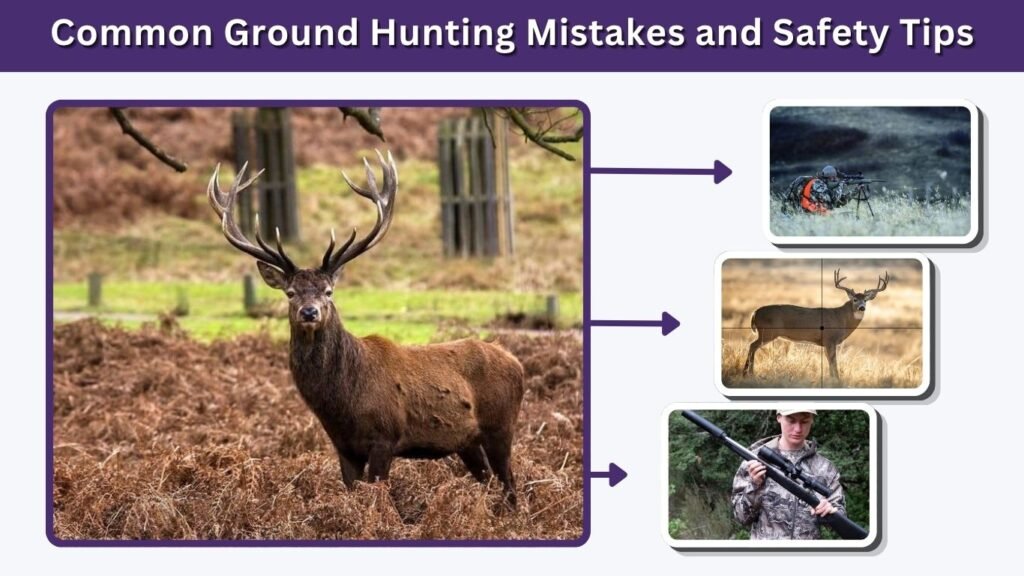
Successful deer hunting depends on more than finding a promising location. Poor preparation, unnecessary movement, unsuitable wind conditions, and unsafe shooting decisions can undermine a hunt. Ground-level hunters should pay special attention to visibility and the surrounding environment. Following safe hunting practices protects other people while supporting responsible and ethical wildlife management throughout the season.
Common Mistakes to Avoid
One frequent mistake is sitting where the wind carries human scent directly toward approaching deer. Another is choosing an exposed position without considering visibility from different directions.
Hunters may also enter their locations too noisily or move repeatedly while watching deer.
Failing to practice from actual ground-hunting positions can create difficulties when an opportunity appears.
Ground Hunting Safety Checklist
Follow these essential precautions whenever hunting deer from the ground.
- Identify your target: Never act on movement or an unidentified shape.
- Check the background: Know what lies in front of and beyond the animal.
- Wear required visibility clothing: Follow local blaze-orange or fluorescent-pink regulations.
- Handle firearms safely: Maintain safe muzzle direction and trigger discipline.
- Know your boundaries: Confirm property access and public-land restrictions.
- Share your plans: Tell someone where you will hunt and when you expect to return.
- Respect hunting regulations: Follow legal seasons, shooting hours, and equipment requirements.
Practice Before Entering the Field
Practice helps hunters become familiar with their equipment and physical limitations.
Rehearse safe handling and shooting positions at an approved range. Bowhunters should confirm that their equipment provides adequate clearance when used from ground-level positions.
Only take shots within your demonstrated ability and when a safe, ethical opportunity exists.
FAQs
Deer hunting from the ground raises several questions, especially for beginners comparing different hunting methods. Hunters often wonder whether blinds are necessary, whether bows work effectively at ground level, and how this approach compares with tree stands. The following answers address common concerns and explain important considerations for safer, more effective ground hunting experiences.
1. Can You Hunt Deer From the Ground Without a Blind?
Yes. Deer can be hunted from the ground without a manufactured blind. Natural cover, favorable wind conditions, minimal movement, and careful observation are important for remaining concealed.
2. Is Bow Hunting Deer From the Ground Effective?
Yes. Bow hunting from the ground can be effective when hunters have suitable concealment, adequate drawing clearance, and opportunities within their practiced shooting range.
3. Is It Better to Hunt Deer From a Tree Stand or the Ground?
Both methods have advantages. Tree stands can improve visibility, while ground hunting offers flexibility and avoids climbing-related risks. The better choice depends on terrain, conditions, and personal preferences.
4. What Is the Best Time to Hunt Deer From the Ground?
Early morning and late afternoon often provide useful opportunities because deer may travel between feeding and bedding areas. However, activity varies with season, weather, and hunting pressure.
5. Can Beginners Successfully Hunt Whitetail Deer From the Ground?
Yes. Ground hunting can be suitable for beginners who understand deer behavior, follow hunting regulations, practice safe equipment handling, and develop patience and observation skills.
