
Deer hunting for beginners can feel complicated because there is a lot to learn about licenses, equipment, deer behavior, scouting, safety, and ethical hunting. A successful first season starts with education rather than expensive gear. Beginners should understand local regulations, practice with their chosen hunting equipment, learn to recognize deer signs, and prepare for changing weather. With patience and responsible field habits, new hunters can gradually build the skills and confidence needed for safer, more enjoyable whitetail or mule deer hunting.
Deer Hunting Basics for Beginners
Before entering the woods, learn the legal and safety requirements that apply where you plan to hunt. Seasons, licenses, tagging rules, legal equipment, public-land regulations, and hunter-education requirements vary by location. In the United States, hunters generally need a license from the state where they hunt and must follow that state’s wildlife regulations.
Take a Hunter Education Course
Hunter education is one of the best starting points for a new deer hunter. Courses typically cover safe firearm or archery handling, wildlife identification, hunting ethics, regulations, and responsible behavior.
Hands-on instruction can be especially valuable because experienced instructors can demonstrate skills that are difficult to learn from reading alone. Hunter-education guidance emphasizes responsibility, safety, knowledge, ethical behavior, and respect for wildlife.
Learn Your Local Deer Regulations
Do not assume rules are identical from one state or hunting area to another.
Check the current regulations for season dates, permitted deer, legal hunting methods, tagging or reporting requirements, blaze-orange rules, and public-land restrictions before each season.
Regulations can change, so use your official wildlife agency rather than relying on an old hunting guide or social-media post.
Deer Hunting Gear for Beginners
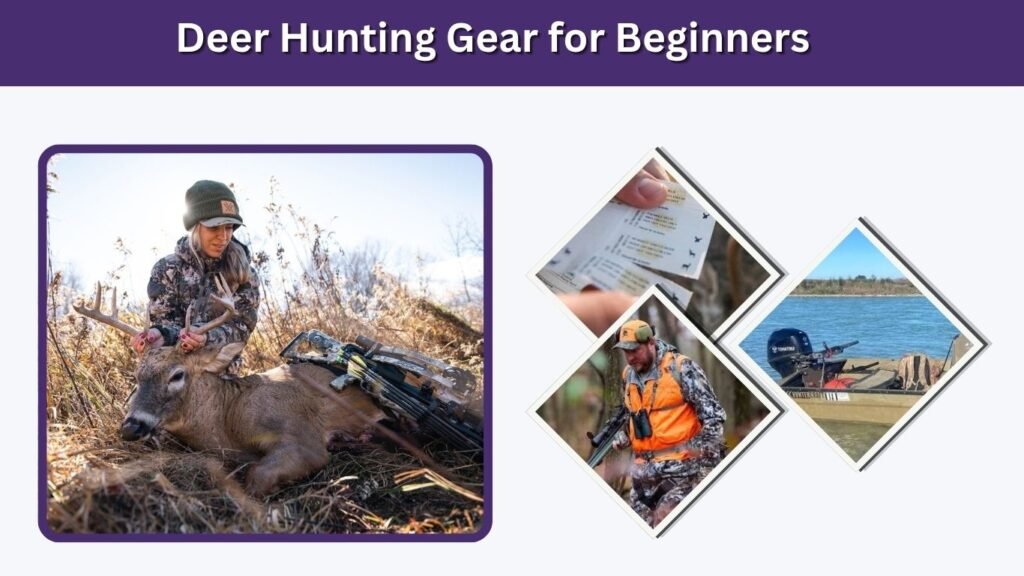
Beginner deer hunting gear does not need to be complicated. Prioritize safety, weather protection, navigation, and equipment you can use confidently. Carrying too much unnecessary gear can make long walks uncomfortable, while forgetting essentials can end a hunt early. Build a simple checklist and adjust it as you gain experience.
Essential Deer Hunting Gear
A beginner’s basic checklist may include:
- Current hunting license and required tags
- Legal hunting firearm, bow, or crossbow
- Appropriate ammunition or arrows
- Blaze-orange clothing where required
- Weather-appropriate layers
- Waterproof, broken-in boots
- Binoculars
- Navigation tool or offline map
- Headlamp with spare batteries
- Water and snacks
- Basic first-aid kit
- Field gloves and appropriate recovery supplies
Dress for the Conditions
Comfort matters because deer hunting often involves sitting quietly for extended periods.
Use layers that can be added or removed as temperatures change. Avoid becoming sweaty during the walk to your hunting location because damp clothing can make cold conditions much less comfortable later.
Good boots are particularly important for uneven, wet, or rocky terrain.
Rifle, Bow or Crossbow for Deer Hunting
Beginners can hunt deer using several legal methods, depending on local seasons and regulations. The best choice is equipment you are legally permitted to use, have been properly trained with, and can operate consistently and safely. Do not choose equipment simply because another hunter recommends it; familiarity, fit, regulations, and responsible practice matter more.
Deer Hunting Rifle for Beginners
A beginner using a firearm should receive proper instruction and spend time practicing under controlled conditions before hunting.
Four fundamental firearm-safety principles are especially important: treat every firearm as loaded, keep the muzzle pointed in a safe direction, keep your finger outside the trigger guard until ready, and positively identify the target and what lies beyond it.
Select a legal deer-hunting setup appropriate for your jurisdiction and seek guidance from a qualified instructor rather than choosing based only on power or popularity.
Bow and Crossbow Hunting
Bow hunting requires additional practice because effective distances are generally shorter and consistency is critical.
A bow should fit the hunter properly, and beginners should practice from realistic field positions rather than only under ideal conditions.
Crossbows can reduce some of the physical demands of drawing a conventional bow, but they still require training, careful handling, and knowledge of local archery regulations.
How to Scout for Deer
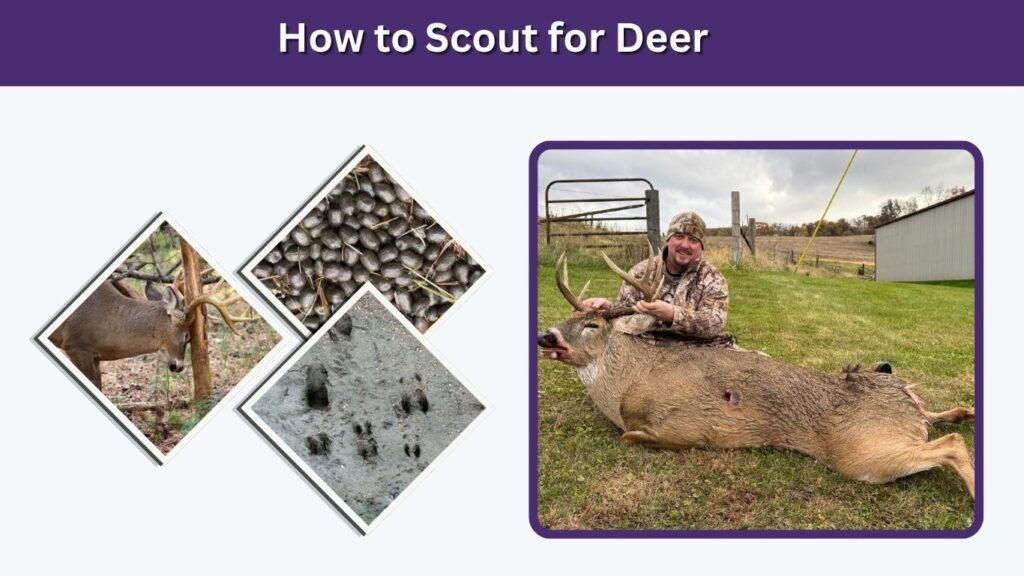
Scouting teaches you where deer feed, bed, travel, and enter hunting areas. Beginners often benefit more from learning the landscape than from constantly changing equipment. Walk prospective areas before the season where permitted, study maps, and observe without unnecessarily disturbing deer. Concentrate on repeated signs rather than assuming one track means a location is consistently active.
Deer Signs to Look For
Useful scouting clues include:
- Deer tracks
- Droppings
- Well-used trails
- Bedding areas
- Feeding locations
- Rubs on trees
- Scrapes during breeding season
- Natural funnels
- Water sources
- Tracks crossing field edges
A combination of fresh signs is generally more useful than one isolated clue.
Pay Attention to Wind
Deer have an excellent sense of smell, making wind direction important when approaching and choosing a hunting position.
Try to avoid allowing your scent to blow directly toward locations where you expect deer to approach.
Also consider how you will enter and leave the area. Walking directly through frequently used deer trails can disturb the location before the hunt begins.
Deer Hunting Tips for Beginners
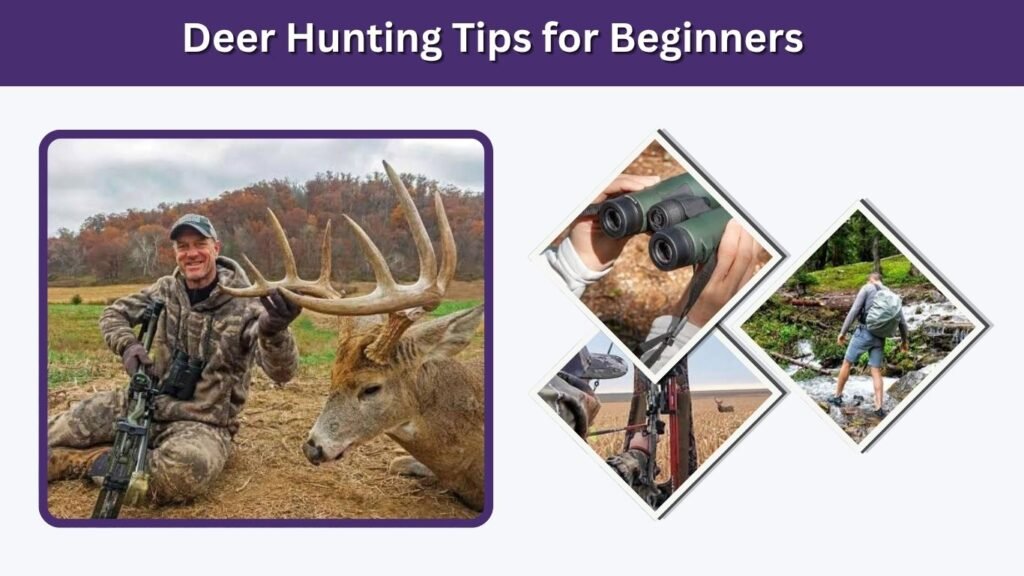
Successful deer hunting often depends on patience and preparation rather than constant movement. Beginners sometimes become discouraged because they expect to see deer immediately. Spending quiet time observing the woods teaches valuable lessons about wildlife movement, weather, wind, and habitat. Treat early hunts as learning experiences rather than judging success only by whether you harvest a deer.
Basic Deer Hunting Tips
Keep these beginner tips in mind:
- Arrive with enough time to settle quietly.
- Minimize unnecessary movement.
- Keep your phone and other distractions controlled.
- Watch trails and habitat edges carefully.
- Use binoculars rather than guessing at distant animals.
- Pay attention to changing wind direction.
- Avoid rushing a shot opportunity.
- Hunt within your practiced abilities.
- Stay patient when deer movement is slow.
Safety and Ethical Hunting
Responsible hunters prioritize safety and humane decision-making over taking a shot. Hunter-education guidance specifically emphasizes obeying laws, practicing safe handling, respecting wildlife, and waiting for an appropriate opportunity.
Always:
- Positively identify the animal before considering a shot.
- Know what is behind and beyond the target.
- Remain within your practiced capabilities.
- Avoid uncertain or obstructed opportunities.
- Follow all legal tagging and reporting requirements.
- Never allow excitement to override basic safety.
Understanding Deer Movement
Deer movement changes with habitat, hunting pressure, food availability, weather, breeding activity, and time of day. Rather than looking for one universal hunting formula, beginners should learn how deer use the particular property they are hunting. Repeated observation usually provides better information than relying entirely on generalized hunting advice.
Whitetail Deer Hunting for Beginners
Whitetails commonly use cover, travel corridors, bedding areas, and feeding locations throughout their daily routines.
Field edges may provide easy-to-recognize feeding areas, while wooded funnels, creek crossings, and transitions between habitat types can concentrate movement.
Avoid repeatedly disturbing a promising location just to check whether deer are present.
Mule Deer Hunting for Beginners
Mule deer hunting can involve more open terrain and extensive observation.
Binoculars become particularly useful for locating animals without walking through every section of habitat. Terrain, elevation, vegetation, and access may require considerably more walking than some forms of whitetail hunting, so physical preparation and navigation skills become important.
After a Deer Is Harvested
A beginner’s responsibilities do not end when a deer is successfully harvested. Follow local tagging or reporting requirements immediately and recover the animal responsibly. Before the season, learn what your jurisdiction requires and arrange transportation, meat processing, and safe food handling in advance so you are not trying to solve these issues unexpectedly in the field.
Recovery and Tagging
Approach recovery carefully and follow the procedures taught in your hunter-education course.
Once the deer is recovered, complete required tagging or reporting according to local law. Requirements vary considerably between jurisdictions, making it important to read current regulations before the hunt rather than waiting until afterward.
Plan for the Meat
Know in advance whether you will process the deer yourself or use a professional processor.
Keeping harvested game clean and cooling it appropriately are important parts of responsible hunting. Beginners can benefit greatly from accompanying an experienced hunter or mentor during their first recovery and processing experience.
FAQs
1. Is deer hunting difficult for beginners?
There is a learning curve, but beginners can develop the necessary skills through hunter education, practice, scouting, and time spent with experienced hunters.
2. What gear does a beginner deer hunter need?
Start with required licenses, legal hunting equipment, safety clothing, weather-appropriate layers, boots, binoculars, navigation, lighting, water, and a small first-aid kit.
3. Should a beginner hunt deer with a rifle or bow?
Either can be appropriate where legal. Choose the method for which you can obtain proper training and practice consistently. Archery typically requires significant practice and closer opportunities.
4. What is the most important deer hunting tip for beginners?
Prioritize safety and patience. Learn your equipment, regulations, deer behavior, and hunting area before worrying about advanced strategies or expensive equipment.
5. Do beginners need a hunting license?
In the United States, a state hunting license is generally required, with additional requirements varying by jurisdiction. Always check the current rules from the official wildlife agency where you intend to hunt.
