
Storks are large, graceful wading birds known for their long legs, strong bills, and impressive wingspans. In Florida, wetlands provide an ideal environment for these birds, although only a few species are naturally found in the region. Many others belong to distant parts of the world but are often included for comparison and identification purposes. Understanding different stork species helps birdwatchers and nature enthusiasts recognize their unique features, behaviors, and habitats while appreciating the diversity of these remarkable birds.
1. Wood Stork
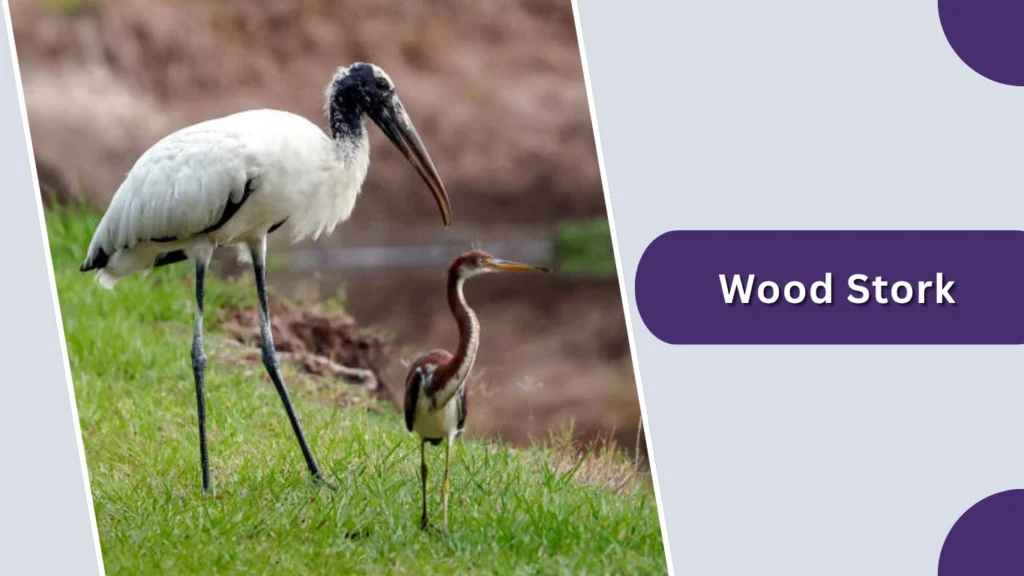
The Wood Stork is the only stork species that breeds regularly in Florida, making it a familiar sight in wetlands, marshes, and swamps. Known for its large size and distinctive appearance, this bird plays an important role in the ecosystem. It is often seen slowly wading through shallow waters in search of food.
Identification
- Large wading bird with a wingspan of up to 5.5 feet
- White body with contrasting black flight feathers
- Bald, dark gray to black head and neck
- Long, thick, slightly curved bill
- Long legs, usually gray or dark-colored
Habitat and Distribution
Wood Storks are commonly found in freshwater and brackish wetlands across Florida. They prefer shallow water areas such as marshes, swamps, and flooded fields where food is concentrated. While they are most abundant in the southeastern United States, Florida serves as a key breeding ground, especially in protected wetland areas.
Behavior and Diet
These birds are known for their unique feeding technique called “tactile feeding.” They walk slowly through the water with their bills open, snapping them shut quickly when they detect prey. Their diet mainly consists of small fish, but they also eat amphibians and insects. Wood Storks are social birds and often feed and nest in groups, especially during breeding season.
Conservation Status
The Wood Stork was once listed as endangered in the United States due to habitat loss and water management issues. Conservation efforts have helped improve their population, but they still depend heavily on healthy wetland ecosystems. Protecting these habitats is essential to ensure the survival of this iconic Florida species.
2. White Stork
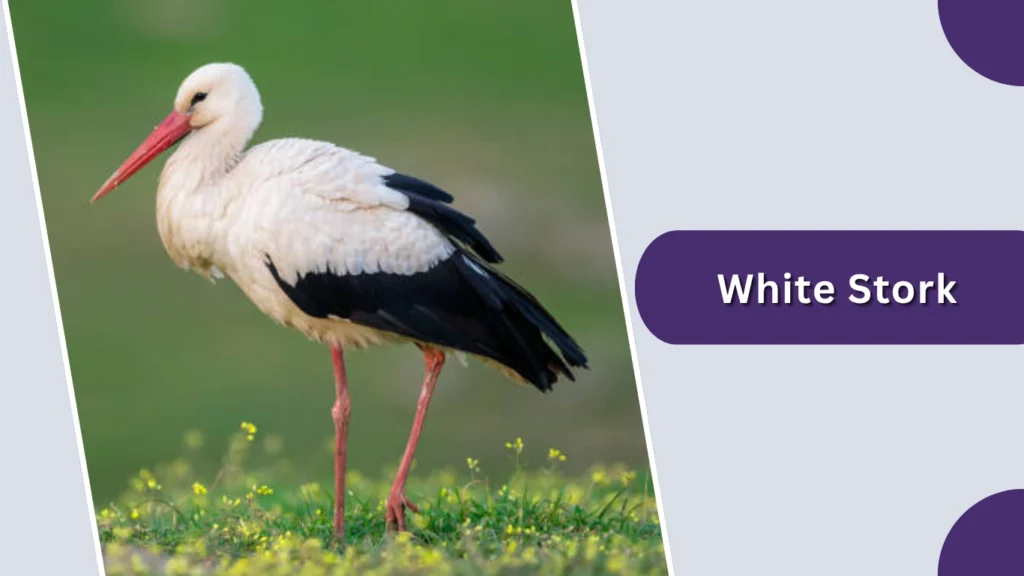
The White Stork is a large, elegant bird widely known across Europe, Asia, and parts of Africa. Although it is not native to Florida, it is sometimes seen in captivity or as a rare visitor. Its striking appearance and cultural significance make it one of the most recognized stork species worldwide.
Identification
- Large white bird with bold black wing feathers
- Long, straight red bill
- Long red legs
- Slender neck and graceful posture
- Wingspan reaching up to 7 feet
Habitat and Distribution
White Storks typically inhabit open landscapes such as grasslands, wetlands, and agricultural areas. They prefer regions with access to shallow water and abundant food. While Florida is not part of their natural range, occasional sightings may occur due to escapees or unusual migration patterns.
Behavior and Diet
These storks are known for their migratory behavior, traveling long distances between breeding and wintering grounds. They feed on a wide variety of prey including insects, small mammals, amphibians, and reptiles. White Storks often forage in open fields, walking slowly while scanning the ground for movement.
Conservation Status
The White Stork has a stable global population and is considered a species of least concern. Conservation efforts in Europe, such as nest protection and habitat management, have helped maintain their numbers. However, like many large birds, they still face threats from habitat loss and environmental changes.
3. Black Stork
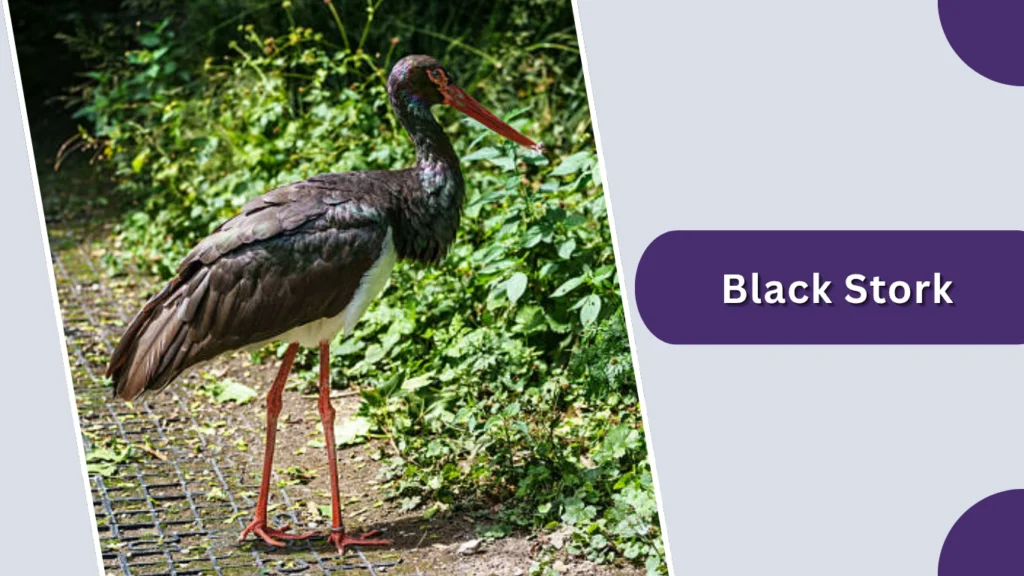
The Black Stork is a striking and more secretive relative of the White Stork, known for its dark, glossy plumage and preference for secluded habitats. Unlike more social storks, this species tends to avoid human activity. It is not native to Florida but may occasionally appear as a rare vagrant.
Identification
- Large bird with mostly black plumage showing a green and purple sheen
- White belly contrasting with dark upperparts
- Long, straight red bill
- Red legs and feet
- Wingspan of about 6 feet
Habitat and Distribution
Black Storks typically live in remote forests, wetlands, and river valleys across Europe, Asia, and parts of Africa. They favor quiet, undisturbed areas near water sources. In Florida, sightings are extremely rare and usually involve accidental visitors rather than established populations.
Behavior and Diet
This species is more solitary compared to other storks. It feeds mainly on fish, amphibians, and small aquatic creatures, often foraging in shallow streams or wetlands. Black Storks are strong fliers and migratory, traveling long distances between breeding and wintering areas while avoiding heavily populated regions.
Conservation Status
The Black Stork is currently listed as a species of least concern globally, but its population is sensitive to habitat disturbance. Deforestation and wetland degradation can impact breeding success. Conservation efforts focus on protecting remote habitats and minimizing human interference in nesting areas.
4. Asian Openbill
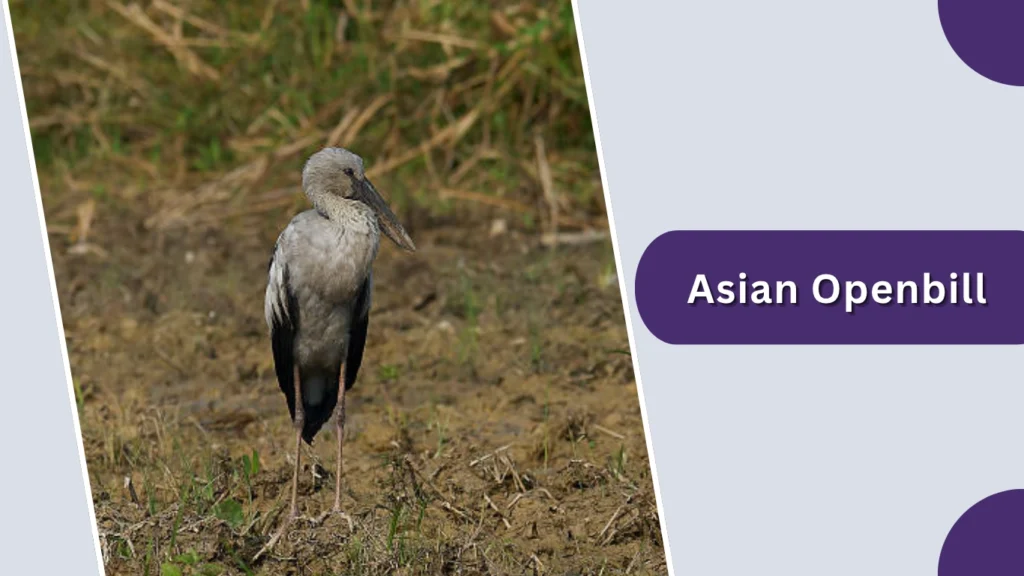
The Asian Openbill is a distinctive stork species recognized for the unique gap between its upper and lower bill. Native to South and Southeast Asia, it is not naturally found in Florida but may occasionally appear in collections or as a rare escapee. Its unusual bill shape is specially adapted for its feeding habits.
Identification
- Medium to large stork with grayish-white body
- Glossy black wings with a greenish sheen
- Noticeable gap between the upper and lower mandibles
- Long, pale legs
- Slightly curved, thick bill
Habitat and Distribution
Asian Openbills are commonly found in wetlands, marshes, rice fields, and floodplains across countries like India, Bangladesh, and Thailand. They prefer areas with abundant freshwater and food sources. In Florida, they are not part of the natural ecosystem and would only be seen under unusual circumstances.
Behavior and Diet
This species is highly specialized in feeding on aquatic snails, which it skillfully extracts using its uniquely shaped bill. It may also consume frogs and other small wetland creatures. Asian Openbills are social birds, often seen in large flocks, especially during feeding and breeding seasons.
Conservation Status
The Asian Openbill is considered a species of least concern due to its wide distribution and stable population. It has adapted well to human-altered environments like rice paddies. However, wetland degradation and pollution still pose potential risks to its long-term survival.
5. African Openbill
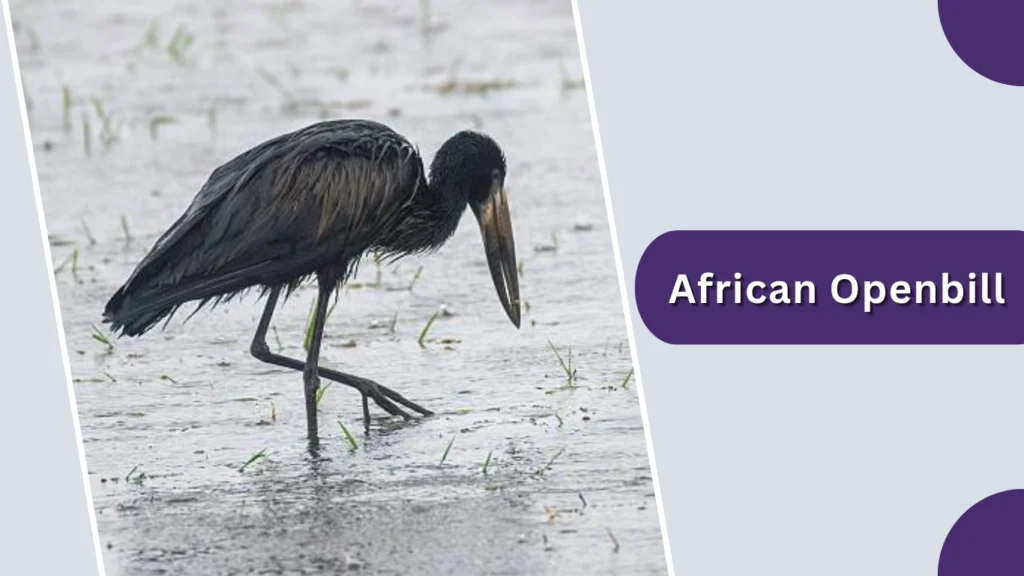
The African Openbill is a close relative of the Asian Openbill and shares the same distinctive bill gap used for feeding. This species is native to sub-Saharan Africa and is not naturally found in Florida. However, it may occasionally be seen in captivity or as an escaped bird.
Identification
- Medium-sized stork with mostly dark brown to black plumage
- Glossy feathers with hints of green and purple sheen
- Distinct gap between upper and lower bill
- Long legs, usually dark in color
- Slightly curved, strong bill adapted for feeding
Habitat and Distribution
African Openbills are commonly found in wetlands such as lakes, marshes, rivers, and floodplains across sub-Saharan Africa. They prefer shallow waters rich in food sources. In Florida, they are not part of the native bird population and would only appear in rare, non-natural situations.
Behavior and Diet
This species is well known for feeding primarily on aquatic snails. Its specialized bill allows it to easily extract snails from their shells. African Openbills are social birds and are often seen in flocks, especially during feeding. They may also eat frogs and other small aquatic animals when available.
Conservation Status
The African Openbill is considered a species of least concern due to its wide range and stable population. It has adapted well to wetland environments, but like many waterbirds, it depends on healthy ecosystems. Habitat destruction and water pollution remain potential threats.
6. Marabou Stork
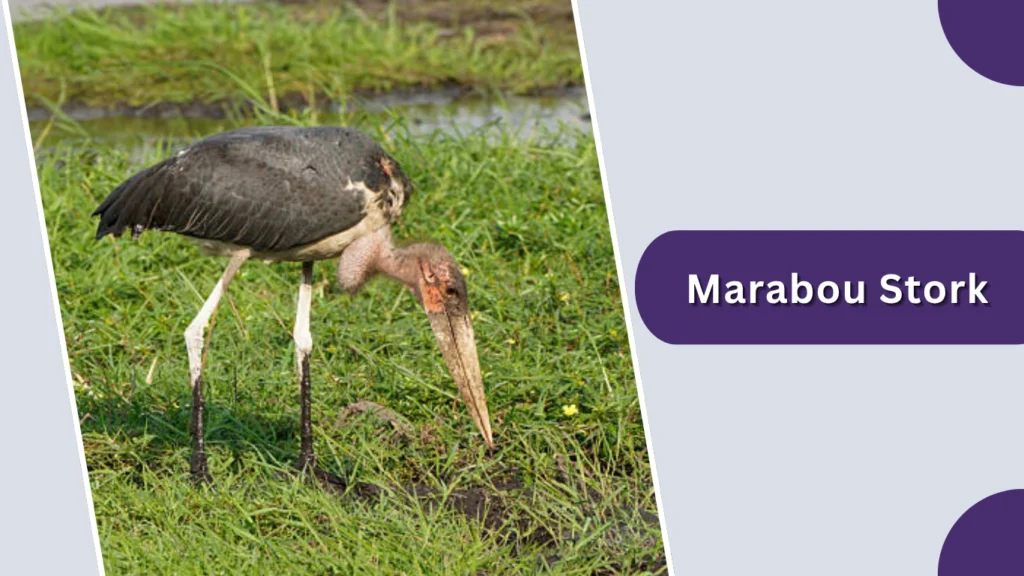
The Marabou Stork is one of the largest and most distinctive stork species, known for its massive size and somewhat unusual appearance. Native to Africa, it is not found in the wild in Florida but may be seen in zoos or as a rare escapee. It is often associated with scavenging behavior.
Identification
- Very large bird with a wingspan up to 10 feet
- Bald head and neck with pinkish skin
- Large, heavy, straight bill
- Prominent throat pouch (gular sac)
- Dark back and wings with a white underbody
Habitat and Distribution
Marabou Storks are widely distributed across sub-Saharan Africa. They inhabit open areas such as savannas, wetlands, and even urban regions near garbage dumps. In Florida, they are not naturally present and would only appear in controlled environments or unusual cases.
Behavior and Diet
This species is both a scavenger and a hunter. It feeds on carrion, fish, small mammals, and birds. Marabou Storks are often seen near human settlements, taking advantage of food waste. They are also known to gather in groups, especially where food is abundant.
Conservation Status
The Marabou Stork is currently listed as a species of least concern due to its large and stable population. Its adaptability to different environments, including urban areas, has helped maintain its numbers. However, environmental pollution and habitat changes could impact local populations over time.
7. Jabiru
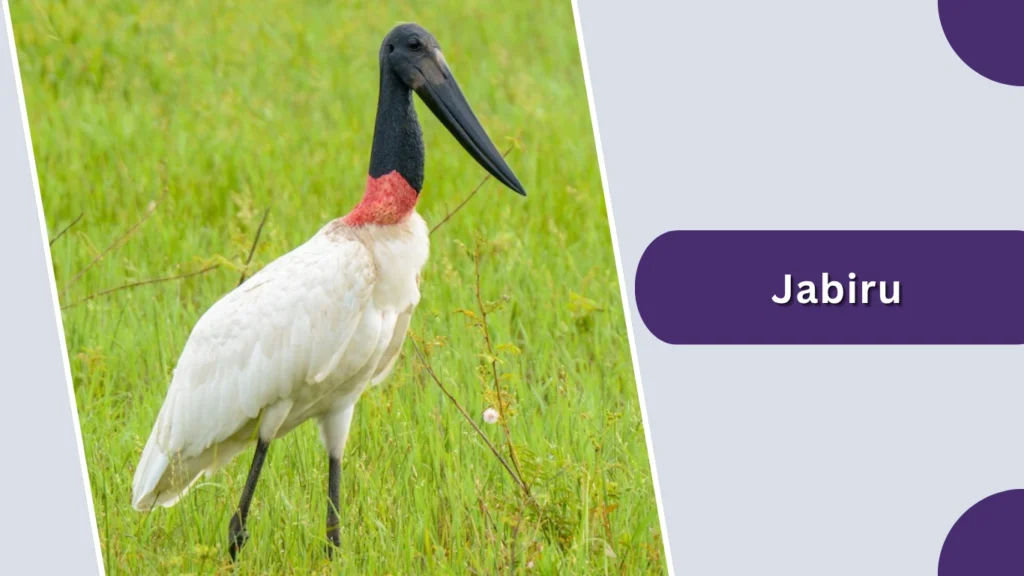
The Jabiru is the tallest flying bird in the Americas and a striking member of the stork family. While it is mainly found in Central and South America, it is only rarely seen in Florida as a vagrant. Its large size and bold coloration make it easy to recognize.
Identification
- Very large stork with a height of up to 5 feet
- White body with contrasting black head and neck
- Bright red band at the base of the neck
- Long, thick, slightly upturned black bill
- Long, dark legs
Habitat and Distribution
Jabirus are typically found in tropical wetlands, including marshes, swamps, and flooded savannas. They are widely distributed across countries like Brazil, Mexico, and Argentina. In Florida, sightings are extremely rare and usually involve wandering individuals rather than established populations.
Behavior and Diet
These birds are often seen alone or in small groups. They feed mainly on fish, but also consume amphibians, reptiles, and small mammals. Jabirus forage by walking slowly through shallow water, using their large bills to catch prey. They are strong fliers and can travel long distances in search of food.
Conservation Status
The Jabiru is considered a species of least concern globally, although some local populations face pressure from habitat loss. Wetland destruction and human disturbance can impact breeding areas. Conservation of natural wetlands is important for maintaining stable populations of this impressive bird.
8. Yellow-billed Stork
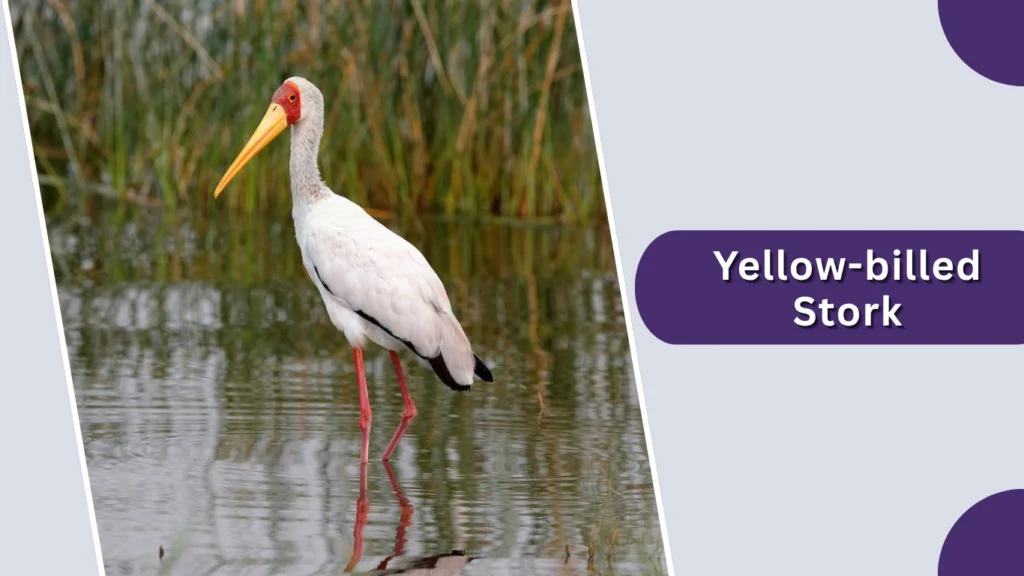
The Yellow-billed Stork is a graceful wading bird native to Africa, known for its bright bill and elegant feeding style. It is not naturally found in Florida but may occasionally be seen in captivity or as a rare escapee. Its vibrant features make it one of the more visually striking storks.
Identification
- Medium to large stork with mostly white plumage
- Bright yellow, slightly curved bill
- Pinkish face with bare skin around the eyes
- Black flight feathers visible during flight
- Long legs, often reddish or pink
Habitat and Distribution
Yellow-billed Storks are commonly found in wetlands such as lakes, rivers, floodplains, and marshes across sub-Saharan Africa. They prefer shallow waters where prey is easy to catch. In Florida, they are not part of the native ecosystem and would only appear under unusual circumstances.
Behavior and Diet
This species feeds using a tactile method similar to the Wood Stork, sweeping its partially open bill through the water to detect prey. It primarily eats fish, but also consumes frogs, insects, and small aquatic animals. Yellow-billed Storks are often seen in groups, especially in areas with abundant food.
Conservation Status
The Yellow-billed Stork is listed as a species of least concern due to its wide distribution and stable population. It adapts well to seasonal changes in water levels, but like other wetland birds, it depends on healthy aquatic habitats for survival.
9. Abdim’s Stork
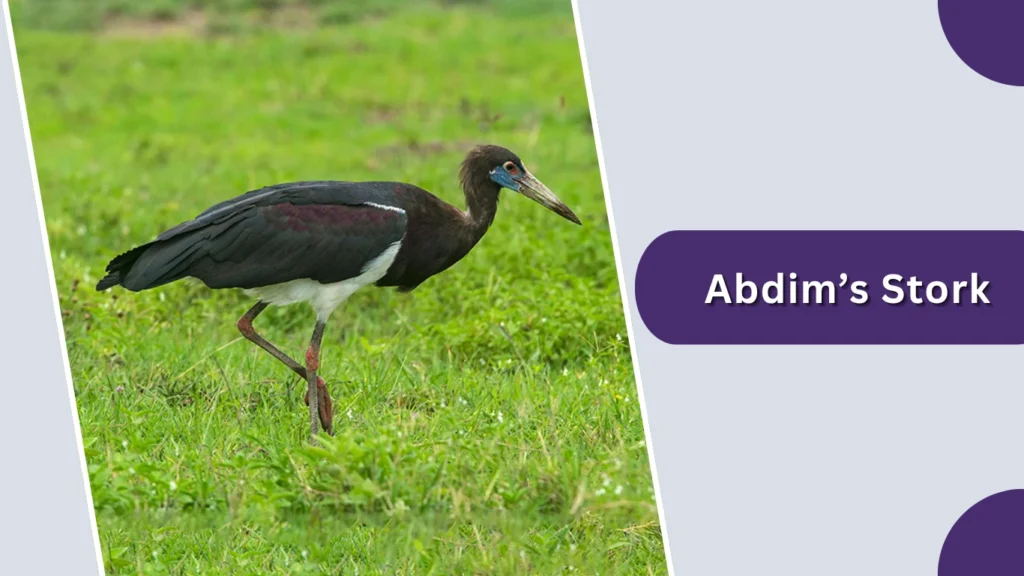
Abdim’s Stork is a smaller and more agile member of the stork family, native to Africa. It is known for its seasonal movements and association with rain patterns. This species is not naturally found in Florida but may appear in captivity or as a rare escapee.
Identification
- Smaller stork compared to most species
- Dark plumage with a metallic green and purple sheen
- White belly contrasting with dark upperparts
- Grayish bill with a pale tip
- Reddish legs and facial skin
Habitat and Distribution
Abdim’s Storks are widely distributed across sub-Saharan Africa, particularly in open savannas, grasslands, and agricultural areas. They often follow seasonal rains to find food. In Florida, they are not part of the natural bird population and would only be seen in unusual or controlled settings.
Behavior and Diet
These storks are highly social and are often seen in large flocks. They feed mainly on insects such as locusts and grasshoppers, making them beneficial for controlling pest populations. Unlike many storks, they are frequently found in drier habitats rather than wetlands.
Conservation Status
Abdim’s Stork is considered a species of least concern due to its wide range and healthy population. Its adaptability to different environments, including farmland, has helped sustain its numbers. However, changes in climate and land use could affect their migratory patterns in the future.
10. Woolly-necked Stork
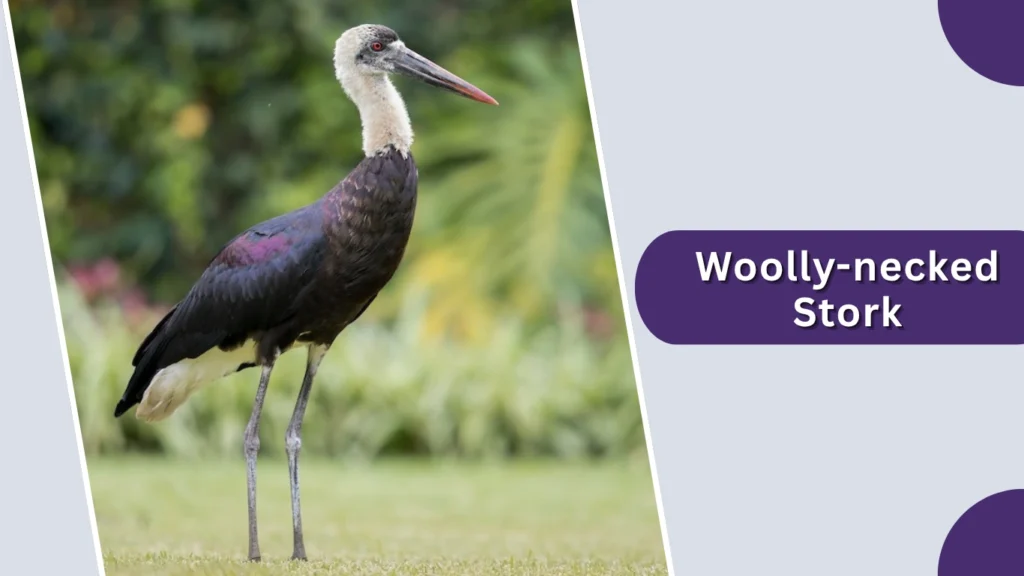
The Woolly-necked Stork is a distinctive and elegant species known for its contrasting colors and soft-looking neck feathers. Native to parts of Africa and Asia, it is not naturally found in Florida but may occasionally be seen in captivity or as an escapee. Its striking appearance makes it easy to identify among storks.
Identification
- Medium to large stork with dark body plumage
- White, “woolly” neck giving a fluffy appearance
- Black head with glossy sheen
- Long, straight dark bill
- Long legs, usually reddish or dull-colored
Habitat and Distribution
Woolly-necked Storks inhabit a variety of environments including wetlands, rivers, grasslands, and agricultural fields. They are widely distributed across sub-Saharan Africa and South Asia. In Florida, they are not part of the natural ecosystem and would only appear in rare or controlled situations.
Behavior and Diet
This species is often seen alone, in pairs, or in small groups. It feeds on a mixed diet that includes fish, frogs, insects, and small reptiles. Woolly-necked Storks forage both in water and on land, showing more versatility than many other stork species.
Conservation Status
The Woolly-necked Stork is generally listed as a species of least concern globally, though some regional populations are declining. Habitat loss and changes in wetland ecosystems can impact their numbers. Conservation efforts focus on protecting both wetland and agricultural habitats.
11. Saddle-billed Stork
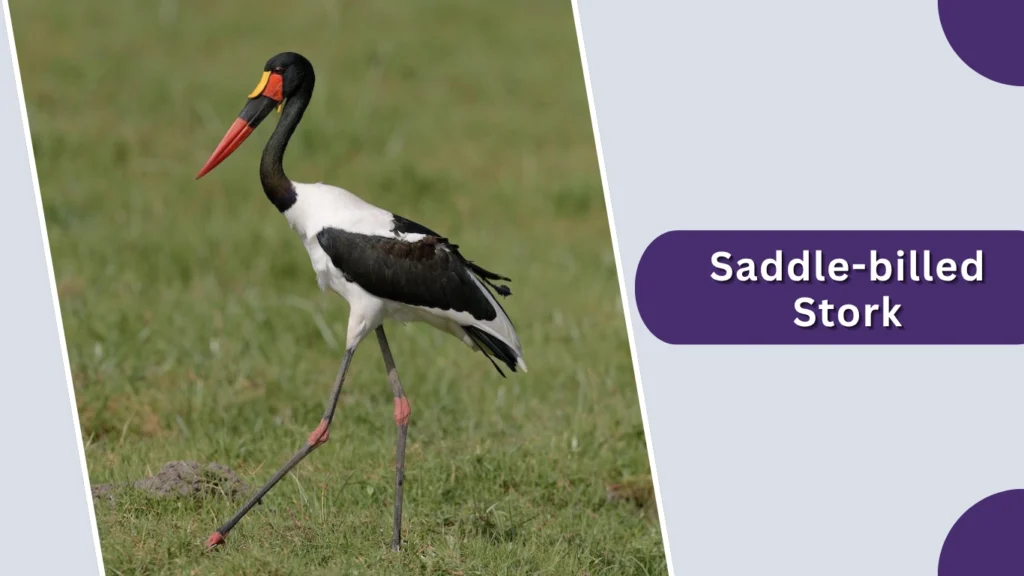
The Saddle-billed Stork is one of the most colorful and striking stork species, easily recognized by its vibrant bill. Native to Africa, it is not found in the wild in Florida but may occasionally be seen in zoos or as an escapee. Its bold appearance makes it stand out among other large wading birds.
Identification
- Large stork with a white body and black wings
- Bright red bill with a distinctive yellow “saddle” near the base
- Black head and neck with glossy sheen
- Long red legs
- Tall and upright posture
Habitat and Distribution
Saddle-billed Storks are found across sub-Saharan Africa in wetlands such as rivers, lakes, marshes, and floodplains. They prefer areas with shallow water and abundant food. In Florida, they are not part of the natural bird population and would only appear in controlled environments or rare cases.
Behavior and Diet
These storks are usually seen alone or in pairs rather than large groups. They feed mainly on fish, but also consume frogs, small reptiles, and crustaceans. Saddle-billed Storks forage by walking slowly through shallow water, using their strong bills to catch prey with precision.
Conservation Status
The Saddle-billed Stork is considered a species of least concern, although some populations are affected by habitat loss. Wetland degradation and human disturbance can impact their breeding and feeding areas. Protecting natural water systems is important for maintaining stable populations.
12. Storm’s Stork
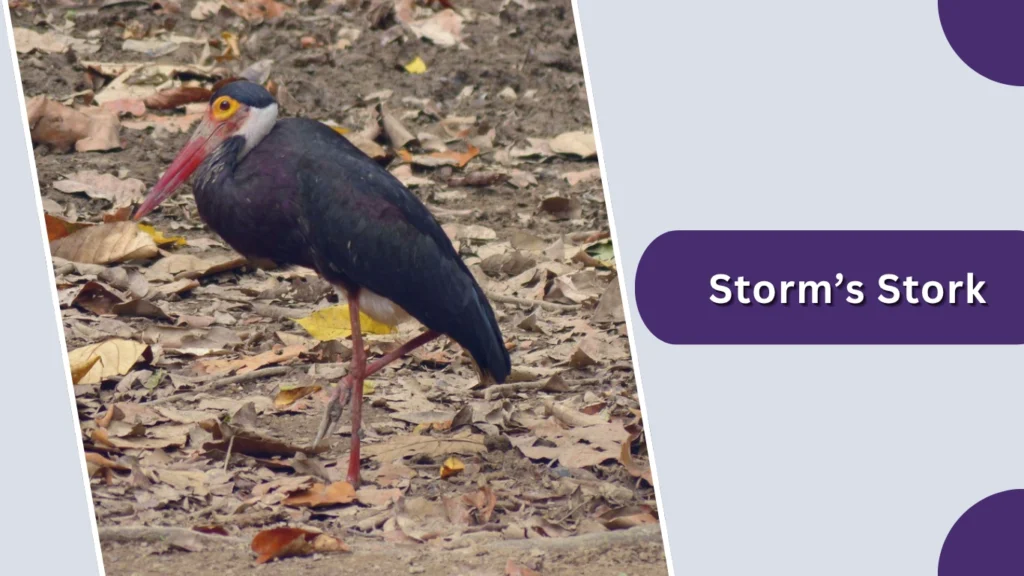
Storm’s Stork is a rare and lesser-known species found in parts of Southeast Asia. It is known for its elusive nature and preference for dense forest habitats. This stork is not found in Florida and would only be seen in highly unusual circumstances, such as captivity or accidental displacement.
Identification
- Medium-sized stork with dark blackish plumage
- White patches on the neck and lower body
- Orange to reddish facial skin
- Long, slightly curved bill
- Slender legs, often dull-colored
Habitat and Distribution
Storm’s Storks inhabit lowland tropical rainforests, especially near rivers and wetlands in countries like Indonesia, Malaysia, and Thailand. They prefer secluded and undisturbed environments. In Florida, they are not part of the natural wildlife and would not occur in the wild under normal conditions.
Behavior and Diet
This species is very shy and usually seen alone or in pairs. It feeds on fish, frogs, and small aquatic animals, often foraging quietly along forest streams. Due to its secretive behavior, it is rarely observed in the wild compared to other storks.
Conservation Status
Storm’s Stork is considered endangered due to habitat loss and deforestation. Its population is declining as tropical forests are cleared for agriculture and development. Conservation efforts are focused on protecting remaining forest habitats and reducing human disturbance.
FAQs
Are all these storks found in Florida?
No, only the Wood Stork is native and commonly found in Florida. The others listed are mostly from Africa, Asia, or other regions. They may only appear in Florida in zoos, captivity, or as rare accidental visitors, not as part of the natural ecosystem.
Which stork is most common in Florida?
The Wood Stork is the most common and the only breeding stork species in Florida. It is frequently seen in wetlands, marshes, and swamps, where it feeds and nests in groups, especially during the breeding season.
Why are many of these storks not native to Florida?
Storks are distributed across different continents based on climate and habitat. Many species prefer tropical regions in Africa and Asia. Florida’s ecosystem mainly supports the Wood Stork, which has adapted specifically to its wetland environments.
What do storks usually eat?
Most storks are carnivorous and feed on fish, frogs, insects, and small animals. Some species, like openbills, specialize in eating snails. Their diet depends on their habitat and bill shape, which helps them catch and handle specific types of prey.
Are storks endangered?
Not all storks are endangered. Many species are listed as least concern, but some, like Storm’s Stork, face serious threats. Habitat loss, pollution, and environmental changes are the main risks affecting stork populations around the world.
