
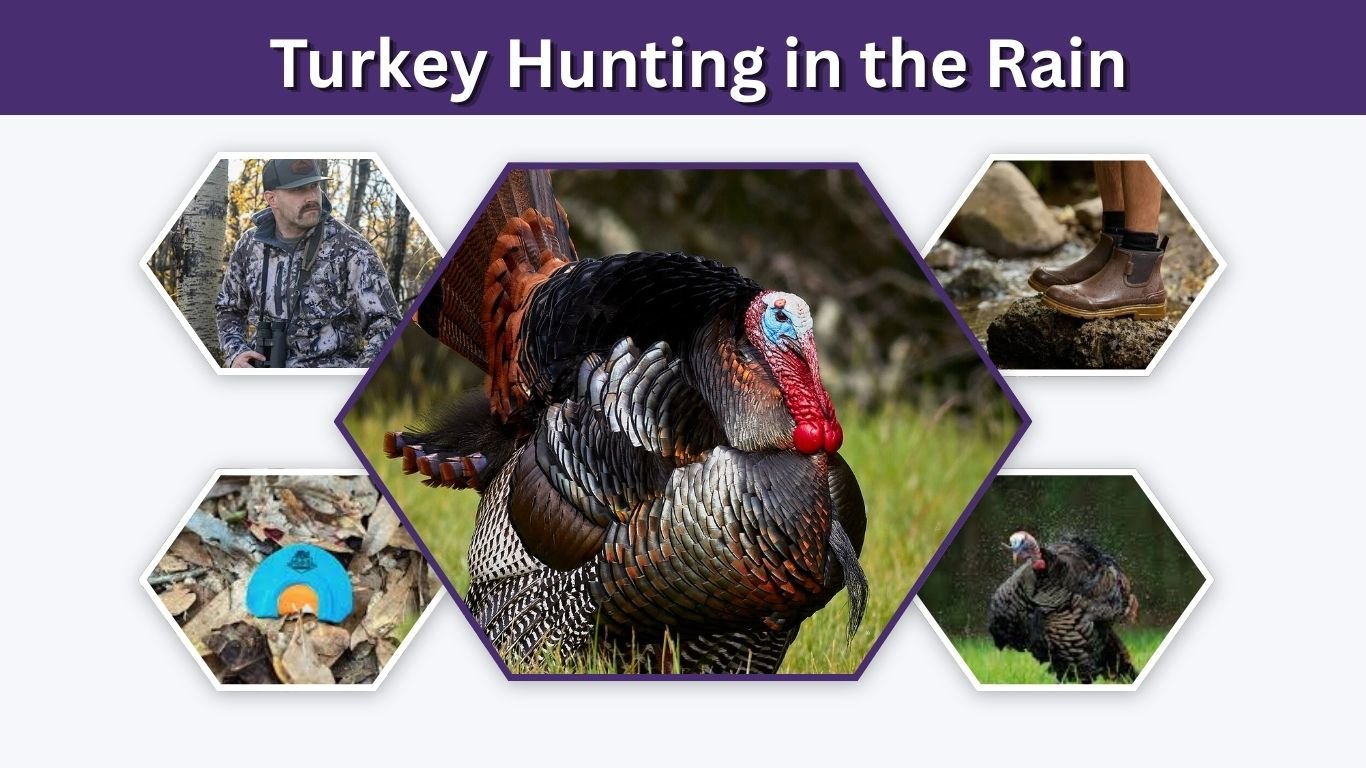
Turkey hunting in the rain can be surprisingly productive when you understand how wet weather affects wild turkeys. Although rainy conditions may reduce gobbling and change their movement patterns, turkeys continue feeding, traveling, and searching for mates. Light rain can even create useful hunting opportunities, especially around open fields and forest edges. Whether you’re hunting spring gobblers or fall flocks, knowing where to look, when to call, and how to stay comfortable can make rainy-day turkey hunting successful.
Can You Hunt Turkeys in the Rain?
Yes, you can hunt turkeys in the rain, provided the hunting season is open and weather conditions are safe. Wild turkeys remain active during rainy weather, although their behavior may differ from what hunters experience on clear, sunny mornings.
Light rain generally creates better hunting conditions than heavy downpours. Turkeys may continue feeding in open fields, moving along woodland edges, and responding to calls.
However, heavy rainfall can temporarily reduce movement and make gobbling harder to hear.
The key is adjusting your hunting strategy to changing weather conditions rather than abandoning your hunt when rain begins.
How Does Rain Affect Wild Turkey Behavior?
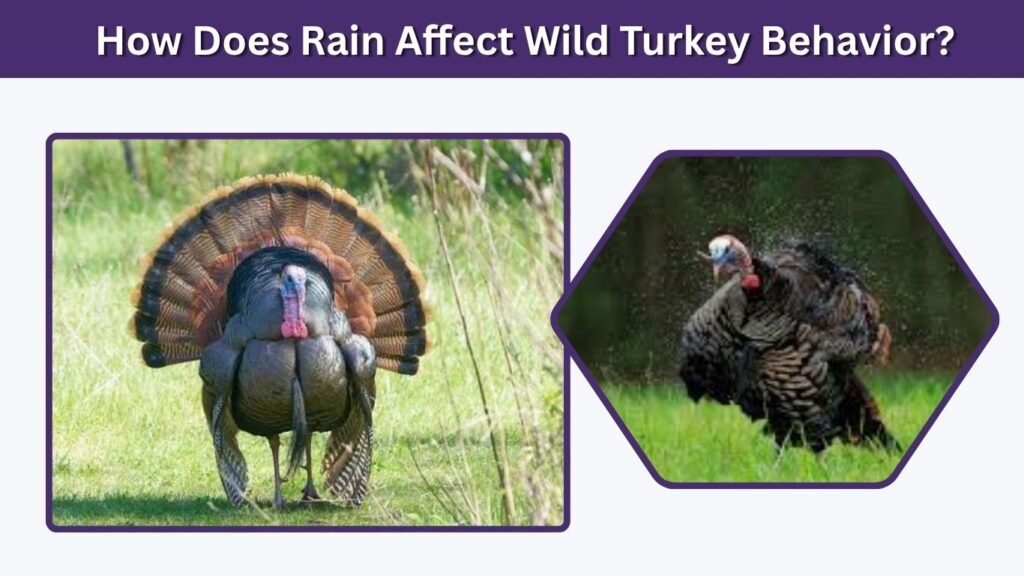
Rain influences where wild turkeys travel, how frequently they gobble, and which habitats they prefer. Understanding these changes can help hunters predict where birds might appear throughout the day.
Do Turkeys Move Around in the Rain?
Wild turkeys continue moving during light and moderate rainfall. They often visit open fields, pastures, logging roads, and other areas with good visibility.
These locations allow turkeys to watch for predators when rain makes surrounding sounds harder to detect.
During intense rainfall, some birds temporarily reduce movement or seek sheltered areas. Their exact behavior depends on temperature, wind, habitat, and storm intensity.
Do Turkeys Gobble in the Rain?
Yes, male turkeys can gobble during rainy weather, but they generally become less vocal.
Research discussed by the National Wild Turkey Federation found that rainfall substantially suppressed gobbling activity, with approximately a 50% reduction in the research summarized.
However, reduced gobbling does not necessarily mean turkeys have stopped moving.
Hunters should remain alert because a gobbler may approach quietly without announcing its presence.
Is Turkey Hunting Good in Light or Heavy Rain?
Not all rainy conditions affect turkey hunting equally. A gentle drizzle, steady rainfall, and powerful storm can produce different turkey behaviors.
Understanding these differences helps hunters choose suitable locations and avoid wasting time in unproductive or dangerous conditions.
Turkey Hunting in Light Rain
Light rain is often excellent for turkey hunting. Birds may remain active and continue their regular feeding routines.
Open pastures, field edges, and woodland clearings are promising locations.
Soft rainfall can also make walking through fallen leaves quieter. However, hunters should still minimize unnecessary movement because turkeys have excellent eyesight.
Turkey Hunting in Steady Rain
During steady rainfall, turkeys frequently use open habitats where visibility is better.
Hunting near agricultural fields, grassy clearings, and established travel routes can be productive.
A ground blind may provide additional comfort during prolonged rainfall, allowing hunters to remain patient without constantly adjusting wet clothing.
Turkey Hunting in Heavy Rain
Heavy rain can make turkey hunting more challenging because visibility decreases, calling becomes difficult to hear, and birds may limit movement.
Some turkeys seek shelter beneath trees or in protected areas.
Instead of constantly changing locations, consider waiting near known feeding areas for conditions to improve. Avoid hunting when lightning, flooding, or dangerous winds are present.
How to Hunt Turkeys in the Rain: 7 Effective Tips
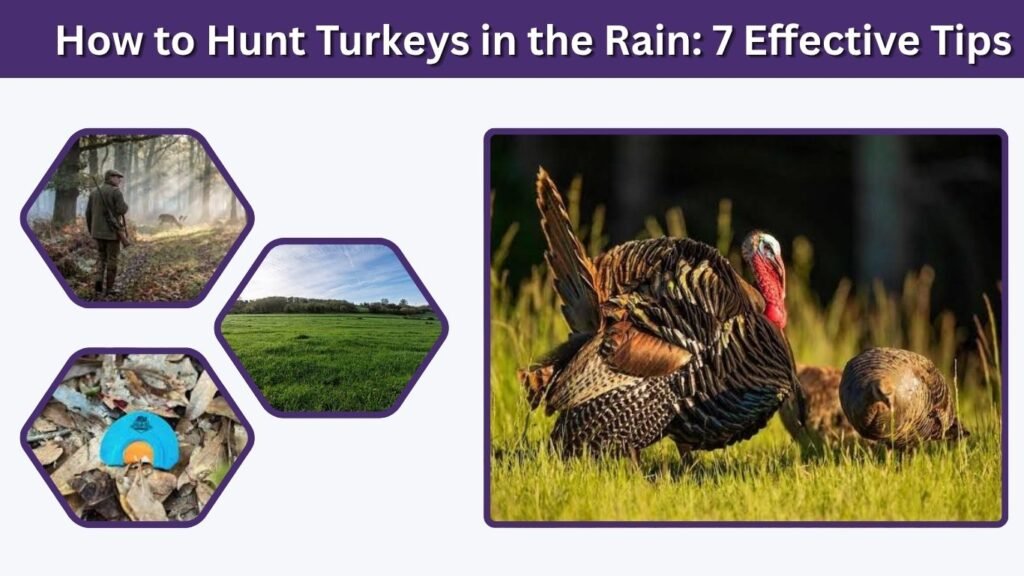
Successful rainy-day turkey hunting depends on adapting your setup and approach to wet conditions. The following tactics can help you locate birds, improve visibility, and make better use of short periods of favorable weather.
1. Focus on Open Fields and Pastures
Open fields are among the most promising locations during light or steady rain.
Turkeys often use these habitats because they can detect approaching predators more easily.
Look for feeding areas near woods, pasture corners, and field edges. Observe from a distance and choose a concealed setup along a likely travel route.
2. Hunt Near Woodland Edges
Woodland edges connect open feeding areas with sheltered forest habitat.
During changing weather, turkeys may move between these locations.
Find a position offering a clear view of natural travel routes without exposing yourself unnecessarily.
Avoid crossing exposed fields toward visible birds. Remaining in a concealed position is generally safer and less likely to disturb them.
3. Adjust Your Turkey Calling Strategy
Rain and wind can make turkey calls difficult to hear.
Consider using:
- Mouth calls: Convenient because moisture does not affect them like traditional wooden friction calls.
- Waterproof pot calls: Useful during prolonged rainfall.
- Clear yelps: Help communicate your presence to nearby gobblers.
- Soft clucks: Useful when birds are already close.
Begin with natural calling rather than calling continuously. Listen carefully between sequences.
4. Take Advantage of Rain Breaks
One of the best times to hunt turkeys is immediately after rainfall decreases or stops.
Birds may return to open areas to feed, preen, and dry their feathers.
Gobbling activity can also improve when conditions become calmer.
The National Wild Turkey Federation specifically recommends taking advantage of breaks in spring rain when turkeys become more active.
5. Consider Using a Ground Blind
A ground blind provides protection from rain and helps conceal small movements.
Choose a location overlooking a known feeding or travel area.
Blinds can be especially useful for hunters planning to remain in one place for several hours.
Always check local regulations before using blinds or decoys.
6. Watch for Silent Gobblers
Rainy conditions often produce quieter hunting experiences.
A gobbler might approach without responding to calls, making frequent observation essential.
Regularly scan nearby field edges and openings while minimizing movement.
Do not assume an area is empty simply because you have not heard gobbling.
7. Stay Patient and Minimize Movement
Patience is especially important when hunting turkeys in wet weather.
Unnecessary movement increases the possibility of being detected.
Choose a comfortable position, keep essential equipment accessible, and allow sufficient time for birds to move naturally.
A quiet rainy morning can still become productive later in the day.
What Is the Best Time to Hunt Turkeys in the Rain?
The best time depends on rainfall intensity, turkey activity, and local hunting regulations.
| Time | Hunting opportunity |
| Early morning | Set up near known roost-to-feeding routes |
| Midmorning | Watch open fields and woodland edges |
| After rainfall stops | Look for increased feeding and movement |
| Afternoon | Monitor feeding areas where hunting is legal |
| During severe storms | Avoid hunting until conditions become safe |
Rain breaks are particularly promising because turkeys may become more visible as they resume normal activities.
Some hunters also experience good opportunities during late-morning periods when gobblers become separated from hens.
Essential Gear for Turkey Hunting in the Rain
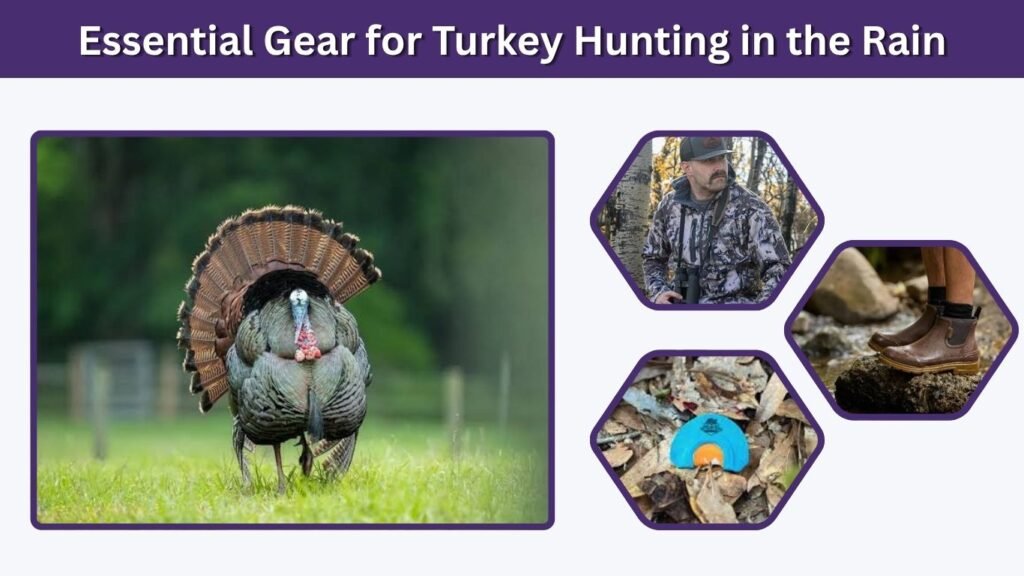
Proper equipment helps hunters remain comfortable, dry, and focused during unpredictable weather.
Consider carrying these essentials:
- Waterproof hunting jacket: Protects against rain while allowing comfortable movement.
- Waterproof boots: Help keep feet dry on muddy ground.
- Water-resistant hunting pants: Reduce discomfort from wet vegetation.
- Waterproof turkey calls: Maintain functionality in damp conditions.
- Ground blind: Provides additional shelter during prolonged rainfall.
- Waterproof equipment bag: Keeps electronics and other supplies protected.
Choose footwear with reliable traction because wet leaves, rocks, and slopes can become slippery.
Always check the weather forecast. If thunderstorms develop, leave exposed locations and seek appropriate shelter. Never remain outdoors during lightning simply to continue hunting.
Spring vs. Fall Turkey Hunting in the Rain
Spring and fall turkey hunting require slightly different approaches.
During spring, male turkeys focus heavily on breeding activity. Hunters frequently use hen calls to attract gobblers, although rain can reduce vocal responses.
In fall, turkeys are more focused on feeding and flock behavior. Locating food sources, established travel routes, and groups of birds becomes particularly important.
During either season, open fields and sheltered woodland edges can provide useful hunting opportunities.
Always confirm the legal season, permitted equipment, shooting hours, and applicable turkey limits before hunting.
FAQs
1. Is Turkey Hunting in the Rain Worth It?
Yes. Light and moderate rain can create productive opportunities, especially near open fields. Hunters who adjust their strategies can still encounter active turkeys.
2. Do Turkeys Come Out After It Rains?
Yes. Turkeys frequently move into open areas after rain to feed, preen, and dry their feathers. These periods can offer excellent hunting opportunities.
3. Should You Turkey Hunt in Cold Rain?
You can hunt during cold rain when conditions are safe, but turkey activity may be reduced. Focus on sheltered locations and known feeding areas, and wear appropriate waterproof clothing.
4. Can You Hunt Turkeys in Rain and Wind?
Yes, although strong wind makes hearing gobbling more difficult. Sheltered field edges, protected valleys, and areas away from direct wind exposure may offer better conditions.
5. Do Turkeys Stay in the Woods When It Rains?
Sometimes. During heavy rainfall, turkeys may seek shelter in wooded habitats. However, light and steady rain often encourage them to use open fields and clearings where visibility is better.
