
Can you duck hunt from a kayak? Yes, kayaking can be an effective way to reach shallow marshes, flooded timber, and secluded waterfowl hunting areas that larger boats cannot easily access. A hunting kayak provides quiet transportation, flexible positioning, and convenient access to remote wetlands. However, successful kayak duck hunting requires careful planning, suitable equipment, and knowledge of local hunting regulations. Whether you use a sit-on-top kayak or a specialized hunting model, this guide explains kayak selection, essential gear, hunting preparation, safety, and regional considerations.
Is It Legal to Duck Hunt From a Kayak?
Duck hunting from a kayak is generally permitted in the United States, but the specific rules depend on federal, state, and local regulations. A nonmotorized kayak can serve as transportation or a hunting platform where permitted. Hunters must still follow migratory bird regulations, observe legal hunting seasons, and comply with restrictions on hunting locations, watercraft, ammunition, and shooting methods.
Federal Duck Hunting Regulations
Federal rules prohibit hunting waterfowl from motorboats or sailboats until the motor is shut off or sails are furled and the vessel’s progress from that propulsion has ceased.
Hunters must also use approved nontoxic shot and comply with applicable shotgun restrictions.
A current Federal Duck Stamp is required for U.S. waterfowl hunters aged 16 and older, along with applicable state licenses, permits, and HIP certification.
State and Local Hunting Restrictions
State laws may place additional restrictions on watercraft, floating blinds, hunting zones, and public access.
Some wildlife management areas allow kayaks only for transportation, while others permit hunting from designated floating blinds or approved locations.
Always verify the specific property’s current rules before planning a kayak hunt.
Choosing the Best Kayak for Duck Hunting
The right kayak can make waterfowl hunting more comfortable and manageable. Stability, storage capacity, maneuverability, and hull construction are important considerations. Duck hunters often carry decoys, waterproof clothing, firearms, and other equipment that increase the total load. A kayak should have sufficient capacity for the hunter and gear while remaining suitable for the expected weather and water conditions.
Duck Hunting From a Sit-on-Top Kayak
Sit-on-top kayaks are popular for waterfowl hunting because their open decks provide convenient equipment access.
Many models feature adjustable seats, storage compartments, and attachment points for accessories.
However, stability varies between designs. Test the loaded kayak in safe conditions before attempting a hunting trip.
Can You Duck Hunt From an Ocean Prowler Kayak?
An Ocean Kayak Prowler may be suitable for certain duck hunting conditions, depending on its specific model, load capacity, stability, and available storage.
Its suitability should be evaluated with all hunting equipment aboard.
Avoid using any kayak in conditions exceeding its design limits or your paddling experience.
Essential Kayak Duck Hunting Gear
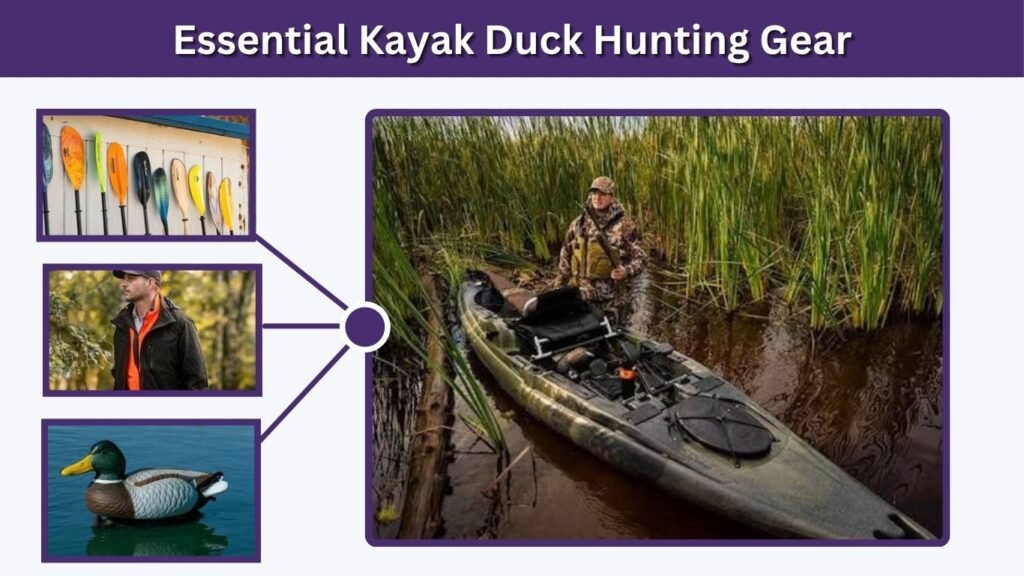
Kayak hunting requires compact equipment because storage space and weight capacity are limited. Unlike larger hunting boats, kayaks cannot comfortably accommodate extensive decoy spreads or oversized accessories. Selecting lightweight, waterproof, and multifunctional equipment helps keep the vessel organized. Essential safety supplies should always take priority over optional hunting accessories, especially when operating in remote wetlands.
Kayak Duck Hunting Gear Checklist
- Hunting kayak: A stable, appropriately sized model with sufficient load capacity.
- Paddle: A durable paddle and suitable backup propulsion plan.
- Life jacket: A properly fitted, approved personal flotation device.
- Shotgun: A legally permitted firearm transported safely.
- Nontoxic ammunition: Approved waterfowl hunting ammunition.
- Duck decoys: A manageable number of lightweight floating decoys.
- Waterproof storage: Dry bags for clothing, documents, and electronics.
- Communication equipment: A waterproof phone or appropriate marine radio.
- Emergency supplies: First-aid equipment, whistle, and suitable lighting.
Organizing Your Hunting Kayak
Keep heavy items low and close to the kayak’s center to maintain balance.
Secure equipment so it cannot shift unexpectedly or fall into the water. Avoid exceeding the manufacturer’s maximum load rating.
Store your firearm unloaded and secured during paddling and other transport activities.
How to Duck Hunt From a Kayak
Successful kayak duck hunting begins long before entering the water. Hunters should inspect their chosen location, evaluate weather conditions, and identify suitable legal hunting areas. Shallow wetlands and protected marshes often provide practical access, while large lakes and exposed coastal waters present greater challenges. Careful preparation reduces unnecessary paddling and improves safety throughout the trip.
Step-by-Step Kayak Duck Hunting Guide
- Scout the location: Identify legal hunting access, water depth, and potential hazards.
- Check regulations: Confirm current seasons, bag limits, permits, and shooting hours.
- Inspect your kayak: Examine the hull, paddle, flotation equipment, and storage attachments.
- Review the weather: Check wind, water temperature, currents, and expected visibility.
- Plan the route: Choose a manageable distance with suitable launch and return points.
- Position safely: Select a stable, permitted location before preparing to hunt.
- Follow hunting regulations: Maintain safe firearm handling and identify birds before shooting.
- Return carefully: Secure all equipment and retrieve personal belongings before departure.
Using Duck Decoys From a Kayak
Kayaks can transport small decoy collections into locations where larger boats may struggle to navigate.
Keep decoy lines organized to reduce tangles around paddles and equipment.
When setting or retrieving decoys, maintain a stable position and avoid leaning excessively over the kayak’s sides.
What to Wear Duck Hunting From a Kayak
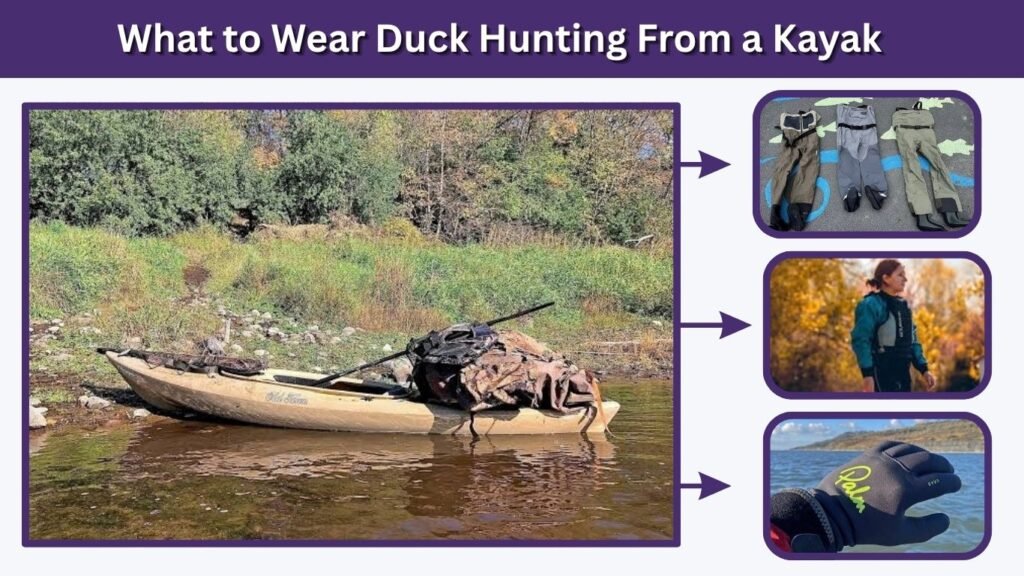
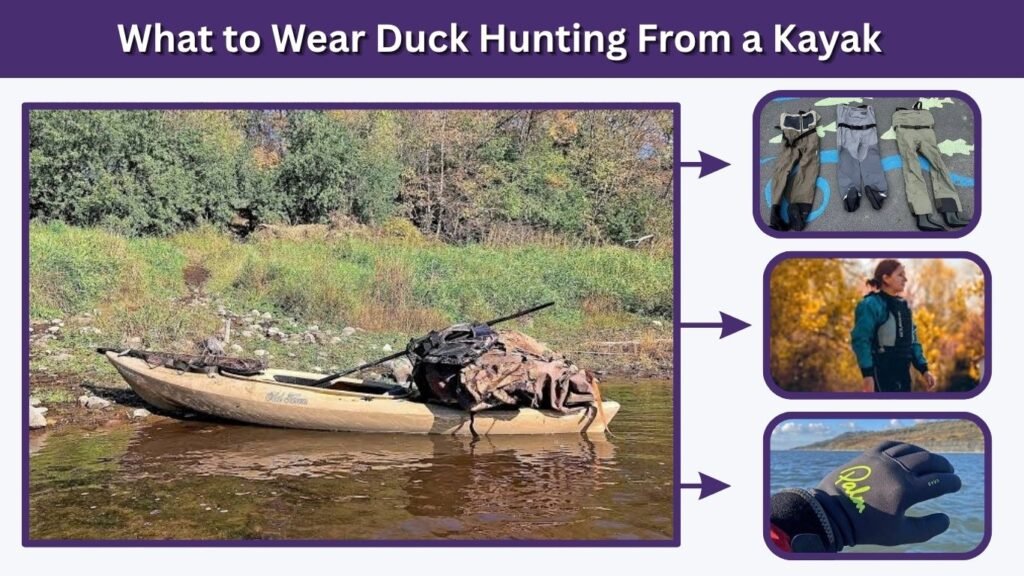
Clothing is particularly important because kayak hunters face the possibility of unexpected cold-water immersion. The combination of low temperatures, wet conditions, and wind can quickly become dangerous. Suitable clothing should provide insulation, freedom of movement, and protection from moisture. Hunters must also consider whether their clothing will remain safe and functional if the kayak overturns.
Kayak Duck Hunting Clothing Checklist
- Life jacket: Wear an approved, properly fitted flotation device.
- Insulating layers: Choose materials that retain warmth when damp.
- Waterproof outerwear: Protect against spray, rain, and wind.
- Cold-water protection: Consider an appropriate paddling drysuit when immersion conditions require it.
- Protective gloves: Maintain hand warmth and paddling control.
- Suitable footwear: Choose footwear appropriate for kayaking and possible immersion.
- Spare dry clothing: Store emergency clothing in a waterproof bag.
Are Waders Safe for Kayak Duck Hunting?
Waders can be useful in shallow hunting environments but are not substitutes for flotation equipment or cold-water immersion protection.
They may complicate movement and recovery after capsizing.
Wear an appropriate life jacket, practice safe recovery techniques, and select clothing based on water temperature rather than air temperature alone.
Kayak Duck Hunting Safety Tips
Safety should be the highest priority when hunting from a small watercraft. Cold water, unexpected wind, shifting equipment, and sudden movement can destabilize a kayak. Carrying hunting equipment creates additional challenges during emergencies. Hunters should understand their vessel’s limitations, develop recovery plans, and avoid conditions beyond their abilities. Practicing basic paddling skills before hunting season is especially valuable.
Important Safety Rules
- Never exceed the kayak manufacturer’s load capacity.
- Wear a properly fitted life jacket throughout the trip.
- Avoid standing or making abrupt movements unless the kayak is designed for it and conditions are safe.
- Keep firearms pointed in safe directions and away from other hunters.
- Avoid exposed waterways during strong winds or dangerous currents.
- Tell someone your location and expected return time.
- Carry emergency communication equipment and navigation lights when required.
- Practice capsize recovery in controlled conditions before hunting.
Should You Shoot While Sitting in a Kayak?
Shooting from a seated position may reduce sudden weight shifts compared with standing, provided the kayak is sufficiently stable.
However, firearm recoil, restricted movement, and changes in balance can increase capsizing risks.
A secure shoreline position may be safer than firing from an unstable floating kayak. Always follow local hunting restrictions.
Kayak Duck Hunting in Texas and Virginia
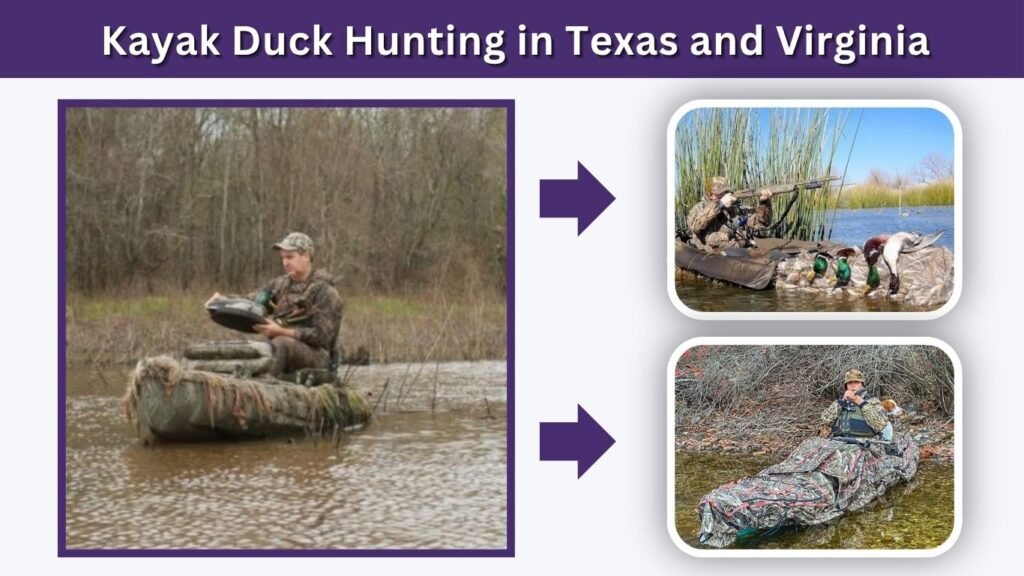
Texas and Virginia provide different wetland environments for kayak duck hunting. Texas coastal marshes may involve tidal flats, shallow bays, and changing saltwater conditions. Virginia offers tidal waterways, freshwater wetlands, and marsh habitats with additional rules governing hunting blinds. Understanding these regional differences is essential because both water conditions and legal restrictions can significantly influence hunting plans.
Duck Hunting Texas Salt Marshes From a Kayak
Texas salt marshes can provide access to shallow waterfowl habitats, but tides, strong winds, oyster beds, and exposed bays create hazards.
Use protected launch locations and check tidal forecasts before traveling.
Texas permits waterfowl hunting from floating craft under specified conditions, but public access and submerged private-property restrictions still apply.
Hunting Ducks From a Kayak in Virginia
Virginia hunters must pay particular attention to waterfowl blind laws.
A kayak modified to conceal a hunter may qualify as a floating blind and require licensing in regulated waters. Distance restrictions around licensed blinds also apply.
Check Virginia Department of Wildlife Resources regulations and local property rules before hunting.
FAQs
Duck hunting from a kayak raises questions about stability, suitable watercraft, equipment, and legal requirements. Although kayaks can be effective for accessing shallow wetlands, every hunting location presents different challenges. Understanding your equipment and following local regulations will help you decide whether kayak hunting is appropriate for your experience and the conditions you expect.
1. Can You Hunt Ducks From a Sit-on-Top Kayak?
Yes, where regulations permit. Choose a stable model with sufficient capacity for hunting equipment and appropriate safety features.
2. Is a Kayak Better Than a Boat for Duck Hunting?
Kayaks are often easier to transport and navigate through shallow wetlands. Larger boats generally offer greater carrying capacity and space.
3. Can You Duck Hunt From a Kayak Without Decoys?
Yes. Decoys are not legally required for ordinary waterfowl hunting, although many hunters use them to attract ducks.
4. Is Duck Hunting From a Kayak Dangerous?
It involves risks, including capsizing, hypothermia, and firearm-handling hazards. Proper flotation equipment, conservative weather decisions, and adequate training help reduce those risks.
5. What Type of Kayak Is Best for Duck Hunting?
A stable recreational or specialized hunting kayak with adequate storage, appropriate weight capacity, and suitable handling characteristics is generally preferable.
