
Duck hunting in the rain can be surprisingly productive, especially when changing weather encourages ducks to move between feeding and resting areas. However, not every rainy day creates ideal hunting conditions. Light rain, heavy downpours, wind direction, and temperature can all influence duck activity. Understanding these weather patterns helps hunters choose better locations and improve their chances of success. This guide explains whether duck hunting is good in the rain, how ducks behave during storms, and nine practical tips for rainy-day hunting.
Is Duck Hunting Good in the Rain?
Yes, duck hunting in the rain can be good, particularly during light to moderate rainfall accompanied by favorable winds. Rainy weather sometimes encourages ducks to change feeding locations, seek sheltered water, or explore newly flooded habitats. However, success depends on the intensity of the rainfall, local duck populations, available food, and the timing of approaching weather systems.
Why Rain Can Improve Duck Hunting
Rain often accompanies low-pressure systems, increased cloud cover, and shifting winds. These conditions can encourage ducks to relocate between feeding and resting areas.
Cloudy skies also reduce harsh shadows, helping hunters remain concealed. Following substantial rainfall, newly flooded fields and wetlands may provide additional feeding opportunities.
When Rain Makes Duck Hunting Difficult
Extremely heavy rainfall can temporarily reduce duck flight activity. Birds may remain in protected areas until conditions improve.
Poor visibility, strong winds, flooding, and cold temperatures can also create problems for hunters. Consequently, knowing when to wait and when to change locations is essential for a productive hunt.
Do Ducks Fly in the Rain?
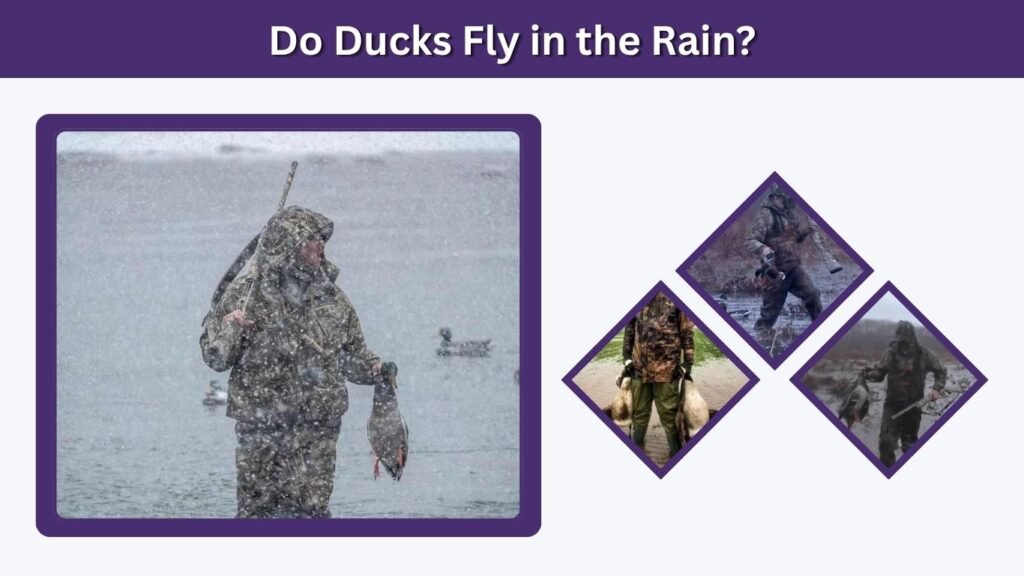
Ducks can fly in the rain because their water-resistant plumage helps protect them from moisture. However, rainfall intensity, wind conditions, and feeding requirements influence their flight activity. Some ducks continue traveling during light rain, while others seek shelter during severe weather. Understanding these differences helps hunters predict when birds are more likely to move.
Duck Hunting in Light Rain
Light rain can provide favorable hunting conditions because ducks may continue their normal feeding and traveling routines.
Overcast skies and gentle winds sometimes make approaching birds less cautious. Hunters can take advantage of these conditions by positioning themselves near established feeding routes and sheltered landing areas.
Duck Hunting in Heavy Rain
Duck hunting in heavy rain is less predictable. Intense downpours may temporarily discourage flight, particularly when combined with strong winds.
However, heavy rainfall can create new shallow-water feeding habitats. Once the rain slows, ducks may begin exploring flooded fields, marshes, and woodland openings.
Duck Hunting in Rain and Wind
Wind direction can be more important than rainfall itself. Ducks frequently seek protected water during strong winds and generally prefer landing into the wind.
Hunters should observe wind direction and look for sheltered shorelines. Avoid exposed water when rough conditions create boating or retrieval hazards.
9 Effective Duck Hunting Tips in the Rain
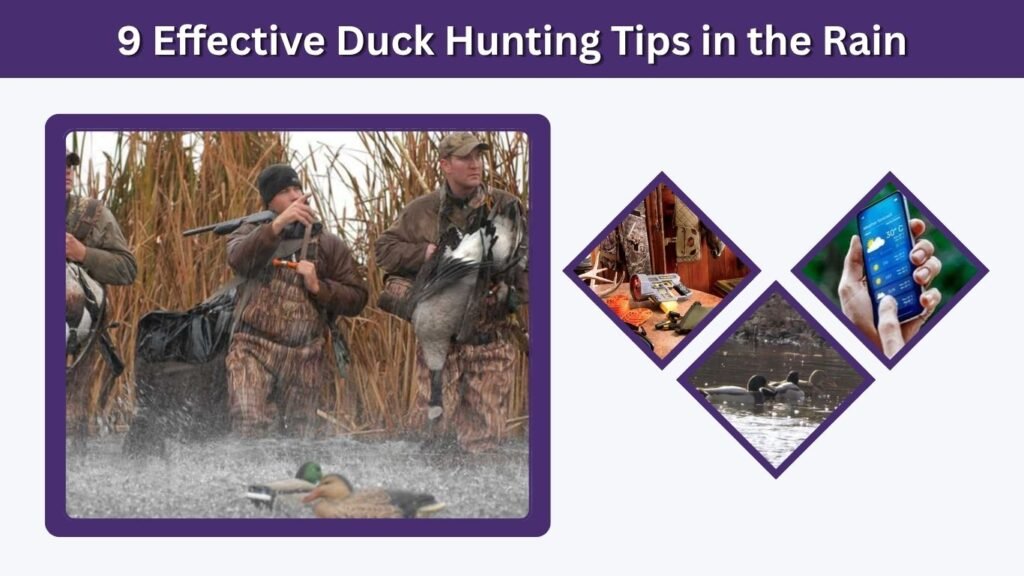
Successful rainy-day duck hunting requires flexibility, observation, and suitable equipment. Weather conditions can change quickly, affecting where ducks feed, rest, and travel. Rather than relying on a single location or decoy arrangement, hunters should adapt to changing water levels and wind patterns. The following nine tips can improve hunting opportunities while helping hunters stay comfortable and safe.
Practical Tips for Rainy-Day Duck Hunting
- Check the weather forecast: Review rainfall intensity, wind direction, temperature, lightning risk, and expected changes before leaving home.
- Scout flooded feeding areas: Look for newly flooded agricultural fields, shallow wetlands, and natural feeding habitats where ducks may gather after rainfall.
- Choose sheltered locations: Protected coves, timber openings, and marsh edges can attract ducks seeking relief from strong winds.
- Adjust decoy placement: Position decoys where approaching ducks have a clear, natural landing opening, considering wind direction and available space.
- Use realistic calling: Begin with natural feeding or contact calls. Adjust calling frequency based on the birds’ reactions rather than calling continuously.
- Stay properly concealed: Waterproof camouflage, natural vegetation, and minimal movement can make hunters less noticeable under cloudy skies.
- Observe changing flight patterns: Watch where ducks travel before, during, and after rainfall. Their preferred routes may change as water levels rise.
- Protect essential equipment: Keep ammunition, communication devices, and other important supplies secured in appropriate water-resistant storage.
- Prioritize safety: Never hunt during lightning, dangerous flooding, or conditions that prevent reliable bird identification and retrieval.
Best Places for Duck Hunting in the Rain
Rainfall can alter duck habitat by changing water levels and opening previously inaccessible feeding locations. Different duck species respond to these changes according to their feeding habits and preferred environments. Hunters should focus on areas already used by waterfowl while observing where birds move after significant rainfall. A productive location during dry weather may become less attractive after a storm.
Flooded Fields and Shallow Wetlands
Freshly flooded fields often attract dabbling ducks such as mallards, pintails, and teal when suitable food is available.
Shallow water makes seeds, vegetation, and invertebrates accessible. Scouting these locations after rainfall can reveal new feeding activity.
Flooded Timber and Woodland Openings
Flooded timber can provide valuable shelter during rainy, windy conditions.
Wood ducks and mallards may use flooded woodland habitats where food and suitable water depths are available. Hunters should pay attention to natural openings and areas protected from strong winds.
Sheltered Ponds, Lakes, and River Backwaters
Protected ponds, river backwaters, and sheltered lake coves can become attractive during unpleasant weather.
Diving ducks may continue using larger bodies of water, while dabbling ducks often favor shallower habitats. Species identification and local scouting remain essential.
What to Wear for Duck Hunting in the Rain
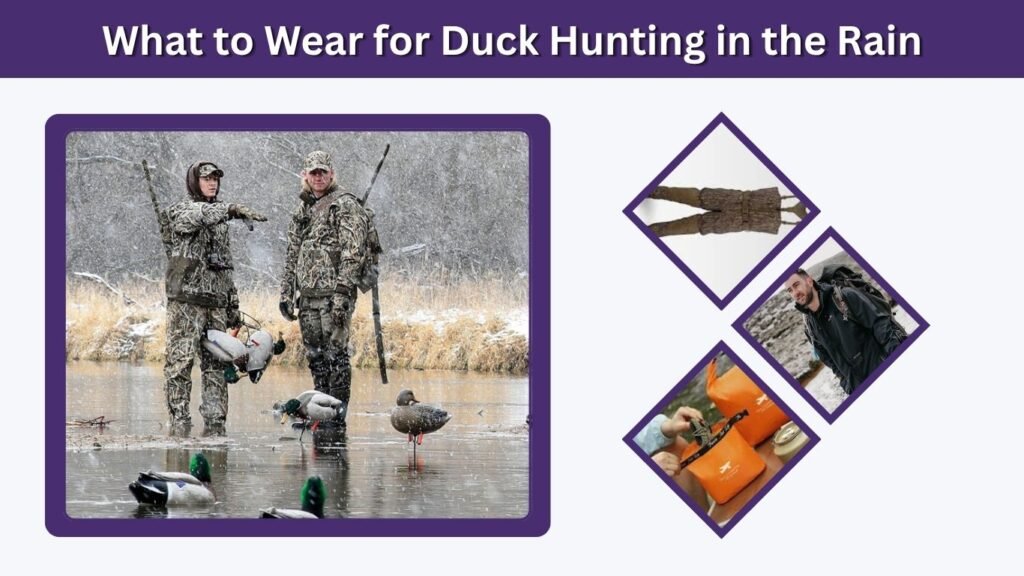
Staying warm and dry is essential when hunting in wet conditions. Rainwater, cold winds, and prolonged exposure can quickly reduce comfort and concentration. Proper clothing also helps hunters remain concealed while moving through wetlands. Choose waterproof outerwear, suitable insulation, and equipment appropriate for the expected air and water temperatures.
Essential Rainy-Day Hunting Gear
- Waterproof hunting jacket: Protects against rain and wind while allowing comfortable movement.
- Insulated waterproof waders: Keep legs dry in suitable shallow-water conditions.
- Waterproof gloves: Help maintain warmth and grip during wet weather.
- Moisture-wicking base layers: Reduce discomfort caused by perspiration.
- Waterproof storage bag: Protects spare clothes and essential supplies.
Safety Precautions During Rainy Hunts
- Wear a properly fitted life jacket when traveling by boat.
- Avoid unfamiliar flooded areas, strong currents, and rising water.
- Stop outdoor activity when thunder is heard and seek proper shelter.
- Keep communication equipment accessible and protected.
- Identify ducks clearly before shooting and follow all hunting regulations.
Cold-water immersion can become life-threatening quickly, making flotation equipment and weather awareness particularly important.
Best Time to Duck Hunt Before, During, or After Rain
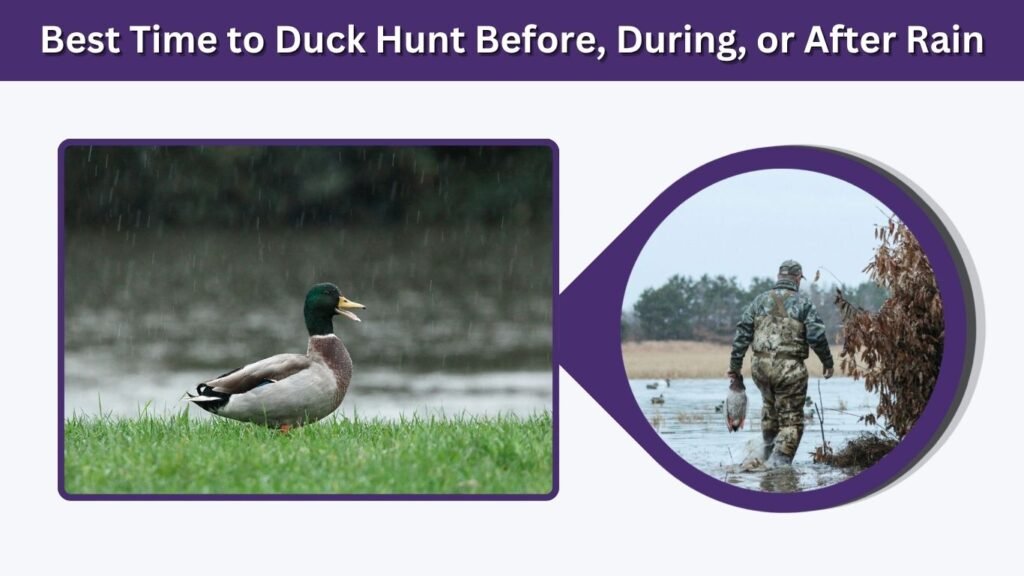
The best hunting time depends on the weather system and how local ducks respond. Some birds move ahead of an approaching front, while others become active as heavy rainfall weakens. Hunters should observe feeding schedules, wind changes, and newly available water instead of assuming that rainfall always improves hunting.
Before the Rain
Approaching weather fronts sometimes encourage ducks to feed or move toward sheltered habitats. Increasing cloud cover and changing winds may create opportunities before substantial rainfall begins.
During the Rain
Light or steady rain can produce useful hunting opportunities when ducks remain active. During intense downpours, activity may decline, making protected feeding or resting areas more important.
After the Rain
The period immediately after heavy rainfall can be productive because ducks may explore newly flooded feeding areas. Scouting becomes especially valuable as birds redistribute across the landscape.
FAQs
1. Can You Duck Hunt in the Rain?
Yes, duck hunting during rain is generally permitted when the hunting season is open and all applicable regulations are followed. Rainfall itself does not usually prohibit hunting. However, hunters must follow legal shooting hours, bag limits, licensing requirements, and local restrictions. Severe thunderstorms or dangerous flooding are reasons to postpone the hunt.
2. Is Duck Hunting Better in the Rain?
Duck hunting can be better during certain rainy conditions, particularly when moderate winds encourage birds to move or new feeding areas become available. However, rain does not guarantee greater duck activity. Heavy downpours may reduce flight temporarily, and success ultimately depends on habitat, food availability, hunting pressure, and local conditions.
3. Do Wood Ducks Fly in the Rain?
Yes, wood ducks can fly during rainfall and may continue traveling between feeding and resting locations in light rain. They commonly use wooded wetlands, streams, and flooded timber. However, intense storms can reduce flight activity. Hunters should observe familiar travel routes and avoid assuming that all wood ducks respond to rain identically.
4. Is Duck Hunting Good in Heavy Rain?
Heavy rain can create hunting opportunities, but success is often better when the downpour weakens or ends. Intense rainfall may keep ducks resting in sheltered locations. Newly flooded habitat can attract birds afterward, making careful scouting valuable. Dangerous winds, lightning, flooding, and poor visibility should always take priority over hunting opportunities.
5. Should You Duck Hunt in Cold Rain?
Duck hunting in cold rain can be productive when changing temperatures and winds encourage bird movement. However, cold exposure and wet clothing increase the risk of hypothermia. Hunters should use suitable insulation, waterproof clothing, and flotation equipment when necessary. Avoid hunting when conditions create unsafe travel, retrieval, or water exposure.
