
Duck hunting in a boat can provide access to marshes, flooded timber, lakes, and other productive waterfowl habitat, but it also introduces risks involving firearms, cold water, unstable footing, and heavy gear. Safe positioning and careful boat preparation are therefore just as important as hunting strategy. Whether you hunt from a jon boat, layout boat, or small aluminum craft, understanding safe shooting zones matters. This guide explains duck hunting boat safety, essential equipment, positioning for two hunters, weather precautions, and practical setup tips.
How to Duck Hunt in a Boat Safely
Boat-based duck hunting combines the normal responsibilities of firearm safety with the additional hazards of boating. Cold conditions, limited space, dogs, decoys, and changing water levels can quickly affect stability. Hunters should organize the boat before departure, establish clear shooting zones, wear appropriate flotation, and keep firearms safely handled whenever the boat is underway or people are boarding.
Safest Position for Duck Hunting in a Boat
When two hunters are duck hunting in a boat, hunter-education guidance commonly identifies a back-to-back seated position as the safest arrangement. Each hunter then has a separate 180-degree zone of fire in front of them rather than both hunters swinging their firearms across the same area.
Hunters should agree on shooting zones before hunting begins and never swing through another person’s position. Remaining seated also helps keep the boat’s center of gravity lower. The U.S. Coast Guard notes that standing raises the center of gravity and increases the risk of capsizing, particularly in small or flat-bottomed boats.
Firearm Handling Around the Boat
Firearms should be unloaded and properly cased while being transported to or from the hunting position. Hunter-education guidance recommends keeping the action open or otherwise securing the firearm in its safest condition while boarding and unloading the boat.
Keep muzzles pointed in safe directions and fingers outside trigger guards until ready to fire at an identified legal target. Avoid attempting to handle a loaded firearm while simultaneously moving around, starting the motor, retrieving equipment, or balancing the boat.
Essential Duck Hunting Boat Gear
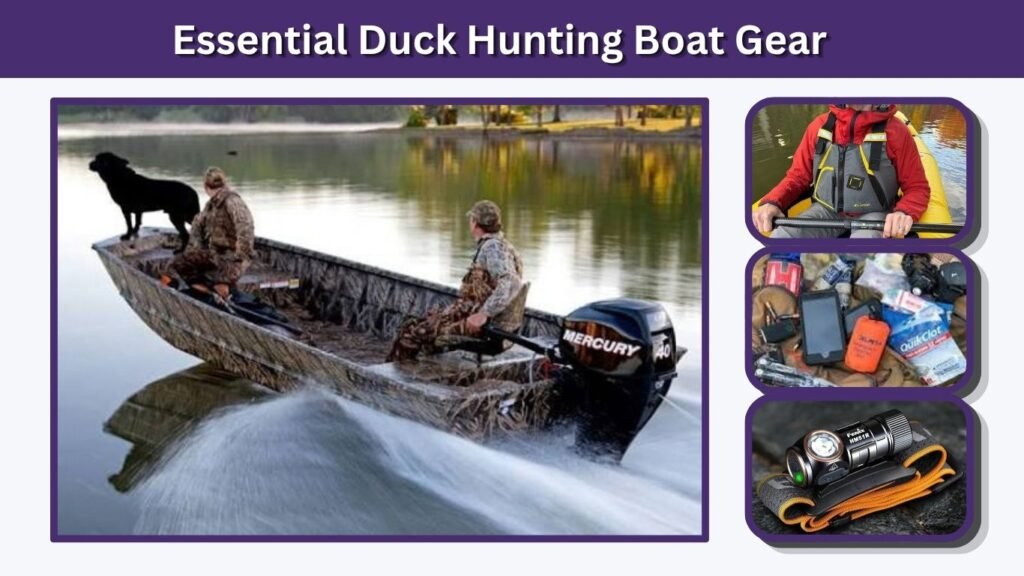
A duck hunting boat often carries more equipment than an ordinary recreational boat. Decoys, firearms, ammunition, clothing, dogs, anchors, blinds, and emergency supplies can quickly add significant weight. Gear should be selected carefully and distributed evenly so the boat remains stable and stays within its rated capacity. A simple organization system also prevents loose equipment from becoming a hazard.
What to Keep in a Duck Hunting Boat
Useful safety and hunting equipment includes:
- Properly fitted, approved life jackets for everyone aboard
- Waterproof emergency or survival kit
- First-aid supplies
- Flashlight or headlamp
- Communication device in a waterproof case
- Navigation equipment appropriate for the area
- Anchor and adequate line
- Emergency signaling equipment where required
- Dry clothing stored in a waterproof bag
- Decoys and properly secured decoy lines
- Firearms stored safely during transportation
- Drinking water and basic emergency food
- Boat registration and other required documents
The Coast Guard emphasizes wearing an approved life jacket rather than merely carrying one aboard.
Choosing and Loading the Boat
Jon boats and other flat-bottomed boats are popular for shallow-water hunting, while layout boats can be used in specialized waterfowl situations. Regardless of design, hunters need to understand the vessel’s stability and rated capacity.
Do not overload a small boat with hunters, dogs, batteries, motors, decoy bags, and hunting equipment. Weight should be distributed from side to side and from bow to stern instead of concentrated in one area.
Two Hunters Duck Hunting in a Boat
Hunting with a partner can make navigation, decoy placement, and retrieving birds easier, but coordination becomes critical once firearms are involved. Before entering the hunting area, both hunters should know where they will sit, which direction each person may safely shoot, and who will control the boat. These decisions should be settled before birds approach rather than during shooting opportunities.
Back-to-Back Hunting Position
For two hunters, a practical safety arrangement includes:
- One hunter positioned toward the bow
- The second hunter positioned toward the stern
- Hunters facing generally opposite directions
- Separate shooting zones established beforehand
- No swinging a firearm through the partner’s zone
- Both hunters remaining seated when conditions require maximum stability
Hunter-education materials specifically describe the back-to-back arrangement as the safest position for two people duck hunting from a boat.
Communication Between Hunters
Clear communication can prevent confusion when several ducks approach simultaneously. Hunters should know who is responsible for each shooting direction and avoid both reacting to the same bird if doing so would cross their safe zones.
The same principle applies when a dog is working, someone is retrieving a bird, or another boat enters the area. When conditions become uncertain, shooting should stop until everyone and everything is safely positioned again.
Weather, Water, and Cold Safety
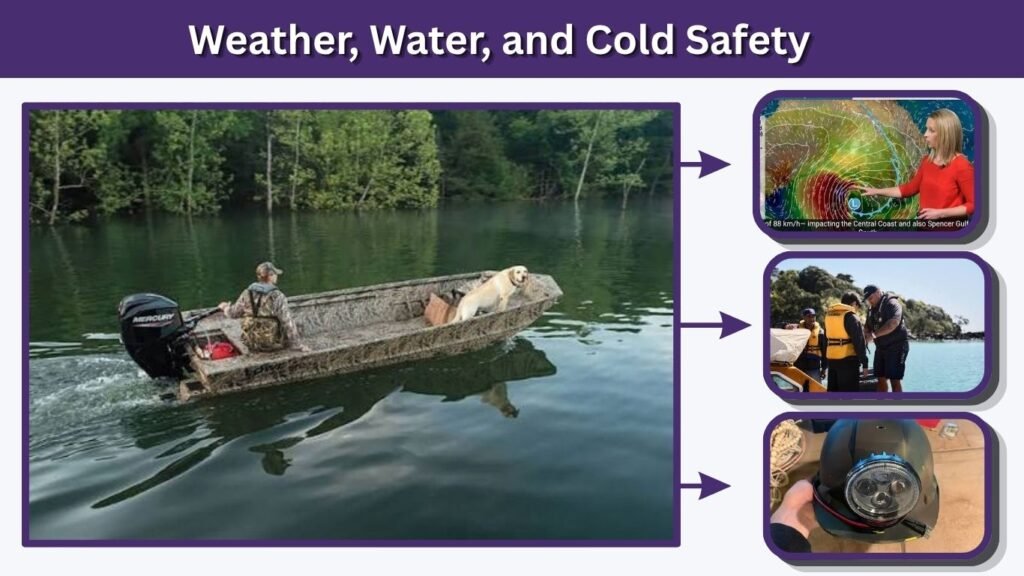
Duck season frequently places hunters on the water during wind, rain, fog, freezing temperatures, and low-light conditions. These factors can transform a routine trip into an emergency surprisingly quickly. Water temperature can be especially dangerous, while wind can overwhelm small hunting boats loaded with gear. Weather and water conditions should therefore be evaluated before launch and continuously during the hunt.
Before Launching the Boat
A practical pre-launch check should include:
- Review the weather and wind forecast.
- Confirm the boat is within its capacity limit.
- Wear life jackets before leaving shore.
- Secure loose gear and decoys.
- Check fuel, battery, motor, and navigation lights.
- Tell someone where you are hunting and when you expect to return.
- Confirm communication equipment works.
- Avoid launching when conditions exceed the boat or operator’s abilities.
Hunter-safety guidance recommends leaving a hunting or float plan with another person and avoiding the trip when wind or water conditions are unsafe.
Cold-Water Precautions
Cold water is one of the biggest hazards associated with waterfowl hunting. Heavy clothing, boots, and hunting equipment can make recovery difficult after an unexpected fall.
A properly fitted life jacket provides immediate flotation and should be worn throughout the boat trip. The Coast Guard also advises hunters and anglers to understand their vessel’s limitations and consider whether they could realistically re-enter the boat after falling overboard while wearing their gear.
Setting Up a Duck Hunting Boat
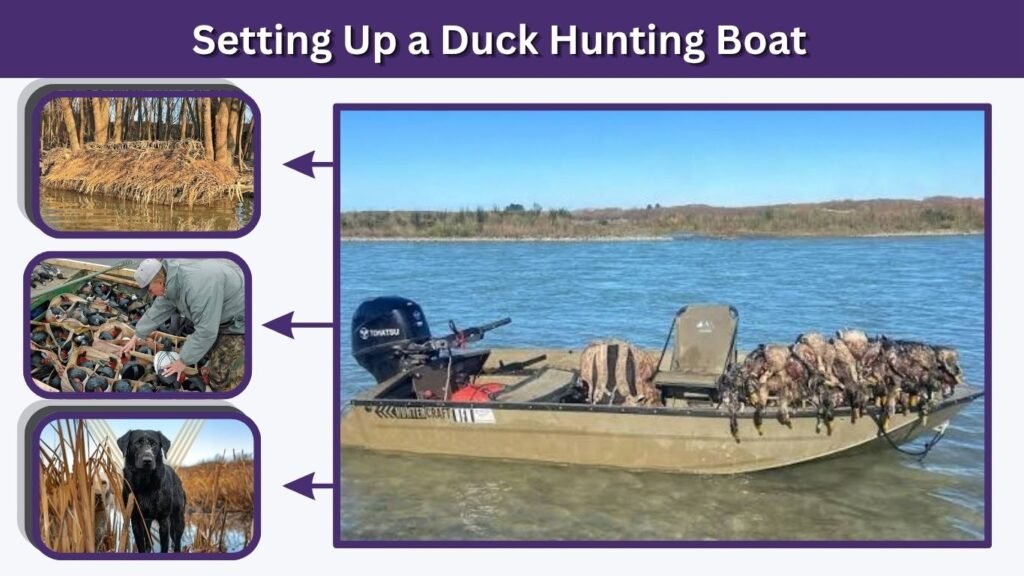
A good boat setup balances concealment with stability and unrestricted safe movement. Hunters often carry blinds, vegetation, decoys, dogs, and additional equipment, but adding too much can reduce usable space and increase weight. Everything should have a designated location so hunters can reach necessary equipment without climbing over bags or shifting heavy loads while on the water.
Boat Blind and Decoy Setup
A boat blind should conceal hunters without blocking visibility needed for navigation and firearm safety. Avoid placing equipment where it interferes with controls, emergency gear, or safe shooting zones.
Decoy bags and other heavy equipment should be positioned low in the boat whenever practical. Keeping weight low helps maintain stability. Once the boat reaches the hunting location, unnecessary movement should be minimized.
Practical Safety Habits
Throughout the hunt:
- Keep the deck and seating areas free from loose equipment.
- Never exceed the boat’s capacity rating.
- Keep hunters and dogs from suddenly shifting weight.
- Avoid standing unnecessarily in small boats.
- Secure firearms before operating the motor or changing locations.
- Maintain awareness of other boats, hunters, buildings, and people.
- Stop hunting when visibility, wind, waves, or other conditions become unsafe.
Duck Hunting Laws and Boat Regulations
Duck hunting from a boat is regulated by both hunting and boating rules, and requirements can vary considerably by state and location. Regulations may address waterfowl seasons, shooting locations, motor use, firearm transport, life jackets, boat registration, hunting licenses, and where a vessel may legally operate. Federal boating requirements also apply to hunters using recreational boats.
Check Local Rules Before Hunting
A method that is legal in one state or waterbody may not be legal somewhere else. For example, special regulations can apply to public wildlife areas, rivers, reservoirs, coastal waters, or motorized boats.
Before hunting, check the current state wildlife-agency regulations as well as boating requirements for the specific waterbody. This is especially important when planning duck hunting from a boat in states such as Maryland, Texas, North Carolina, Wisconsin, California, or Alabama.
FAQs
1. What is the safest position for two hunters duck hunting in a boat?
Hunter-education guidance recommends sitting back-to-back so each hunter has a separate 180-degree zone of fire in front of them. This helps prevent one hunter from swinging a firearm across the other’s shooting area.
2. Should you stand while duck hunting from a small boat?
Standing can reduce stability because it raises the boat’s center of gravity. The Coast Guard warns that small flat-bottomed boats and similar vessels can capsize more easily when occupants stand or shift weight unexpectedly.
3. What should you keep in a duck hunting boat?
Important equipment includes life jackets, emergency supplies, first-aid equipment, lights, communication and navigation devices, an anchor, dry clothing, required boating equipment, and properly organized hunting gear.
4. Should firearms be loaded while transporting them in a boat?
Hunter-education materials advise unloading and casing firearms before boarding or leaving a boat, with the action open or firearm otherwise placed in a safe transport condition.
5. Can you legally duck hunt from any boat?
Not necessarily. Hunting methods, firearm use, boat operation, and permitted hunting locations vary by jurisdiction. Hunters should check current state wildlife regulations, federal waterfowl rules, and applicable boating laws before going out.
