
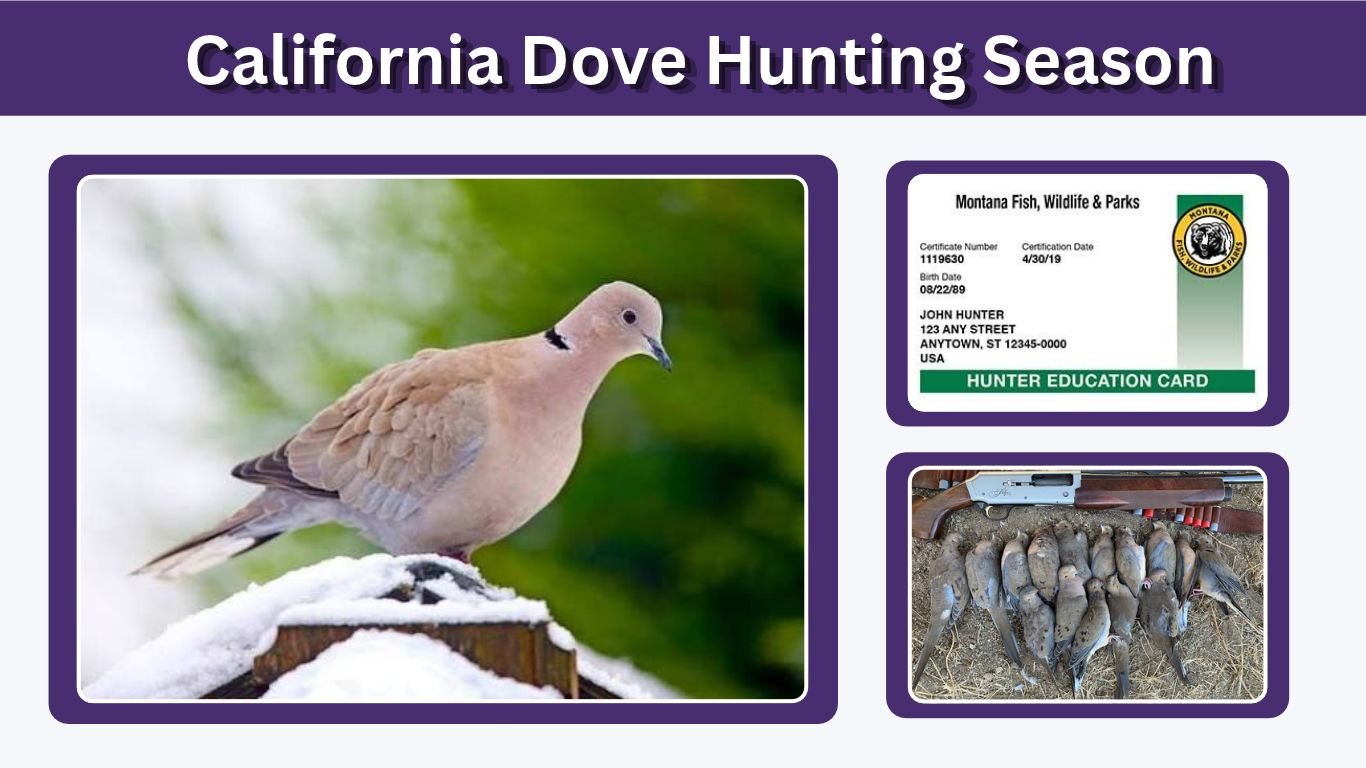
California offers excellent dove hunting opportunities, attracting thousands of hunters each year. From the agricultural fields of the Imperial Valley to the wildlife areas of Northern California, hunters can find mourning doves, white-winged doves, and Eurasian collared-doves. However, understanding California dove hunting season dates, bag limits, licensing requirements, and legal hunting areas is essential before heading outdoors. Whether you’re planning an early September hunt or a late-season trip, this guide covers the 2026–2027 California dove hunting season, regulations, public hunting areas, and practical tips for a successful experience.
When Is Dove Hunting Season in California?
The California dove hunting season is divided into two main periods for mourning doves and white-winged doves. The first season begins in September, while the second takes place during November and December.
The California Department of Fish and Wildlife (CDFW) establishes statewide hunting dates and regulations. Although the season dates apply throughout California, hunting opportunities and bird populations vary by region.
California Dove Hunting Season Dates 2026–2027
| Hunting Season | Opening Date | Closing Date |
| Early Dove Season | September 1, 2026 | September 15, 2026 |
| Late Dove Season | November 14, 2026 | December 28, 2026 |
| Eurasian Collared-Dove | January 1 | December 31 |
These dates apply statewide, subject to local land-access restrictions. Eurasian collared-doves may be hunted year-round under applicable hunting regulations.
Early Dove Hunting Season in California
The early California dove hunting season begins September 1 and continues through September 15. This is one of the most anticipated hunting periods because doves are often concentrated around agricultural fields, feeding areas, and water sources.
Southern California destinations, especially the Imperial Valley, are popular during early September. Warm temperatures and agricultural activity can provide favorable dove hunting conditions.
Hunters should scout fields before opening day and identify legal access points. Early morning and late afternoon are often productive periods because doves regularly travel between feeding and watering locations.
Late Dove Hunting Season in California
California’s late dove hunting season runs from November 14 through December 28, 2026.
This second season offers opportunities for hunters who prefer cooler weather and potentially less competition than the September opener.
Migrating birds can influence hunting success, particularly around agricultural lands and suitable feeding habitats. However, dove movements depend on weather conditions, available food, and local habitat.
Late-season hunters should monitor bird activity, check access restrictions, and prepare for changing weather conditions.
Eurasian Collared-Dove Hunting Season
Unlike mourning doves and white-winged doves, Eurasian collared-doves can be hunted throughout the year in California.
There is no daily bag limit or possession limit for this introduced species.
Eurasian collared-doves are commonly found near farms, rural communities, livestock facilities, and developed areas.
However, hunters still need the appropriate licenses and must follow firearm, ammunition, property-access, and other applicable hunting regulations.
California Dove Hunting Limits and Regulations
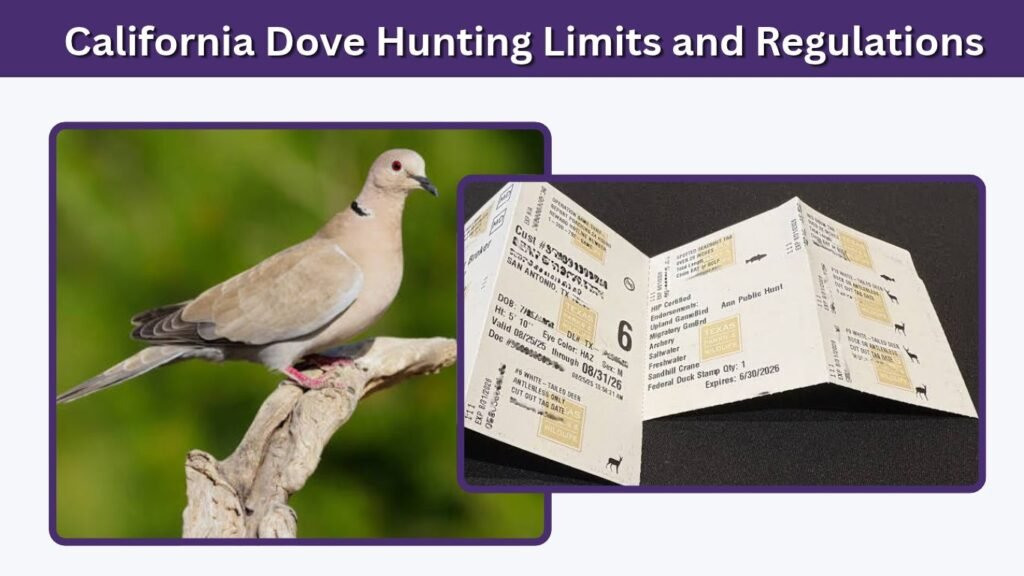
California has specific regulations governing dove hunting, including daily bag limits, possession limits, shooting hours, and approved ammunition. These requirements help maintain sustainable wildlife populations while providing recreational opportunities.
Hunters should understand the differences between protected native species and introduced dove species. Misidentifying birds or exceeding legal limits can result in wildlife violations.
California Dove Hunting Bag Limits
The 2026–2027 daily bag limits depend on the dove species being hunted.
| Dove Species | Daily Bag Limit | Possession Limit |
| Mourning Dove | Combined limit of 15 with white-winged doves | 45 combined |
| White-Winged Dove | Maximum 10 within the combined 15 | 45 combined, subject to species limits |
| Eurasian Collared-Dove | No limit | No limit |
| Spotted Dove | No limit during open season | No limit |
| Ringed Turtle Dove | No limit during open season | No limit |
For mourning and white-winged doves, the combined daily limit is 15, with no more than 10 white-winged doves. Their possession limit is three times the daily bag limit.
California Dove Hunting Hours
Legal dove hunting hours generally begin 30 minutes before sunrise and end at sunset.
The exact shooting time changes depending on the date and geographic location.
Hunters should consult official shooting-time tables, particularly when hunting in Southern California, where sunrise and sunset times differ from northern areas.
Shooting outside legal hunting hours is prohibited, even if birds are present.
Important California Dove Hunting Rules
Hunters must follow several important regulations:
- Nonlead Ammunition: California requires approved nonlead ammunition when hunting wildlife with firearms.
- Shotgun Capacity: Shotguns generally cannot hold more than three shells when hunting migratory game birds.
- Hunting License: Hunters must carry a valid California hunting license and necessary validations.
- Legal Hunting Areas: Hunting is prohibited in restricted areas, wildlife refuges closed to hunting, and properties without required access permission.
- Species Identification: Hunters must correctly identify legal dove species before shooting.
- Bird Transportation: Hunters must follow identification requirements when transporting harvested migratory birds.
CDFW specifically reminds dove hunters to comply with nonlead ammunition and shotgun-capacity requirements.
What License Do You Need for Dove Hunting in California?
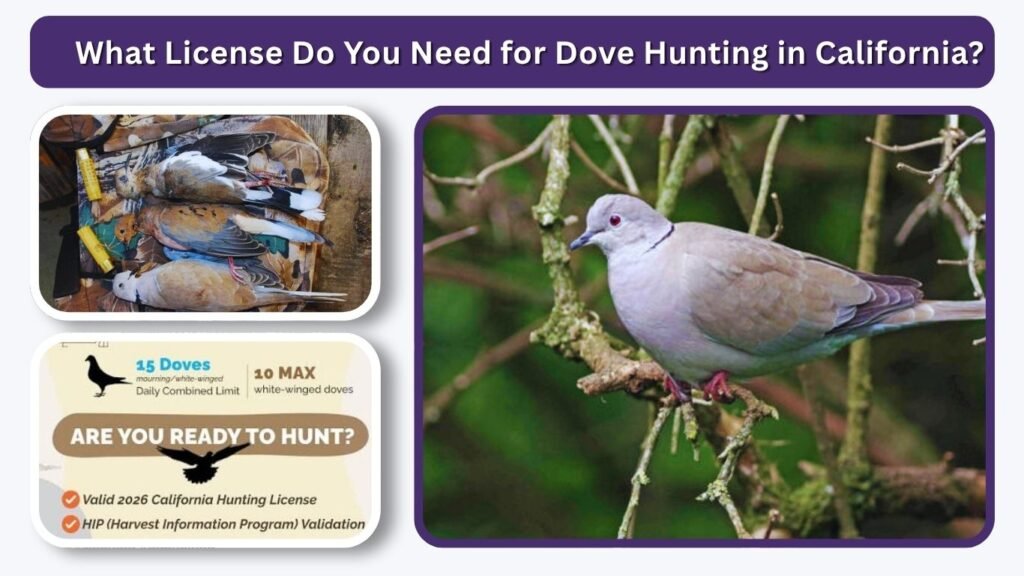
Anyone planning to hunt doves in California must obtain the appropriate hunting license and comply with migratory bird requirements.
The state offers different license types for residents, nonresidents, and junior hunters. Additional validations may be necessary depending on the hunter’s age and intended hunting activities.
California Dove Hunting License Requirements
Most adult dove hunters need:
- California Hunting License: Required for legal hunting activities.
- Upland Game Bird Validation: Required for most hunters, except qualifying junior license holders.
- HIP Validation: A free certification required for migratory bird hunters.
- Hunter Education: Certification when required for hunting license eligibility.
- Wildlife Area Pass: Additional access authorization when hunting designated wildlife areas.
Hunters can obtain these documents through the California Department of Fish and Wildlife’s official licensing system.
How Much Is a Dove Hunting License in California?
The following are published California hunting license fees for 2026.
| License or Validation | Cost |
| Resident Hunting License | $64.54 |
| Nonresident Hunting License | $225.46 |
| Junior Hunting License | $17.02 |
| Two-Day Nonresident Hunting License | $64.54 |
| Upland Game Bird Validation | $25.41 |
| HIP Validation | Free |
A typical adult resident pays $89.95 for the hunting license and upland game bird validation, excluding any processing fees or additional access permits.
The one-day nonresident license has restricted uses and is not a general one-day public-land dove hunting license.
Best Places to Dove Hunt in California
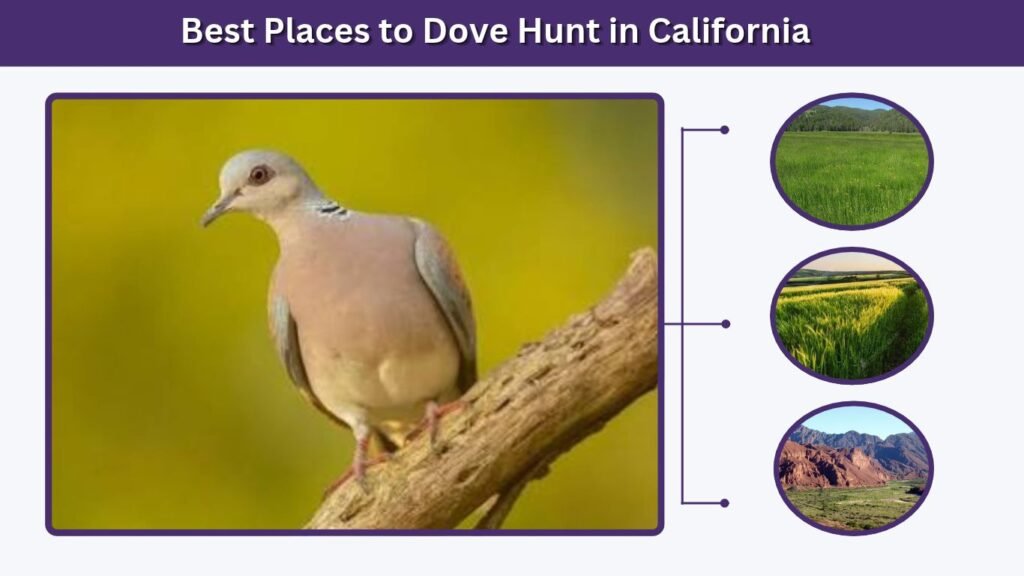
California offers diverse dove hunting habitats, including agricultural fields, river valleys, open grasslands, and managed wildlife areas.
Some of the most productive destinations are in Southern and Central California, although Northern California also provides worthwhile opportunities.
Hunters should verify public access, hunting schedules, and reservation requirements before visiting any location.
Dove Hunting in Southern California
Southern California is particularly popular for dove hunting because its agricultural landscapes and warm climate provide attractive feeding habitats.
The Imperial Valley is widely recognized as a major dove hunting destination. Agricultural fields around Brawley, Calipatria, and surrounding communities can attract mourning and white-winged doves.
Other promising locations include:
- Imperial Valley Wildlife Area
- Palo Verde Ecological Reserve
- Colorado River Valley
- San Jacinto Wildlife Area
Some public hunting areas have limited access or special hunting schedules. Hunters should consult CDFW regulations before visiting.
Dove Hunting in Central California
Central California’s San Joaquin Valley provides another excellent dove hunting region.
Agricultural fields, irrigation canals, grasslands, and wildlife management areas create feeding and resting habitats for doves.
Popular public hunting locations include:
- Los Banos Wildlife Area
- North Grasslands Wildlife Area
- Mendota Wildlife Area
- Selected Fresno County hunting areas
CDFW offers special dove hunting opportunities in several Central California locations. Some opening-day hunts require advance applications or reservations.
Dove Hunting in Northern California
Northern California offers a different hunting environment, including agricultural valleys, wetlands, and grasslands.
The Sacramento Valley is one of the better-known dove hunting regions, particularly during early September.
Potential hunting locations include Gray Lodge Wildlife Area and Upper Butte Basin wildlife areas.
Bird concentrations depend on local crops, available water, and seasonal weather patterns.
CDFW identifies the Sacramento, San Joaquin, Imperial, and Colorado River valleys as important regions for public dove hunting opportunities.
How to Prepare for Dove Hunting in California
Successful dove hunting requires preparation, scouting, and familiarity with state regulations.
Doves are fast-moving birds that often travel predictable routes between feeding fields, roosting locations, and water sources. Understanding these movements can help hunters select productive locations.
Essential Dove Hunting Equipment
Consider preparing the following equipment:
- Shotgun suitable for dove hunting
- Approved nonlead shotgun ammunition
- Valid hunting license and required validations
- Eye and hearing protection
- Lightweight camouflage clothing
- Comfortable hunting boots
- Drinking water and sun protection
- Dove decoys, if desired
- Game bag or cooler
- Binoculars for scouting
A properly fitted shotgun and adequate shooting practice can improve accuracy and reduce unnecessary ammunition use.
Tips for a Successful California Dove Hunt
Scouting is one of the most important parts of preparing for dove season.
Hunters should observe bird movements before the hunt, identify legal access areas, and look for natural feeding routes.
Agricultural fields containing sunflower, safflower, wheat, and other grains can attract doves when crops are managed through lawful agricultural practices.
Nearby water sources may also influence dove activity, particularly during California’s hot September weather.
Early arrival, safe shooting positions, and careful species identification help create a better hunting experience.
FAQs
1. When Does Dove Hunting Season Start in California?
California’s 2026 dove hunting season begins September 1 and continues through September 15. The late season starts November 14 and ends December 28. These dates apply to mourning and white-winged doves statewide. Eurasian collared-doves have a separate year-round hunting season.
2. Can You Hunt Eurasian Collared-Doves Year-Round in California?
Yes. Eurasian collared-doves can be hunted throughout the year in California, with no daily bag or possession limit. Hunters must still follow applicable licensing requirements, firearm restrictions, nonlead ammunition rules, and property-access regulations. Correct species identification is particularly important outside the regular dove season.
3. Can You Hunt Doves on Public Land in California?
Yes. California provides public dove hunting opportunities on selected wildlife areas and other lands open to hunting. Popular destinations include the Imperial Valley, Los Banos Wildlife Area, and Gray Lodge Wildlife Area. Certain locations require reservations, additional permits, or special access passes.
4. Can You Use Lead Shot for Dove Hunting in California?
No. California requires approved nonlead ammunition for taking wildlife with firearms, including dove hunting. Hunters commonly use approved nontoxic shotgun ammunition. Check ammunition packaging and California’s certified ammunition guidance before purchasing or using shells for a dove hunt.
5. What Is the Best Time of Day for Dove Hunting in California?
Early morning and late afternoon are often productive because doves commonly move between feeding areas, water sources, and roosting locations. Legal shooting hours generally begin 30 minutes before sunrise and end at sunset. Actual hunting success depends on weather, habitat, and local bird activity.
