
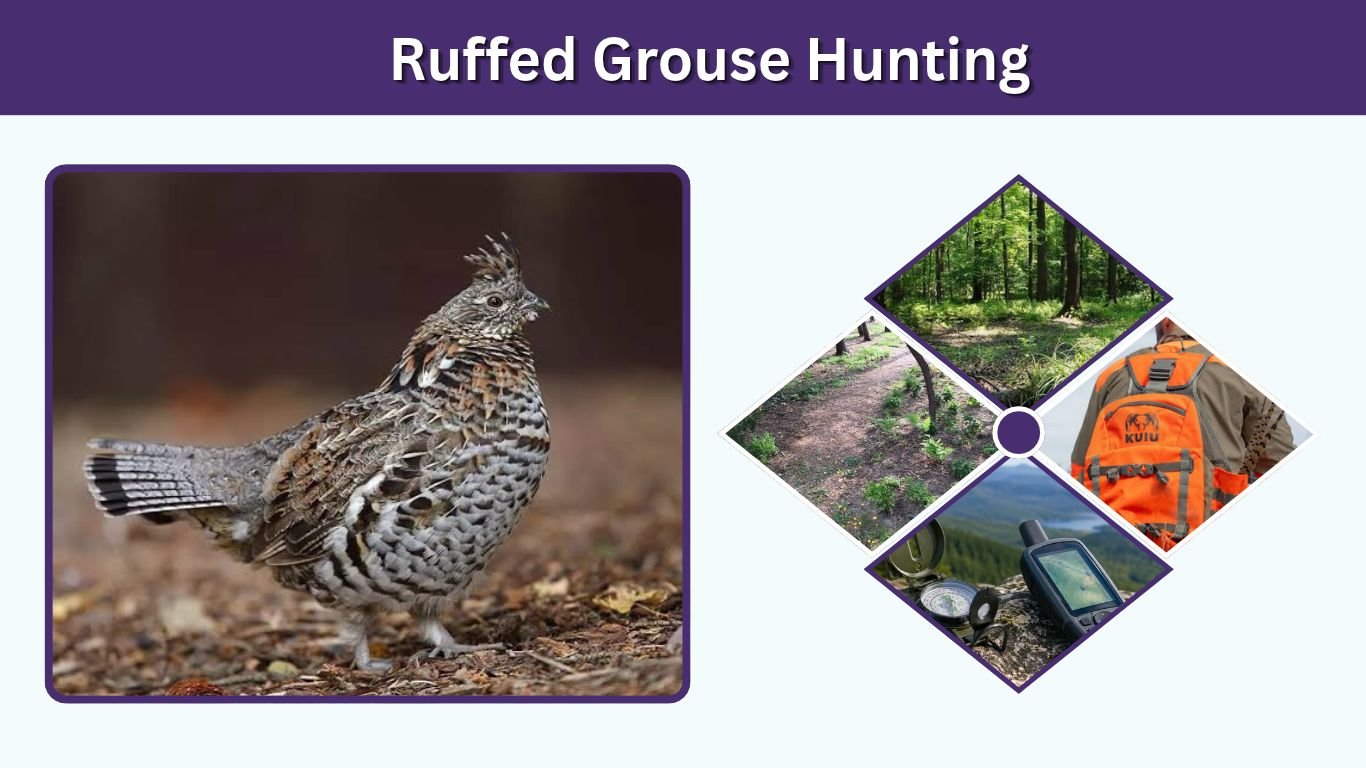
Ruffed grouse hunting is a popular upland bird hunting activity across North America, especially in forested regions of the United States and Canada. Known for their explosive takeoffs and quick movements through dense woodland, ruffed grouse are among the most challenging game birds to hunt.
Successful hunting requires an understanding of grouse habitat, seasonal behavior, suitable equipment, and effective hunting techniques. States such as Minnesota, Michigan, Wisconsin, and Maine offer opportunities to pursue these birds in forests filled with aspen, birch, and young hardwood growth. Whether you’re an experienced hunter or planning your first trip, learning where to find grouse and how to approach them can improve your hunting experience.
What Is Ruffed Grouse Hunting?
Ruffed grouse hunting involves locating and pursuing wild ruffed grouse (Bonasa umbellus) in their natural forest habitat. These medium-sized birds belong to the grouse family and are commonly found in northern hardwood and mixed forests.
Unlike birds that prefer open fields, ruffed grouse spend much of their time in dense vegetation. Their brown, gray, and reddish feathers provide excellent camouflage among fallen leaves and branches.
Hunters usually walk through suitable habitat, sometimes accompanied by trained bird dogs. When startled, a grouse may burst into flight with a loud fluttering sound before disappearing through the trees.
Finding birds consistently requires knowledge of their food sources, protective cover, and daily movements.
Best States for Ruffed Grouse Hunting
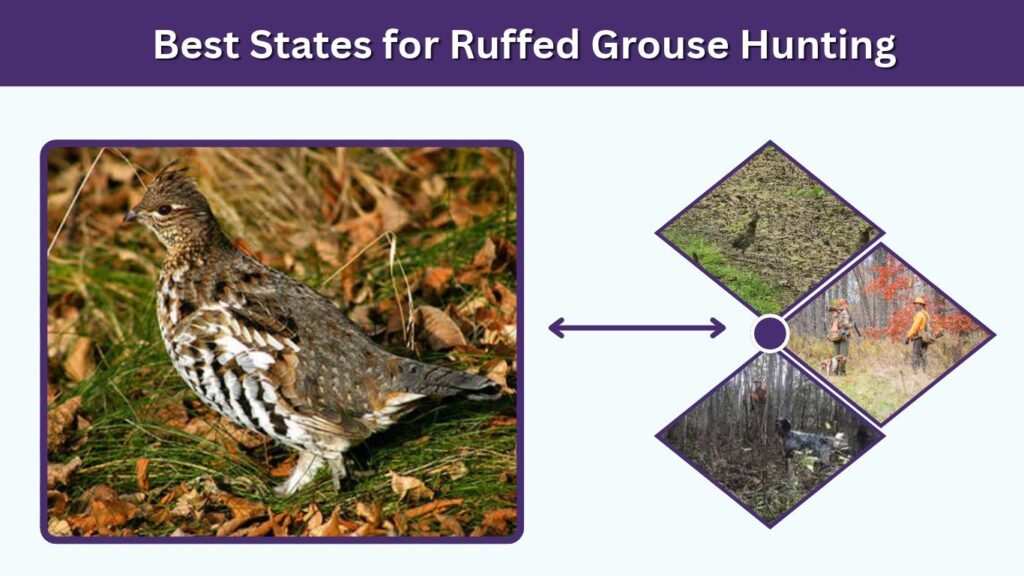
Several states offer excellent ruffed grouse hunting opportunities. However, habitat quality, population cycles, and access conditions can influence hunting success.
1. Minnesota Ruffed Grouse Hunting
Minnesota is one of the leading destinations for ruffed grouse hunting in the United States. Its northern forests contain extensive aspen stands, birch woodland, and regenerating vegetation.
Popular hunting regions include northeastern and north-central Minnesota, where public forests and wildlife management areas offer access.
Hunters often concentrate on younger aspen stands and areas with dense undergrowth. Minnesota also maintains hunter walking trails and designated grouse management areas.
2. Michigan Ruffed Grouse Hunting
Michigan provides extensive hunting opportunities, particularly across the Upper Peninsula and northern Lower Peninsula.
Aspen forests, mixed hardwood stands, and areas with recent timber management can provide suitable habitat.
The state has numerous public hunting areas, making it attractive to hunters who prefer independent trips.
Early October through November is a popular period, depending on weather and leaf conditions.
3. Maine Ruffed Grouse Hunting
Maine is another well-known destination for ruffed grouse hunting.
The state’s northern and western forests contain mixed hardwood vegetation, regenerating woodland, and extensive areas of grouse habitat.
Hunters can pursue birds independently or arrange guided trips through licensed outfitters.
Maine’s autumn landscape and woodland conditions make it particularly appealing for traditional upland hunting.
4. Wisconsin Ruffed Grouse Hunting
Northern Wisconsin offers productive grouse habitat, especially in areas containing young aspen and mixed hardwood forests.
State forests, county forests, and wildlife management properties provide opportunities to explore suitable cover.
Hunters should concentrate on habitat quality rather than assuming every wooded area supports similar grouse numbers.
Ruffed Grouse Hunting Season
Ruffed grouse hunting seasons vary by state. Most hunting opportunities occur during autumn, although some states allow hunting into winter.
2026–2027 Hunting Seasons
| State | Hunting Season |
| Minnesota | September 19, 2026 – January 3, 2027 |
| Michigan | September 15 – November 14, 2026; December 1, 2026 – January 1, 2027 |
| Maine | September 26 – December 31, 2026 |
Dates and bag limits are subject to state regulations. Hunters should verify applicable licensing requirements, hunting zones, and access restrictions before entering the field.
Best Time to Hunt Ruffed Grouse
The best hunting conditions often occur during cooler autumn weather when birds are active and forest vegetation begins changing.
Early Season Hunting
September and early October provide opportunities to find grouse around feeding areas and dense young woodland.
However, thick foliage can limit visibility.
Hunters should move carefully and remain attentive to birds hidden along forest edges.
Midseason Hunting
October and November are popular because cooler temperatures make walking more comfortable.
As leaves fall, visibility improves, although birds can still escape quickly through woodland cover.
Late Season Hunting
Late-season ruffed grouse hunting presents different challenges.
Snow and freezing temperatures can affect access, while birds may concentrate around protective conifer stands and available food.
Proper winter clothing and careful navigation become especially important.
How to Hunt Ruffed Grouse Successfully
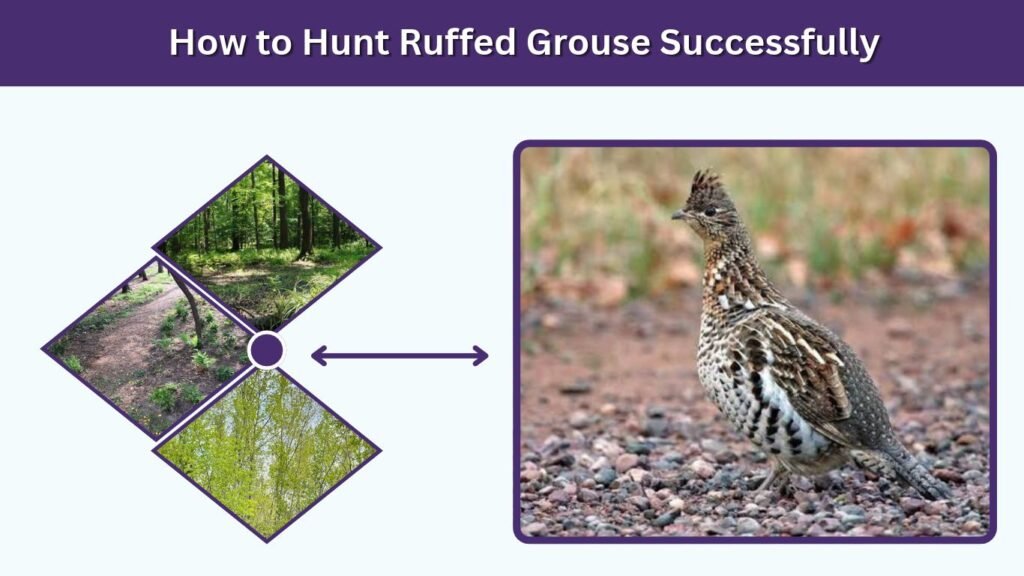
Understanding where birds spend their time is essential for planning an effective hunt.
Find Suitable Grouse Habitat
Ruffed grouse prefer forests with dense vegetation that provides food and protection.
Look for:
- Young aspen stands: Provide valuable feeding and protective habitat.
- Mixed hardwood forests: Offer diverse food sources and shelter.
- Woodland edges: Create transitions between different vegetation types.
- Brushy areas: Provide hiding places and protective cover.
- Wetland margins: May contain suitable shrubs and young trees.
Grouse often use several habitat types throughout the year, depending on food availability and weather conditions.
Hunting Ruffed Grouse Without a Dog
Hunting ruffed grouse without a dog is possible, especially for hunters who understand suitable habitat.
Walk slowly through accessible woodland areas and occasionally pause to listen for movement.
Focus on young forests, brushy edges, and locations where birds have previously been observed.
Because grouse frequently remain hidden until disturbed, patience and careful observation are important.
Hunting Ruffed Grouse With Dogs
Trained bird dogs can help locate grouse concealed in dense vegetation.
Pointing dogs attempt to locate and indicate birds, while flushing dogs work to move birds out of cover.
Popular breeds used for upland hunting include English setters, Brittanys, English pointers, and English springer spaniels.
A well-trained dog should respond reliably to commands and remain under control throughout the hunt.
Essential Ruffed Grouse Hunting Gear
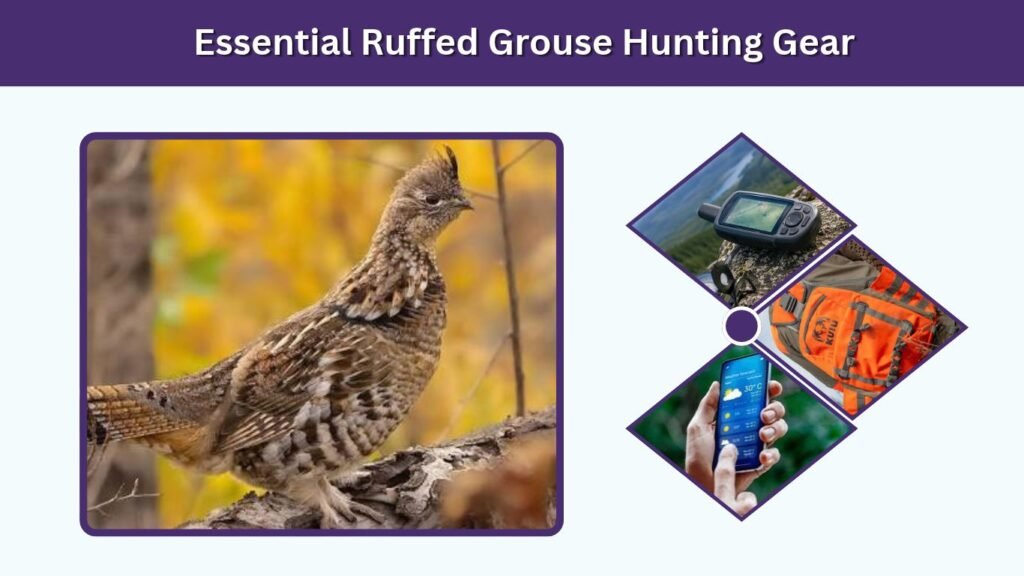
The right equipment improves comfort, navigation, and safety during long walks through woodland terrain.
| Hunting Gear | Main Purpose |
| Weather-resistant boots | Protect feet in muddy and uneven terrain |
| Brush-resistant pants | Reduce discomfort from thick vegetation |
| Blaze-orange clothing | Improve hunter visibility |
| Hunting vest | Carry essential field equipment |
| GPS or compass | Assist with navigation |
| Layered clothing | Provide comfort in changing temperatures |
| Water and first-aid kit | Support basic field safety |
Hunters should also carry appropriate, legally permitted hunting equipment and follow all applicable firearm safety rules.
Comfortable boots and protective clothing are especially important when covering several miles of dense forest.
Ruffed Grouse Hunting Tips for Beginners
Beginners can improve their experience by focusing on preparation, suitable habitat, and safe hunting practices.
Study the Hunting Area
Before leaving home, review public hunting maps, access points, and wildlife management information.
Identify promising young woodland habitat and establish a safe return route.
Pay Attention to Weather
Rain, wind, and falling temperatures can affect walking conditions and bird activity.
Adjust your schedule and equipment according to the forecast.
Avoid Rushing Through Cover
Moving too quickly can make observing birds and identifying suitable habitat difficult.
Take breaks, remain aware of your surroundings, and allow sufficient time for the return journey.
Practice Responsible Hunting
Always positively identify the species before considering a shot.
Maintain a safe field of fire, respect private property boundaries, and follow local hunting regulations.
Hunting success should never take priority over personal safety or wildlife conservation.
FAQs
1. What Is the Best State for Ruffed Grouse Hunting?
Minnesota, Michigan, Wisconsin, and Maine are among the most popular states for ruffed grouse hunting. The best destination depends on habitat conditions, public access, and current bird populations.
2. What Is the Best Time of Day to Hunt Ruffed Grouse?
Morning and late afternoon can offer good opportunities because birds may be active around feeding areas. However, grouse can be encountered throughout legal hunting hours.
3. Can You Hunt Ruffed Grouse Without a Dog?
Yes. Hunters can locate ruffed grouse without dogs by exploring young woodland, brushy edges, and other suitable habitats. Understanding bird behavior and moving carefully through cover can improve opportunities.
4. What Type of Habitat Is Best for Ruffed Grouse?
Young forests containing aspen, birch, dense shrubs, and regenerating hardwood trees generally provide valuable habitat. Grouse also use woodland edges, wetland margins, and protective conifer stands.
5. Is Ruffed Grouse Hunting Difficult for Beginners?
Ruffed grouse hunting can be challenging because birds remain concealed and flush unexpectedly. However, beginners can gain experience through careful preparation, hunter education, and outings with experienced companions.
