
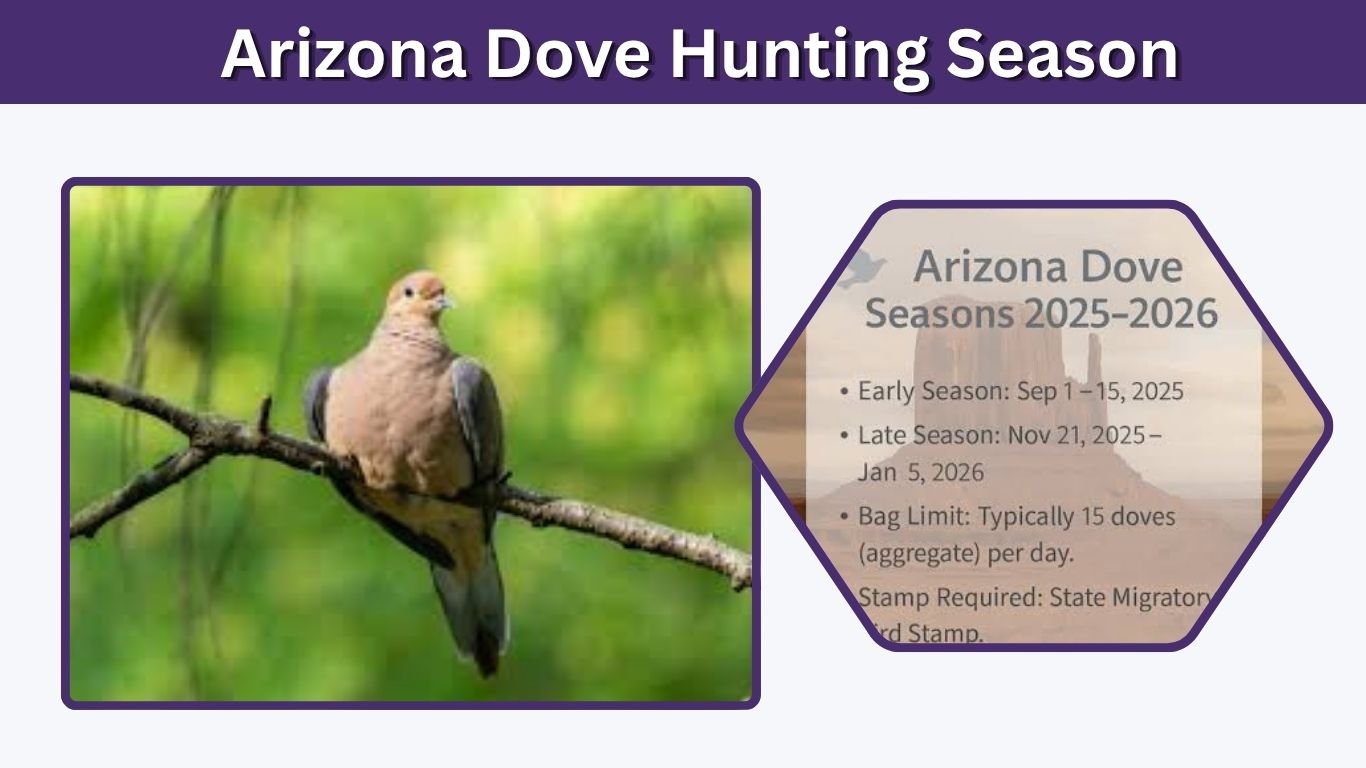
Arizona is one of the most popular destinations for dove hunting in the United States, offering excellent opportunities across desert landscapes, agricultural fields, and wildlife areas. Whether you are hunting near Yuma, Buckeye, or Phoenix, understanding the Arizona dove hunting season dates, license requirements, and regulations is essential. The 2026–2027 season includes an early September hunt and a longer late-season opportunity. This guide covers official hunting dates, bag limits, license costs, shooting hours, the best hunting locations, and practical tips for a successful dove hunt.
Arizona Dove Hunting Season Dates 2026–2027
The Arizona dove hunting season is divided into early and late periods, allowing hunters to pursue mourning doves and white-winged doves during different parts of the year. The Arizona Game and Fish Department (AZGFD) establishes the official dates and hunting regulations. Eurasian collared-doves have a separate, much longer season, offering additional hunting opportunities.
| Dove Hunting Season | Opening Date | Closing Date |
| Early Dove Season | September 1, 2026 | September 15, 2026 |
| Late Dove Season | November 20, 2026 | January 3, 2027 |
| Eurasian Collared-Dove Season | September 1, 2026 | August 31, 2027 |
These dates apply statewide, subject to restrictions on particular lands, wildlife refuges, and other closed areas.
Early Dove Hunting Season in Arizona
The early season runs from September 1 through September 15, 2026. This 15-day period is especially popular because mourning and white-winged doves are often abundant around agricultural fields and desert feeding areas.
September temperatures can be extremely high, particularly in southern Arizona. Hunters should bring plenty of drinking water and concentrate their efforts around established bird flight paths.
Late Dove Hunting Season in Arizona
The late season begins November 20, 2026, and continues through January 3, 2027.
Late-season hunting typically offers cooler weather and fewer hunters. Mourning doves remain widespread, while many white-winged doves have migrated south.
Agricultural areas, water sources, and sheltered roosting locations are productive places to investigate during winter.
Arizona Dove Hunting Bag Limits

Arizona regulates the number of mourning and white-winged doves hunters may harvest and possess. The limits are the same during the early and late seasons. However, invasive Eurasian collared-doves have different regulations, including no daily bag or possession limit. Hunters must correctly identify each species to follow the applicable rules.
| Dove Species | Daily Bag Limit | Possession Limit |
| Mourning Dove | 15 combined | 45 combined |
| White-winged Dove | 15 combined | 45 combined |
| Eurasian Collared-Dove | Unlimited | Unlimited |
The 15-bird daily limit applies to mourning and white-winged doves combined, not separately. For example, a hunter may harvest eight mourning doves and seven white-winged doves in one day.
The possession limit is 45 combined birds. Special rules and area restrictions apply to Eurasian collared-doves, particularly on national wildlife refuges.
Arizona Dove Hunting License Requirements and Costs
Anyone planning to hunt doves in Arizona must understand the state’s licensing requirements. Most hunters need a valid Arizona hunting license, and adults pursuing mourning or white-winged doves also need an Arizona migratory bird stamp. License prices vary depending on residency, age, and whether the hunter chooses an annual or short-term license.
Arizona Dove Hunting License Cost
The Arizona Game and Fish Department lists the following license prices:
- Resident general hunting license: $37.
- Resident combination hunting and fishing license: $57.
- Nonresident combination hunting and fishing license: $160.
- Resident short-term combination license: $15 per day.
- Nonresident short-term combination license: $20 per day.
- Arizona migratory bird stamp: $5.
- Youth combination hunting and fishing license: $5.
For example, an Arizona resident purchasing a general hunting license and migratory bird stamp would pay $42.
Adult nonresident hunters purchasing the $160 combination license would pay $165 with the migratory bird stamp.
Youth Dove Hunting License Requirements
Arizona offers affordable hunting opportunities for young hunters.
Hunters ages 10 through 17 need a valid youth combination hunting and fishing license. This costs $5 and already includes the state migratory bird stamp.
Children younger than 10 may hunt doves without a license when accompanied by a properly licensed adult who is at least 18 years old. One licensed adult may accompany no more than two unlicensed children.
Arizona HIP and Migratory Bird Stamp Requirements
Arizona uses its migratory bird stamp system to meet federal Harvest Information Program (HIP) requirements.
Adults hunting mourning or white-winged doves must carry the applicable state stamp and hunting license. A separate federal duck stamp is not required for dove hunting alone.
The Arizona migratory bird stamp is not required when hunting only Eurasian collared-doves, although applicable hunting license requirements remain in effect.
Best Dove Hunting Locations in Arizona

Arizona offers productive dove hunting opportunities across agricultural valleys, desert habitats, and designated public hunting areas. Dove populations are often concentrated where food, water, and suitable roosting habitat occur close together. The most productive locations can change with seasonal migration, farming activity, rainfall, and local hunting pressure.
1. Yuma, Arizona
Yuma is widely recognized as one of Arizona’s premier dove hunting destinations.
Its agricultural landscape provides feeding opportunities for mourning and white-winged doves. Areas near grain fields, desert edges, and established flight corridors can attract significant numbers of birds.
Hunters should scout accessible land and obtain permission before entering private agricultural property.
2. Buckeye and Robbins Butte Wildlife Area
Buckeye, west of Phoenix, is another popular destination for Arizona dove hunting.
The surrounding agricultural fields and desert habitat support both mourning and white-winged doves.
Robbins Butte Wildlife Area offers hunting opportunities, but designated portions have seasonal access restrictions and special youth-hunt arrangements. Always check current maps and posted notices.
3. Gila Bend, Eloy, and Florence
These central and southern Arizona communities offer additional opportunities for hunters willing to scout agricultural landscapes.
Grain-producing fields, desert washes, and nearby watering areas may attract birds during early morning and evening movements.
Hunters should confirm property boundaries and identify safe shooting locations before setting up.
4. Finding Arizona Dove Hunting Maps
The Arizona Game and Fish Department provides Game Management Unit (GMU) maps and regional hunting information.
These resources help hunters identify public lands, wildlife management areas, access routes, and hunting restrictions.
However, a GMU boundary does not automatically mean every property within it is open to hunting. Check land ownership, local closures, and refuge-specific regulations before traveling.
Arizona Dove Hunting Regulations and Shooting Hours

Arizona dove hunting is governed by state regulations and applicable federal migratory bird laws. These rules cover legal hunting hours, firearms, ammunition, hunting methods, and land access. Understanding the requirements helps hunters avoid violations while protecting other outdoor recreationists, livestock, and wildlife.
Legal Dove Hunting Shooting Hours
Legal dove shooting hours in Arizona begin 30 minutes before sunrise and end at sunset.
Because sunrise and sunset vary by date and location, hunters should check the official Arizona shooting-hours table before entering the field.
Morning flights often provide productive hunting, while evening feeding movements offer another opportunity.
Important Arizona Dove Hunting Rules
Hunters must follow several important regulations:
- Use a shotgun no larger than 10 gauge.
- Limit shotgun capacity to three shells when hunting migratory game birds.
- Never shoot from, across, or into roads or railways.
- Do not shoot within 440 yards of an occupied structure without the required permission.
- Never hunt over illegally baited areas.
- Respect private property boundaries and posted closures.
- Make reasonable efforts to retrieve every downed bird.
- Keep harvested birds belonging to different hunters separate.
Hunters must also retain one fully feathered wing on harvested doves for identification until reaching their permanent residence or the location where the birds will be consumed.
Lead Shot and Hunter Orange Requirements
Lead ammunition is not universally prohibited for dove hunting throughout Arizona. However, nontoxic shot is mandatory in certain national wildlife refuges, including Cibola, Havasu, Imperial, and Bill Williams River.
Hunter orange clothing is not generally mandatory for Arizona dove hunting, but wearing it can improve visibility around other hunters.
How to Hunt Doves Successfully in Arizona

Successful dove hunting depends on preparation, scouting, and understanding bird behavior. Doves frequently move between feeding grounds, water sources, and roosting areas. Locating these movements before hunting can improve shooting opportunities. Weather conditions, migration patterns, and agricultural activity also influence where birds gather throughout the season.
Arizona Dove Hunting Tips
- Scout before hunting: Observe feeding areas and flight paths from legal access points.
- Hunt during active periods: Early morning and late afternoon often provide good opportunities.
- Watch agricultural fields: Grain fields may attract feeding doves.
- Locate water sources: Desert birds often travel regularly to accessible water.
- Choose suitable ammunition: Many hunters prefer smaller birdshot, such as No. 7½ or No. 8.
- Practice shooting: Clay-target practice helps hunters prepare for fast-moving birds.
- Retrieve harvested birds: Mark where birds fall and recover them promptly.
Late-Season Dove Hunting Tips
Winter dove hunting requires a slightly different approach.
Mourning doves are generally more reliable targets than white-winged doves during the late season. Concentrate scouting around agricultural fields, water sources, and sheltered roosting areas.
Cooler temperatures make longer hunting sessions more comfortable. However, hunters should remain flexible because weather changes can shift bird movements and feeding patterns.
FAQs
When Is Dove Hunting Season in Arizona?
Arizona’s 2026–2027 dove hunting season has two main periods. The early season runs September 1–15, 2026, while the late season runs November 20, 2026, through January 3, 2027. These seasons cover mourning and white-winged doves, with separate regulations for Eurasian collared-doves.
How Many Doves Can You Shoot Per Day in Arizona?
Arizona permits a combined daily bag limit of 15 mourning and white-winged doves, with a possession limit of 45. Hunters may take any combination of those two species within the daily limit. Eurasian collared-doves have no daily bag or possession limit under the applicable regulations.
Where Is the Best Dove Hunting in Arizona?
Yuma is among Arizona’s most popular dove hunting destinations because of its extensive agricultural landscape. Other promising areas include Buckeye, Gila Bend, Eloy, and Florence. Hunters should look for legal hunting access near feeding fields, water sources, and established flight paths.
Do You Need a License to Hunt Doves in Arizona?
Yes. Most dove hunters need a valid Arizona hunting license. Adults hunting mourning or white-winged doves also need an Arizona migratory bird stamp. Hunters ages 10–17 can use the $5 youth combination license, while children younger than 10 have a supervised hunting exemption.
Can You Hunt Eurasian Collared-Doves Year-Round in Arizona?
Arizona’s 2026–2027 Eurasian collared-dove season runs from September 1, 2026, through August 31, 2027, with unlimited daily bag and possession limits. However, some national wildlife refuges and other properties restrict or prohibit hunting these birds during certain periods. Hunters must always check location-specific rules.
