
Duck hunting in snow can create exciting opportunities, especially when cold weather changes where ducks feed, rest, and travel. Snowfall, freezing temperatures, and approaching winter storms can influence waterfowl movement, sometimes bringing new birds into hunting areas. However, successful hunting depends on understanding duck behavior and selecting suitable locations. Light snowfall may offer favorable conditions, while heavy snowstorms can create serious challenges. This guide explains whether duck hunting is good in the snow, how ducks react to winter weather, and nine practical tips for improving your hunting experience.
Is Duck Hunting Good in the Snow?
Yes, duck hunting in the snow can be excellent, particularly when snowfall accompanies cold fronts that encourage ducks to move toward available food and open water. Winter weather can concentrate birds in specific locations, making their movements easier to predict. However, snowfall alone does not guarantee hunting success. Wind conditions, temperature, snow accumulation, and habitat availability all influence duck activity.
Why Snow Can Improve Duck Hunting
Snowfall can change feeding patterns and encourage ducks to search for accessible food. When agricultural fields become covered with deep snow, some ducks relocate to areas where feeding remains possible.
Cold fronts may also bring migrating ducks into new regions. These movements create opportunities for hunters positioned along established waterfowl migration routes.
When Snow Makes Duck Hunting Difficult
Heavy snowfall can reduce visibility and make it difficult to identify approaching birds. Strong winds may also cause ducks to seek sheltered locations rather than travel across exposed areas.
Additionally, frozen wetlands can limit hunting opportunities. When shallow water freezes completely, ducks may relocate to larger lakes, flowing rivers, or warmer regions.
How Different Snow Conditions Affect Duck Hunting
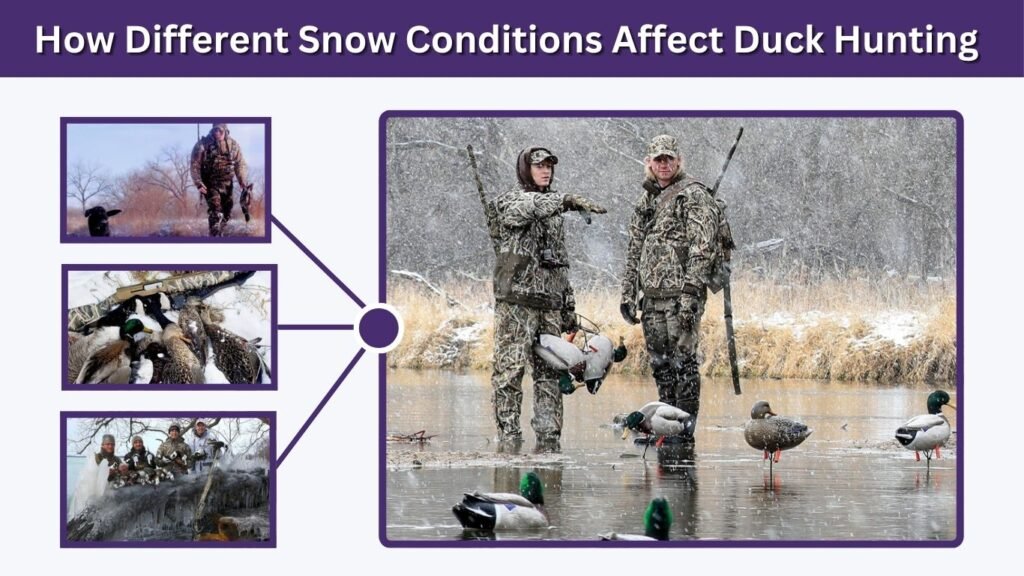
Not every snowy day produces the same hunting conditions. The intensity of snowfall, wind speed, and temperature can change how ducks behave throughout the day. Light snow may allow normal feeding activity, while heavy storms can disrupt movement. Understanding these differences helps hunters choose suitable hunting locations and recognize when dangerous weather makes hunting inadvisable.
Duck Hunting in Light Snow
Light snowfall can provide favorable duck hunting conditions. Ducks may continue flying between feeding and resting areas, particularly when temperatures remain relatively moderate.
Overcast skies can reduce glare, although snow-covered surroundings make dark clothing and poorly concealed blinds easier to notice.
Hunters should observe familiar flight routes and adjust concealment to match the winter landscape.
Duck Hunting in Heavy Snow
Duck hunting in heavy snow is less predictable because reduced visibility and strong winds can affect flight activity.
Some ducks move into protected waterways, while others remain in resting areas until weather conditions improve.
Snow accumulation can also cover feeding areas, forcing birds to search elsewhere. Hunters should avoid dangerous storms and look for opportunities once conditions become safe.
Duck Hunting in Wind and Snow
Wind plays an important role in winter duck movement. During windy snowfall, ducks often use sheltered waterways and areas protected from strong gusts.
Hunters can look for protected shorelines, river bends, and wooded wetlands. Ducks frequently approach landing areas into the wind, so wind direction should influence decoy placement.
Best Places to Hunt Ducks in the Snow
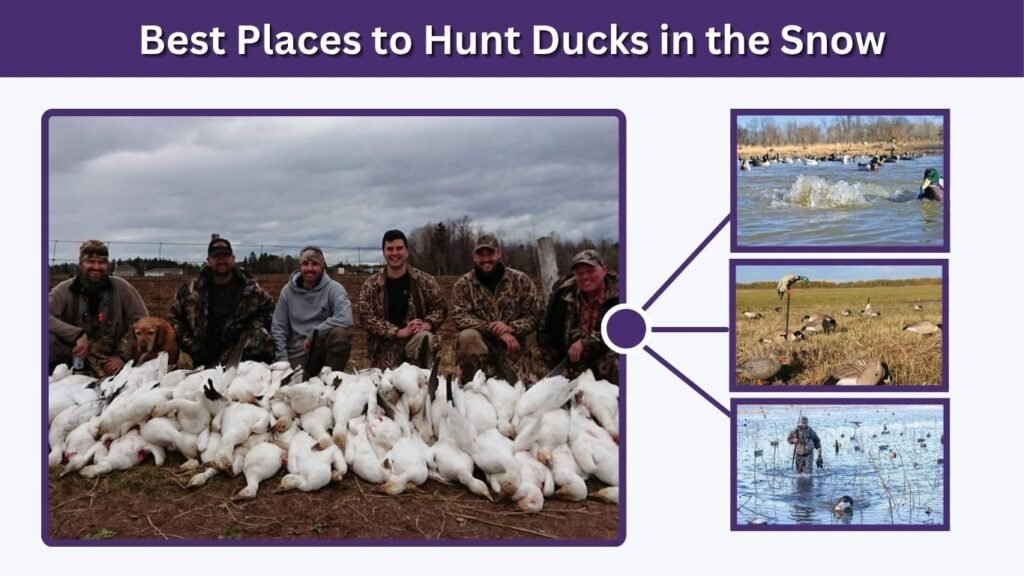
Finding suitable habitat becomes particularly important during snowy weather. Falling temperatures can freeze shallow wetlands, while accumulated snow may cover agricultural food sources. Ducks often concentrate where they can access both food and unfrozen water. Hunters who scout these locations before a winter storm may have better opportunities when weather conditions change.
Open Rivers and Flowing Water
Rivers and streams with consistent currents may remain unfrozen longer than shallow ponds.
Mallards and other ducks sometimes gather along open river sections when surrounding wetlands freeze. Protected bends, backwaters, and shallow feeding areas can be productive where birds have reliable access to food.
Agricultural Fields and Feeding Areas
Snow-covered agricultural fields can still attract ducks when waste grain remains accessible.
Mallards may feed in harvested cornfields or other agricultural areas with suitable food availability. However, deep snow or ice can eventually prevent birds from reaching grain, causing them to move elsewhere.
Sheltered Lakes and Wetlands
Protected lake coves, marsh edges, and flooded timber may attract ducks during cold, windy weather.
These habitats can offer shelter and feeding opportunities, particularly when some water remains open. Scouting is essential because heavily frozen habitats may no longer support large concentrations of ducks.
9 Effective Duck Hunting Tips in the Snow
Successful hunting during snowfall requires preparation and an understanding of changing winter conditions. Ducks may become concentrated around limited feeding and resting habitats, making scouting particularly valuable. Hunters also need to adapt their concealment, calling, and decoy arrangements. The following nine tips can help improve hunting opportunities during safe winter weather.
Practical Snow Hunting Tips
- Monitor approaching cold fronts: Check weather forecasts to identify changes in temperature, wind, and snowfall that may influence duck movement.
- Scout open water: Search for rivers, unfrozen wetlands, and protected waterways where ducks can continue resting and feeding.
- Use snow-appropriate camouflage: Match your blind and clothing to snow-covered surroundings while maintaining natural-looking concealment.
- Adjust decoy placement: Position decoys near areas ducks naturally use, leaving suitable landing space based on wind direction.
- Watch feeding patterns: Observe when ducks leave resting areas to feed, especially during prolonged freezing weather.
- Adapt your calling: Use natural calling patterns and adjust volume based on snowfall, wind, and the reactions of approaching birds.
- Protect hunting equipment: Keep ammunition, communication devices, and essential supplies dry and protected from snow and freezing temperatures.
- Consider changing locations: If wetlands freeze or food becomes inaccessible, scout alternative habitats where ducks have relocated.
- Prioritize winter safety: Avoid blizzards, unstable ice, hazardous waterways, and weather conditions that prevent safe travel or retrieval.
Best Time to Duck Hunt Before, During, or After Snow
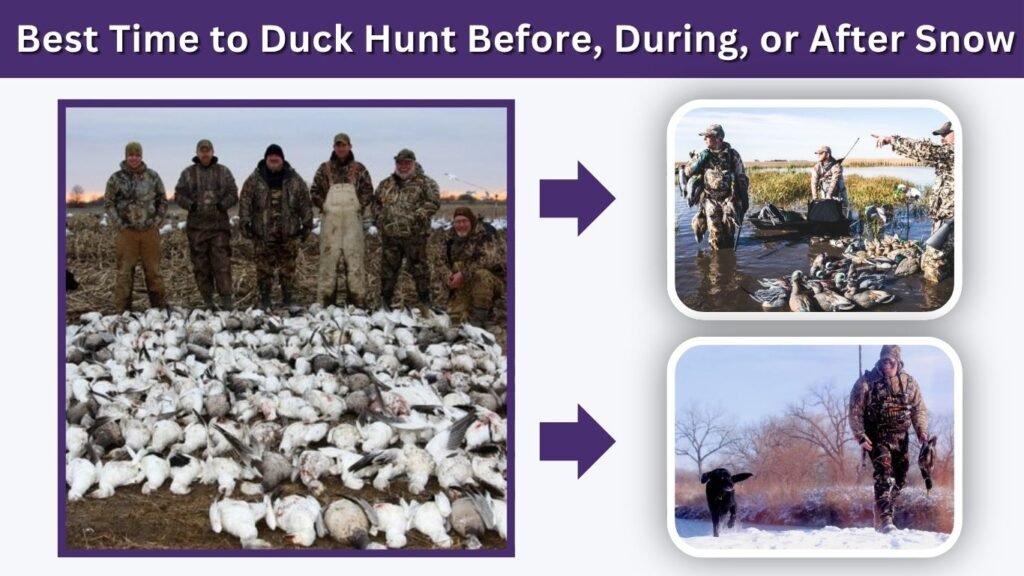
Timing can significantly influence duck hunting success during winter weather. Approaching cold fronts sometimes encourage migration, while freezing temperatures can change daily feeding schedules. Snow accumulation also affects access to natural food sources. Hunters should monitor weather patterns over several days rather than assuming that the heaviest snowfall will always provide the best hunting opportunities.
Before a Snowstorm
The period before an approaching winter storm can be productive when changing winds and temperatures encourage duck movement.
Ducks may continue feeding before conditions deteriorate, while approaching cold fronts can bring additional migrating birds into suitable habitats.
During Light Snowfall
Light snowfall may provide good hunting conditions when ducks remain active and visibility is adequate.
Hunters can focus on established feeding routes, sheltered wetlands, and suitable landing areas. Bird activity should guide hunting decisions rather than snowfall alone.
After a Snowstorm
The period after snowfall can be particularly productive when ducks begin moving toward accessible food and open water.
Clearer visibility and changing temperatures may encourage renewed flight activity. However, severe freezing conditions can also cause ducks to leave an area entirely.
Essential Gear for Duck Hunting in Snow
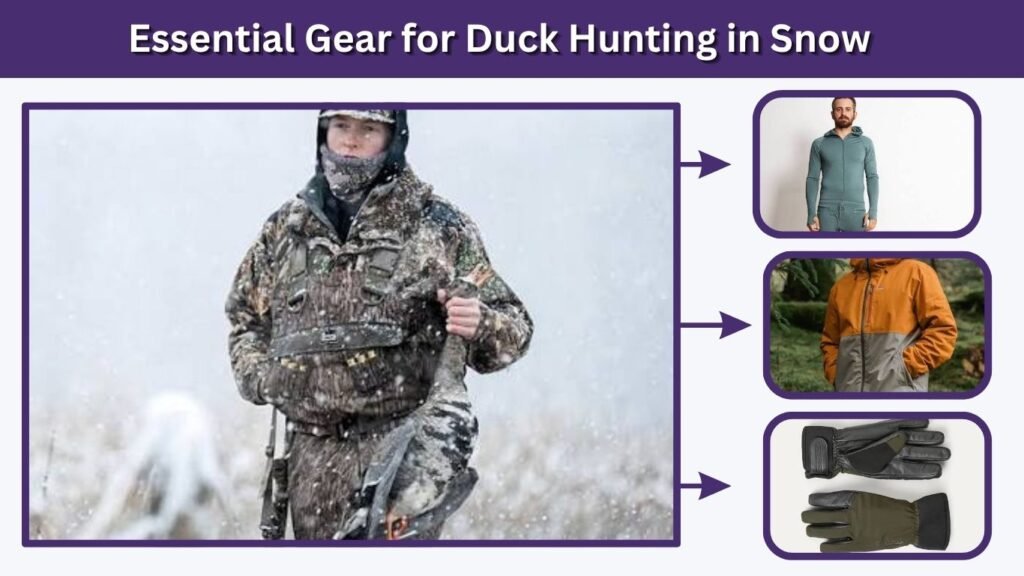
Proper winter hunting equipment helps protect against freezing temperatures, wind, and moisture. Snowy conditions can quickly become uncomfortable when hunters remain stationary for long periods. Wearing suitable layers and keeping essential equipment protected improves comfort and preparedness. Clothing should provide insulation without restricting movement, while safety equipment must remain easily accessible.
Winter Duck Hunting Gear Checklist
- Insulated waterproof jacket: Provides protection against snow, cold wind, and moisture.
- Thermal base layers: Help maintain body temperature while managing perspiration.
- Insulated waterproof boots: Keep feet warmer and drier in snowy terrain.
- Waterproof gloves: Protect hands while allowing safe equipment handling.
- Warm headwear: Reduces heat loss and protects exposed skin.
- Water-resistant storage bag: Keeps spare clothing and supplies protected.
- Properly fitted life jacket: Essential for boating in cold-water conditions.
Safety Tips for Hunting Ducks in Snowstorms
Winter duck hunting presents hazards beyond normal hunting conditions. Extreme cold, reduced visibility, frozen waterways, and strong winds can quickly create dangerous situations. Even experienced hunters should recognize their limits and prepare for unexpected weather changes. A productive hunting opportunity is never worth risking serious injury, hypothermia, or becoming stranded in a remote wetland.
Important Winter Hunting Precautions
- Avoid severe snowstorms: Postpone hunting during blizzard warnings, dangerous winds, or whiteout conditions.
- Stay off uncertain ice: Never assume frozen lakes or wetlands can safely support your weight.
- Prevent hypothermia: Carry dry clothing, dress in layers, and recognize early signs of dangerous cold exposure.
- Maintain communication: Inform someone of your hunting location, travel route, and expected return time.
- Practice safe retrieval: Never enter unstable ice or dangerous water to retrieve a bird.
Always follow applicable hunting seasons, legal shooting hours, species restrictions, and bag limits.
FAQs
1. Is Duck Hunting Good in the Snow?
Yes, duck hunting can be productive during snowfall, especially when cold fronts influence migration and feeding activity. Ducks may concentrate around available food and open water as temperatures drop. However, deep snow and severe storms can reduce opportunities by limiting food access, visibility, and safe hunting conditions.
2. Do Ducks Fly During Snowstorms?
Ducks can fly during snowfall, including moderately snowy conditions. However, severe storms, strong winds, and poor visibility may reduce flight activity or encourage birds to use sheltered habitats. Duck movement depends on weather intensity, food availability, and migration needs. Hunters should avoid dangerous storms regardless of potential bird activity.
3. Is Duck Hunting Better in Light Snow or Heavy Snow?
Light snow generally provides more manageable hunting conditions because visibility is often better and ducks may continue their normal movements. Heavy snowfall can occasionally concentrate birds around sheltered habitats, but severe weather creates significant safety risks. Local scouting and changing temperatures are more reliable indicators than snowfall intensity alone.
4. Where Do Ducks Go When It Snows?
During snowy weather, ducks often seek accessible food and open water. Common locations include flowing rivers, sheltered lakes, unfrozen wetlands, and agricultural feeding areas. When heavy snow covers food sources or shallow habitats freeze, some species relocate to warmer regions where feeding and resting conditions remain suitable.
5. Is Duck Hunting Good After a Snowstorm?
Duck hunting after a snowstorm can be productive when weather conditions improve and ducks resume feeding. Birds may concentrate around remaining open water or move toward accessible food sources. However, prolonged freezing weather may drive ducks away from the area, making scouting essential before planning a hunt.
