
Finding a wounded deer without a visible blood trail can be frustrating, especially when the animal disappears into thick woods. However, the absence of blood does not always mean you missed your shot. Deer can travel considerable distances without leaving obvious signs of injury. Understanding their behavior, identifying subtle tracking clues, and searching systematically can improve your chances of recovery. This guide explains how to find a deer with no blood trail, what to do when blood disappears, and where wounded deer may hide.
Why Is There No Blood Trail After Shooting a Deer?
A deer may leave little or no blood after being shot for several reasons. Shot placement, wound location, terrain, and vegetation can all influence how much blood reaches the ground. Sometimes, blood accumulates internally before becoming visible outside the body. Understanding these possibilities helps hunters avoid assuming they missed and encourages a more careful approach to recovering wounded animals.
High Entry Wounds and Internal Bleeding
A high entry wound may leave limited blood because the opening sits above the lowest point of the body cavity. Blood can collect internally rather than immediately reaching the ground.
An arrow or bullet that does not pass completely through may also produce a less visible trail. Even a serious wound may initially leave only a few drops.
Environmental Conditions Affecting Blood Visibility
Dry leaves, tall grass, muddy ground, and dense vegetation can conceal small blood spots. Rain may wash away evidence, while darkness makes tiny droplets difficult to recognize.
Blood may appear on branches rather than the ground. Therefore, carefully inspecting surrounding vegetation is essential before concluding that no trail exists.
What to Do Immediately After Shooting a Deer
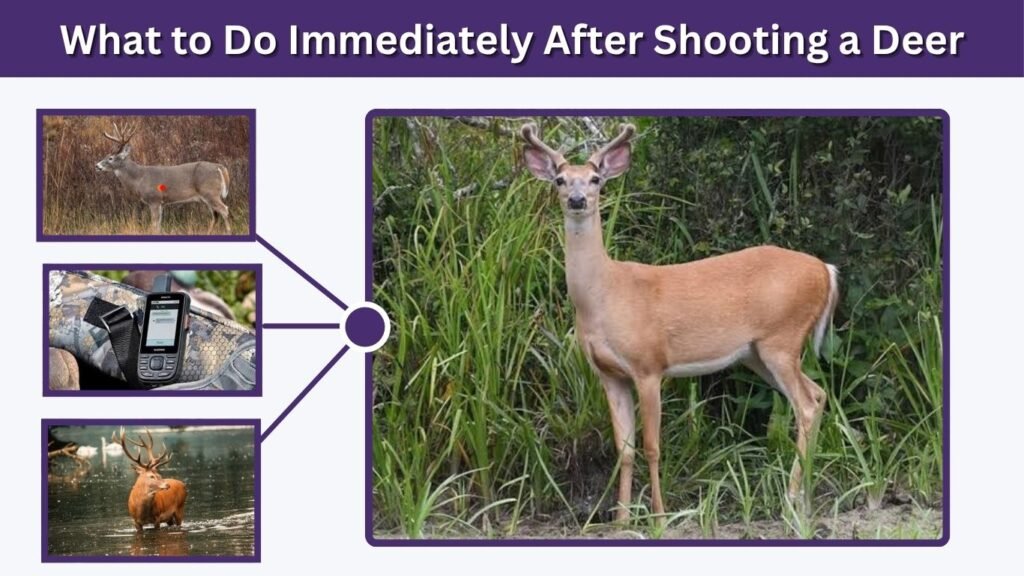
Your actions immediately after the shot can significantly influence your chances of finding a wounded deer. Rushing into the woods may cause an injured animal to move farther away. Instead, observe its behavior, remember important landmarks, and allow an appropriate waiting period. These precautions help preserve tracking evidence and make the recovery process more organized and effective.
Five Essential Steps After the Shot
- Watch the deer’s reaction: Notice whether it jumps, stumbles, hunches its back, or runs normally. These reactions offer clues but cannot confirm the wound location.
- Mark the shooting position: Record your location using GPS or recognizable landmarks.
- Identify the impact location: Remember exactly where the deer stood when the shot occurred.
- Observe its escape direction: Watch where the animal runs and note the last place you see it.
- Listen carefully: Breaking branches, heavy movement, or a sudden crash may help identify its final direction.
How Long Should You Wait Before Tracking?
Waiting time depends on the suspected wound. For a confidently identified vital-organ hit, hunters commonly wait at least 30 minutes before beginning recovery.
A suspected liver or gut wound generally requires several hours or longer. Beginning too soon may push the deer from its resting location.
When shot placement is uncertain, consult an experienced tracker. Weather, especially extreme heat, must also be considered.
How to Find a Wounded Deer With No Blood Trail
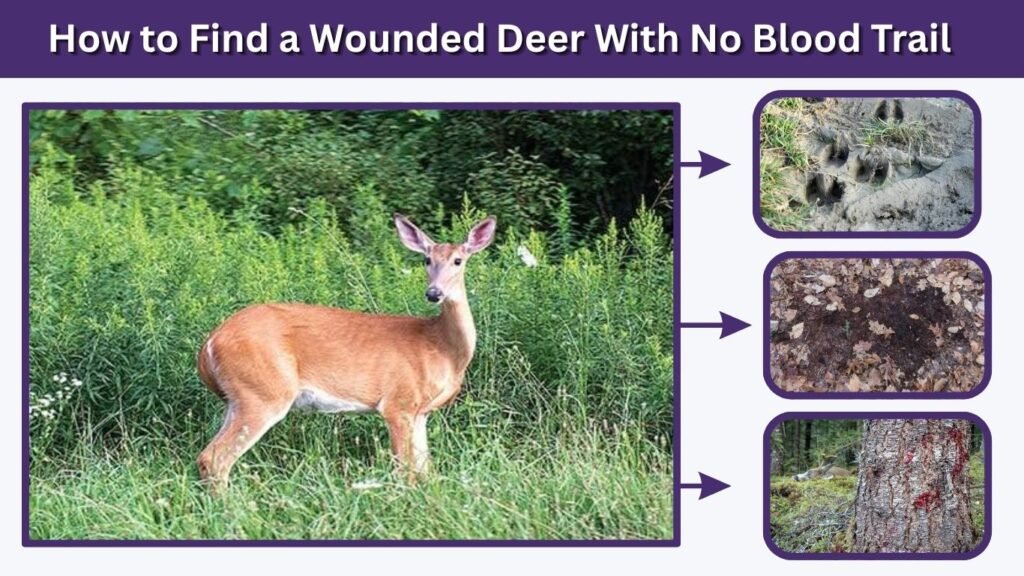
Tracking a deer without blood requires examining evidence beyond visible bleeding. Fresh hoofprints, displaced leaves, damaged vegetation, and animal hair can help establish its travel direction. The most effective approach involves returning to the original impact location and moving slowly along the suspected escape route. Each confirmed clue provides another opportunity to narrow the search area and locate the animal.
Look for These Important Tracking Signs
- Fresh hoofprints: Examine mud, soft soil, and damp ground for tracks consistent with the escaping deer.
- Disturbed leaves: Look for overturned leaves, scraped soil, or disrupted forest litter.
- Broken vegetation: Freshly bent grasses and damaged twigs may reveal recent movement.
- Deer hair: Search around the impact location for hair that could indicate contact.
- Subtle blood spots: Examine leaves, rocks, tree trunks, and low branches for tiny stains.
Follow the Deer’s Likely Escape Route
Begin with the direction you actually observed rather than guessing where the deer should have traveled.
Examine nearby deer trails, narrow passages, and natural openings through vegetation. These routes may provide easier movement through thick cover.
Move slowly and avoid walking directly over possible tracks. Whenever you discover reliable evidence, mark its location before continuing.
Remember that other deer may use the same trails, making it important to distinguish fresh evidence from older signs.
How to Find a Deer When the Blood Trail Ends
Sometimes a deer initially leaves visible blood, but the trail suddenly disappears. This can happen when bleeding slows, a wound becomes temporarily obstructed, or the deer enters terrain where evidence is difficult to see. Losing the trail does not necessarily mean losing the deer. A systematic search beginning at the last confirmed blood spot often provides the best opportunity for continuing recovery.
Steps to Follow When Blood Disappears
- Mark the last blood location: Save its GPS coordinates or use a suitable removable marker.
- Return to confirmed evidence: Avoid continuing blindly into unfamiliar terrain.
- Inspect surrounding vegetation: Look above ground level for blood on leaves and branches.
- Search in widening circles: Expand outward from the last confirmed sign while checking possible travel routes.
- Begin a grid search: Divide the area into manageable sections and systematically inspect each section.
Using a Grid Search Effectively
A grid search is useful when tracks and blood disappear completely. Establish parallel search lanes across the most likely recovery area.
Keep enough overlap between lanes to inspect thick vegetation and hidden depressions. Working with a small, coordinated group can improve coverage.
If new evidence appears, stop the wider search and return to following the confirmed trail. Avoid trampling the remaining signs.
Where to Look for a Wounded Deer Without Blood
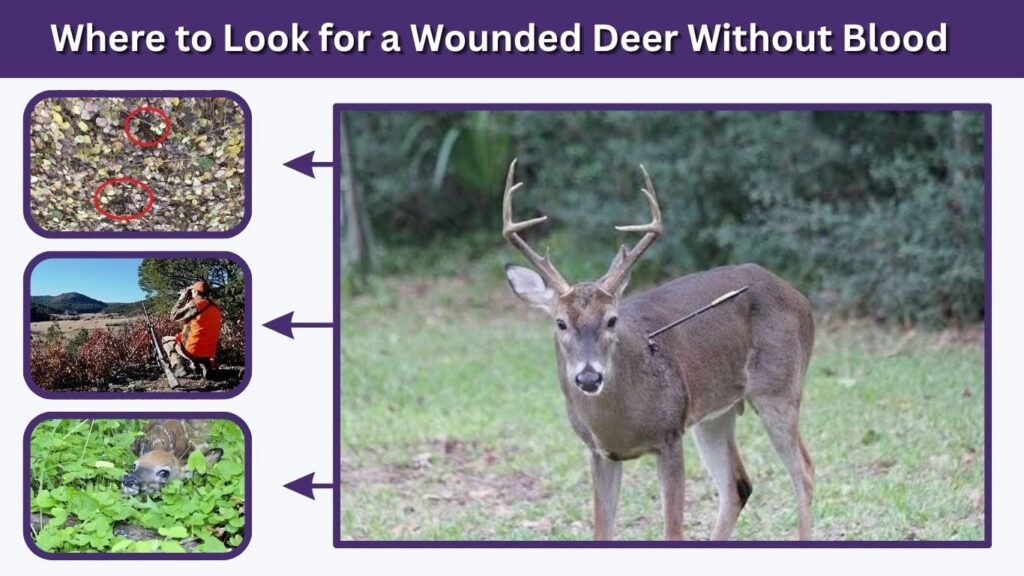
A wounded deer may seek dense vegetation or a relatively undisturbed resting location. However, its final destination depends on injury severity, terrain, nearby disturbances, and individual behavior. Hunters should prioritize the animal’s known escape direction before searching alternative locations. Understanding common bedding areas and natural travel corridors can help identify places worth checking when visible tracking evidence becomes scarce.
Common Areas to Search for Wounded Deer
- Dense thickets: Heavy brush and tangled vegetation can provide concealed resting places.
- Creek bottoms: Drainages and stream corridors may offer sheltered routes through the landscape.
- Tall grass: Thick grass can hide an injured deer from casual observation.
- Wooded depressions: Low areas and terrain folds may provide secluded bedding locations.
- Nearby bedding cover: Familiar resting areas may be worth checking when they align with confirmed tracks.
Use Tracking Dogs and Technology When Necessary
A trained deer-tracking dog can follow scent even when blood is not visible. Experienced handlers may help locate animals that human trackers cannot follow.
GPS mapping can also prevent repeated searches of the same locations and help organize a larger recovery effort.
Check local regulations before using tracking dogs, thermal equipment, drones, or searching after legal hunting hours. Obtain landowner permission before entering private property.
If the deer is still alive, maintain a safe distance and follow applicable laws concerning a humane follow-up shot.
FAQs
Finding deer without visible blood raises several questions about tracking distance, wound severity, and recovery methods. Many hunters wonder whether a deer was actually hit or how long they should continue looking. The following answers explain common situations and provide practical guidance for recognizing tracking evidence, planning searches, and making responsible recovery decisions when conventional blood tracking becomes difficult.
1. Can You Find a Deer Without Any Blood Trail?
Yes. A wounded deer may leave tracks, hair, or disturbed vegetation even when blood is absent. Carefully examining the impact location and following confirmed movement signs can help locate the animal.
2. How Far Can a Wounded Deer Run Without Leaving Blood?
There is no reliable fixed distance. Some fatally wounded deer travel only a short distance, while others may travel hundreds of yards or farther. Wound severity and disturbance strongly influence their movement.
3. What Should You Do If You Cannot Find Deer Blood?
Return to the impact location and inspect the ground, leaves, and nearby branches. Look for hair, tracks, and disturbed vegetation. If the search remains unsuccessful, consider contacting an experienced tracker.
4. Do Wounded Deer Always Run Downhill?
No. Although some injured deer may follow downhill routes, others travel uphill, across ridges, or through flat terrain. Follow actual evidence instead of relying on assumptions about their direction.
5. Can a Tracking Dog Find a Deer Without Blood?
Yes. Trained tracking dogs can follow the individual animal’s scent even when visible blood is missing. Their effectiveness varies with environmental conditions, scent contamination, and the handler’s experience.
