
Deer rarely choose a bedding spot at random. They usually settle where natural cover, visibility, temperature, and escape routes help them feel secure. But where do deer bed during the day, at night, in heavy rain, or when winter snow covers the ground? The answer depends on habitat, season, hunting pressure, and deer species. Whitetails, mule deer, and blacktails may use different bedding locations. This guide explains where deer prefer to rest, how to recognize bedding areas, and what their changing habits reveal about daily movement.
Where Do Deer Usually Bed Down?
Deer typically bed in locations that offer protection from predators, comfortable temperatures, and opportunities to detect approaching danger. Dense vegetation, wooded hillsides, and secluded fields are common choices. Their preferred spots change depending on weather and human activity. Understanding these locations helps wildlife observers and hunters recognize important resting habitats without unnecessarily disturbing the animals.
Common Deer Bedding Locations
Deer use several types of natural habitat for bedding.
- Thick brush: Dense shrubs and tangled vegetation provide concealment from potential threats.
- Tall grass fields: Overgrown fields allow deer to rest while remaining difficult to see.
- Wooded ridges: Elevated terrain can offer visibility and opportunities to detect danger.
- Swamps and wetlands: Isolated dry hummocks and thick vegetation create secluded bedding locations.
- Fallen trees: Logs and branches provide visual cover in forest environments.
- Evergreen forests: Dense conifers offer shelter from wind, snow, and harsh winter conditions.
- Creek bottoms: Shaded areas near streams can provide cooler resting places during summer.
Why Deer Choose These Spots
Safety is a major factor in deer bedding behavior. Deer frequently select locations where vegetation hides their bodies while allowing them to monitor nearby surroundings.
Temperature also influences bedding preferences. During hot weather, deer often seek shade, while colder conditions may encourage them to rest in sheltered or sunny areas.
Where Do Deer Bed During the Day and Night?
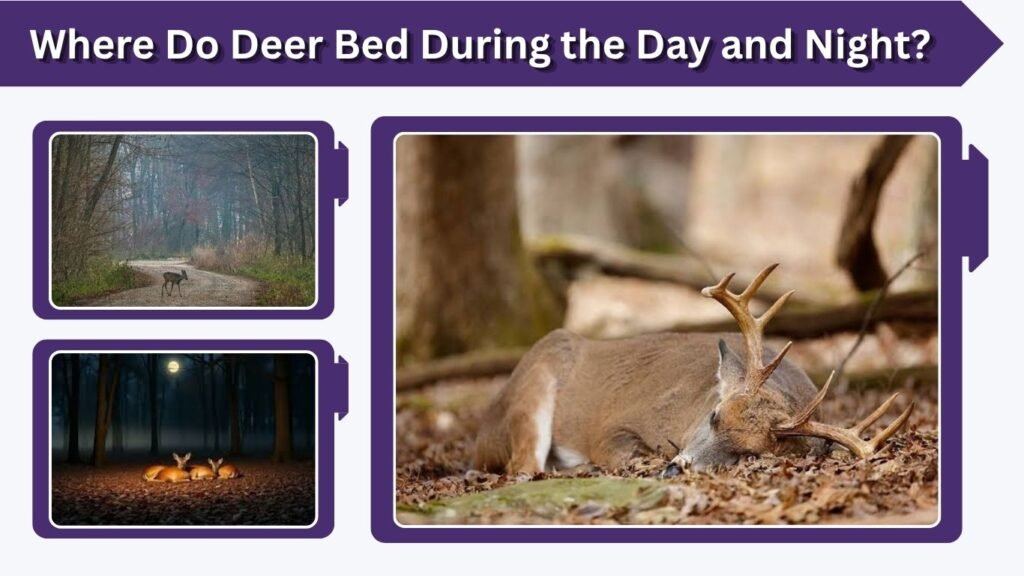
Deer are crepuscular animals, meaning their activity often increases around dawn and dusk. However, they can move, feed, and rest throughout both day and night. Bedding patterns depend on food availability, weather, predators, and human disturbance. Deer may use several resting spots within their home range rather than returning to one permanent bed every day.
Where Do Deer Bed During the Day?
During daylight hours, deer commonly bed in thick woods, brushy areas, and secluded vegetation.
Whitetail deer may settle in dense cover near feeding locations, particularly where human disturbance is limited. Some bucks select isolated spots with useful visibility and nearby escape routes.
In hot weather, shaded woodland areas become especially attractive because they help deer avoid excessive heat.
Where Do Deer Bed Down at Night?
Deer also bed at night, sometimes in more open locations when they feel secure.
They may rest near feeding areas, grassy fields, or woodland edges. Their nighttime bedding locations vary with environmental conditions and perceived danger.
Although deer are frequently active after sunset, they do not spend the entire night feeding or traveling.
Where Do Deer Go When They Are Not Bedded Down?
When deer leave their beds, they may travel toward feeding locations, water sources, or other areas within their home range.
They also spend time browsing, socializing, and moving between different types of habitat.
Where Do Different Deer Species Prefer to Bed?
Although deer species share similar needs for protection and comfort, their bedding locations can differ considerably. Whitetails frequently use dense woodland vegetation, while mule deer often occupy mountainous or open terrain. Blacktail deer commonly inhabit coastal forests and brushy landscapes. Regional climate, predators, vegetation, and terrain influence where each species chooses to rest.
Where Do Whitetail Deer Bed?
Whitetail deer often bed in thick brush, young forests, tall grass, and sheltered woodland areas.
In agricultural landscapes, they may use overgrown fields or wooded patches near food sources. Mature bucks sometimes select secluded locations with useful escape routes.
Does may bed in familiar cover with other deer, although females with newborn fawns behave differently.
Where Do Mule Deer Bed?
Mule deer commonly bed on hillsides, beneath shrubs, near rock formations, and in shaded woodland areas.
In mountainous regions, they may choose slopes that provide favorable temperatures and visibility.
During summer, shade becomes particularly important, while winter bedding locations may shift toward sheltered terrain and areas with less snow.
Where Do Blacktail Deer Bed Down?
Blacktail deer frequently use thick coastal forests, brushy slopes, and areas with dense understory vegetation.
They may rest beneath evergreen trees, among ferns, or near fallen logs.
In wet climates, sheltered forest locations can provide useful protection from rain and wind.
Where Do Deer Bed in Different Weather Conditions?
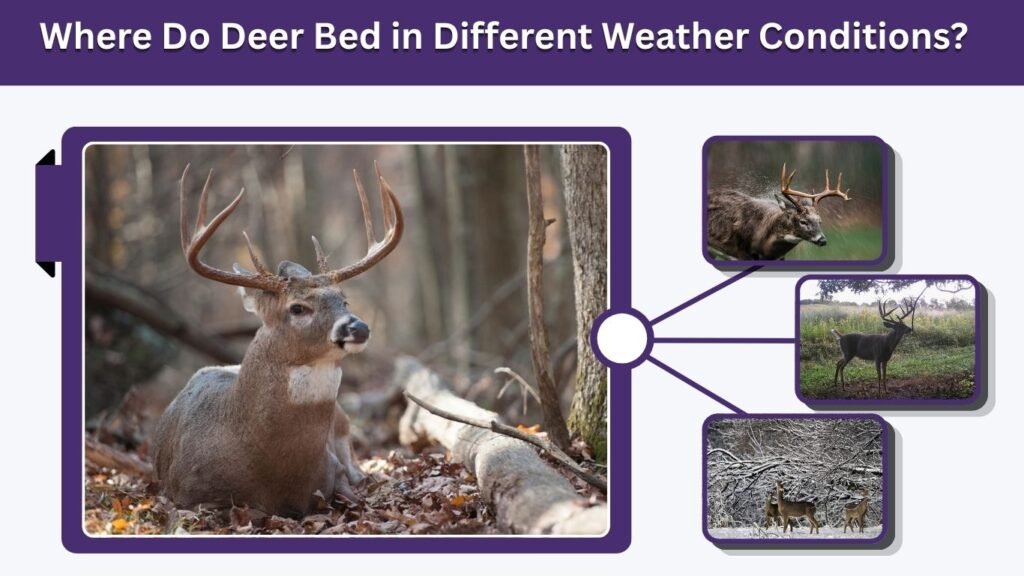
Weather significantly influences deer bedding behavior because animals must balance security with temperature regulation. Rain, snow, strong winds, and summer heat can change which resting areas are comfortable. Deer do not always respond to weather in exactly the same way, but certain habitat features become more valuable under particular conditions, especially when severe temperatures increase energy demands.
Deer Bedding Locations by Weather
- During rain: Deer may choose dense woods, sheltered slopes, or vegetation that reduces exposure to heavy rainfall.
- On windy days: They often use protected valleys, leeward slopes, or thick cover where wind speeds are lower.
- During hot weather: Shaded creek bottoms, dense forests, and cooler north-facing slopes can provide relief.
- During snowfall: Deer may rest beneath conifer trees or in sheltered areas where snow accumulation is reduced.
- During cold weather: Sunny slopes and protected woodland areas can help deer conserve body heat.
- After severe storms: Deer may change resting locations as wind, temperature, and ground conditions improve.
Where Do Deer Bed in the Mountains?
Mountain deer often choose bedding locations based on slope exposure, elevation, wind direction, and vegetation.
South-facing slopes may provide warmth during colder months, while shaded slopes can offer cooler resting conditions in summer.
Ridges, benches, and sheltered hillsides may also provide useful bedding habitats.
How to Find and Identify Deer Bedding Areas
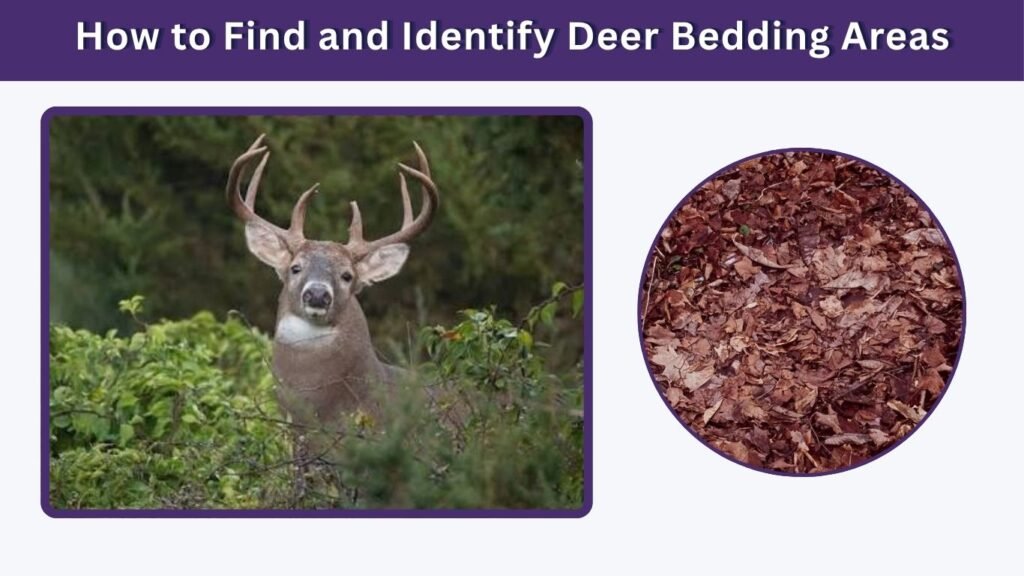
Finding deer bedding areas requires recognizing physical signs and understanding how deer use surrounding habitats. These locations are often hidden inside dense vegetation, making direct observation difficult. Flattened plants, oval depressions, tracks, and nearby trails can indicate repeated use. However, identifying a single bed does not necessarily mean deer return to that exact location every day.
Signs of a Deer Bedding Area
Look for the following signs when exploring potential deer habitat.
- Oval ground depressions: Resting deer may leave shallow, body-shaped impressions.
- Flattened vegetation: Grass, leaves, or other plants may appear compressed.
- Multiple bedding spots: Several nearby depressions can indicate a regularly used resting area.
- Deer tracks: Fresh tracks around cover may suggest recent activity.
- Droppings: Deer droppings sometimes appear near bedding locations.
- Nearby trails: Regularly traveled paths may connect resting areas with feeding sites.
How to Recognize an Active Bedding Area
Freshly flattened vegetation and recent tracks can suggest a bedding location has been used recently.
Nevertheless, old depressions may remain visible for weeks, depending on weather and ground conditions.
Observing habitat from a distance can provide useful information without repeatedly entering and disturbing sensitive resting areas.
How Deer Bedding Habits Change Throughout the Year

Deer do not necessarily use identical bedding areas throughout the year. Seasonal temperature changes, vegetation growth, food availability, and breeding activity influence their choices. Bedding habitat that provides excellent concealment during summer may offer little protection after leaves fall. Understanding these seasonal changes helps explain why deer sometimes leave familiar resting locations for more suitable habitat.
Spring and Summer Bedding
During spring and summer, deer often select locations with dense growing vegetation and sufficient shade.
Pregnant does may seek secluded areas before giving birth. Young fawns spend considerable time resting quietly in concealed locations during their earliest weeks.
Avoid approaching or disturbing hidden fawns, even if an adult deer is not immediately visible.
Fall and Winter Bedding
During fall, deer may use thicker cover as vegetation changes and hunting activity increases.
During winter, shelter from wind and deep snow becomes especially valuable.
In northern regions, deer may gather in traditional wintering areas with dense evergreen cover that reduces snow accumulation and provides thermal protection.
FAQs
Deer bedding behavior raises many questions for wildlife enthusiasts and hunters. The exact location of a resting deer can be difficult to predict because individuals respond differently to habitat, temperature, and disturbance. Understanding the following common questions can help explain why deer select particular resting spots and how their bedding habits change throughout the day and season.
1. Where Do Deer Like to Bed the Most?
Deer generally prefer secluded locations with adequate vegetation, favorable temperatures, and opportunities to detect approaching danger. Thick brush, young forests, and sheltered hillsides are common examples.
2. Where Do Big Bucks Usually Bed Down?
Mature bucks may choose secluded brush, wooded ridges, swamp edges, or other locations offering concealment and escape routes. Their preferences depend on available habitat and hunting pressure.
3. Do Deer Sleep in the Same Spot Every Night?
Not necessarily. Deer may reuse familiar bedding areas, but they also move between different beds depending on weather, food availability, and potential threats.
4. Where Do Deer Bed in the Winter?
Deer often bed beneath dense evergreen trees, on sheltered slopes, or in sunny locations where they can reduce exposure to cold winds and deep snow.
5. How Long Do Deer Stay in Their Beds?
Deer may remain in one bedding location for several hours, but they frequently change position or move between resting and feeding periods. The duration varies with weather, disturbance, and individual behavior.
