
Choosing the best deer attractant depends on the season, local deer behavior, available natural food, and your reason for attracting deer. Some hunters prefer feed-based attractants, while others rely on minerals, scents, liquids, or scrape products. Whitetail deer may also respond differently during summer, early season, rut, and late season. This guide explains the most useful deer attractant types, when they work best, and how to choose an option for feeders, trail cameras, food plots, and hunting areas.
What Is the Best Deer Attractant?
There is no single deer attractant that performs best in every location or season. Deer are influenced by food availability, nutritional needs, breeding behavior, weather, and hunting pressure. The most effective strategy is usually matching the attractant to current deer needs instead of expecting one product to produce consistent results throughout the year.
Best Deer Attractant Types
Common options include:
- Feed attractants: Corn, grains, pellets, and flavored feed
- Mineral attractants: Salt and mineral mixtures
- Liquid attractants: Concentrated food or scent formulas
- Scent attractants: Doe, buck, gland, or food-based scents
- Attractant blocks: Long-lasting compressed feed or mineral blocks
- Natural attractants: Apples, acorns, persimmons, and other local foods
Food-based attractants are useful when deer are actively feeding, while scent products can become more useful when breeding behavior increases.
What Deer Attractant Works the Best?
A deer attractant works best when it gives deer something they already want. During summer, nutrition may be the strongest motivation. During fall, high-energy foods become more attractive. Around the rut, curiosity and breeding-related scents can become more important.
Deer also quickly learn where reliable food sources are located. Consistency can therefore matter as much as the exact attractant being used.
Best Deer Feed Attractant
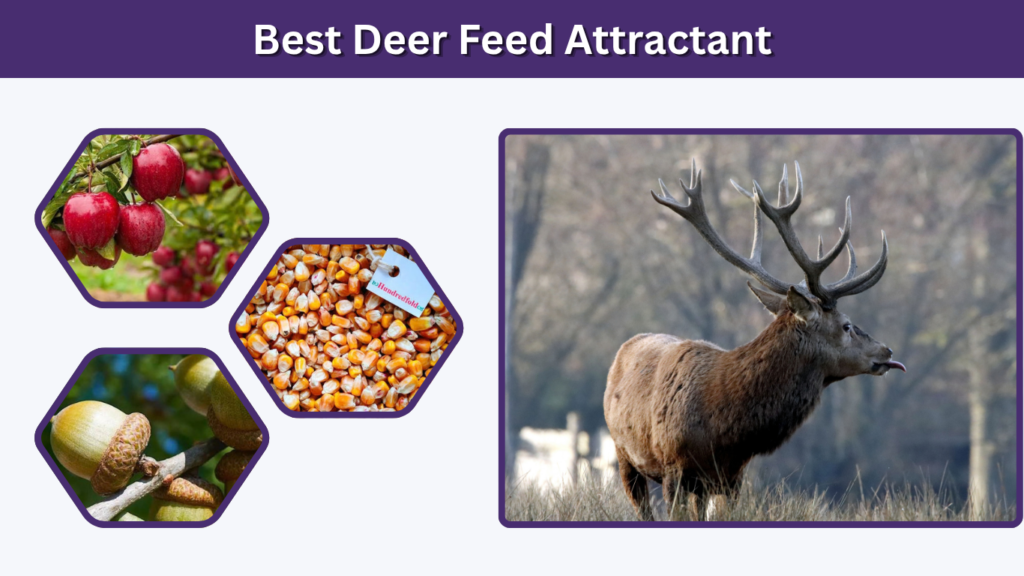
Feed is one of the most popular approaches because deer naturally spend much of their time searching for food. Corn is widely associated with deer attraction, but combining corn with other attractive flavors or feeds can sometimes produce more interest, particularly where ordinary corn is already common.
Best Food Attractants for Deer
Popular food choices include:
- Shelled corn
- Whole corn
- Apples
- Acorns
- Persimmons
- Soybeans
- Oats
- Deer pellets
- Molasses-flavored feed
- Grain mixtures
Local deer preferences should guide your selection. Deer living around oak forests, for example, may naturally respond strongly to acorns when mast is available.
Best Deer Attractant to Mix With Corn
Adding sweet or strong-smelling ingredients can make corn easier for deer to locate. Molasses, apple flavoring, powdered grain attractants, or commercially prepared feed additives are common choices.
However, simply adding more scent does not always produce better results. Deer may initially be suspicious of unfamiliar odors, especially mature bucks living in heavily hunted areas.
Best Deer Mineral Attractant
Mineral sites are often used during spring and summer when bucks are developing antlers and do have increased nutritional demands. Deer naturally seek sodium and other minerals, which can make properly located mineral sites useful for observing deer movement.
What Makes a Good Mineral Attractant?
Look for mixtures containing ingredients such as:
- Salt or sodium
- Calcium
- Phosphorus
- Magnesium
- Trace minerals
Minerals should not be viewed as a guaranteed method of producing larger antlers. Genetics, age, habitat quality, overall nutrition, and herd health all influence antler development.
Best Location for Mineral Attractants
Place mineral sites near established deer travel areas rather than randomly choosing open ground. Edges between feeding and bedding habitat can be particularly productive.
A trail camera positioned nearby can help determine when deer visit and whether bucks, does, or entire groups are using the location.
Best Deer Scent Attractant
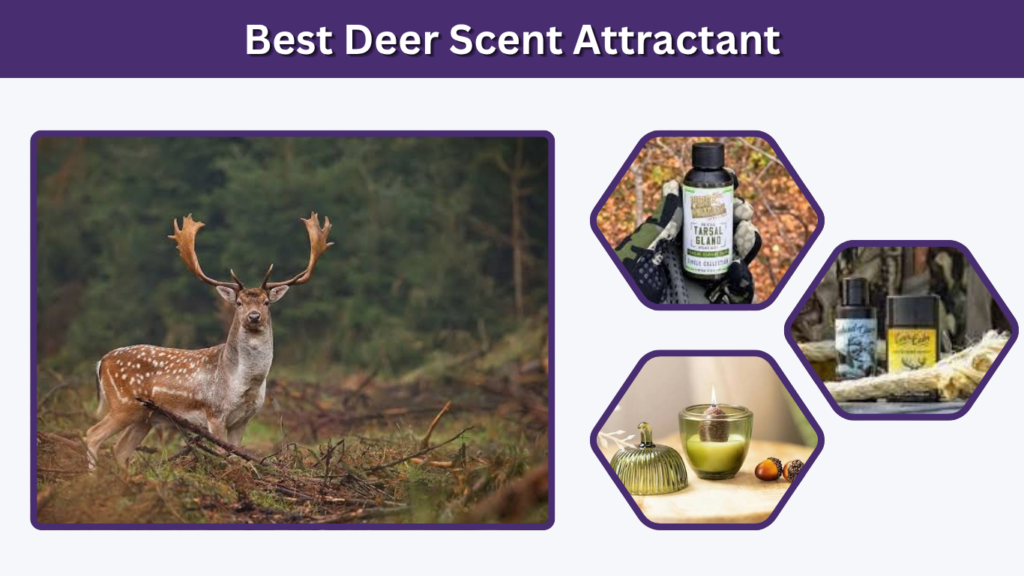
Scent attractants are designed to take advantage of a deer’s highly developed sense of smell. Some imitate food, while others reproduce odors associated with deer communication and breeding behavior. The effectiveness of each type depends heavily on timing.
Common Deer Scent Attractants
Hunters commonly use:
- Doe scents
- Estrous-style scents
- Buck scents
- Tarsal gland scents
- Scrape scents
- Acorn scents
- Apple scents
- Earthy cover scents
Food scents may be useful earlier in the season, while deer-related scents are generally more relevant as breeding activity approaches.
Best Deer Attractant During the Rut
During the rut, mature bucks are frequently interested in other deer rather than simply searching for food. Scrape-related and breeding scents may therefore receive increased attention.
Scent alone cannot force a buck to enter an area. Wind direction, hunting pressure, bedding cover, doe activity, and existing travel routes remain major factors.
Best Liquid Deer Attractant
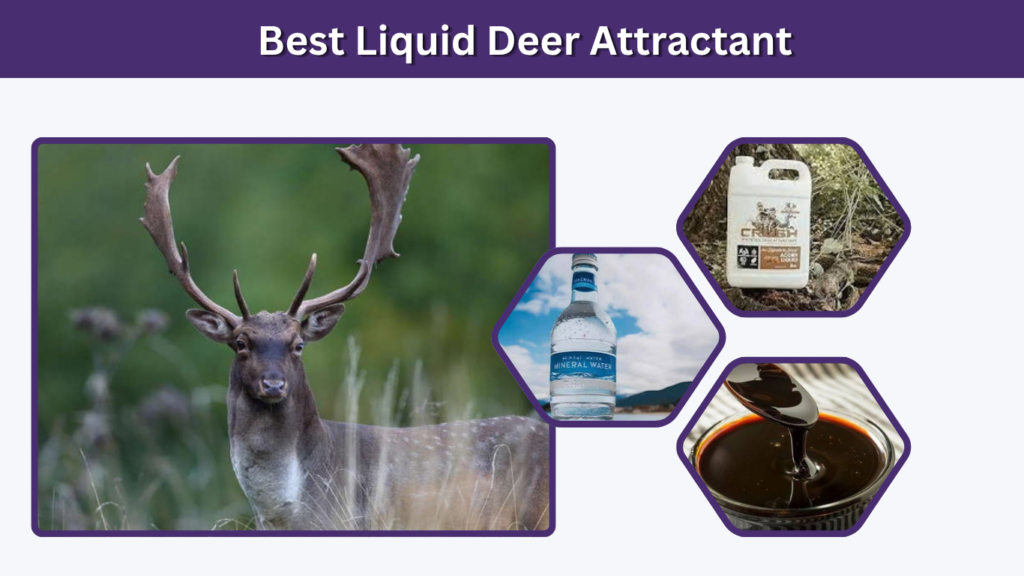
Liquid deer attractants create concentrated odor without requiring large quantities of feed. Depending on the formula, they may smell like apples, acorns, molasses, minerals, or deer scent.
Because liquids can be applied to specific locations, they are particularly convenient around trail-camera sites and established deer travel corridors.
Advantages of Liquid Attractants
Liquid formulas can offer:
- Fast scent distribution
- Easy application
- Small storage requirements
- Strong concentrated aromas
- Convenient trail-camera use
- Multiple food and scent options
Rain, moisture, heat, and soil conditions can shorten how long some liquid attractants remain noticeable.
Best Deer Attractant for Trail Cameras
For trail-camera monitoring, the goal is often to encourage deer to stop long enough for clear photos rather than move quickly through the area.
Food or mineral sites can accomplish this effectively where legal. Position the camera where several deer trails converge and give animals enough space to approach naturally.
Best Deer Attractant by Season
Deer behavior changes dramatically throughout the year, so seasonal strategy is important. An attractant that performs well in July may be much less useful during November. Understanding seasonal food needs and breeding behavior helps determine which attraction method deserves the most attention.
Best Deer Attractant for Summer
Summer deer focus heavily on nutrition. Agricultural crops, natural browse, protein-rich foods, and mineral sources may attract regular activity.
Mineral sites can also make summer trail-camera monitoring easier because deer may repeatedly visit established locations.
Best Early Season Deer Attractant
During early fall, food remains one of the strongest attractions. Deer commonly concentrate around available crops, fruits, nuts, and other high-value foods.
Food-based scents may help complement these natural resources, but placing an attractant close to an established travel route is generally more important than simply using a stronger-smelling product.
Best Deer Attractant for Fall and Rut
As fall progresses, deer gradually shift from feeding-focused patterns toward breeding behavior. Bucks begin checking scrapes, following does, and covering larger areas.
This is when scrape scents and deer-related scent attractants may become more useful.
Best Late Season Deer Attractant
After the rut, deer need to replace lost body weight and conserve energy. High-calorie foods become especially important.
Late-season hunting strategies therefore commonly focus on dependable food sources near secure bedding cover.
Best Homemade Deer Attractant
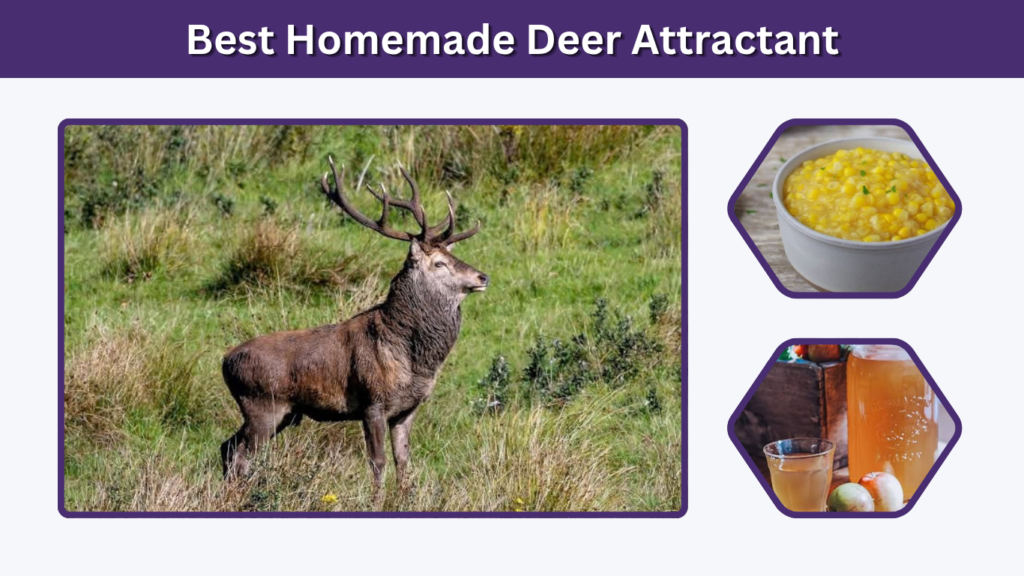
A homemade deer attractant can be inexpensive and allows hunters to experiment with foods already available locally. Simple ingredients are usually preferable because deer often respond better to familiar foods than complicated mixtures containing unfamiliar odors.
Simple Homemade Deer Attractant Ideas
Common ingredients include:
- Corn
- Apples
- Oats
- Molasses
- Peanut butter
- Acorns
- Fruit-flavored grain
- Mineral salt
Avoid assuming that more ingredients automatically produce a stronger attraction. Start with familiar foods and monitor activity.
Homemade Liquid Deer Attractant
A basic food-scent liquid can be created using sweet-smelling food ingredients diluted sufficiently for application around an observation location.
Rather than relying entirely on the liquid, place it where deer already travel. Location remains one of the biggest factors determining whether an attractant receives attention.
Best Deer Attractant for Whitetail Deer
Whitetails use predictable combinations of bedding areas, feeding locations, water, security cover, and travel corridors. The best whitetail deer attractant therefore works as part of an overall habitat strategy rather than as an isolated product.
Attract Mature Bucks Where They Already Travel
Mature bucks can be cautious around sudden changes. Instead of placing attractants in random locations, identify existing sign such as tracks, trails, rubs, scrapes, bedding areas, and feeding routes.
An attractant placed near natural movement can complement deer behavior. An attractant located far from secure cover may receive little daytime activity, even when deer visit it regularly after dark.
Deer Attractant Safety and Legal Considerations
Regulations covering deer bait, feed, minerals, urine products, and hunting over attractants vary considerably by location. Some jurisdictions prohibit baiting entirely, while others restrict particular substances, quantities, seasons, or locations.
Check Local Regulations Before Using Attractants
Before establishing an attractive site, check the current wildlife regulations for the area where you hunt.
Rules can also change because of wildlife disease management. Even an attractant intended only for trail-camera monitoring may be regulated in certain locations, so verify local requirements before putting feed, minerals, or scent products in the field.
FAQs
What is the best deer attractant?
The best deer attractant depends on season and deer behavior. Food attractants are often effective when feeding is the primary motivation, mineral sites can be useful during spring and summer, and deer scents may become more relevant around the rut.
What is the best deer attractant for big bucks?
There is no guaranteed attractant for mature bucks. Established travel routes, secure cover, available food, doe activity, wind direction, and low hunting pressure generally matter more than any single attractant.
What is the best deer attractant to mix with corn?
Molasses, apple-flavored additives, grain-based powders, and other food scents are commonly mixed with corn. However, local deer may prefer plain corn if it is already familiar to them.
What is the best deer attractant during the rut?
Scrape scents, doe-related scents, and other deer communication scents may become more useful during the rut because bucks are actively searching for does and monitoring competing bucks.
Are homemade deer attractants effective?
Homemade deer attractants can work when they contain foods deer already recognize, including corn, apples, acorns, oats, or molasses. Their effectiveness depends largely on location, season, natural food availability, deer pressure, and local regulations.
