
Deer hunting in the wind can be challenging, but windy conditions do not automatically mean poor hunting. Wind influences how whitetail deer travel, use cover, detect danger, and choose bedding areas. It also determines where your scent moves, making stand placement especially important. Research even suggests that bucks may remain active or increase movement under certain windy conditions. By understanding wind direction, speed, terrain, and deer behavior, you can adjust your strategy and make a windy hunting day much more productive.
Is Deer Hunting Good in the Wind?
Many hunters assume deer stop moving when the wind becomes strong, but deer behavior is more complicated. Wind speed, time of day, terrain, hunting pressure, and season can all influence movement. Penn State Deer-Forest Study observations have found increased daytime movement under some windy conditions, particularly among bucks, showing that wind does not necessarily ruin a hunt.
How Wind Affects Deer Movement
Wind can change deer activity in several ways:
- Light wind: Deer often continue their normal feeding and travel patterns.
- Moderate wind: Bucks may remain active while using protected travel routes.
- Strong wind: Deer may favor sheltered terrain and heavier vegetation.
- Changing wind: Shifting scent conditions can change how deer approach an area.
- Wind at night: Some research has recorded reduced nighttime movement during windy conditions.
Rather than staying home simply because it is windy, adjust your location and tactics.
Are High Winds Bad for Deer Hunting?
Very high winds can make hunting more difficult. Moving branches create noise, trees sway, shooting becomes harder, and detecting approaching deer becomes challenging.
However, strong winds do not guarantee that deer will remain bedded. Penn State observations found increased buck movement during some periods with winds of 16–27 mph, although these findings were observational and should not be treated as a universal rule.
How to Hunt Deer in the Wind
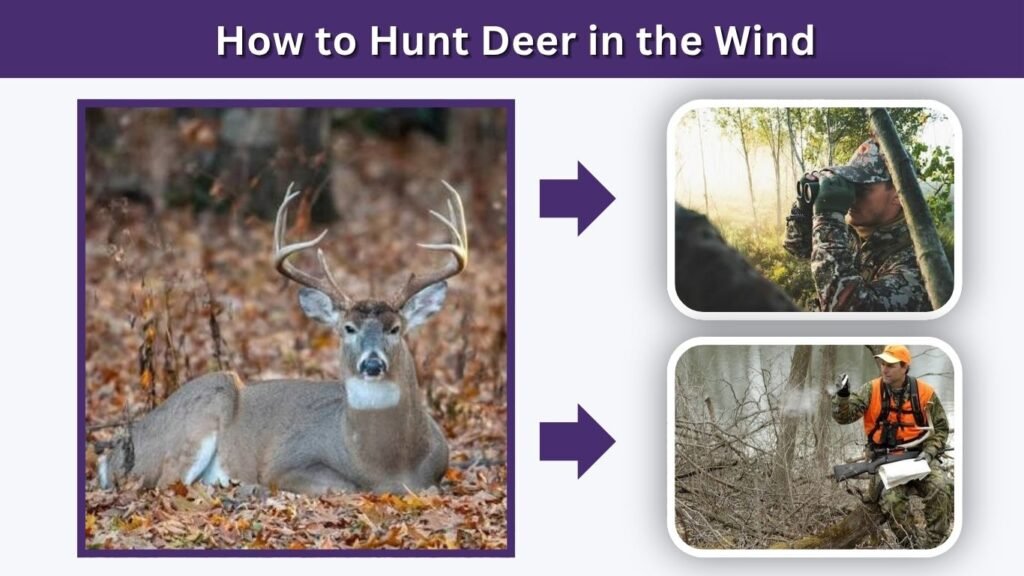
Successful deer hunting in windy weather depends heavily on controlling your scent and predicting where animals will travel. Instead of fighting the conditions, use the wind to determine your access route, stand location, and approach. Remember that wind direction can change throughout the day, particularly around hills, valleys, ridges, and other complicated terrain.
Keep Your Scent Away From Deer
Wind direction should be one of your first considerations.
Set up so your scent blows away from expected bedding areas, feeding locations, and travel routes. Ideally, you want the wind blowing from the deer toward you or across your position without carrying your scent directly into their path.
Whitetails rely heavily on scent communication and detection, so careless wind positioning can quickly ruin an otherwise promising setup.
Use Wind to Cover Your Movement
Wind creates natural background noise as leaves, branches, and vegetation move.
Hunters can sometimes use this noise to approach more quietly. Move slowly when gusts increase and stop when conditions become calm again.
This tactic can be particularly useful when still-hunting or moving toward a stand, but never assume wind makes you completely undetectable.
Where to Hunt Deer in the Wind
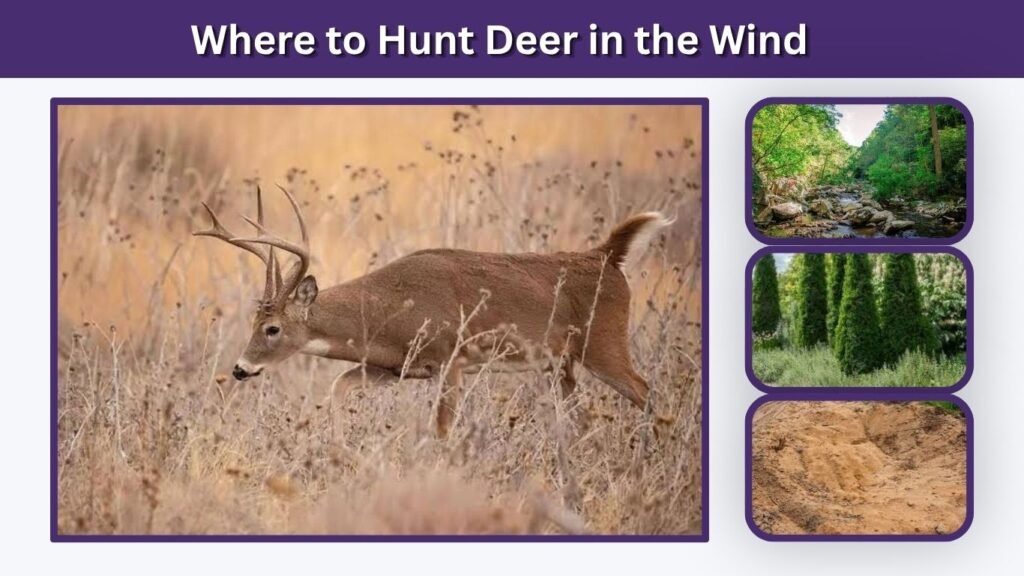
Location becomes particularly important when hunting whitetail deer in the wind. Deer may select routes and bedding areas that provide protection while still allowing them to monitor their surroundings. Terrain can create sheltered pockets even when exposed areas are extremely windy, so studying topographic features before the hunt can give you an advantage.
Hunt the Leeward Side of Ridges
The protected or leeward side of a ridge can be worth watching during strong winds.
Ridges can block some of the direct wind, creating more comfortable travel and bedding conditions. At the same time, swirling currents around ridges can make scent control difficult.
Position yourself carefully and monitor wind direction instead of assuming the wind remains consistent.
Focus on Protected Cover
Potential windy-day locations include:
- Creek bottoms
- Deep valleys
- Thick evergreen stands
- Brushy cover
- Protected hillsides
- Timbered draws
- Terrain depressions
- Bedding-cover edges
These locations can provide relief from stronger winds while still connecting bedding and feeding areas.
Watch Food-to-Bedding Routes
Deer still need food regardless of windy weather.
Instead of sitting directly over a wide-open feeding area during severe wind, consider hunting a protected travel corridor leading toward it. Deer may remain inside timber or cover longer before entering an exposed field.
Intercepting them between bedding cover and food can therefore provide a better opportunity.
Hunting Whitetail Deer in the Wind
Whitetails experience windy conditions throughout their lives, so moderate wind alone does not cause them to completely abandon normal behavior. Research demonstrates that the relationship between wind and movement can vary by sex, time of day, rainfall, and wind speed. Hunters should therefore combine weather observations with knowledge of local deer patterns.
Hunting Bucks in Windy Conditions
Windy conditions may offer better buck movement than many hunters expect.
Penn State observations from multiple October periods found that bucks increased movement under certain windy conditions. Researchers also emphasized that the results were observational, meaning wind should be viewed as one influence rather than a guaranteed predictor of deer activity.
Focus on areas where bucks can travel while remaining close to secure cover.
Hunting Does in the Wind
Does may react differently from bucks.
In Penn State observations, higher wind speeds had less effect on doe movement than on buck movement in the studied periods.
This is another reason hunters should avoid assuming that every deer will react identically to windy weather.
Deer Hunting the Rut in the Wind
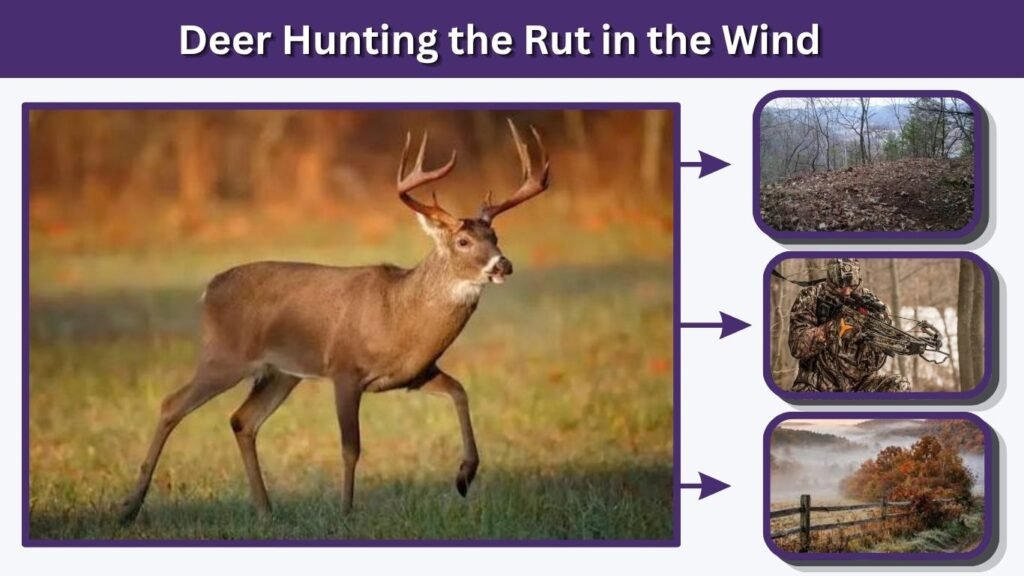
Wind can complicate rut hunting, but breeding behavior can still keep bucks moving. During the rut, bucks frequently travel between doe bedding areas, funnels, crossings, and travel corridors while searching for receptive females. A windy forecast alone is therefore not necessarily a reason to abandon a planned rut hunt.
Target Rut Travel Corridors
During windy rut conditions, concentrate on:
- Doe bedding-area edges
- Creek crossings
- Timber funnels
- Saddles and protected terrain
- Thick-cover travel routes
- Inside field corners
- Downwind sides of doe areas
Bucks searching for does may pass through these locations throughout daylight hours.
Don’t Depend Only on the Weather
Rut activity can sometimes outweigh simple weather patterns.
Penn State research has repeatedly shown substantial individual variation in deer movement, meaning weather alone is not a perfect predictor of what a particular buck will do.
Known bedding areas, current sign, hunting pressure, food availability, and breeding activity should all influence your strategy.
Best Tips for Deer Hunting in the Wind
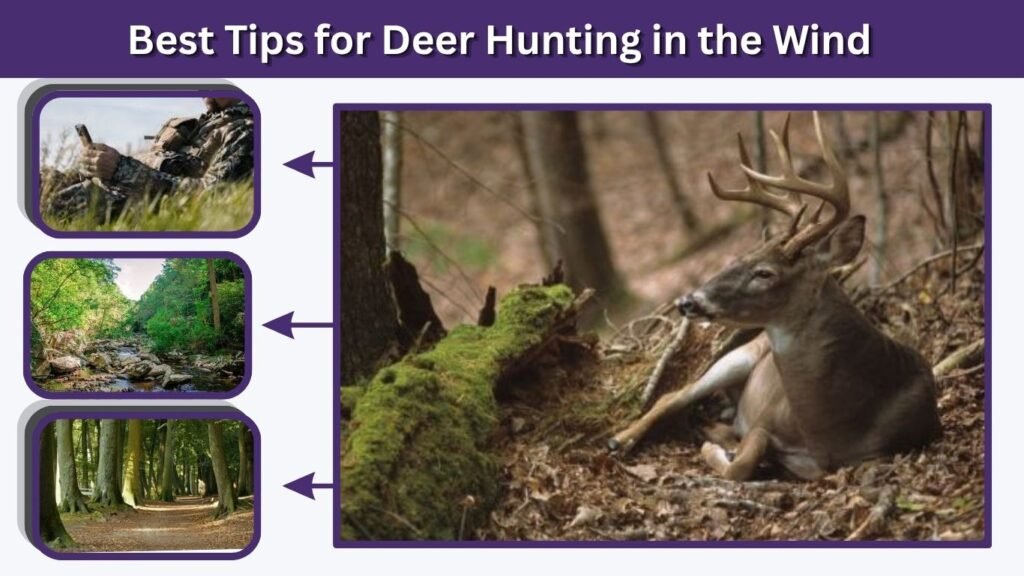
Wind can provide both advantages and disadvantages. It carries your scent, affects shooting, moves vegetation, and makes detecting deer more difficult. At the same time, background noise can conceal careful movement. Preparing for these factors before entering the woods helps you make better decisions once conditions begin changing.
Windy-Day Deer Hunting Tips
- Check wind direction before choosing your stand.
- Keep your scent away from likely deer approaches.
- Hunt sheltered terrain during stronger winds.
- Watch creek bottoms, valleys, and thick timber.
- Use gusts to cover careful movement.
- Expect wind to swirl around complex terrain.
- Reduce shooting distance when conditions affect accuracy.
- Secure loose clothing and equipment that may create noise.
- Watch protected bedding-to-feeding routes.
- Never remain near unsafe trees during dangerously high winds.
Know When Conditions Become Unsafe
Hunting success should never come before safety.
Strong winds can break limbs or bring damaged trees down without warning. Tree-stand hunters should be especially cautious in severe conditions.
If winds become dangerous, leave the area rather than continuing the hunt. A productive location is never worth the risk of falling branches or unstable trees.
Bow Hunting Deer in the Wind
Bow hunting deer in the wind requires extra attention because gusts can affect both the hunter and the arrow. Wind can also move branches and vegetation into the shooting lane. The stronger or more unpredictable the wind becomes, the more conservative your shot selection should be.
Take High-Confidence Shots
Keep shots within distances where you remain consistently accurate.
Strong crosswinds become increasingly important as distance increases. Wait for manageable conditions and a clean shot angle rather than forcing a difficult opportunity.
Stable footing, proper shot placement, and an ethical recovery should remain more important than taking a marginal shot.
Protect Your Setup
Make sure loose straps, clothing, tree-stand accessories, and other equipment cannot flap or bang against nearby objects.
Wind naturally creates plenty of woodland noise, but an unfamiliar metallic or repetitive sound near your position can still draw attention.
A quiet, secure setup also helps you concentrate when a deer finally enters range.
Is Deer Hunting in the Wind Worth It?
Yes, deer hunting in the wind can be worth it. Scientific observations challenge the old assumption that windy weather automatically shuts down whitetail movement. Bucks in particular have shown increased movement under certain daytime windy conditions.
The key is adapting instead of using the same strategy you would on a calm day. Hunt protected terrain, pay close attention to scent direction, concentrate on travel corridors, and use your knowledge of local bedding and feeding patterns. When conditions become dangerously windy, however, safety should determine when the hunt ends.
FAQs
Can You Hunt Deer in the Wind?
Yes, you can successfully hunt deer in windy conditions. Deer do not automatically stop moving simply because the wind increases. Moderate winds may still produce good daytime movement. Hunters should pay extra attention to scent direction, sheltered terrain, stand safety, and known travel corridors when choosing where to hunt.
Is It Good to Hunt Deer in the Wind?
It can be. Research has found increased daytime movement among some whitetails during windy conditions, particularly bucks. However, results vary with location, season, wind strength, and other weather factors. Your knowledge of local bedding areas and travel patterns remains extremely important.
Where Should You Hunt Deer When It Is Windy?
Look for protected creek bottoms, valleys, timbered draws, thick vegetation, leeward hillsides, and travel corridors between bedding and feeding areas. Terrain that reduces direct wind exposure can provide comfortable travel routes for deer while giving hunters better visibility and more manageable shooting conditions.
Should You Deer Hunt in High Winds?
Hunting in moderately strong wind can still be productive, but extremely high winds create safety concerns. Falling limbs, unstable trees, difficult shooting conditions, and poor visibility can outweigh the potential benefits. Tree-stand hunters should be especially cautious and leave the woods when weather conditions become unsafe.
How Do You Hunt Whitetail Deer in the Wind?
Start by determining wind direction and placing yourself where your scent will not blow toward expected deer movement. Concentrate on sheltered travel corridors, creek bottoms, thick cover, and leeward terrain. Use wind noise to conceal careful movement while continually checking for changing or swirling wind around complex terrain.
