
A compact spotting scope is a useful choice for birdwatching, target viewing, wildlife observation, hiking, and other outdoor activities where portability matters. Compared with full-size scopes, compact models are easier to carry while still providing useful magnification and clear long-distance views. The best options balance optical quality, size, durability, zoom range, and ease of use. In this guide, we review six of the best compact spotting scopes to help you find a model that fits your viewing needs without adding unnecessary bulk to your outdoor gear.
1. Vortex Optics Crossfire HD 12-36×50 – Best Overall Compact Spotting Scope
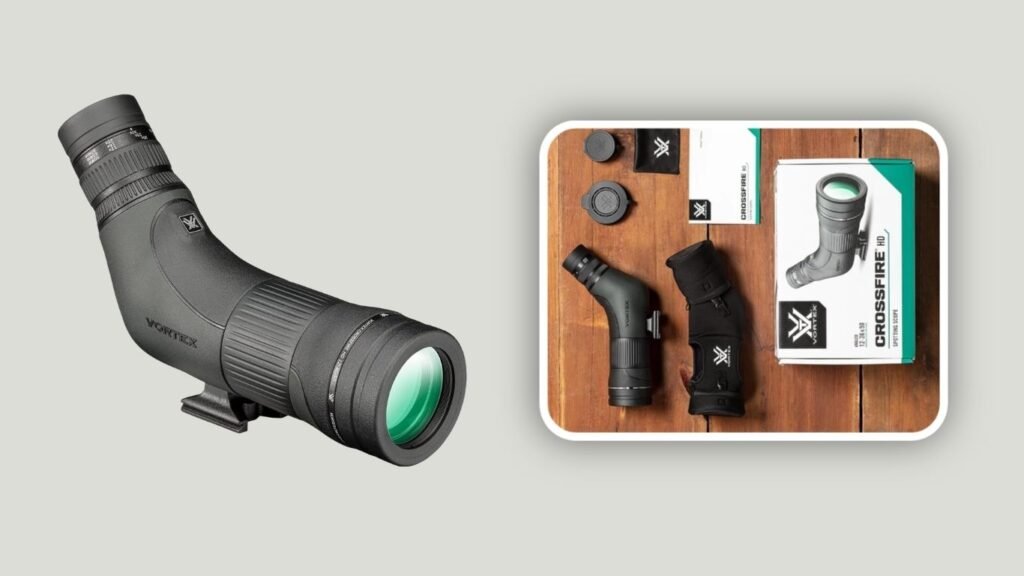
The Vortex Optics Crossfire HD 12-36×50 combines portable dimensions with enough magnification for wildlife observation, hunting, target viewing, and general outdoor use. Its 50mm objective keeps the body more manageable than many full-size spotting scopes, while the 12-36x zoom provides flexibility for scanning an area and examining distant details. The rugged construction also makes it well suited to regular field use.
Key Features
- 12-36x variable magnification
- 50mm objective lens
- HD optical system
- Fully multi-coated lenses
- Waterproof, fogproof, and shockproof construction
- Helical focusing system
- Rubber-armored exterior
- Arca-Swiss compatible and tripod adaptable
Vortex lists the scope at approximately 9.7 inches long and 31.2 ounces for the straight version, reinforcing its portable design.
Why It Is Best for Portable Outdoor Viewing
The Crossfire HD is particularly appealing when you want more reach than conventional binoculars without carrying a large 65mm or 80mm spotting scope. The 12x lower end makes locating subjects relatively straightforward, while increasing toward 36x lets you examine animals, targets, or distant landscape details.
Its compact dimensions also make it easier to fit into a hunting pack or day bag. That portability is valuable for users who regularly move between observation locations.
Optical Performance and Field Durability
Vortex uses an HD optical system designed to improve resolution, color fidelity, edge-to-edge sharpness, and light transmission. Fully multi-coated lens surfaces further support image brightness, particularly when viewing conditions are less than ideal.
The nitrogen-purged, O-ring-sealed body provides waterproof and fogproof protection, while rubber armor adds grip and exterior protection. These features make the scope more practical when weather conditions change unexpectedly.
Overall Verdict
The Crossfire HD 12-36×50 strikes an attractive balance between portability and useful long-range performance. It may not provide the extreme magnification of a larger 60x scope, but that tradeoff results in a smaller optic that is easier to transport.
For hikers, hunters, wildlife watchers, and recreational target shooters who value compact dimensions without moving down to binocular-level magnification, this Vortex model offers a particularly well-rounded combination.
2. SVBONY SV28 25-75×70 Spotting Scope – Best for High Magnification
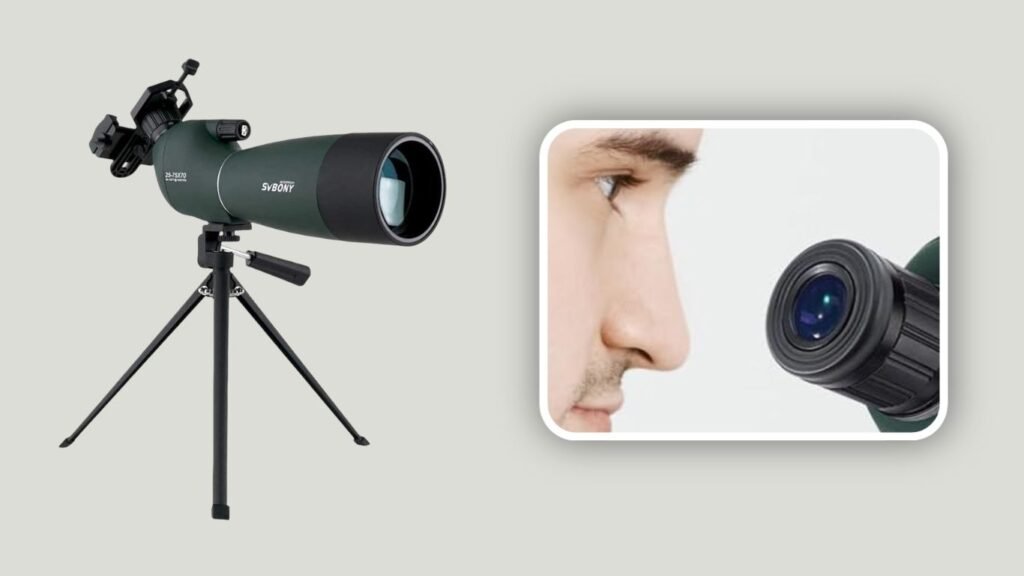
The SVBONY SV28 25-75×70 is designed for users who prioritize zoom range while still wanting a spotting scope that is practical for regular outdoor activities. With magnification extending to 75x and a comparatively large 70mm objective lens, it provides considerably more long-distance reach than many ultra-compact models. It can suit birdwatching, wildlife observation, target viewing, and general long-range outdoor use.
Key Features
- 25-75x variable magnification
- 70mm objective lens
- Large eyepiece design
- Multi-coated optical system
- Adjustable zoom
- Suitable for long-distance observation
- Tripod-compatible design
SVBONY describes the SV28 as offering 25-75x zoom and a 70mm objective intended to provide strong light gathering for clear viewing.
Why It Is Best for Long-Distance Detail
The standout feature is its 75x maximum magnification. Starting around 25x allows users to locate a bird, target, or landscape feature before increasing magnification when finer detail is needed.
This flexibility makes the scope useful for observation at changing distances. Birdwatchers can scan broader areas at lower power and then zoom in when a stationary bird is located, while target shooters can use higher magnification to inspect distant targets.
Viewing Performance and Practical Use
The 70mm objective provides more light-gathering area than the objectives found on many smaller compact scopes. That can be particularly helpful when using higher magnification, where perceived image brightness naturally decreases.
At the highest zoom settings, a stable tripod becomes increasingly important because even small movements become more visible. Users looking for maximum portability should therefore consider that the SV28 is larger than true micro spotting scopes.
Overall Verdict
The SVBONY SV28 makes sense for users who want significant magnification without immediately moving into premium spotting-scope pricing or extremely large optics.
Its greatest strength is versatility across medium and long viewing distances. The 25-75x range gives it more reach than most compact scopes, while the 70mm objective supports brighter viewing. For birdwatching, range observation, and casual wildlife viewing where detail matters more than minimum size, it offers useful optical capability.
3. Celestron Hummingbird 9-27x56mm – Best for Travel
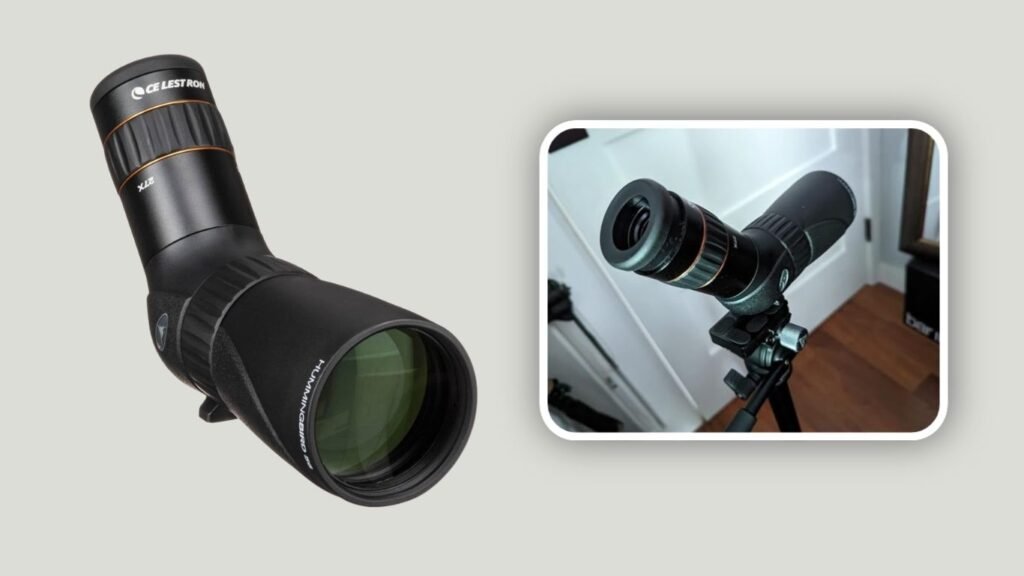
The Celestron Hummingbird 9-27x56mm is one of the most genuinely compact spotting scopes in this group. Designed as a micro spotting scope, it measures roughly 8.2 inches long and weighs about 20.8 ounces. Its combination of low starting magnification, a 56mm objective, and compact dimensions makes it especially attractive for hikers, travelers, birdwatchers, and wildlife enthusiasts who want to minimize equipment weight.
Key Features
- 9-27x zoom magnification
- 56mm objective lens
- Approximately 20.8-ounce weight
- Fully multi-coated optics
- BaK4 prism
- Waterproof and nitrogen-filled body
- 45-degree angled viewing
- Tripod and camera adaptable
Why It Is Best for Hiking and Travel
The Hummingbird’s biggest advantage is portability. At lower magnification, Celestron even describes it as usable handheld for quick observations, although a tripod remains preferable for prolonged or higher-powered viewing.
Its 9x starting magnification also overlaps with conventional binocular territory. Travelers who want to minimize the number of optical devices they carry may appreciate having moderate and higher magnification available from one compact instrument.
Optical Performance and Close Viewing
The 9-27x zoom provides useful flexibility for birds, butterflies, animals, and landscape details. A close-focus distance of approximately 9.8 feet also makes it useful for observing subjects that are much nearer than those typically associated with spotting scopes.
Fully multi-coated optics, a BaK4 prism, and phase coating are designed to support image quality, while nitrogen filling and waterproof construction prepare it for outdoor conditions.
Overall Verdict
The Celestron Hummingbird is particularly compelling when pack size and weight matter more than extreme magnification. A 27x maximum will not compete with 60x or 75x scopes for very distant details, but it is considerably easier to carry.
For hiking, travel, birdwatching, nature walks, and situations where a full-size spotting scope feels unnecessarily bulky, the Hummingbird provides an unusually portable combination of spotting-scope reach and binocular-like usability.
4. Leupold Gold Ring 10-20x40mm Compact – Best Lightweight Premium Option
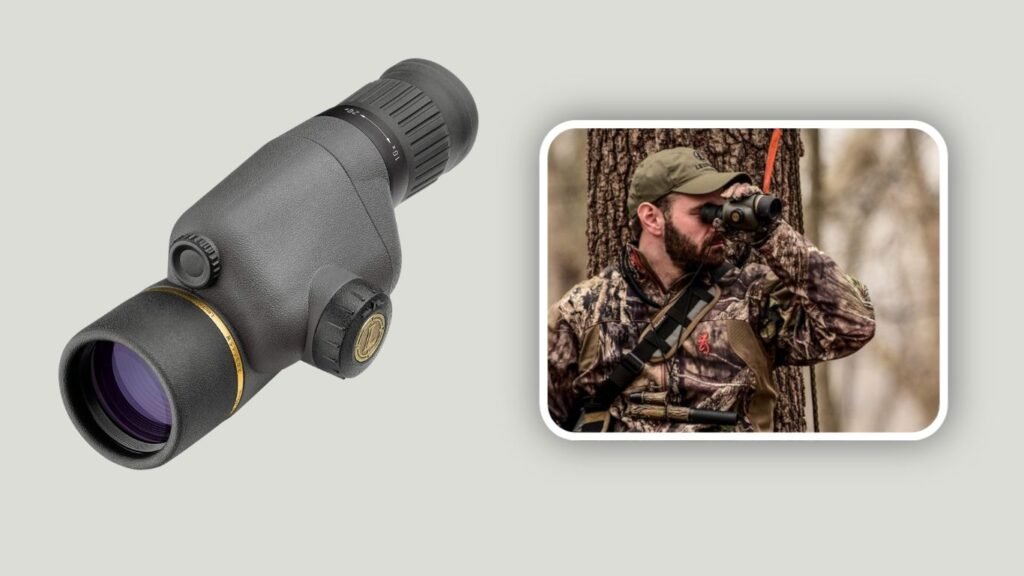
The Leupold Gold Ring 10-20x40mm Compact is built around portability and straightforward field use. Its relatively low 10-20x magnification range and 40mm objective create a much smaller package than traditional long-range spotting scopes. Leupold’s specifications list the model at approximately 15.8 ounces and 7.5 inches long, making it particularly appealing when reducing pack weight is a priority.
Key Features
- 10-20x variable magnification
- 40mm objective aperture
- Compact 7.5-inch body
- Approximately 15.8-ounce weight
- Carbon-fiber housing
- Side-focus adjustment
- Can be used handheld or supported
- Designed for highly portable field observation
Why It Is Best for Minimalist Outdoor Gear
Many spotting scopes provide impressive magnification but can become inconvenient during hikes or long days outdoors. The Gold Ring Compact approaches the problem differently by emphasizing lightweight construction and manageable magnification.
At only around one pound, it can be carried in situations where a large scope and substantial tripod might otherwise be left behind. The 10x lower setting also makes quick target or wildlife acquisition easier.
Viewing Performance and Portability
Leupold’s older product literature describes a durable carbon-fiber housing and a side-focus system intended to provide smooth image refinement. The 10-20×40 specifications include a field of view of roughly 199 to 136 feet at 1,000 yards and eye relief ranging from about 18.5 to 17.2mm.
Its modest magnification means it is better suited to portable observation than extremely distant target inspection.
Overall Verdict
The Gold Ring Compact is an interesting choice for users who consider weight and size just as important as magnification. Rather than trying to deliver 60x or 75x power, it focuses on maintaining useful spotting capability in a very portable form.
For hunters, hikers, backpackers, and outdoor observers who frequently travel light, the 10-20×40 format can be much easier to live with than a full-size spotting scope.
5. Compact Spotting Scope Monocular Telescope – Best for Casual Viewing
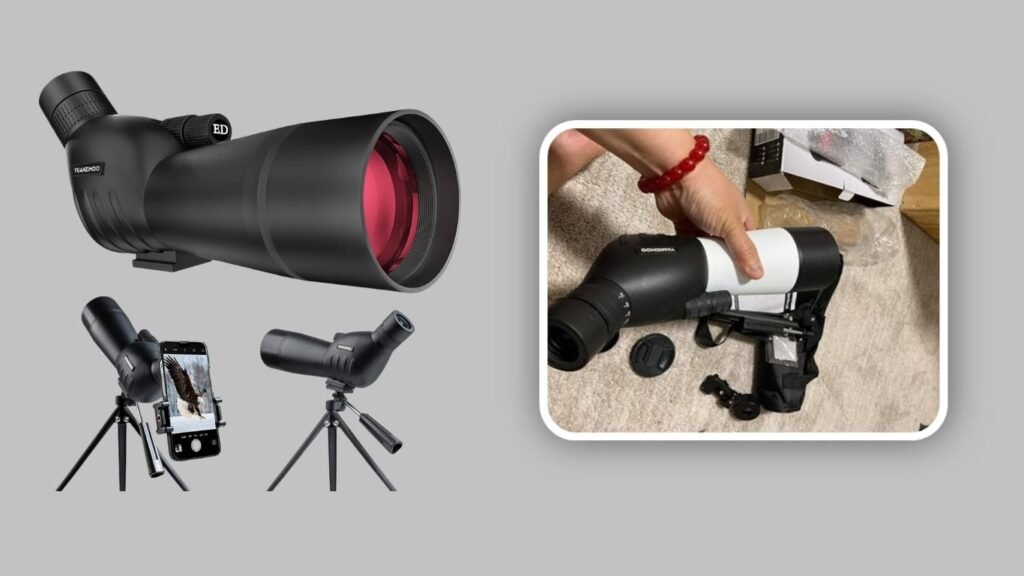
This Compact Spotting Scope Monocular Telescope is aimed at users who want a straightforward optic for recreational target observation, wildlife watching, and other long-distance outdoor activities. Rather than focusing on a premium optical system or specialized professional features, its appeal is centered on accessibility and general-purpose use. That can make it a practical starting point for occasional observers who do not need a large or complicated spotting-scope setup.
Key Features
- Compact spotting-scope format
- Variable-distance observation
- Monocular viewing design
- Suitable for outdoor target viewing
- Useful for wildlife watching
- Portable construction
- Tripod-friendly spotting-scope format
Why It Is Best for Occasional Users
Not every user needs professional-grade glass or extremely specialized optical features. Someone who occasionally watches wildlife, visits an outdoor range, or wants a magnified view across open landscapes may value simplicity more highly.
A compact monocular scope can also be easier to store and transport than larger spotting equipment. This makes it suitable for keeping with outdoor equipment and bringing along whenever additional magnification might be useful.
Viewing Experience and Everyday Usability
The practical advantage of this type of scope is flexibility. It can provide more reach than typical binoculars while maintaining the single-eyepiece configuration common to spotting scopes.
For long observation sessions or higher magnification, mounting the optic on a stable tripod is typically preferable to handheld viewing. Stability becomes increasingly important as magnification rises because small vibrations become much more noticeable through the eyepiece.
Overall Verdict
This model is most appealing for buyers who want a simple spotting scope rather than a premium optical investment. Its general-purpose design lends itself to target observation, wildlife watching, scenery, and other recreational uses.
Users who demand highly refined optics or demanding low-light performance may prefer one of the established premium models in this roundup. For casual observation, however, the simpler design may provide the functionality many users actually need without adding unnecessary complexity.
6. Gosky 20-60×80 Spotting Scope – Best for Smartphone Viewing
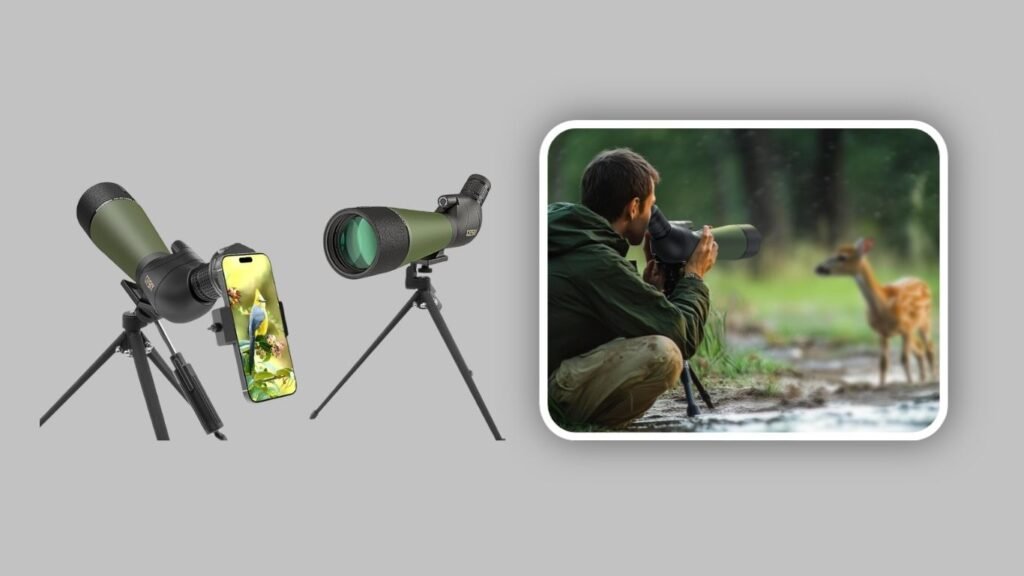
The Gosky 20-60×80 Spotting Scope combines substantial magnification with a large objective lens and smartphone compatibility. Its 20-60x zoom covers a broad range of viewing distances, while the 80mm objective is designed to collect more light than smaller compact scopes. The included smartphone-oriented setup also makes it appealing to birdwatchers and wildlife observers who want to capture photos or videos through the eyepiece.
Key Features
- 20-60x variable magnification
- Large 80mm objective lens
- BaK4 prism system
- Fully multi-coated optics
- Smartphone adapter compatibility
- Waterproof and fog-resistant construction
- Manual focusing system
- Suitable for tripod-mounted observation
Available documentation for Gosky’s 20-60×80 models describes BaK4 prisms, multi-coated optics, weather-resistant construction, and smartphone compatibility.
Why It Is Best for Digiscoping and Wildlife Viewing
The smartphone adapter is particularly useful for people who want more than visual observation. Once a phone camera is aligned with the eyepiece, users can capture distant wildlife, scenery, or targets without needing a dedicated interchangeable-lens camera and large telephoto lens.
The 20x starting point works well for locating subjects, while the 60x upper end provides greater detail when conditions and tripod stability allow.
Optical Performance and Long-Range Capability
An 80mm objective offers substantial light-gathering capability. This becomes important at higher magnification because increasing zoom generally reduces image brightness.
A tripod is strongly recommended, especially toward 60x, because high magnification amplifies vibrations. The large objective also means this Gosky is less compact than models such as the Celestron Hummingbird or Leupold Gold Ring, so portability comes with a tradeoff.
Overall Verdict
The Gosky 20-60×80 is best suited to users who value viewing power and smartphone photography more than ultralight dimensions. Its broad zoom range can handle birdwatching, wildlife observation, scenic viewing, and target inspection across substantial distances.
For users willing to carry a larger scope and tripod in exchange for 60x magnification, a large objective, and phone-compatible viewing, this model offers a feature combination that is particularly attractive for recreational digiscoping.
FAQs
1. What Magnification Is Best for a Compact Spotting Scope?
For general birdwatching, wildlife viewing, and target observation, a magnification range around 15x to 40x is practical. Higher magnification such as 60x or 75x can reveal more distant detail, but it usually requires a stable tripod and good lighting conditions for the clearest view.
2. Are Compact Spotting Scopes Good for Birdwatching?
Yes. Compact spotting scopes are excellent for birdwatching because they provide more magnification than standard binoculars while remaining relatively easy to carry. Models with a wide field of view and lower starting magnification can make it easier to locate moving birds before zooming in for a closer look.
3. Can You Use a Compact Spotting Scope Without a Tripod?
Some lightweight spotting scopes can be used handheld at lower magnification for short viewing sessions. However, a tripod is recommended when using higher magnification because even small hand movements become noticeable. A stable support also makes extended wildlife observation and target viewing much more comfortable.
4. What Objective Lens Size Is Best for a Compact Spotting Scope?
Objective lenses between about 40mm and 60mm provide a useful balance between portability and light gathering. Larger 70mm or 80mm lenses can produce brighter images, especially at higher magnification, but they also make the scope heavier and less compact.
5. Can I Take Photos Through a Compact Spotting Scope?
Yes. Many spotting scopes can be paired with a smartphone adapter for digiscoping. This allows you to position your phone camera over the eyepiece and capture distant birds, wildlife, scenery, or targets. Using a tripod usually produces sharper photos and more stable video.
