
The right duck hunting accessories can make a cold, wet morning safer, more comfortable, and more productive. While a hunter’s exact setup depends on whether they hunt from shore, a blind, a boat, or a kayak, certain items belong in almost every gear bag.
Essential duck hunting gear includes insulated waders, waterproof clothing, decoys, calls, a blind bag, protective cases, navigation tools, and safety equipment. Boat hunters, retriever owners, and hunters crossing deep water will need additional accessories suited to their hunting method.
Must-Have Duck Hunting Accessories
A beginner does not need to purchase every available gadget. Start with equipment that protects you from water and cold, helps you carry essential items, and allows you to hunt safely.
The following accessories form the foundation of a practical duck hunting setup.
Waterproof Blind Bag
A blind bag keeps licenses, gloves, calls, snacks, ammunition, and small tools organized. Choose one made from water-resistant or waterproof material with a reinforced bottom.
Useful features include:
- Multiple internal compartments
- Water-resistant zippers
- A shoulder strap
- External attachment loops
- A rigid or waterproof base
- Drainage openings
- Easy-to-clean lining
A floating bag provides extra protection when hunting from a boat or kayak. However, sensitive items such as phones and licenses should still be stored in sealed waterproof pouches.
Duck Calls and Call Lanyard
Duck calls allow hunters to imitate feeding, greeting, comeback, and attention sounds. Many beginners start with a single-reed or double-reed mallard call.
Double-reed calls are usually easier for new hunters to control, while single-reed calls may provide a wider range of sounds after sufficient practice.
A call lanyard keeps calls accessible and prevents them from falling into the water. Choose a lanyard with separate loops so the calls do not strike each other while walking.
Carrying too many calls can create unnecessary weight. A mallard call, whistle, and species-specific call are enough for most situations.
Decoy Bag
A durable decoy bag makes it easier to transport and organize duck decoys. Mesh bags allow wet decoys to drain and dry, while slotted bags help protect painted finishes and prevent tangled lines.
Backpack-style decoy bags are useful for walk-in hunting because they leave both hands free. Boat hunters may prefer large floating bags that can be loaded directly into the vessel.
The bag should be large enough for your spread without being so oversized that it becomes difficult to carry.
Decoy Weights and Lines
Every decoy needs a reliable anchoring system. Common accessories include decoy line, crimping sleeves, clips, swivels, and weights.
Texas-rigged decoys are popular because their long weighted lines can be gathered quickly. Traditional wraparound systems may be less expensive but usually require more time to deploy and retrieve.
Match line length to the water depth. A line that is too short may allow a decoy to drift, while excessive line can create tangles.
Duck Hunting Wader Accessories
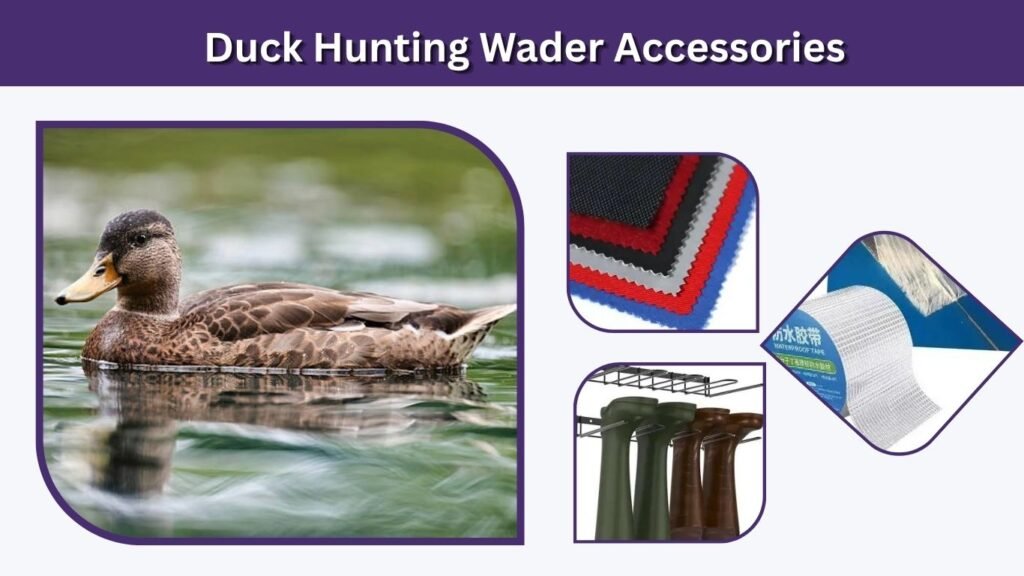
Waders are among the most important pieces of duck hunting gear. Accessories that improve their fit, warmth, and storage can make long hunts considerably more comfortable.
Wader Hangers
A wader hanger allows wet waders to dry properly after use. Hanging them upside down improves airflow and helps remove trapped moisture.
Never leave muddy or wet waders folded in a truck or storage bin for long periods. Moisture can cause odor, mildew, and premature material deterioration.
Store dry waders in a cool area away from direct sunlight, heaters, sharp objects, and chemicals.
Wader Repair Kit
Small punctures can quickly end a hunt, so carry a compact repair kit containing:
- Wader repair adhesive
- Material patches
- Alcohol cleaning wipes
- A small cloth
- Waterproof tape
- A marker for identifying leaks
Temporary field repairs may not look perfect, but they can prevent cold water from continuing to enter the waders.
Test repaired waders at home before relying on them during another hunt.
Insulating Base Layers
Waders provide waterproof protection, but they do not always provide enough warmth. Moisture-wicking base layers help move perspiration away from the skin.
Avoid cotton clothing under waders because it absorbs moisture and dries slowly. Synthetic fabrics and wool blends are usually better choices for cold, damp environments.
Use several light layers rather than one extremely bulky garment. This makes it easier to adjust your clothing as temperatures change.
Wading Belt
A properly adjusted wading belt helps limit the amount of water that can enter the lower portion of the waders after a fall.
It should fit firmly around the waist without restricting normal movement. Although a belt cannot eliminate all risk, it is a basic safety accessory for anyone entering moving or deep water.
Duck Hunting Boat Accessories
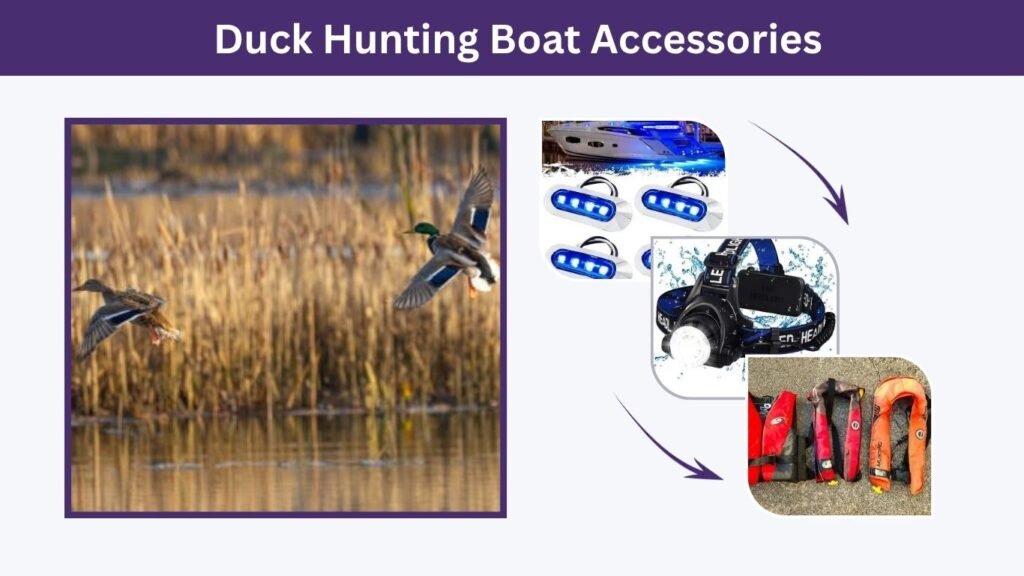
A duck boat needs to transport hunters, decoys, dogs, and equipment without becoming dangerously overloaded. Accessories should improve safety, organization, and concealment rather than simply add weight.
Personal Flotation Devices
Every person in a duck boat should have a properly fitted, approved personal flotation device. Wearing it is particularly important during cold weather, darkness, rough conditions, or high-speed travel.
The U.S. Coast Guard encourages boaters to wear an approved life jacket while underway rather than relying on one stored elsewhere in the boat.
Choose a low-profile design that allows normal arm movement. Inflatable models may be comfortable, but hunters should confirm that the model is approved and suitable for cold, wet conditions.
Waterproof Navigation Lights
Legal navigation lights are essential when operating before sunrise or after sunset. Carry replacement bulbs or a backup portable light in case the main system fails.
Additional useful lighting includes:
- Waterproof headlamp
- Handheld spotlight
- Small interior boat light
- Red-light mode for preserving night vision
- Emergency strobe
Lights should be mounted so they do not create glare for the operator.
Boat Blind
A boat blind helps conceal the boat and its occupants. Commercial frame systems are convenient, while homemade blinds can be built from suitable framing and camouflage materials.
The blind must not interfere with:
- Boat steering
- Visibility
- Life jackets
- Emergency exits
- Navigation lights
- Safe entry and departure
Natural vegetation can improve concealment where its collection and use are legal. Avoid cutting plants on protected land without permission.
Bilge Pump and Bailing Device
A manual or electric bilge pump removes water that enters the boat from rain, waves, wet dogs, or equipment.
Even boats with an electric pump should carry a manual bailing device. A simple container can become valuable if electrical equipment fails.
Test the pump before every trip and keep the intake area clear of grass, leaves, and other debris.
Anchor and Push Pole
An appropriate anchor helps hold the boat securely in wind or current. Carry enough anchor line for the expected water depth.
A push pole is useful for moving through shallow marshes, checking depth, clearing vegetation, and positioning the boat quietly.
Neither accessory should be stored loose where it can roll underfoot or become a tripping hazard.
Duck Hunting Kayak Accessories
A kayak allows hunters to access shallow water and narrow marsh channels, but its limited space requires careful organization.
Kayak Crate
A secured crate can hold decoys, a blind bag, water, and other supplies. Attach it firmly so it cannot fall overboard during a sudden movement.
Avoid stacking equipment too high. A high load can affect balance and create wind resistance.
Paddle Leash
A paddle leash prevents the paddle from drifting away if dropped. It is especially valuable when the hunter must handle decoys or other equipment.
The leash should be positioned so it does not wrap around the hunter’s legs or interfere with entering and exiting the kayak.
Kayak Anchor System
A compact anchor or stake-out pole can keep a kayak positioned during decoy placement and hunting.
An anchor trolley allows the attachment point to be adjusted toward the bow or stern. However, hunters should learn how the system affects the kayak before using it in current or strong wind.
Dry Bags
Use separate dry bags for clothing, electronics, emergency supplies, and food. Brightly colored dry bags are easier to locate in low light.
Important items should be attached to the kayak or stored in sealed compartments rather than left loose on the deck.
Duck Hunting Dog Accessories
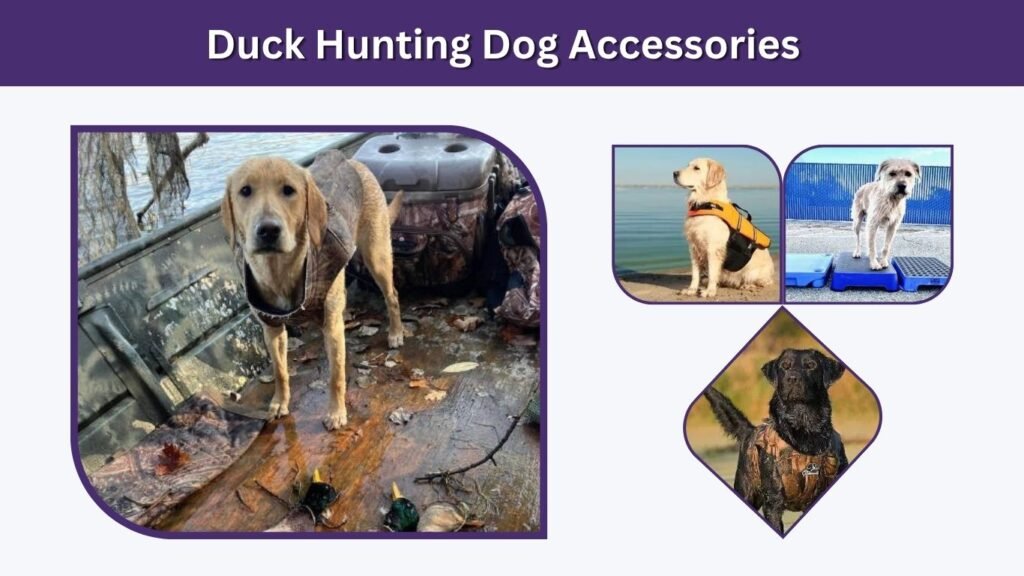
A trained retriever can recover birds that would otherwise be difficult to reach. The dog’s equipment should support warmth, visibility, control, and safe transportation.
Dog Life Jacket
A canine life jacket provides flotation and can make a dog easier to see and lift from the water. It is particularly useful around deep water, strong currents, boats, or inexperienced swimmers.
A suitable jacket should include a strong lifting handle, secure straps, and adequate chest coverage. Dog life jackets provide more flotation and visibility than lighter swimming vests.
Neoprene Dog Vest
A properly fitted neoprene vest helps protect a retriever’s chest and body from cold water, sticks, ice, and vegetation.
The vest should fit closely without restricting movement or rubbing under the front legs. Inspect it regularly for trapped debris and damaged seams.
Remove the vest after hunting so the dog’s coat and skin can dry.
Dog Stand or Platform
A dog stand provides a raised, relatively dry place for the retriever to wait. It is useful in flooded timber, marshes, and shallow water.
Choose a stable stand with a nonslip surface. Train the dog to use it before hunting season rather than introducing it during an active hunt.
First-Aid Kit for Dogs
A dog-specific field kit may include:
- Gauze
- Flexible bandages
- Saline solution
- Tweezers
- Blunt-tip scissors
- Antiseptic recommended by a veterinarian
- Emergency blanket
- Veterinarian contact information
Check the dog for cuts, thorns, ice buildup, and paw damage after every retrieve.
Camouflage Accessories for Duck Hunting
Good camouflage breaks up the human outline and reduces movement. The pattern should resemble the environment rather than simply look attractive in a store.
Face Mask or Face Paint
An uncovered face can appear bright inside a dark blind. A lightweight mask or suitable face paint helps reduce reflection.
Masks should not interfere with vision, hearing, calls, or safe equipment handling.
Camouflage Gloves
Gloves hide hand movement while protecting against wind and cold. Many hunters carry two pairs: a lighter waterproof pair for setting decoys and an insulated pair for waiting in the blind.
A glove with a flexible or fold-back trigger finger may improve dexterity, but safe handling must remain the priority.
Camouflage Blind Material
Grass mats, synthetic vegetation, burlap-style material, and fabric panels can help conceal a blind, boat, or kayak.
Select non-reflective materials that remain quiet when wet or windy. Secure all loose pieces so they cannot enter a motor, wrap around a propeller, or block visibility.
Truck and Storage Accessories
The truck often becomes the main storage and preparation area for a hunt. Proper organization keeps wet, muddy equipment separated from clean clothing and sensitive gear.
Useful truck accessories include:
- Lockable storage box
- Rubber cargo mat
- Wader changing mat
- Waterproof tote
- Seat covers
- Boot tray
- Decoy storage rack
- Dog kennel
- Portable drying rack
- Small trash container
A locking storage box protects equipment from weather and casual theft. However, valuable gear should not be left visible in an unattended vehicle.
Safety and Emergency Accessories
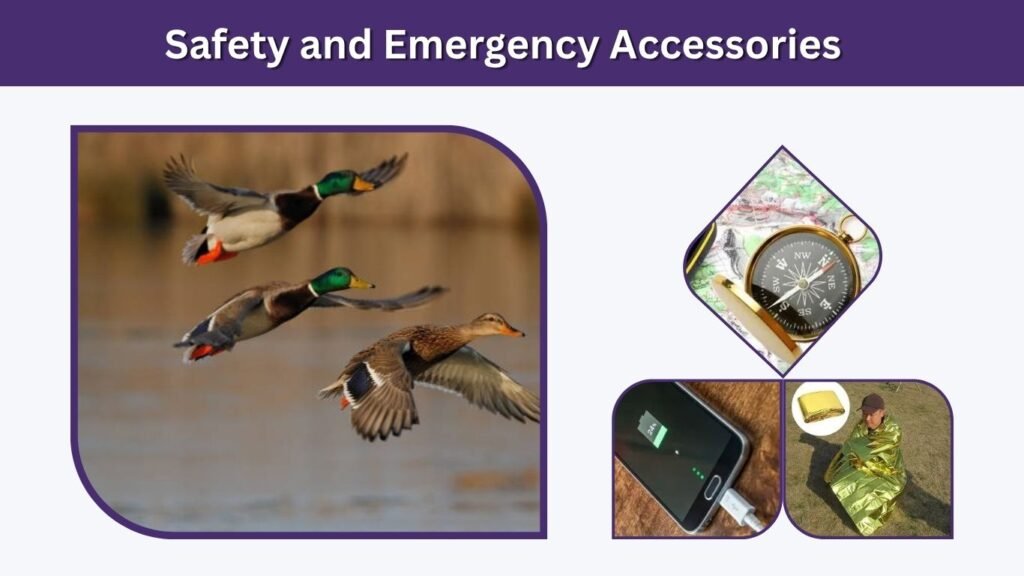
Safety equipment should be packed before comfort items. Duck hunters frequently travel in darkness, cold weather, fog, and isolated wetlands.
Carry a basic emergency kit containing:
- Charged phone
- Portable power bank
- Waterproof flashlight
- Whistle
- First-aid kit
- Fire-starting supplies
- Emergency blanket
- Compass or GPS
- Drinking water
- Basic repair tools
- Spare dry clothing
A waterproof floating phone case can provide additional protection. Hunters should also tell someone where they are going and when they expect to return.
Accessories You May Not Need Immediately
Many cool duck hunting accessories are useful only in specific situations. Beginners can usually postpone purchasing electronic decoy systems, expensive blind modifications, action-camera mounts, large decoy carts, and specialized storage systems.
Before buying an accessory, ask whether it will:
- Improve safety
- Keep you warmer or drier
- Reduce setup time
- Protect essential equipment
- Solve a problem you regularly experience
A simple, organized setup is often more useful than carrying every available gadget.
How to Choose the Best Duck Hunting Accessories
Choose accessories according to the hunting environment rather than online popularity. A walk-in marsh hunter needs lightweight equipment, while a boat hunter can carry more gear but must consider vessel capacity.
Look for materials that resist water, mud, freezing temperatures, and rough handling. Buckles should be operable while wearing gloves, and zippers should not easily clog with dirt.
Buy safety gear first. Comfort and convenience items can be added gradually as you learn which conditions you hunt most often.
Waterfowl hunters should also remember that federal regulations require approved nontoxic shot rather than lead shot for hunting ducks, geese, swans, and coots. Always check federal, state, and public-land rules before hunting.
FAQs
What are the most important duck hunting accessories?
The most important accessories are waterproof clothing, insulated waders, a wading belt, blind bag, decoy bag, calls, headlamp, first-aid kit, navigation tools, and appropriate flotation equipment. Start with safety and weather protection before purchasing optional gadgets.
What should be inside a duck hunting blind bag?
A blind bag should contain licenses, calls, gloves, eye and ear protection, water, snacks, a flashlight, basic tools, a first-aid kit, spare clothing, and waterproof storage for electronics. Contents should be adjusted to the location and expected weather.
What accessories do I need for a duck hunting boat?
Essential boat accessories include approved life jackets, navigation lights, an anchor, bilge pump, bailing device, emergency signaling equipment, waterproof lighting, and a secure storage system. A boat blind and push pole may also be useful.
Does a duck hunting dog need a vest?
A vest is not required in every situation, but a properly fitted neoprene vest can provide warmth and protection in cold water and heavy vegetation. A canine life jacket is particularly valuable around boats, deep water, or strong currents.
How can I keep duck hunting gear organized?
Separate equipment into waterproof containers for clothing, safety supplies, dog gear, decoy equipment, and personal items. Dry everything after each hunt, replace damaged parts immediately, and use a checklist when loading your truck or boat.
