
Successful duck hunting requires more than a shotgun and a box of shells. Hunters often face deep water, freezing temperatures, mud, rain, and long periods of waiting. The right duck hunting gear helps you remain warm, dry, concealed, organized, and prepared for changing conditions. Whether you are assembling a beginner duck hunting gear list or replacing worn equipment, focus first on safety and dependable essentials. Specialized clothing, decoys, calls, storage equipment, and dog accessories can then be added according to your hunting location and style.
Essential Duck Hunting Gear List
A practical duck hunting gear checklist should cover safety, concealment, weather protection, bird attraction, and retrieval. Beginners do not need every premium product immediately. Start with equipment that directly affects safety and comfort, then expand your collection as you gain experience.
| Gear Category | Essential Items | Main Purpose |
| Safety | Life jacket, first-aid kit, light, communication device | Reduces risks in remote or wet areas |
| Clothing | Waders, waterproof jacket, gloves, warm layers | Keeps the hunter dry and comfortable |
| Hunting equipment | Legal shotgun, ammunition, calls | Supports responsible hunting |
| Attraction | Decoys, weights, lines, motion devices | Brings passing ducks within range |
| Retrieval | Wading staff, boat, dog equipment | Helps recover harvested birds |
| Storage | Blind bag, shell pouch, waterproof containers | Protects and organizes equipment |
Waders and Waterproof Boots
Waders are among the most important pieces of duck hunter gear. Chest waders are commonly used in marshes, flooded timber, and shallow lakes because they protect most of the body from water and mud.
Choose insulated waders for freezing conditions and breathable models for warmer hunts. Proper fit is essential. Waders that are too tight can restrict movement, while oversized models may catch on branches or make walking difficult. Boots should provide secure traction on slippery banks and soft bottoms.
Weather-Appropriate Hunting Clothing
Duck hunting clothing should be selected as a layering system. A moisture-wicking base layer moves perspiration away from the skin. An insulating middle layer retains warmth, while a waterproof outer shell blocks rain and wind.
Avoid relying on one extremely heavy garment. Adjustable layers make it easier to remain comfortable during changing weather. Gloves, warm socks, a face covering, and an insulated hat are also valuable during cold-weather hunts.
Shotgun and Ammunition
Use a reliable shotgun that is legal and appropriate for waterfowl hunting in your area. Hunters must also use ammunition permitted by applicable regulations. Non-toxic shot is widely required for waterfowl hunting, but hunters should verify current local rules before entering the field.
Store ammunition in a dry, secure container. Mud, rain, and standing water can damage poorly protected shells. Always keep the firearm pointed in a safe direction and follow established handling practices.
Duck Calls and Lanyards
Duck calls can imitate feeding chatter, greeting calls, and other vocalizations. Beginners usually benefit from mastering one dependable call before carrying several specialized models.
A call lanyard keeps calls accessible while preventing them from being dropped into water or mud. Practice volume control and rhythm before the season. Excessive or poorly timed calling can make cautious ducks avoid the area rather than approach it.
Decoys and Concealment Equipment
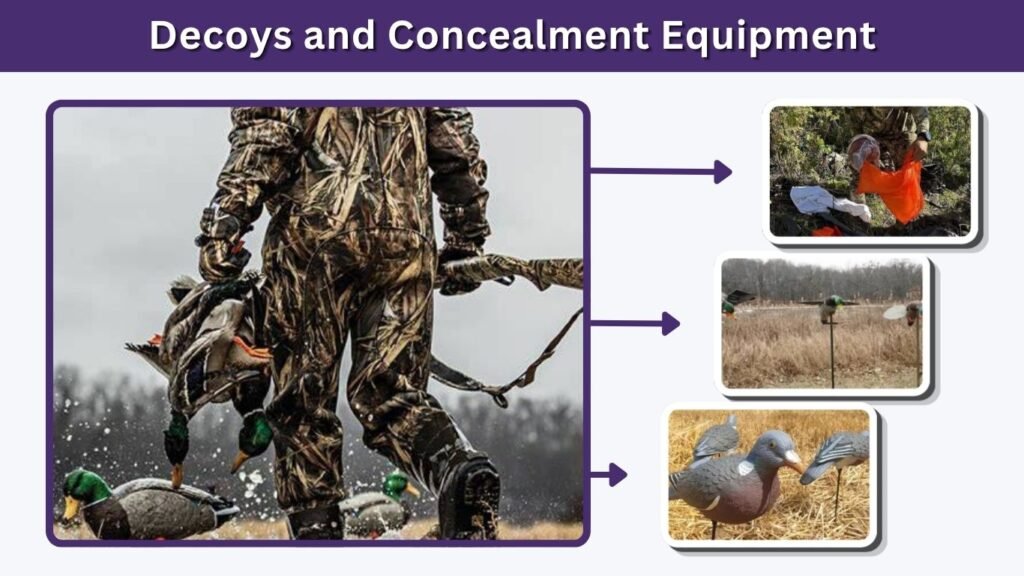
Decoys and concealment influence how naturally a hunting setup appears to passing birds. The best configuration depends on the species, water depth, wind direction, hunting pressure, and available cover.
Duck Decoys
A basic decoy spread may include a manageable number of floating decoys representing locally common species. More decoys are not automatically better. A smaller, natural-looking spread is often easier to transport, deploy, and retrieve.
Use durable lines, suitable anchors, and clearly organized weights. Tangled decoy cords waste time and can create hazards in boats. A slotted decoy bag helps protect painted surfaces and keeps the spread organized between hunts.
Hunting Blind and Natural Cover
A portable blind, boat blind, layout blind, or natural vegetation can help conceal movement. Select camouflage that resembles the surrounding marsh, reeds, timber, or shoreline rather than choosing a pattern only because it looks attractive.
Cover exposed skin, shiny equipment, and straight artificial edges. Ducks can detect sudden movement easily, so remaining still is often more important than wearing an expensive camouflage pattern.
Motion Decoys
Spinning-wing, jerk-string, and water-motion decoys can add movement to an otherwise stationary spread. Their effectiveness varies according to weather, hunting pressure, and regional regulations.
Check whether electronic or motorized decoys are permitted where you hunt. Mechanical jerk rigs offer a simple alternative and can create realistic ripples without batteries.
Waterproof and Cold-Weather Duck Hunting Gear
Waterfowl seasons frequently involve rain, snow, strong wind, and low temperatures. Waterproof duck hunting gear must prevent outside moisture from entering while also allowing internal moisture to escape.
Duck Hunting Rain Gear
A waterproof jacket should have sealed seams, adjustable cuffs, a protective hood, and enough room for insulating layers. Waterproof pants or bibs provide additional protection when sitting in a wet blind or traveling through heavy vegetation.
Quiet fabric is preferable because stiff materials may create noise when the hunter moves. Waterproof does not always mean breathable, so compare both characteristics when selecting rain gear.
Cold-Weather Accessories
Insulated gloves, wool or synthetic socks, hand warmers, neck gaiters, and warm hats can improve comfort considerably. Carry an extra pair of gloves because wet hands lose heat quickly.
Avoid cotton as the primary insulating material in wet conditions. Once saturated, cotton dries slowly and provides limited warmth. Wool and synthetic fabrics generally perform better around water.
Duck Hunting Boat and Retrieval Gear
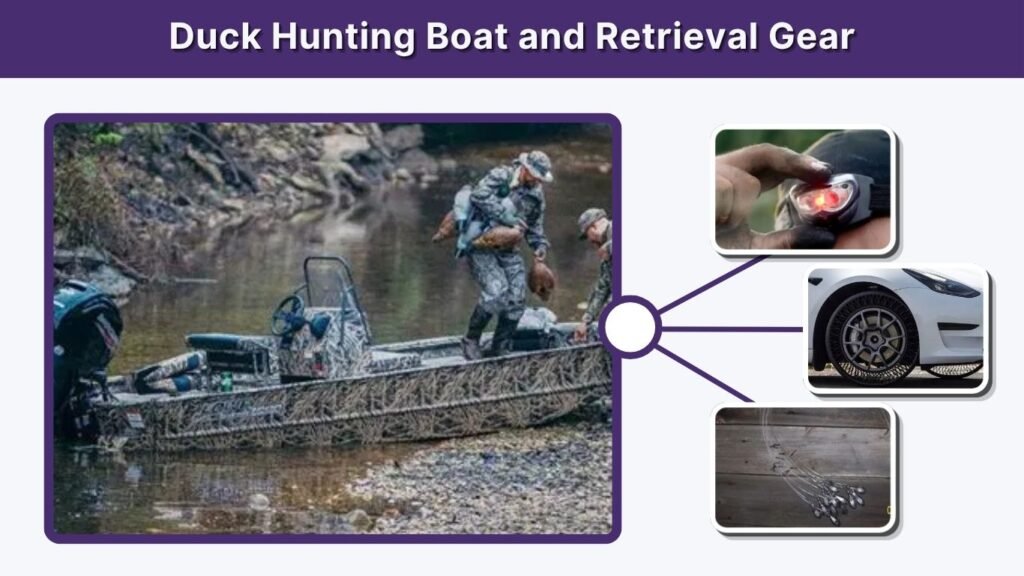
Boat-based hunting introduces additional equipment requirements. The boat must be suitable for the water, load, weather, and number of passengers. Never overload a small craft with hunters, decoys, dogs, and unnecessary gear.
Boat Safety Equipment
Every passenger should have an accessible, properly fitted personal flotation device. Other useful items include navigation lights, a paddle, anchor, emergency whistle, first-aid supplies, communication device, and waterproof flashlight.
Inspect the fuel system, motor, battery, plugs, and weather forecast before departure. Cold water can become life-threatening quickly, even when air temperatures appear manageable.
Bird Retrieval Equipment
A trained retriever can recover birds efficiently, but hunters without dogs may use a boat, long-handled retrieval tool, or carefully planned wading route. A wading staff helps test water depth and bottom stability.
Never enter unfamiliar deep water simply to recover a bird. Consider currents, submerged obstacles, cold-water exposure, and the limitations of your waders.
Duck Hunting Dog Gear
A working retriever needs equipment designed for warmth, visibility, control, and protection. Dog gear should fit correctly and should never restrict swimming, breathing, or normal movement.
Essential Equipment for Retrievers
A neoprene dog vest can help conserve warmth and protect the chest from vegetation. Other useful equipment includes a secure collar, identification tag, leash, dog stand, towel, fresh water, and canine first-aid supplies.
Remove or modify loose straps that could become caught on branches. Check the dog frequently for cuts, ice buildup, exhaustion, and signs of dangerous cooling.
Training Gear
Whistles, bumpers, check cords, and place boards are commonly used when developing retrieval skills. Training should begin well before hunting season and progress gradually from land exercises to controlled water retrieves.
A dog should reliably follow basic commands before being exposed to firearms, boats, unfamiliar hunters, or difficult water conditions.
How to Buy Duck Hunting Gear on a Budget
Cheap duck hunting gear is not always poor quality, but essential safety equipment should never be selected by price alone. Budget hunters can reduce costs by prioritizing versatile products, purchasing proven used equipment, and watching seasonal clearance sales.
Spend first on well-fitting waders, weather protection, safety equipment, and reliable storage. Decoys, calls, clothing accessories, and blind materials can be upgraded later. Inspect used waders for leaks, check decoy lines for damage, and avoid compromised safety equipment.
Premium brands may offer advanced fabrics and specialized designs, but a coordinated set of dependable mid-priced equipment can perform well. Fit, durability, weather resistance, and suitability for your hunting environment matter more than the logo.
Beginner Duck Hunting Gear Checklist
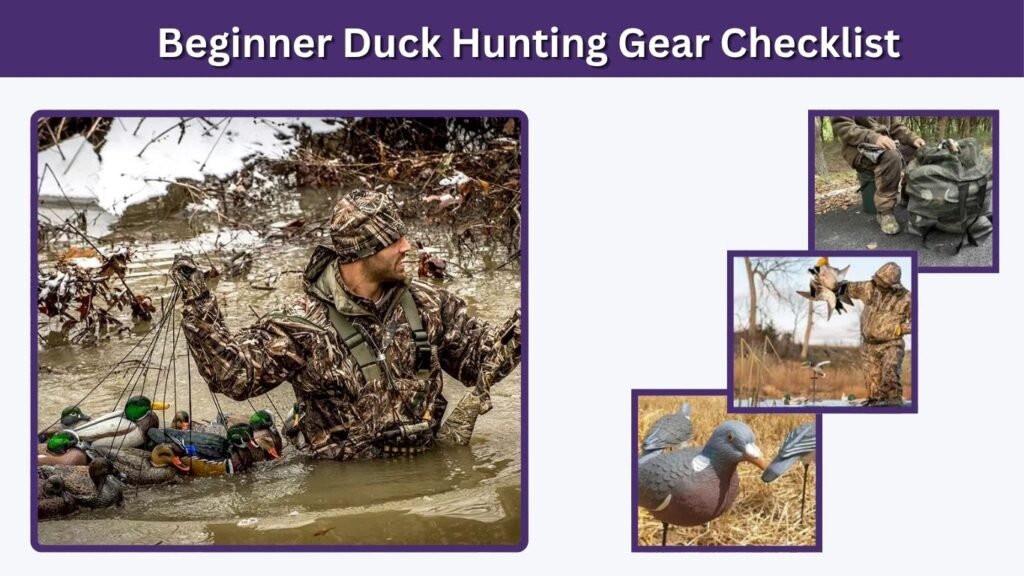
Before leaving home, use a written checklist rather than relying on memory.
- Hunting license, permits, and identification
- Legal firearm and approved ammunition
- Waders, waterproof jacket, and layered clothing
- Personal flotation device when hunting near deep water
- Decoys, anchors, lines, and decoy bag
- Duck calls and lanyard
- Blind bag and waterproof storage boxes
- Flashlight or headlamp with spare batteries
- First-aid kit and emergency communication device
- Food, drinking water, gloves, and dry clothing
- Retrieval equipment or properly equipped hunting dog
- Maps, navigation tools, and required safety equipment
FAQs
What gear is essential for first-time duck hunting?
A beginner needs appropriate licenses, a legal firearm and ammunition, weather-resistant clothing, waders, basic decoys, a duck call, waterproof storage, and safety equipment. Hunters using boats also need personal flotation devices and required boating supplies. Additional accessories can be purchased after gaining practical experience.
How many duck decoys does a beginner need?
There is no universal number because the ideal spread depends on location, species, wind, and hunting pressure. A beginner can start with a small, manageable group of decoys. Correct placement, realistic spacing, movement, and visibility are usually more valuable than owning a very large collection.
What should I wear for duck hunting?
Wear moisture-wicking base layers, insulating middle layers, and a waterproof outer shell. Add properly fitted waders, gloves, warm socks, a hat, and camouflage suited to the surroundings. Carry dry backup clothing, especially when boating or hunting in cold rain and freezing temperatures.
Is expensive duck hunting gear necessary?
Premium gear can provide better fabrics, reduced weight, or improved durability, but it is not essential for every hunter. Prioritize dependable waders, waterproof clothing, and safety equipment. Calls, decoys, bags, and camouflage accessories can often be purchased inexpensively, used, or during clearance sales.
What should be kept in a duck hunting blind bag?
A blind bag should contain ammunition, calls, licenses, gloves, a light, first-aid supplies, water, snacks, basic tools, and waterproof storage for electronics. Hunters may also carry spare decoy parts, hand warmers, a face covering, insect protection, and cleaning materials for wet or muddy equipment.
