
Preparing for your first deer hunting trip can feel exciting and overwhelming at the same time. Many beginner hunters focus only on equipment, but successful deer hunting also requires planning, scouting, safety knowledge, and understanding deer behavior.
The better prepared you are before entering the woods, the more enjoyable and successful your hunting experience will be. Proper preparation helps improve safety, confidence, and overall comfort during long hours outdoors.
Learn Local Hunting Laws and Regulations
Before hunting deer, it is extremely important to understand your local hunting laws and regulations. Every region has different rules regarding hunting seasons, legal weapons, licenses, and tagging requirements.
Failing to follow hunting regulations can result in fines, loss of hunting privileges, or legal trouble.
Important Legal Requirements
Most beginner hunters will need several legal documents before hunting.
Common requirements include:
- Hunting license
- Deer tags or permits
- Hunter education certification
- Public land permits
- Legal hunting season information
Always check your local wildlife agency for updated regulations before your trip.
Why Hunter Safety Courses Matter
Hunter safety courses teach beginners how to hunt responsibly and safely.
These courses usually cover:
- Firearm safety
- Ethical hunting practices
- Wildlife conservation
- Safe tree stand use
- Emergency procedures
Many states and provinces legally require hunter education before purchasing a hunting license.
Choose the Right Hunting Weapon
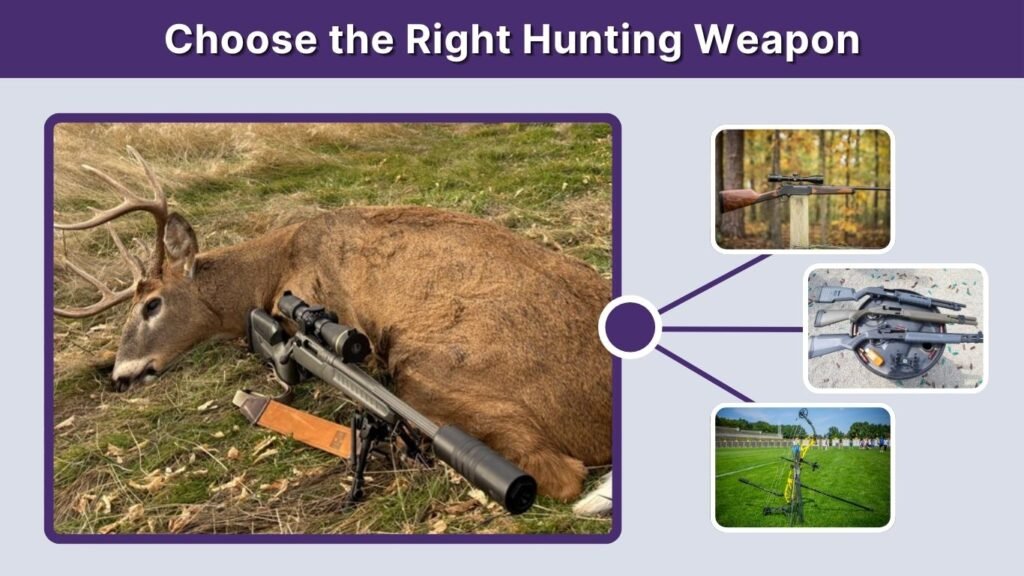
Selecting the proper hunting weapon is one of the most important decisions for first-time deer hunters. The best option depends on local regulations, hunting style, and personal comfort level.
Beginners should choose a weapon they can handle safely and confidently.
Common Deer Hunting Weapons
Several types of hunting weapons are commonly used for deer hunting.
Popular choices include:
- Rifles
- Shotguns
- Compound bows
- Crossbows
- Muzzleloaders
Each option has different advantages depending on terrain, distance, and hunting regulations.
How to Choose the Best Weapon for Beginners
New hunters should focus on safety, comfort, and ease of use when choosing a weapon.
Important factors include:
- Recoil comfort
- Shooting accuracy
- Local hunting laws
- Practice opportunities
- Hunting distance
Many beginners prefer rifles because they are easier to learn and provide better accuracy at longer distances.
Practice Before the Hunt
Practicing before hunting season is essential for building confidence and improving shooting accuracy.
Practice should include:
- Safe firearm handling
- Shooting from different positions
- Target practice at realistic distances
- Learning proper aiming techniques
Consistent practice reduces mistakes and helps ensure ethical shots in the field.
Essential Deer Hunting Gear for Beginners
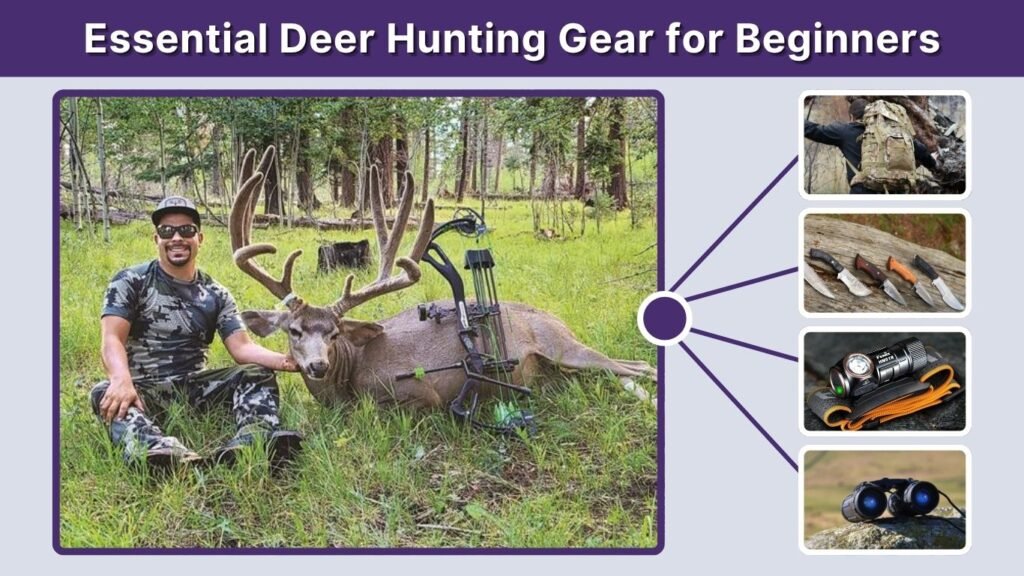
Reliable hunting gear makes deer hunting safer, more comfortable, and more effective. Beginners do not need the most expensive equipment, but they should carry basic supplies for safety and convenience.
Good preparation also helps hunters stay outdoors longer in changing weather conditions.
Basic Deer Hunting Checklist
Important beginner hunting gear includes:
- Hunting backpack
- Hunting knife
- Flashlight or headlamp
- Binoculars
- Rope
- Gloves
- Water bottle
- Extra batteries
Carrying a small first aid kit is also highly recommended for outdoor safety.
Deer Hunting Clothing Essentials
Proper clothing helps hunters stay warm, dry, quiet, and concealed in the woods.
| Clothing Item | Purpose |
| Camouflage clothing | Blend into surroundings |
| Waterproof boots | Comfort and protection |
| Blaze orange vest | Hunter visibility and safety |
| Gloves | Warmth and scent reduction |
| Layered clothing | Temperature control |
Layered clothing is especially important because morning temperatures can change quickly during hunting season.
Why Scent Control Is Important
Deer have an incredible sense of smell and can detect human scent from long distances. Poor scent control is one of the biggest reasons hunters fail to see deer.
Helpful scent-control practices include:
- Staying downwind
- Avoiding strong fragrances
- Washing hunting clothes carefully
- Using scent-free soaps
- Minimizing unnecessary movement
Paying attention to wind direction is often more important than camouflage.
Scout the Hunting Area Before the Trip
Scouting is one of the most important parts of deer hunting preparation. Learning where deer travel, feed, and rest greatly increases the chances of success.
Many experienced hunters spend more time scouting than actually hunting.
What to Look for While Scouting
While scouting, hunters should search for signs of deer activity.
Important deer signs include:
- Deer tracks
- Trails
- Bedding areas
- Fresh droppings
- Feeding signs
- Rubs and scrapes
Fresh signs usually indicate active deer movement in the area.
Best Places to Find Deer
Certain locations naturally attract deer because they provide food, water, and cover.
Good places to scout include:
- Forest edges
- Creek crossings
- Thick brush
- Crop fields
- Oak tree areas
- Funnel-shaped terrain
Deer often move between bedding and feeding areas during dawn and dusk.
How Trail Cameras Help
Trail cameras are useful tools for beginner hunters because they help monitor deer movement without disturbing the area constantly.
Trail cameras can help:
- Identify active deer trails
- Track deer activity times
- Estimate deer size
- Observe movement patterns
Reviewing camera footage helps hunters choose better stand locations before opening day.
Learn Basic Deer Behavior
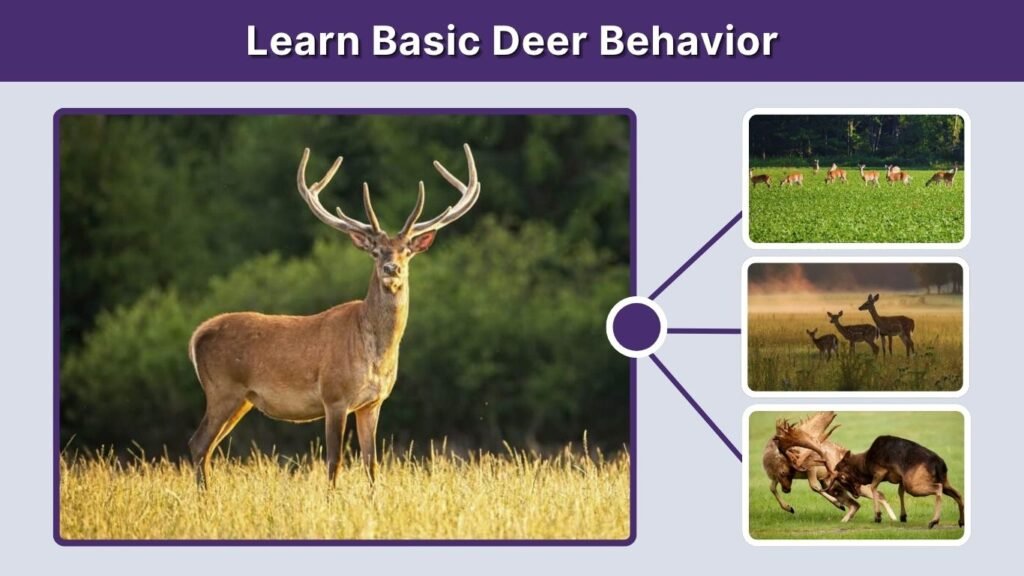
Understanding deer behavior helps hunters predict movement and avoid common mistakes. Deer follow patterns related to food, weather, pressure, and breeding activity.
Hunters who understand these patterns are usually more successful.
Common Deer Movement Patterns
Deer typically behave in predictable ways during certain times of the day.
Common movement habits include:
- Feeding during dawn and dusk
- Traveling between bedding and feeding areas
- Avoiding heavily pressured areas
- Staying near thick cover during daylight
During the rut, bucks may move more aggressively while searching for does.
How Weather Affects Deer Activity
Weather conditions strongly influence deer movement and feeding behavior. Understanding how deer react to changing weather can help hunters choose better hunting times and locations.
Important weather effects include:
- Cold weather increases feeding activity
- Wind affects deer scent detection
- Rain may encourage daytime movement
- Snow makes tracking easier
Many hunters experience the best deer movement during cool mornings and just before weather changes.
Prepare Physically for the Hunt
Deer hunting can be physically demanding, especially for beginners who are not used to hiking through rough terrain or sitting outdoors for long periods.
Improving physical fitness before the trip can make hunting safer and more comfortable.
Why Fitness Matters
Hunting often requires:
- Long walks through forests
- Carrying heavy gear
- Climbing hills or rough terrain
- Dragging harvested deer
- Sitting for extended periods
Better stamina allows hunters to move quietly and stay focused longer.
Beginner Fitness Tips
Simple fitness preparation can greatly improve your hunting experience.
Helpful fitness ideas include:
- Walking regularly
- Practicing hiking with a backpack
- Stretching before outdoor activities
- Improving leg strength
- Staying hydrated
Even moderate physical preparation helps reduce fatigue during the hunt.
Learn Deer Hunting Safety Basics
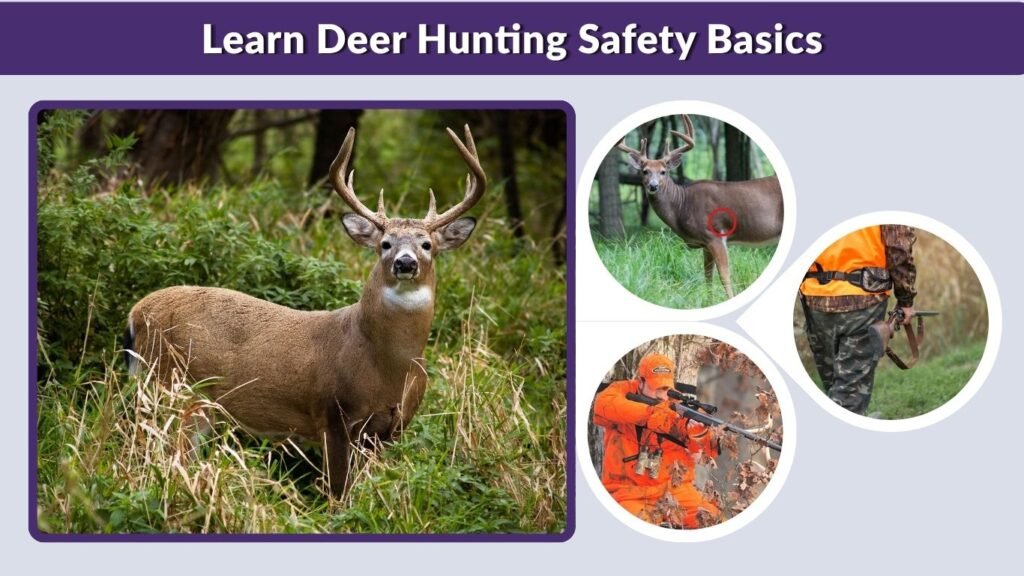
Safety should always be the highest priority during any hunting trip. Responsible hunters follow strict safety rules to protect themselves and others in the woods.
Understanding basic safety procedures before the hunt is essential for beginners.
Essential Hunting Safety Tips
Important deer hunting safety rules include:
- Always identify your target clearly
- Keep firearms pointed safely
- Wear blaze orange clothing
- Never climb with a loaded firearm
- Inform someone about your location
Safe firearm handling should become a habit before entering the woods.
Tree Stand Safety
Tree stands are commonly used during deer hunting, but they can be dangerous if used improperly.
Important tree stand safety practices include:
- Always wear a safety harness
- Inspect straps and equipment regularly
- Climb carefully
- Use a haul line for gear
- Never stand on damaged platforms
Falls from tree stands are one of the most common hunting accidents.
What to Pack for Your First Deer Hunting Trip
Packing the right supplies helps hunters stay safe, comfortable, and prepared for changing conditions in the woods.
Creating a checklist before the trip helps avoid forgetting important items.
Deer Hunting Packing List
Useful items for beginner deer hunters include:
- Hunting license and tags
- Ammunition or arrows
- Food and snacks
- Water bottle
- Flashlight or headlamp
- Extra batteries
- First aid kit
- GPS or map
Carrying extra supplies is especially important during longer hunts in remote areas.
Cold Weather Hunting Tips
Cold temperatures can make deer hunting uncomfortable without proper preparation.
Helpful cold-weather tips include:
- Wear layered clothing
- Bring hand warmers
- Use waterproof outerwear
- Pack extra socks
- Protect hands and face from wind
Staying warm helps hunters remain patient and focused during long waits.
Mental Preparation for First-Time Hunters
Many beginners expect immediate success during their first deer hunting trip, but hunting often requires patience and persistence.
Mentally preparing for long quiet periods is important for enjoying the experience.
What First-Time Hunters Should Expect
Beginner hunters should understand that deer hunting involves:
- Long waiting periods
- Early mornings
- Changing weather conditions
- Learning from mistakes
- Limited early success
Even experienced hunters sometimes spend entire days without seeing deer.
Ethical Hunting Mindset
Ethical hunting is an important part of responsible wildlife management.
Good hunting ethics include:
- Respecting wildlife
- Following all hunting laws
- Taking responsible shots
- Recovering wounded animals
- Appreciating nature
Responsible hunters prioritize clean, humane harvests whenever possible.
What to Do After Harvesting a Deer
After successfully harvesting a deer, hunters must act carefully and responsibly to preserve meat quality and follow local regulations.
Proper post-hunt handling is extremely important.
Important Steps After the Shot
Basic post-harvest steps include:
- Wait before tracking
- Follow blood trails carefully
- Confirm the deer has expired
- Tag the deer properly
- Begin field dressing quickly
Remaining calm after the shot helps prevent mistakes during recovery.
Why Meat Care Matters
Proper meat care improves food safety and meat quality.
Important meat-care practices include:
- Cooling the carcass quickly
- Keeping meat clean
- Avoiding contamination
- Processing meat properly
Warm temperatures can spoil venison quickly if the deer is not handled correctly.
Common Beginner Deer Hunting Mistakes
Most beginner hunters make mistakes during their first few seasons. Learning from these mistakes is part of becoming a better hunter.
Mistakes to Avoid
Common beginner hunting mistakes include:
- Moving too much
- Ignoring wind direction
- Wearing noisy clothing
- Skipping practice sessions
- Arriving late to hunting areas
Patience and preparation are usually more important than expensive gear.
Interesting Facts About Deer Hunting
Deer hunting has been practiced for centuries and remains one of the most popular outdoor activities in North America.
Amazing Facts
- Deer have extremely powerful senses of smell
- Mature bucks avoid high-pressure areas
- Deer movement often increases during the rut
- Hunters may wait quietly for hours
- Scouting often matters more than luck
Understanding deer behavior helps hunters become more successful over time.
FAQs
What should a beginner bring on a deer hunt?
Beginner hunters should bring essential gear such as a hunting license, weapon, ammunition, water, snacks, flashlight, knife, binoculars, warm clothing, and a first aid kit. Proper preparation helps improve safety, comfort, and hunting success during the trip.
How do I prepare for my first deer hunting trip?
Preparing for your first deer hunt involves learning local hunting laws, practicing with your weapon, scouting the hunting area, packing essential gear, and understanding deer behavior. Physical fitness and hunting safety knowledge are also very important for beginners.
What is the best weapon for beginner deer hunters?
Many beginners prefer rifles because they are easier to use accurately at longer distances. However, shotguns, crossbows, and muzzleloaders may also work well depending on local hunting laws, terrain, and personal comfort level.
How early should you arrive before deer hunting?
Hunters often arrive at least one hour before sunrise to quietly reach their hunting location before deer become active. Early arrival helps reduce noise, avoid disturbing deer, and allows time to settle into position safely.
What should you wear deer hunting?
Hunters should wear camouflage clothing, waterproof boots, layered clothing for temperature changes, gloves, and blaze orange safety gear when required by law. Proper clothing helps improve comfort, safety, scent control, and concealment in the woods.
