
Duck hunting season is one of the most exciting times of the year for outdoor enthusiasts, especially those who enjoy waterfowl hunting. If you’re wondering “when is duck hunting season?”, the answer depends on several important factors, including your location, local regulations, and duck migration patterns.
Unlike fixed hunting seasons, duck hunting dates change every year and vary across regions to align with migratory bird movements. This ensures sustainable hunting practices and helps protect duck populations. Whether you’re a beginner or an experienced hunter, understanding when the season starts and ends is essential for both success and legality.
In this guide, we’ll break down duck hunting season timelines, regional differences, and key factors that influence hunting dates.
When Is Duck Hunting Season? (Quick Answer)
In most regions, duck hunting season typically runs from early fall to mid-winter, generally between September and January.
However, the season is often divided into different phases:
- Early season – Begins around September
- Regular season – Peaks between October and December
- Late season – Extends into January
These dates vary depending on:
- Your country or state
- Local wildlife regulations
- Migration patterns of ducks
- Specific hunting zones or flyways
For example, northern regions may start earlier due to colder weather, while southern areas often have longer seasons as migrating ducks move south.
Because of these variations, it’s always important to check official wildlife agency guidelines for your exact location.
Duck Hunting Season Breakdown
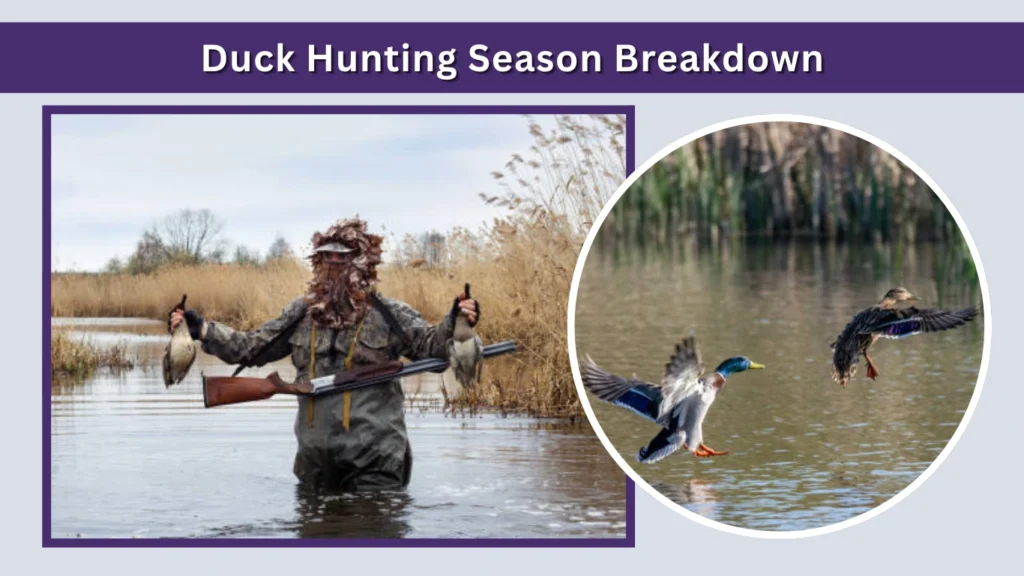
Understanding the different phases of duck hunting season can help you plan your trips more effectively and increase your chances of success.
Early Duck Season
Early duck season usually begins in early fall, often around September. This period mainly targets resident or local ducks that have not yet migrated.
Key features:
- Warmer weather conditions
- Less hunting pressure
- Smaller duck populations
Hunters often find this season ideal for scouting locations and practicing techniques, although success rates may be lower compared to peak season.
Regular Duck Season
The regular season is the main and most popular part of duck hunting season. It typically runs from October through December, depending on the region.
Why it’s important:
- Peak migration period
- Large numbers of ducks moving through flyways
- Higher success rates
This is when most hunters head out, so expect increased competition and activity in popular hunting areas.
Late Duck Season
Late duck season usually takes place during the winter months, often extending into January.
What to expect:
- Fewer ducks compared to peak season
- Reduced hunting pressure
- More cautious and experienced birds
Late season hunting can be challenging, but skilled hunters often take advantage of predictable feeding patterns during colder weather.
Duck Hunting Season by Region (Flyways)
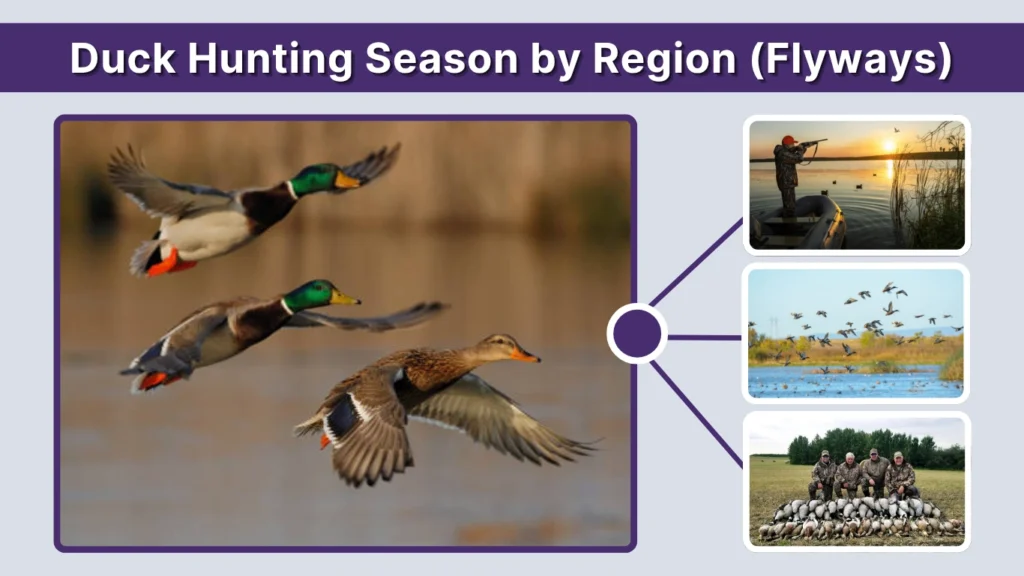
Duck hunting seasons are heavily influenced by flyways, which are major migration routes used by waterfowl. These flyways help wildlife authorities set appropriate hunting dates.
Atlantic Flyway
The Atlantic Flyway covers the eastern parts of North America.
- Moderate season length
- Influenced by coastal weather patterns
- Good mix of early and migrating ducks
Mississippi Flyway
The Mississippi Flyway is one of the most popular regions for duck hunting.
- Covers central U.S. regions
- High concentration of migrating ducks
- Excellent hunting opportunities during peak season
Central Flyway
The Central Flyway runs through the Great Plains and surrounding areas.
- Migration timing depends heavily on weather
- Ducks move quickly during cold fronts
- Hunters must adapt to changing conditions
Pacific Flyway
The Pacific Flyway includes western regions and coastal areas.
- Diverse duck species
- Often longer hunting seasons
- Strong migration patterns along wetlands and coastlines
Why Duck Hunting Seasons Change
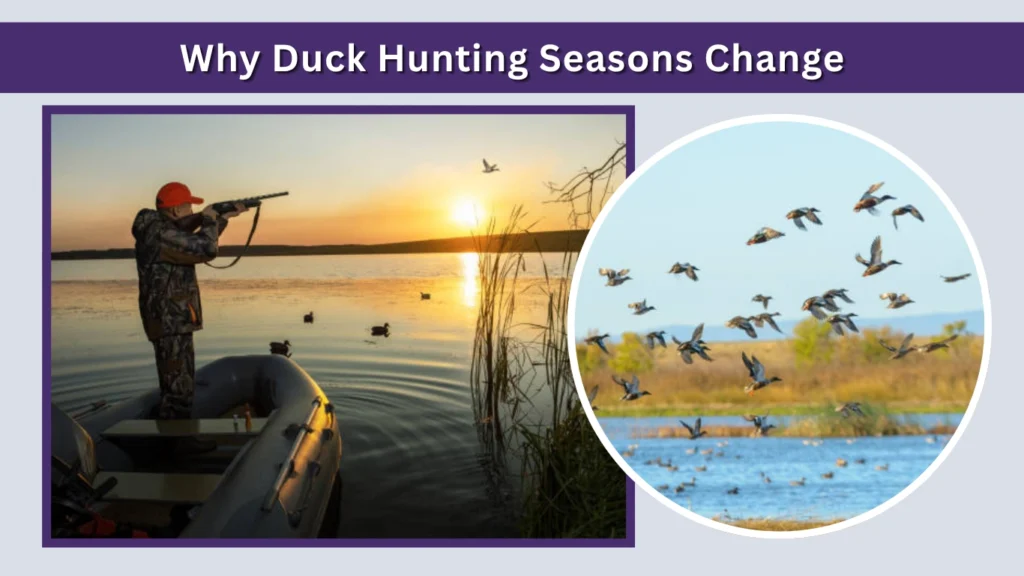
Duck hunting seasons are not fixed because they are designed to balance hunting opportunities with conservation efforts.
Migration Patterns
Ducks migrate based on temperature, food availability, and daylight hours. Hunting seasons are carefully scheduled to match these movements, ensuring hunters can access migrating populations without harming long-term sustainability.
Wildlife Conservation Laws
Governments regulate duck hunting through strict laws to protect migratory birds. These rules control:
- Hunting dates
- Bag limits
- Allowed hunting methods
Such regulations help maintain healthy duck populations for future generations.
Weather and Habitat Conditions
Environmental factors like rainfall, wetlands availability, and temperature changes can influence when ducks migrate. As a result, hunting seasons may shift slightly each year.
Best Time to Hunt Ducks During the Season
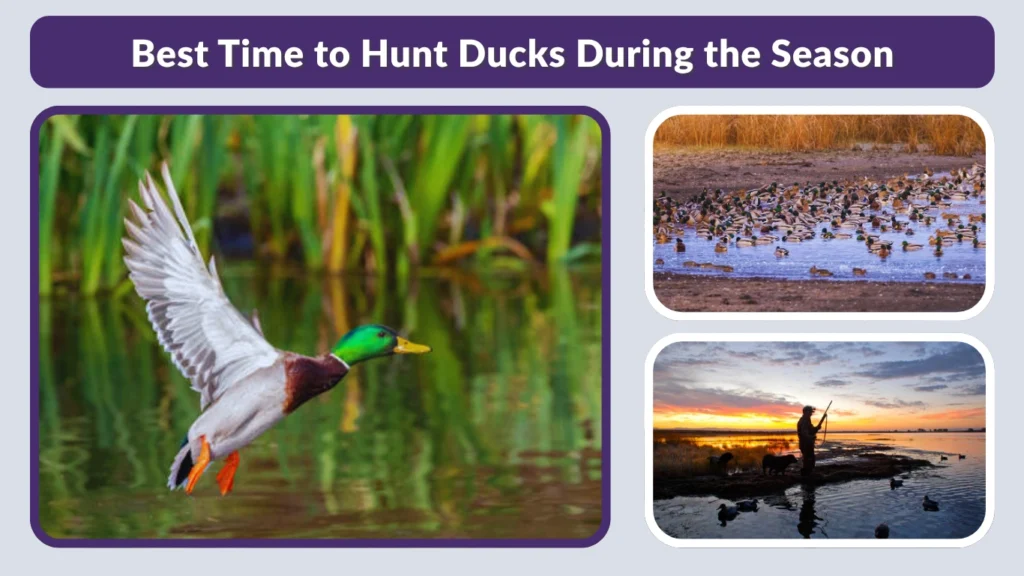
Timing plays a crucial role in duck hunting success. Even within the season, certain periods and conditions offer better opportunities.
Early Season Strategy
During the early season, focus on local water bodies such as ponds, lakes, and small wetlands.
- Ducks are less pressured and more predictable
- Use simple decoy setups
- Scout areas regularly
This is a great time for beginners to build experience.
Peak Migration (Best Time)
The peak migration period is widely considered the best time to hunt ducks.
- Large flocks move through flyways
- Increased daytime activity
- Higher success rates
Cold fronts often trigger migration, so watching weather patterns can give you an advantage.
Late Season Tips
Late season hunting requires more patience and strategy.
- Ducks are more cautious due to hunting pressure
- Focus on feeding and resting areas
- Use realistic decoy spreads
Although challenging, experienced hunters often find success during this phase.
Best Time of Day
Ducks are most active during:
- Early morning (sunrise)
- Late afternoon to sunset
These times offer the best chances for spotting and attracting ducks.
Duck Hunting Regulations You Must Know
Before heading out, it’s essential to understand the rules governing duck hunting.
Licenses and Permits
Most regions require:
- A valid hunting license
- Migratory bird permits
- Duck stamps (in certain countries)
These ensure that hunting activities are tracked and regulated.
Bag Limits
Bag limits control how many ducks you can harvest.
- Daily limits vary by region
- Some species have stricter limits
- Exceeding limits can result in penalties
Legal Equipment
Duck hunting typically allows:
- Shotguns only
- Non-toxic ammunition (such as steel shot)
These rules are designed to reduce environmental impact and improve safety.
Hunting Zones
Many regions divide hunting areas into zones.
- Different opening and closing dates
- Specific rules for each zone
- Split seasons in some locations
Understanding your zone is key to staying compliant.
How to Find Duck Hunting Dates in Your Area
Since duck hunting seasons vary, always rely on official sources for accurate information.
- Government wildlife agency websites
- Official hunting regulation booklets
- Mobile hunting apps
- Local hunting communities and experts
These sources provide up-to-date and location-specific details.
Tips for Beginner Duck Hunters
If you’re new to duck hunting, these tips can help you get started:
- Learn duck calls to attract birds effectively
- Use decoys strategically to mimic real flocks
- Scout locations before the season begins
- Understand wind direction, as ducks land into the wind
- Stay patient, as success often takes time
Preparation and observation are key to improving your skills.
FAQs
When does duck hunting season usually start?
Duck hunting season usually begins in early fall (around September), but exact dates depend on your region and migration patterns.
What is the best month for duck hunting?
November is often the best month because it coincides with peak migration in many areas.
Can you hunt ducks year-round?
No, duck hunting is strictly regulated and limited to specific seasons to protect migratory bird populations.
Do duck hunting dates change every year?
Yes, dates may change slightly each year based on migration patterns, weather conditions, and conservation policies.
What gear is required for duck hunting?
Basic gear includes a shotgun, non-toxic ammunition, decoys, camouflage clothing, and appropriate licenses or permits.
Conclusion
Duck hunting season generally runs from early fall to winter, but exact dates vary depending on location, migration patterns, and regulations. Understanding the different phases of the season and staying informed about local rules is essential for a safe and successful experience.
By planning ahead, following legal guidelines, and learning proper techniques, you can make the most of duck hunting season while contributing to responsible wildlife management.
