
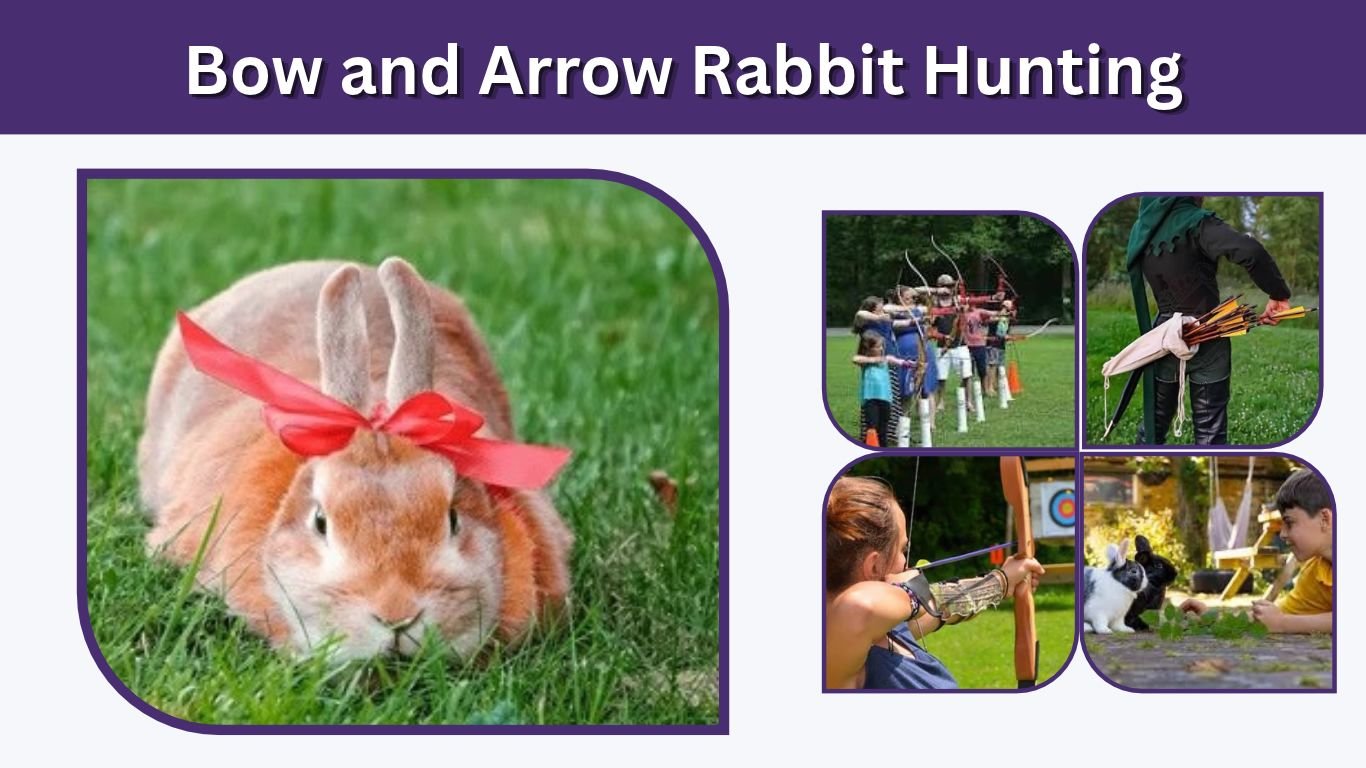
Bow and arrow rabbit hunting offers an exciting challenge for hunters who enjoy traditional archery and small-game hunting. Unlike firearms, bows require careful positioning, accuracy, and patience because rabbits are small, alert, and quick to escape. Both recurve and compound bows can be used where local hunting regulations permit. Success depends on selecting suitable equipment, understanding rabbit behavior, and practicing consistently before entering the field. This guide explains how to hunt rabbits with a bow, which equipment works best, where to find rabbits, and important safety considerations for beginners.
Can You Hunt Rabbits With a Bow and Arrow?
Yes, rabbits can be hunted with a bow and arrow in many locations where small-game bowhunting is legal. Both traditional and modern archery equipment can be effective when used responsibly. However, bowhunting rabbits is more challenging than hunting larger animals because their small bodies leave little room for error, making accurate shot placement and ethical hunting practices particularly important.
Is Bow Hunting Rabbits Legal?
Rabbit bowhunting regulations vary depending on the country, state, and hunting location.
For example, Texas allows lawful archery equipment for hunting rabbits, while California provides regulated small-game hunting opportunities that may include archery.
Missouri also permits longbows, compound bows, and recurve bows for rabbit hunting under applicable regulations.
However, hunting wild animals with bows and crossbows is prohibited in the United Kingdom.
Before hunting, always confirm:
- Legal rabbit hunting seasons
- Hunting license requirements
- Permitted archery equipment
- Minimum draw-weight requirements, if any
- Public and private land restrictions
Never assume that equipment permitted for target archery is automatically legal for hunting.
Best Bow for Rabbit Hunting
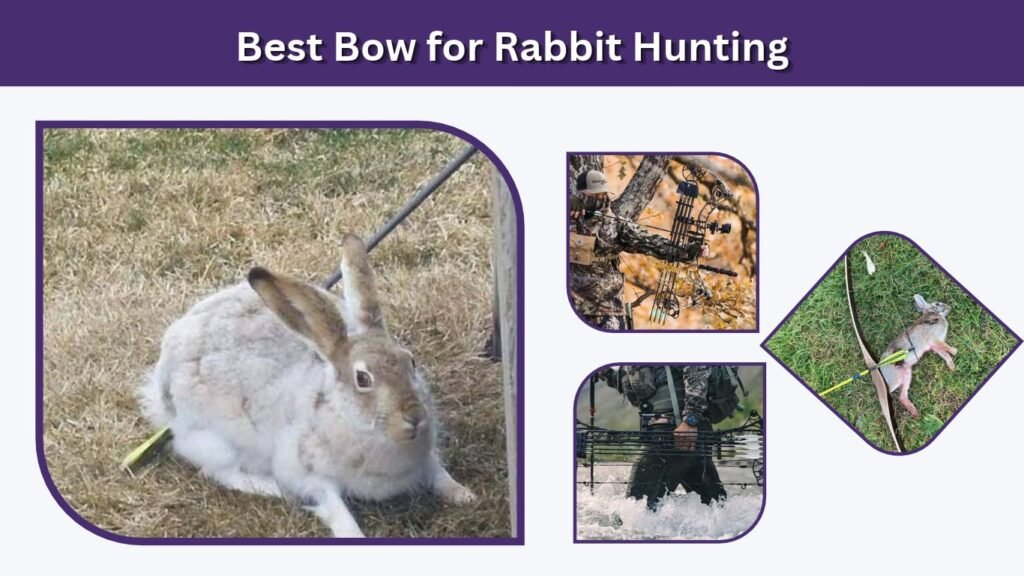
Choosing the best bow for rabbit hunting depends on the hunter’s experience, shooting ability, and personal preferences. Some hunters prefer traditional recurve bows because they are lightweight and straightforward. Others choose compound bows for their adjustable features and mechanical advantages. Both can be effective when properly fitted and used within the hunter’s abilities.
Compound Bow for Rabbit Hunting
A compound bow uses a system of cams and cables to make drawing and holding the bow more manageable.
Its let-off reduces the holding weight at full draw, allowing hunters additional time to aim.
Compound bows also commonly support sights, arrow rests, and release aids, which may help improve consistency.
They are especially useful for hunters already familiar with modern archery equipment.
However, compound bows generally require more adjustment and maintenance than traditional bows.
Recurve Bow for Rabbit Hunting
A recurve bow offers a simpler, more traditional approach to rabbit hunting.
Unlike a compound bow, it does not use cams or cables. The archer holds the full draw weight while aiming.
Recurve bows are often lighter and easier to carry through dense vegetation.
However, they demand consistent shooting form and practice, particularly when aiming at small targets.
Beginners should select a draw weight they can comfortably control rather than choosing an unnecessarily powerful bow.
Compound Bow vs. Recurve Bow
| Feature | Compound Bow | Recurve Bow |
| Drawing effort | Reduced holding weight at full draw | Full draw weight must be held |
| Accuracy | Benefits from sights and consistent setup | Depends heavily on shooting technique |
| Weight | Generally heavier | Often lighter |
| Maintenance | More mechanical components | Simpler construction |
| Best suited for | Modern archery enthusiasts | Traditional archery enthusiasts |
Neither design guarantees better results. A properly fitted bow and consistent shooting ability are more important than the bow category.
Best Arrows for Rabbit Hunting
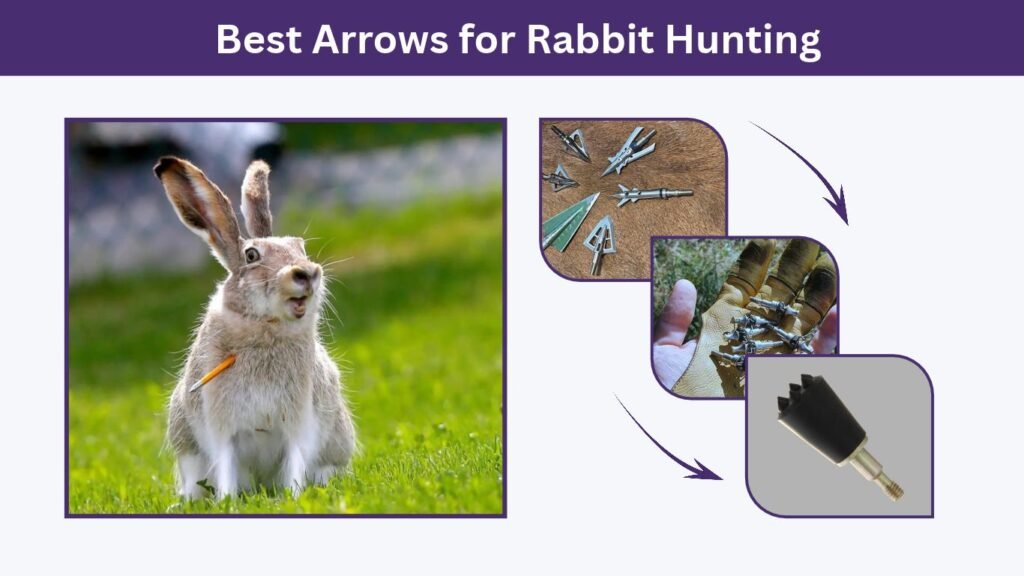
Selecting suitable arrows is just as important as choosing the bow. Because rabbits are small animals often found near dense vegetation, hunters need arrows that match their equipment and are appropriate for legal small-game hunting. Arrow materials, shaft stiffness, point design, and overall compatibility can influence shooting accuracy and performance.
Types of Arrow Points
Several arrow-point designs are commonly associated with small-game archery.
1. Blunt Points
Blunt points have wider, flattened striking surfaces. They are commonly used for small animals, including rabbits and squirrels, where permitted by hunting regulations.
2. Judo Points
Judo-style points include small wire arms designed to reduce the chance of arrows disappearing into grass or vegetation. They are commonly associated with small-game hunting and outdoor practice.
3. Broadheads
Broadheads have cutting edges and are used in various forms of bowhunting. Their legality and suitability for rabbits depend on local regulations, equipment, and hunting conditions.
Hunters should choose equipment specifically approved for the intended game and practice with the same arrow configuration before hunting.
Choosing the Right Arrow Weight
Arrow weight must be compatible with the bow’s draw weight, draw length, and manufacturer specifications.
Arrows that are improperly matched can perform unpredictably and may damage equipment or cause injuries.
There is no universal minimum bow draw weight for rabbit hunting. Requirements vary by jurisdiction, and some places have no specific minimum for small-game archery.
The most important consideration is choosing equipment that the hunter can operate accurately, safely, and humanely.
How to Hunt Rabbits With a Bow
Successful rabbit bowhunting requires understanding where rabbits spend their time and how they respond to approaching hunters. Rabbits are cautious animals that frequently remain close to protective cover. Hunters generally need to move quietly, observe their surroundings, and wait for suitable opportunities rather than attempting difficult shots at fast-moving animals.
Step 1: Find Suitable Rabbit Habitat
Rabbits prefer areas offering accessible food and places to hide from predators.
Common locations include:
- Thick brush piles and shrubs
- Grassy fields and meadows
- Woodland edges
- Hedgerows and fence lines
- Overgrown agricultural land
- Areas with fallen branches and dense vegetation
Look for droppings, tracks, feeding signs, and narrow trails through vegetation.
Cottontail rabbits frequently use thick cover, while jackrabbits are more commonly associated with relatively open habitats.
Step 2: Move Slowly and Observe
Moving slowly through rabbit habitat can help reduce disturbances.
Rabbits often remain motionless when they detect danger, relying on their surroundings for protection.
Hunters should pause occasionally and carefully scan vegetation for movement.
Avoid unnecessary noise and sudden movements, especially around feeding areas.
Early mornings and late afternoons can provide useful opportunities because rabbits are often more active around these times.
Step 3: Wait for a Safe Shooting Opportunity
Rabbit bowhunting requires patience because a moving rabbit can be difficult to hit accurately.
A stationary rabbit at a manageable distance generally offers a more controlled opportunity than one moving rapidly through vegetation.
Hunters should never release an arrow unless they can clearly identify the animal and confirm that the background is safe.
If the shot is uncertain or an animal is partly concealed, the responsible choice is to wait or pass up the opportunity.
Where and When to Bow Hunt Rabbits
Rabbit hunting locations and seasonal conditions influence how frequently hunters encounter animals. Habitat quality, weather, and surrounding vegetation can affect rabbit activity throughout the day. While cottontails are commonly found near dense protective cover, jackrabbits often occupy more open landscapes where their speed helps them escape predators.
Best Locations for Cottontail Rabbits
Cottontail rabbits commonly inhabit grasslands, brushy fields, and woodland borders.
Areas where thick vegetation meets open feeding ground can be particularly productive.
Brush piles and fallen branches provide protection, making them important places to investigate while scouting.
For bowhunters, open spaces near protective cover may provide better visibility than extremely dense thickets.
Best Weather for Rabbit Hunting
Cool, dry, or moderately damp weather can provide comfortable conditions for outdoor hunting.
Early morning and late afternoon are often productive because rabbits may become more active as temperatures change.
However, rabbit movement is influenced by predators, food availability, and local habitat conditions.
Heavy rain and strong winds can make observing small animals more difficult.
Always check the weather forecast and legal shooting hours before leaving.
Rabbit Bow Hunting Tips for Beginners
Beginners often find rabbit bowhunting difficult because small targets require consistent shooting accuracy. Proper preparation can improve confidence and reduce mistakes. Learning the basics of archery, studying rabbit behavior, and practicing in controlled environments are essential before attempting a hunt.
Helpful beginner tips include:
- Practice regularly: Develop consistent accuracy using appropriate archery targets.
- Start with manageable equipment: Choose a bow that fits your strength and experience.
- Learn rabbit behavior: Understand where rabbits feed, rest, and seek protection.
- Wear suitable clothing: Choose comfortable outdoor clothing that meets visibility requirements.
- Check arrow compatibility: Inspect arrows and equipment before every outing.
- Be patient: Avoid rushed shots or attempting to hit fast-moving rabbits.
- Respect hunting regulations: Confirm that your equipment and location are legal.
Attending an archery course or practicing with an experienced instructor can also help beginners develop sound shooting techniques.
Common Mistakes When Bow Hunting Rabbits
Rabbit bowhunting requires preparation, and some common errors can make the experience more difficult or unsafe. Many beginners underestimate the importance of practice, proper equipment selection, and understanding rabbit behavior. Recognizing these issues early can help hunters develop more responsible habits.
Common mistakes include:
- Using a bow with excessive draw weight
- Attempting shots beyond practiced distances
- Failing to inspect arrows before hunting
- Moving too quickly through rabbit habitat
- Choosing unsuitable hunting locations
- Ignoring weather conditions
- Shooting without a clear background
A missed shot should never encourage a hunter to rush another attempt. Patience and restraint are essential parts of responsible bowhunting.
Essential Safety Rules for Rabbit Bowhunting
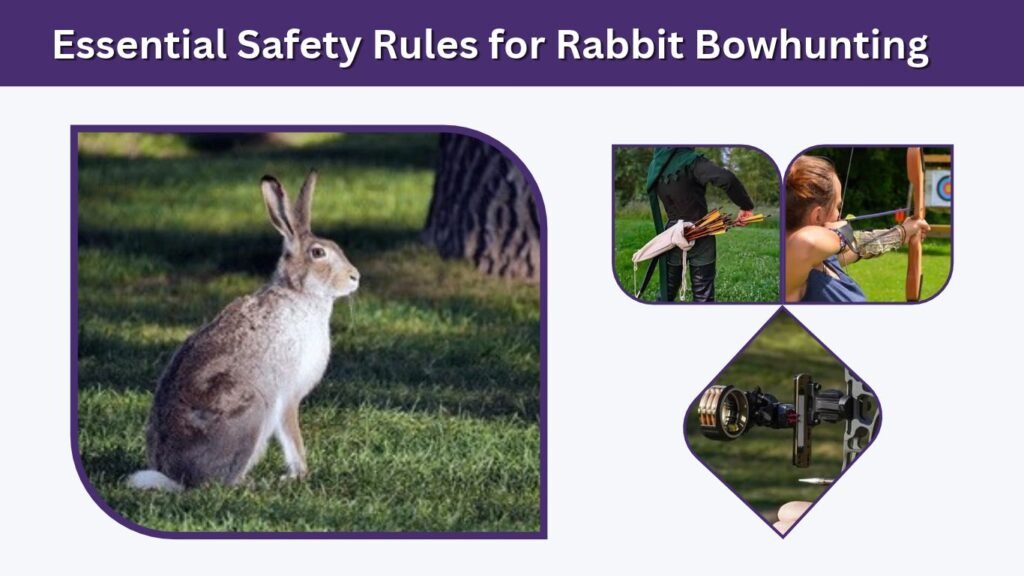
Safety should always take priority when hunting rabbits with a bow. Arrows can travel beyond their intended targets and remain dangerous even after striking vegetation or the ground. Hunters must understand their equipment, maintain awareness of other people, and follow established archery safety rules throughout the outing.
Important safety practices include:
- Keep arrows in a protective quiver when not in use.
- Never point a drawn bow toward another person.
- Confirm what lies beyond the intended target.
- Avoid shooting toward roads, buildings, or livestock.
- Inspect bowstrings, limbs, and arrows regularly.
- Never release a bowstring without an arrow.
- Follow local hunter-orange clothing requirements.
Hunters should also make reasonable efforts to locate and recover wounded game promptly, as required by law and ethical hunting principles.
FAQs
Is Rabbit Hunting With a Bow Difficult?
Yes, rabbit bowhunting can be challenging, especially for beginners. Rabbits are relatively small, move quickly, and often remain close to protective vegetation. Consistent practice, suitable equipment, and patience improve the experience. Hunters should only attempt shots they are confident they can make accurately and humanely.
Can You Hunt Rabbits With a Compound Bow?
Yes, compound bows can be used for rabbit hunting in jurisdictions where they are legal. Their let-off and adjustable accessories may help some hunters maintain consistent shooting form. However, successful rabbit hunting still depends on proper training, compatible arrows, and understanding local hunting regulations.
Can You Hunt Rabbits With a Recurve Bow?
Yes, recurve bows are suitable for rabbit hunting where permitted by law. Their simple design and relatively light weight make them appealing to traditional archery enthusiasts. Because they lack the mechanical let-off of compound bows, recurve bows require consistent technique and sufficient practice.
What Draw Weight Is Best for Rabbit Hunting?
There is no single draw weight that is ideal for every rabbit hunter. The appropriate weight depends on the archer’s strength, equipment, arrow selection, and applicable regulations. Beginners should prioritize a manageable bow they can shoot accurately rather than selecting unnecessarily high draw weight.
Can You Bow Hunt Rabbits at Night?
Nighttime rabbit bowhunting depends entirely on local hunting laws. Some jurisdictions allow nighttime rabbit hunting under specific conditions, while others restrict hunting to daylight hours. Rules for artificial lighting and night-vision equipment may also apply. Always verify legal hunting hours before planning a nighttime outing.
