
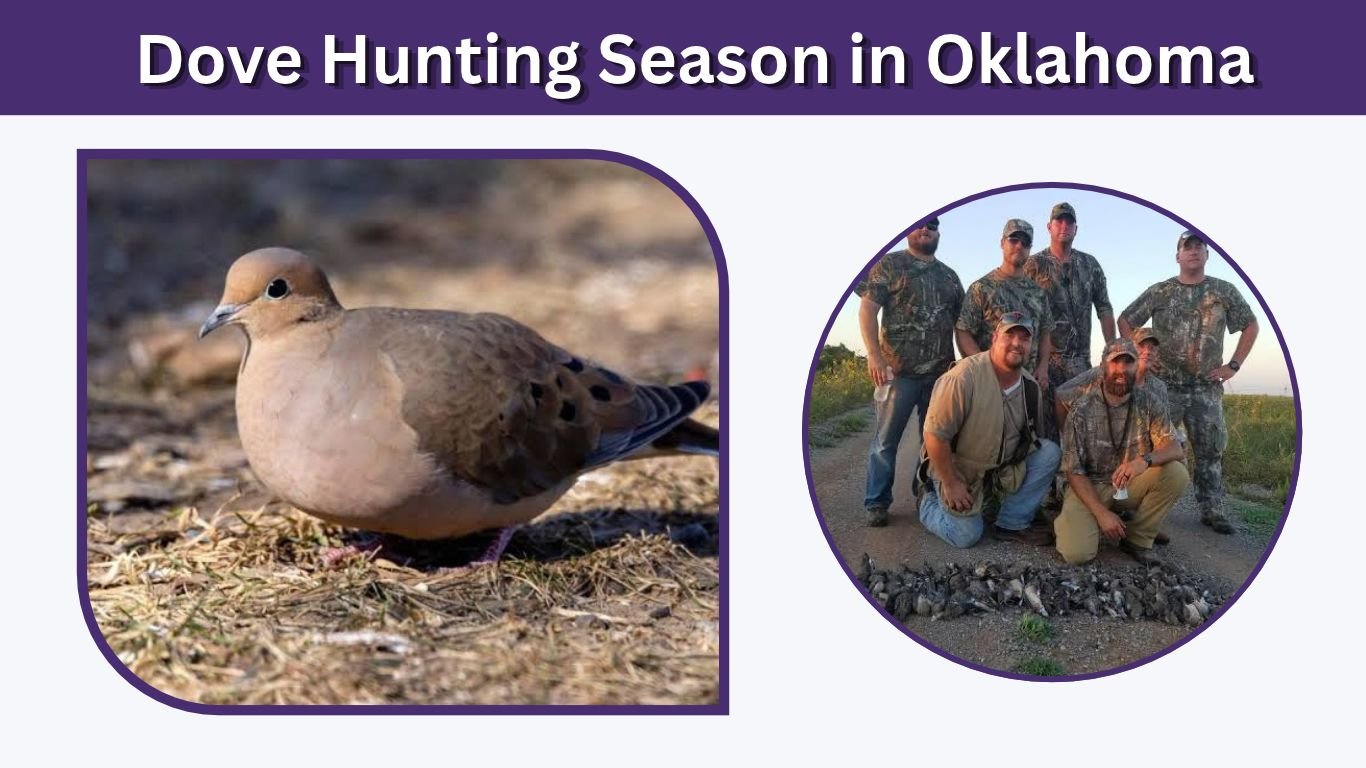
Dove hunting in Oklahoma is a popular outdoor tradition that attracts hunters every fall. The state offers excellent opportunities to hunt mourning doves, white-winged doves, and Eurasian collared doves across agricultural fields, grasslands, and public hunting areas. Oklahoma’s dove hunting season typically begins in September, providing opportunities for both experienced hunters and beginners. However, hunters must understand the official season dates, daily bag limits, license requirements, and hunting regulations before heading into the field. This guide covers the 2026 Oklahoma dove hunting season, including the best hunting locations, public land opportunities, legal shooting hours, and practical tips for a successful hunt.
Oklahoma Dove Hunting Season Dates for 2026
The Oklahoma Department of Wildlife Conservation (ODWC) establishes dove hunting seasons according to state and federal migratory bird regulations.
For 2026, Oklahoma has two statewide dove hunting periods.
| Hunting Season | Opening Date | Closing Date |
| Early Dove Season | September 1, 2026 | October 31, 2026 |
| Late Dove Season | December 1, 2026 | December 29, 2026 |
These dates apply statewide, although certain public hunting areas may have additional restrictions or shorter hunting periods.
Early Dove Hunting Season
The early season begins September 1, traditionally one of Oklahoma’s most anticipated hunting days.
During September, mourning doves frequently gather near harvested grain fields, sunflower plots, and watering locations.
Early-season hunting can be particularly productive because birds often follow predictable feeding and watering patterns.
However, extremely hot weather may affect their movement throughout the day.
Late Dove Hunting Season
Oklahoma’s second dove hunting period begins December 1 and continues through December 29.
During this period, hunting opportunities depend heavily on weather conditions and bird migration.
Cold fronts may push some mourning doves farther south, while other birds remain in Oklahoma throughout winter.
Hunters should concentrate on areas with available food, suitable shelter, and accessible water.
Oklahoma Dove Hunting Bag Limits
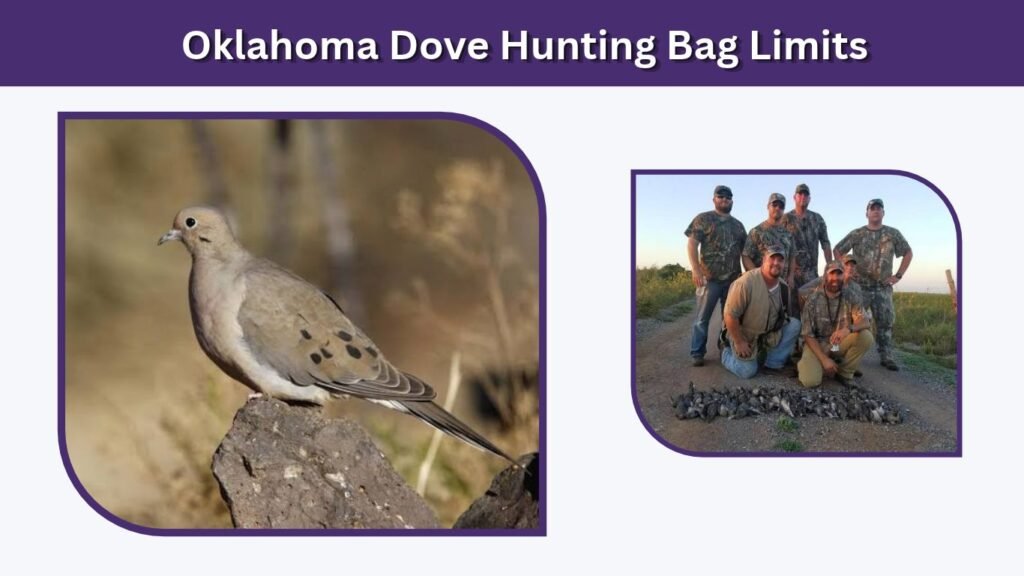
Oklahoma establishes daily bag limits to help maintain sustainable dove populations.
For the 2026 season, the standard daily dove hunting limit is 15 birds.
| Regulation | Limit |
| Daily Bag Limit | 15 doves |
| Possession After One Hunting Day | 15 doves |
| Possession After Two Hunting Days | 30 doves |
| Possession After Three Hunting Days | 45 doves |
Which Dove Species Count Toward the Limit?
Oklahoma’s combined daily bag limit includes:
- Mourning doves
- White-winged doves
- Fully dressed Eurasian collared doves
However, Eurasian collared doves have a special exception.
There is no daily bag limit for Eurasian collared doves when the head or one fully feathered wing remains naturally attached to each bird’s carcass during transportation to its final destination.
Hunters should identify species carefully before shooting and understand how the identification requirements affect possession limits.
Understanding Possession Limits
Possession limits control how many harvested birds a hunter may legally possess after multiple hunting days.
The standard limit increases from 15 birds after one hunting day to 30 after two days and 45 after three days.
However, hunters cannot exceed the daily bag limit while hunting or returning from the field.
Oklahoma Dove Hunting License Requirements
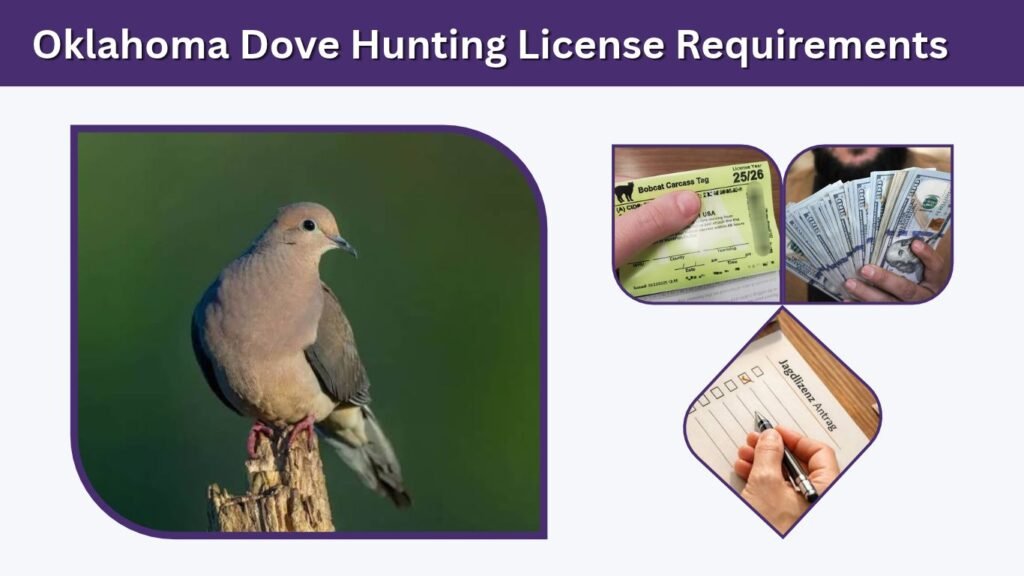
Hunters generally need a valid Oklahoma hunting license and a Harvest Information Program (HIP) permit to hunt doves legally.
Requirements vary according to residency, age, and exemptions.
Resident Dove Hunting License
Oklahoma residents aged 18 and older generally need a resident hunting license unless exempt.
The resident annual hunting license costs $36 under the current fee schedule.
Hunters between 18 and 63 generally must also obtain a HIP permit.
Some residents, including qualifying senior citizens and landowners hunting their own property, may qualify for exemptions.
Nonresident Dove Hunting License
Hunters visiting Oklahoma from another state generally need a nonresident hunting license.
Available options include:
| License Type | Listed Cost |
| Nonresident Annual Hunting License | $209 |
| Nonresident 5-Day Hunting License | $75 |
| Nonresident Game Bird Permit | $100 |
The five-day hunting license is valid for dove hunting but excludes several other hunting categories, including waterfowl.
Nonresident hunters pursuing game birds on Wildlife Management Areas must also obtain the required game bird permit.
Additional public-land access and check-in rules may apply.
Oklahoma HIP Permit
The Harvest Information Program helps wildlife agencies monitor migratory bird hunting activity.
Most dove hunters aged 18–63 must obtain a HIP permit, including qualifying lifetime hunting license holders.
The permit is free when obtained online through Oklahoma’s licensing system, although a dealer-issued permit may carry a $3 charge.
A federal duck stamp is not required solely for dove hunting.
Dove Hunting Regulations in Oklahoma
Oklahoma dove hunting regulations cover shooting hours, firearms, ammunition, hunting methods, and wildlife conservation requirements.
Hunters must follow statewide regulations as well as any additional restrictions established for specific hunting areas.
Legal Dove Hunting Hours
The standard legal dove hunting hours in Oklahoma begin 30 minutes before official sunrise and end at official sunset.
These hours may differ on certain public properties.
Hunters should calculate the correct sunrise and sunset times for their hunting location and date.
Shotgun and Ammunition Regulations
Shotguns used for dove hunting must follow federal migratory game bird restrictions.
Important requirements include:
- Shotguns cannot be larger than 10-gauge.
- Shotguns must hold no more than three shells in total.
- Hunters must follow applicable ammunition restrictions.
- Rifles and pistols are not permitted for taking migratory game birds.
A shotgun holding more than three shells must be properly plugged before hunting.
Baiting Restrictions
Hunting doves over illegally baited fields is prohibited.
Hunters cannot use scattered grain, feed, salt, or other prohibited attractants to lure migratory birds into shooting range.
However, hunting over agricultural fields prepared under approved normal farming practices may be legal.
Hunters should understand the distinction before hunting recently harvested or manipulated fields.
Non-Toxic Shot Requirements
Certain Oklahoma public hunting areas require federally approved non-toxic ammunition.
For example, Hackberry Flat Wildlife Management Area has restrictions on lead shot.
Hunters should review the regulations for their specific location before purchasing or using ammunition.
Best Places for Dove Hunting in Oklahoma
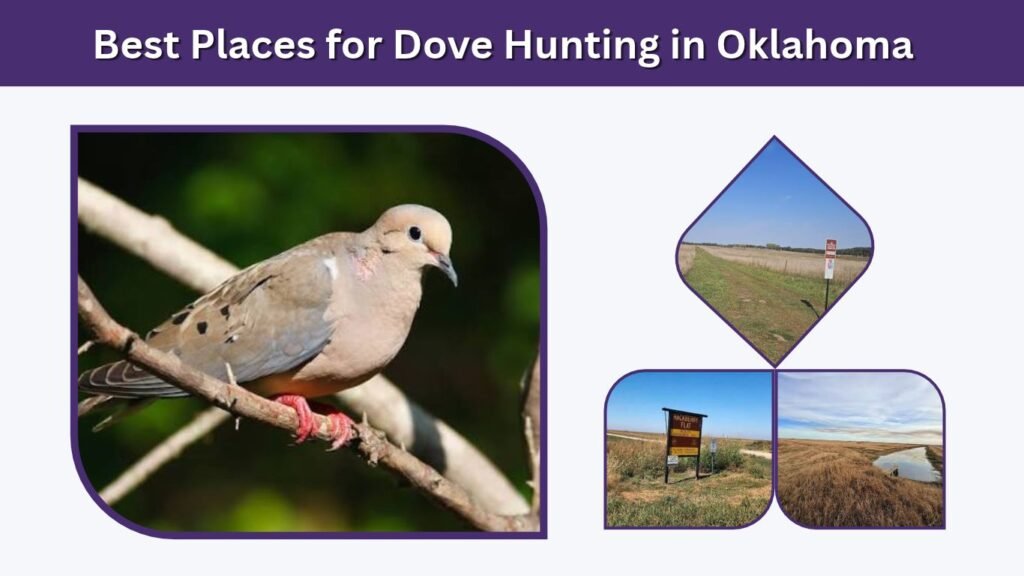
Oklahoma provides dove hunting opportunities throughout the state, but areas containing agricultural fields, grasslands, and accessible water often attract the most birds.
Public hunting areas are particularly useful for hunters who do not have access to private property.
Hackberry Flat Wildlife Management Area
Hackberry Flat WMA in southwestern Oklahoma is a well-known destination for dove hunting.
The area contains wetlands, grasslands, and agricultural habitats that support migrating birds.
Hunters often concentrate on feeding areas and established flight routes.
Its popularity can also create substantial hunting pressure during opening week.
Keystone Wildlife Management Area
Keystone WMA, near Mannford, provides dove hunting opportunities in eastern Oklahoma.
Its combination of agricultural land, shoreline habitats, and open spaces can attract mourning doves during fall migration.
Hunters should scout fields before the season and check the area’s specific regulations.
Sandy Sanders Wildlife Management Area
Sandy Sanders WMA in western Oklahoma offers extensive open-country habitat.
Doves may gather near small ponds, bare shorelines, and feeding areas.
Because the landscape is relatively open, locating regular flight paths can be particularly valuable.
Other Public Dove Hunting Locations
Additional areas worth researching include:
- Copan Wildlife Management Area
- Fort Gibson Wildlife Management Area
- Kaw Wildlife Management Area
- Beaver River Wildlife Management Area
- Cooper Wildlife Management Area
- Skiatook Wildlife Management Area
These locations provide potential dove hunting opportunities, although conditions and access restrictions vary.
Oklahoma also offers hunting access through its Oklahoma Land Access Program (OLAP).
Some OLAP properties allow public hunting on enrolled private lands, subject to specific access requirements.
Best Time to Dove Hunt in Oklahoma
Dove movement changes throughout the day according to feeding habits, weather conditions, and available water.
Hunters generally experience the most consistent activity during early morning and late afternoon.
Morning Dove Hunting
The morning period can be productive as doves leave roosting locations and travel toward feeding areas.
Recently harvested grain fields may attract substantial activity.
Hunters should arrive early enough to identify safe shooting positions before legal hunting hours begin.
Afternoon Dove Hunting
Late afternoon is another productive period.
Doves often visit ponds and other water sources before returning to roosting areas.
During hot September weather, watering locations can be particularly attractive.
Hunters should observe bird movement and choose positions along established flight paths.
Tips for Successful Dove Hunting in Oklahoma
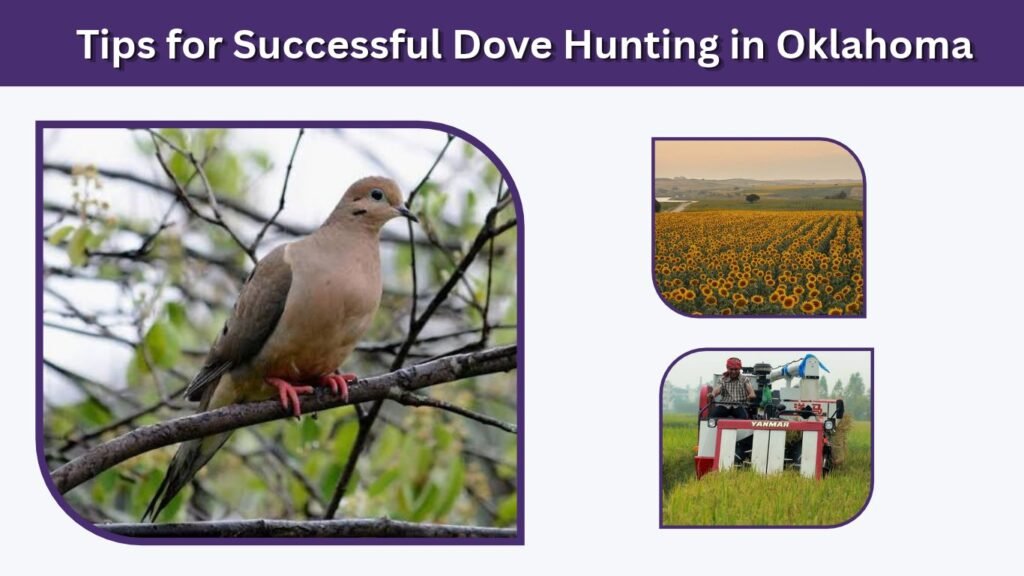
Successful dove hunting requires more than simply choosing a popular hunting location.
Understanding the birds’ behavior and preparing properly can make a considerable difference.
Scout Before Hunting
Visit potential hunting locations before your planned trip.
Look for:
- Recently harvested agricultural fields
- Sunflower and grain fields
- Small ponds and watering areas
- Open ground with scattered seeds
- Regular dove flight paths
Observing where birds feed and travel can help identify productive hunting positions.
Choose Appropriate Equipment
Dove hunting does not require expensive equipment, but several items improve safety and comfort.
Useful gear includes:
- A legally configured shotgun
- Appropriate ammunition
- Shooting glasses
- Hearing protection
- Lightweight hunting chair
- Drinking water
- Insect repellent
- Cooler for harvested birds
Always follow firearm safety procedures and maintain awareness of nearby hunters.
Consider Weather Conditions
Weather influences dove migration and daily activity.
Warm temperatures may encourage predictable movement around feeding and watering locations.
Strong cold fronts can move migrating doves out of an area, sometimes changing hunting conditions rapidly.
Checking recent bird activity is often more useful than relying entirely on historical hunting reports.
FAQs
1. When Does Dove Hunting Season Start in Oklahoma?
The 2026 Oklahoma dove hunting season began September 1. The early season ended October 31, while the second hunting period runs from December 1 through December 29, 2026.
2. What Is the Daily Dove Hunting Limit in Oklahoma?
The standard daily bag limit is 15 doves in any combination of mourning doves, white-winged doves, and fully dressed Eurasian collared doves. A special unlimited-harvest exception applies to properly identifiable Eurasian collared doves.
3. Can You Hunt Doves on Public Land in Oklahoma?
Yes. Oklahoma offers dove hunting on numerous Wildlife Management Areas and qualifying OLAP properties. Hunters must follow area-specific seasons, access rules, permit requirements, and ammunition restrictions.
4. Do You Need a License to Hunt Doves in Oklahoma?
Most adult hunters need a valid Oklahoma hunting license and HIP permit. Nonresident hunters may need an additional game bird permit when hunting on WMAs. Certain age-based and landowner exemptions apply.
5. What Is the Best Month for Dove Hunting in Oklahoma?
September is generally one of the most popular months because the season opens while mourning doves are actively feeding around agricultural fields. December also offers opportunities, although bird numbers and hunting success depend more heavily on migration and weather conditions.
