
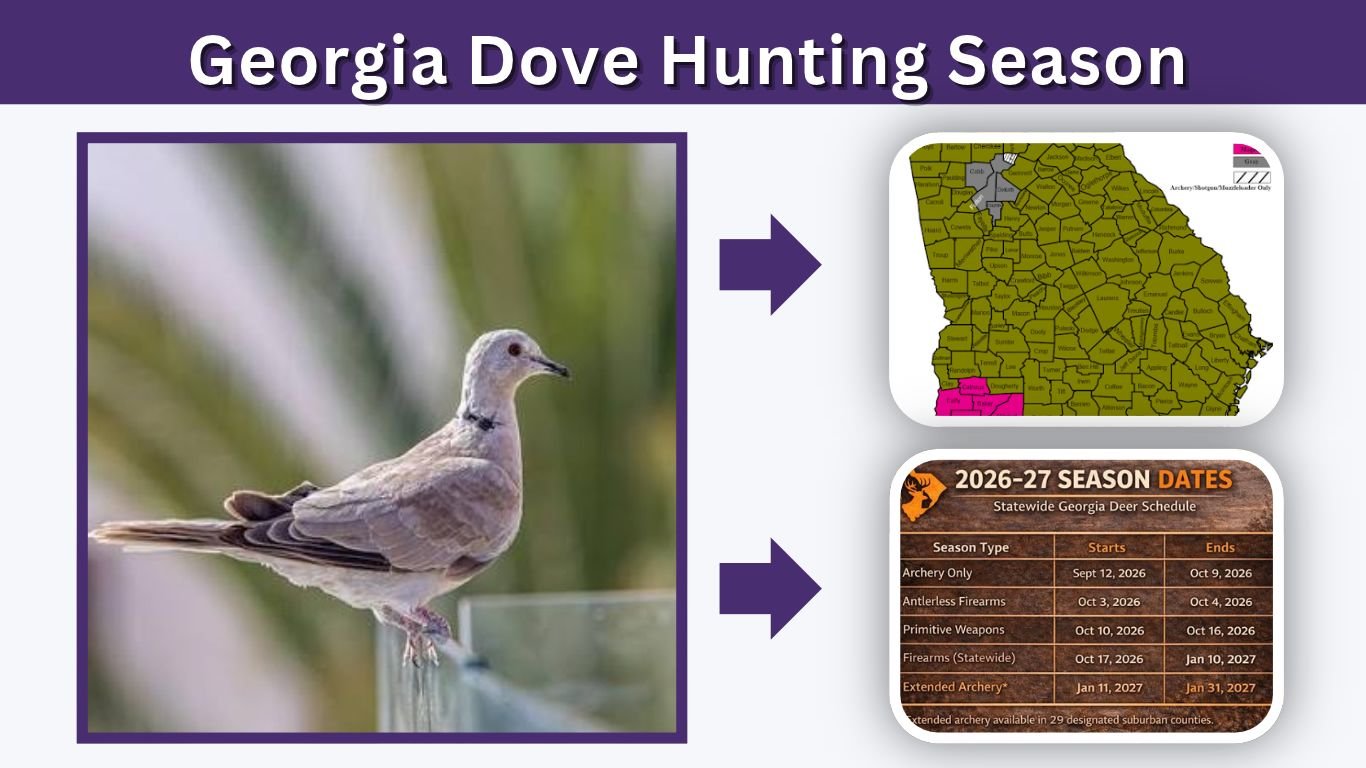
Dove hunting in Georgia is a popular outdoor tradition that attracts thousands of hunters each year. From agricultural fields in South Georgia to managed public hunting areas in the northern part of the state, there are plenty of opportunities to pursue mourning doves. However, hunters must understand the official season dates, licensing requirements, daily bag limits, and hunting regulations before heading into the field. This guide covers the Georgia dove hunting season for 2026–2027, including hunting locations, public and private dove hunts, license costs, and practical hunting tips.
Georgia Dove Hunting Season Dates 2026–2027
The Georgia dove hunting season is divided into three periods, giving hunters opportunities during early fall, late fall, and winter. The Georgia Department of Natural Resources (DNR) establishes the official dates and regulations. Although the statewide season dates apply to eligible private lands, Wildlife Management Areas (WMAs) and other public properties may have different hunting schedules.
| Hunting Period | Opening Date | Closing Date |
| Early Dove Season | September 5, 2026 | October 11, 2026 |
| Second Dove Season | November 21, 2026 | November 29, 2026 |
| Late Dove Season | December 19, 2026 | January 31, 2027 |
Early Dove Hunting Season
Georgia’s early dove season begins September 5, 2026, and ends October 11, 2026.
This period is particularly popular because resident doves and migrating birds may gather around agricultural fields. Sunflower plots, harvested grain fields, and watering areas can provide productive hunting opportunities.
Second Dove Hunting Season
The second hunting period runs from November 21 through November 29, 2026.
During this period, hunters may encounter migrating mourning doves moving through Georgia. Bird concentrations depend on weather patterns, food availability, and local habitat conditions.
Late Dove Hunting Season
The late season begins December 19, 2026, and continues through January 31, 2027.
Winter dove hunting often requires more scouting because birds may concentrate around dependable food sources. Agricultural fields with available seeds, sheltered feeding areas, and established flight routes are worth investigating.
Georgia Dove Hunting License Requirements and Costs
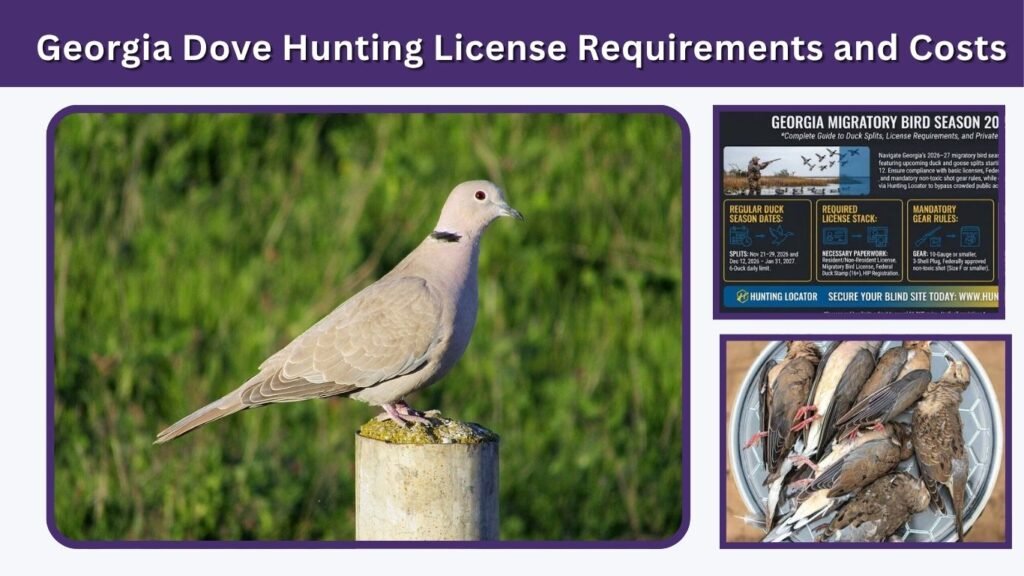
Anyone planning to hunt doves in Georgia should understand the state’s licensing requirements. Hunters ages 16 and older generally need a valid Georgia hunting license and a Georgia Waterfowl and Migratory Bird License. However, certain landowners and holders of qualifying licenses have exemptions or receive the migratory bird license at no additional cost.
Georgia Dove Hunting License Cost
The following table shows common hunting license options for Georgia residents and nonresidents.
| License Type | Resident Cost | Nonresident Cost |
| Annual Hunting License | $15 | $100 |
| One-Day Hunting License | $5 | $20 |
| Additional Hunting Day | $1 | $6 |
| Waterfowl and Migratory Bird License | $5 | $5 |
| Annual Hunting and Fishing Combination | $30 | $150 |
Additional transaction fees may apply.
For most adult residents, the basic annual hunting license and migratory bird license cost $20 before transaction fees. Adult nonresidents would generally pay $105 for the equivalent annual licenses.
Do You Need a Migratory Bird Stamp?
Yes. Georgia requires hunters ages 16 and older to obtain the Georgia Waterfowl and Migratory Bird License when hunting doves.
This license fulfills the state’s participation in the federal Harvest Information Program (HIP).
A federal duck stamp is not required for dove hunting alone. Hunters can purchase the necessary licenses through Georgia’s official licensing system.
Youth Dove Hunting License Requirements
Georgia hunters younger than 16 generally do not need a standard hunting license for dove hunting.
However, youth hunting on public lands must follow applicable supervision requirements. Some youth hunting opportunities are limited to specific dates or require advance applications.
Resident landowners hunting on their own property may also qualify for licensing exemptions, although the appropriate free migratory bird license is still required for eligible adults.
Georgia Dove Hunting Regulations and Bag Limits
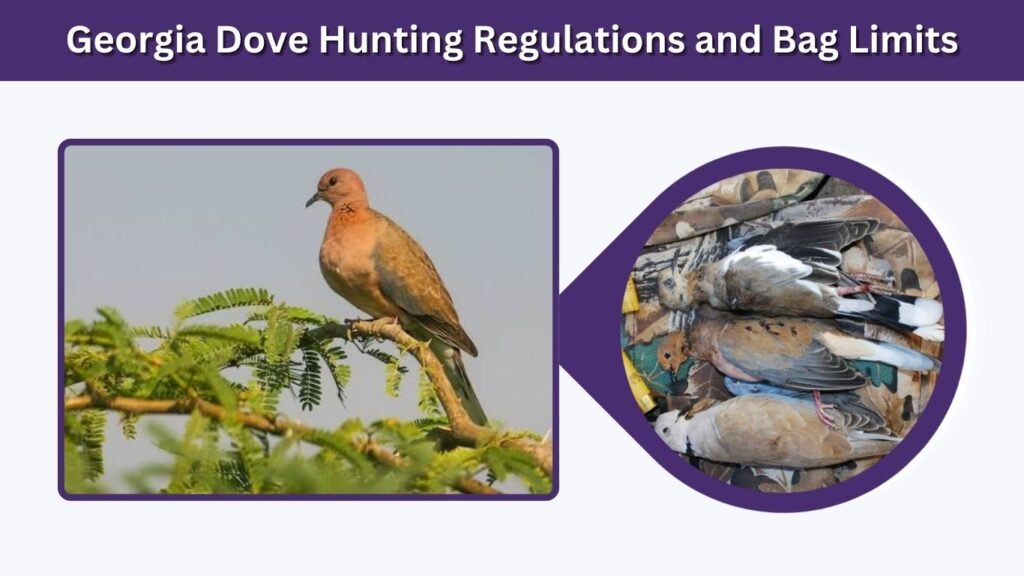
Georgia dove hunting regulations are designed to support sustainable bird populations and ensure safe hunting practices. The state follows federal migratory bird regulations alongside its own hunting laws. Hunters must comply with limits on harvested birds, legal shooting hours, approved hunting methods, and restrictions involving baited fields and public hunting areas.
Georgia Dove Hunting Bag Limits
The daily bag limit for mourning doves in Georgia is 15 birds per hunter, with a possession limit of 45 birds.
Hunters cannot exceed the daily limit, even when hunting multiple properties on the same day.
Every hunter should keep an accurate count of harvested birds and make reasonable efforts to retrieve wounded or downed doves.
Legal Dove Hunting Hours in Georgia
Statewide legal shooting hours begin 30 minutes before sunrise and end at sunset.
However, some public dove fields have shorter shooting periods or additional entry restrictions.
Hunters should check the specific WMA regulations before visiting a managed public hunting field.
Important Georgia Dove Hunting Rules
Hunters must follow several important requirements:
- Shotguns used for migratory bird hunting must hold no more than three shells.
- Hunting over illegally baited fields is prohibited.
- Hunters must follow posted public-land boundaries and restrictions.
- Private property requires appropriate hunting permission.
- Protected bird species must not be shot.
- Harvested doves must be handled and transported according to applicable regulations.
- Hunters should avoid shooting toward roads, buildings, power lines, or other dangerous areas.
Is Dove Hunting Over Bait Illegal in Georgia?
Yes. Hunting doves over illegally baited fields is prohibited under federal regulations.
However, hunting over fields managed through legitimate agricultural practices may be legal.
The distinction depends on how grain or other feed was planted, harvested, manipulated, or distributed. Hunters should review Georgia DNR’s agricultural practices guidance before hunting unfamiliar fields.
Best Places for Dove Hunting in Georgia
Georgia provides dove hunting opportunities across northern, central, and southern regions. Agricultural landscapes are particularly productive because doves frequently feed on seeds and grains. Public wildlife management areas provide additional access, while private fields and organized hunting clubs offer alternatives for hunters who prefer reserved hunting locations.
Dove Hunting in North Georgia
North Georgia offers opportunities around managed fields, open valleys, and agricultural habitats.
Some public properties worth investigating include:
- Dawson Forest Wildlife Management Area
- Berry College Wildlife Management Area
- McGraw Ford Wildlife Management Area
- Crockford-Pigeon Mountain Wildlife Management Area
These areas may offer dove hunting on designated dates, but not every field is available for general hunting.
Hunters should check each property’s regulations, quota requirements, and field conditions before traveling.
Dove Hunting in Central Georgia
Central Georgia has agricultural landscapes that can support productive dove hunting.
Clybel Wildlife Management Area is a notable destination with managed dove fields and scheduled hunting opportunities.
Other public opportunities include selected fields at Oconee WMA, River Bend WMA, and designated dove hunting properties.
Some opening-day hunts require successful quota applications, while later dates may offer different access arrangements.
Dove Hunting in South Georgia
South Georgia is a popular destination because of its extensive agricultural landscape and relatively mild hunting-season temperatures.
Fields containing harvested corn, millet, sunflowers, and other seed-producing crops can attract feeding doves.
Public hunting opportunities may be available at Alapaha WMA, Albany Nursery WMA, and additional managed properties.
Hunters should use Georgia DNR’s dove field forecast to identify available fields and review their individual hunting schedules.
Public Dove Hunts and Quota Hunts in Georgia

Georgia provides public dove hunting opportunities through Wildlife Management Areas and Voluntary Public Access properties. These programs allow hunters to access designated fields without arranging a private hunting lease. However, public hunts vary by location, and some require a quota permit or sign-in before participation.
How Georgia Quota Dove Hunts Work
A quota hunt limits participation to a specific number of selected hunters.
Interested hunters must submit an application during the designated application period. Successful applicants receive permission to participate in the selected hunt.
Georgia’s 2026 opening-day quota locations included Clybel, Dawson Forest, Di-Lane, and several other WMAs.
Public Dove Field Regulations
Public dove fields may have additional requirements beyond statewide hunting rules.
On the statewide opening day, hunters generally cannot enter managed dove fields earlier than one hour before sunrise.
Some properties also restrict hunting to specific fields or dates. Always review the individual area listing rather than assuming statewide dates apply.
Paid Dove Hunts and Hunting Clubs in Georgia
Private dove hunting clubs and commercial hunting operations provide additional opportunities for hunters seeking managed fields or organized group experiences. These operations may offer reserved hunting positions, agricultural feeding areas, and other services. Availability and pricing depend on the property, season, location, and services included.
Before booking a paid dove hunt, consider the following:
- Confirm the hunting dates and available reservations.
- Ask whether licenses and ammunition are included.
- Verify that the hunting fields comply with baiting regulations.
- Check whether guides or designated shooting positions are provided.
- Review cancellation policies and property-specific safety rules.
Private hunting arrangements can be useful for groups, but they do not remove the requirement to follow state and federal hunting laws.
Best Time of Day to Hunt Doves in Georgia
Dove activity changes throughout the day as birds travel between feeding grounds, water sources, and resting areas. Hunters often concentrate on morning and evening flight movements. However, the most productive time depends on weather conditions, available food, hunting pressure, and the location of established flight paths.
Morning Dove Hunting
Early morning hunting can be productive because doves frequently leave their roosting areas to feed.
Hunters should identify active flight routes during scouting and select a safe position before shooting hours begin.
Evening Dove Hunting
Late afternoon is another popular time for dove hunting.
Birds may travel between feeding fields, watering locations, and evening roosts.
Watch their flight direction and avoid unnecessary movement when birds approach. Remember that all shooting must end at the applicable legal closing time.
How to Hunt Doves Successfully in Georgia

Successful dove hunting requires preparation, scouting, and safe shooting practices. Although doves are relatively small birds, their fast flight and changing direction can make them challenging targets. Understanding feeding behavior, using appropriate equipment, and identifying legal hunting locations can improve the overall experience.
Georgia Dove Hunting Tips
- Scout agricultural fields: Look for feeding birds near harvested crops.
- Identify flight paths: Observe how doves travel between food, water, and roosting locations.
- Practice shooting: Clay-target practice can improve accuracy.
- Choose suitable ammunition: No. 7½ or No. 8 birdshot is commonly used.
- Wear appropriate clothing: Choose comfortable, weather-appropriate clothing and footwear.
- Bring drinking water: Early-season temperatures can remain high.
- Use eye and hearing protection: Protect yourself whenever shooting.
- Retrieve downed birds: Carefully mark their landing locations and recover them promptly.
FAQs
When Is Dove Hunting Season in Georgia?
Georgia’s 2026–2027 dove hunting season has three periods. The first runs September 5–October 11, 2026. The second runs November 21–29, 2026, and the final period extends from December 19, 2026, through January 31, 2027. Public hunting areas may follow different schedules.
How Many Doves Can You Shoot in Georgia?
Georgia allows hunters to harvest up to 15 mourning doves per day, with a possession limit of 45 birds. Hunters must follow federal migratory bird regulations and cannot exceed their daily bag limit. Every harvested bird counts toward the applicable limit.
What License Do You Need for Dove Hunting in Georgia?
Most hunters ages 16 and older need a valid Georgia hunting license and a Georgia Waterfowl and Migratory Bird License. The standard resident annual hunting license costs $15, while the migratory bird license costs $5. Certain qualifying hunters may receive exemptions or free privileges.
Where Can You Hunt Doves on Public Land in Georgia?
Georgia offers public dove hunting through Wildlife Management Areas and designated Voluntary Public Access properties. Examples include Clybel, Dawson Forest, Di-Lane, and Alapaha WMAs. Some locations require quota permits, while others offer scheduled hunts. Always check the property’s current regulations before visiting.
Can You Hunt Doves Over a Cornfield in Georgia?
Yes, dove hunting over a cornfield can be legal when the field has been planted, harvested, or managed according to permitted agricultural practices. However, placing grain or manipulating a field in ways that constitute illegal baiting is prohibited. Hunters should confirm field conditions before hunting.
