
A complete deer hunting checklist helps you prepare for a safer, more comfortable, and more organized day in the field. Whether you are planning a whitetail hunt, mule deer trip, rifle season, or archery hunt, forgetting one important item can create unnecessary problems. Your deer hunting gear checklist should cover weapons, clothing, navigation, safety equipment, field-dressing tools, food, and emergency supplies. Use this guide as a practical deer hunting packing checklist for day hunts, camp trips, and first-time hunting adventures.
Essential Deer Hunting Equipment Checklist
Every hunter’s equipment will vary according to season, hunting method, terrain, and trip length. However, several essentials belong on almost every deer hunting equipment checklist. Preparing these items before leaving home prevents last-minute mistakes and gives you enough time to inspect equipment, replace batteries, sharpen tools, and confirm that everything functions properly.
Basic Hunting Equipment
- Hunting license and required permits or tags
- Rifle, shotgun, bow, or crossbow
- Appropriate ammunition, arrows, or bolts
- Binoculars
- Rangefinder
- Hunting knife
- Headlamp or flashlight
- Spare batteries
- Backpack or day pack
- Water bottle or hydration system
- Smartphone
- Offline map, GPS, or compass
- First-aid kit
- Emergency whistle
- Fire-starting equipment
Check Your Equipment Before Leaving
Do not simply put everything into your vehicle the night before your hunt. Inspect weapons, optics, batteries, straps, zippers, knives, and electronic equipment.
A damaged sling, dead rangefinder battery, or forgotten release aid can seriously affect a hunt. Completing an equipment inspection several days beforehand gives you time to correct any problems.
Deer Hunting Clothes Checklist
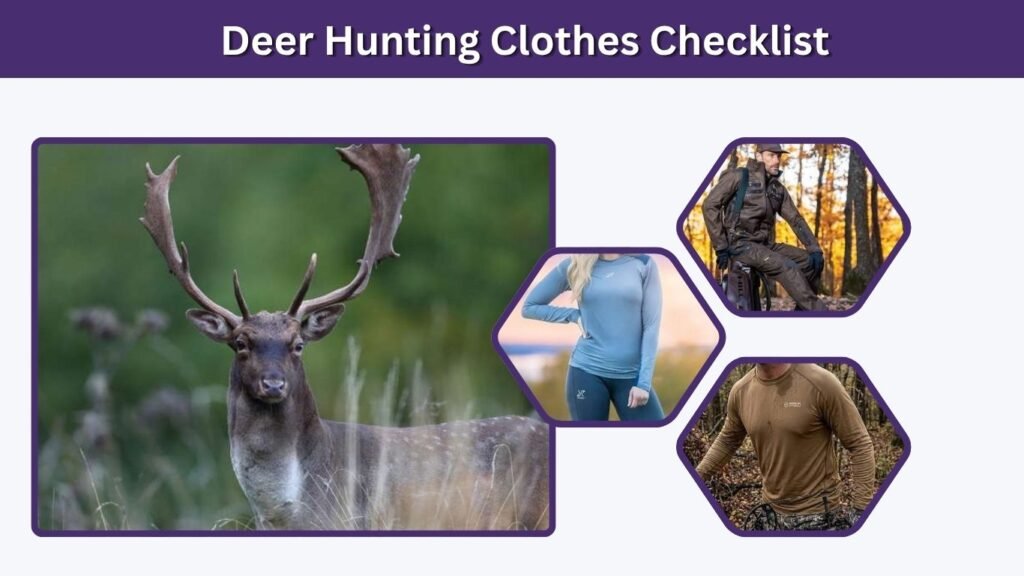
Hunting clothing should protect you from changing temperatures, moisture, vegetation, and wind while keeping movement comfortable. Layering is generally more practical than relying on one extremely heavy garment. Your deer hunting clothes checklist should change throughout the season because early-season conditions can be dramatically different from late-season cold-weather hunts.
Clothing to Pack
- Moisture-wicking base layer
- Hunting pants
- Long-sleeve hunting shirt
- Insulating mid-layer
- Weather-resistant hunting jacket
- Rain gear
- Hunting boots
- Multiple pairs of socks
- Gloves
- Warm hat or beanie
- Face covering
- Required blaze-orange clothing
- Extra clothing for changing weather
Dress for the Conditions
Overdressing during the walk to your hunting location can cause excessive sweating. Once you stop moving, that moisture can make you uncomfortable and cold.
Carry heavier layers in your pack when practical and put them on after reaching your stand or hunting location. This approach can improve comfort while also helping manage body odor.
Deer Hunting Backpack Checklist
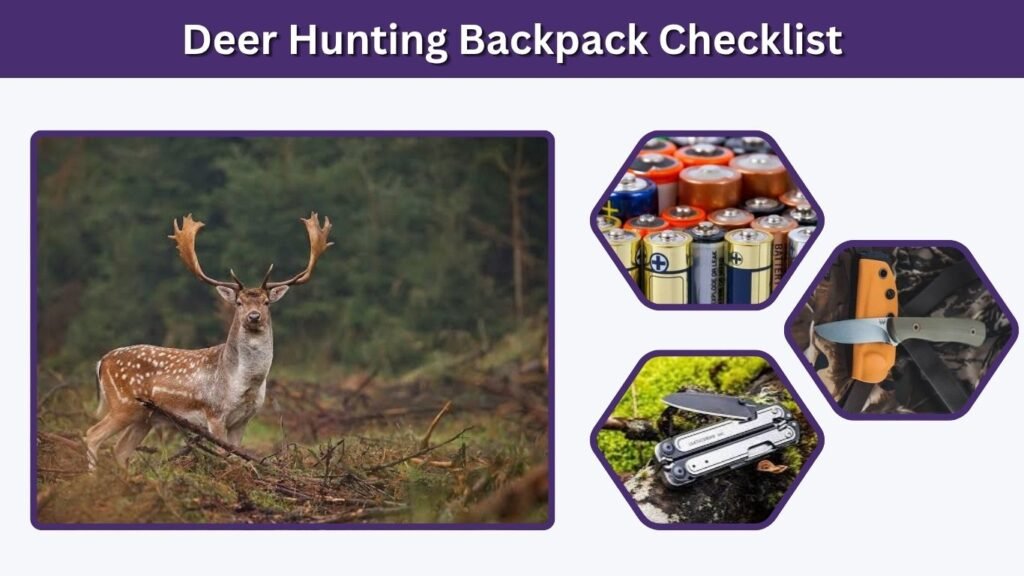
A well-organized backpack keeps frequently needed equipment within easy reach without becoming unnecessarily heavy. The ideal deer hunting backpack checklist depends on whether you are sitting in a tree stand, hunting from a blind, or covering several miles in western terrain. Pack essential safety and survival items first before adding convenience gear.
What to Carry in Your Hunting Pack
- Water
- Snacks or energy bars
- First-aid kit
- Headlamp
- Backup flashlight
- Spare batteries
- Hunting knife
- Multi-tool
- Rangefinder
- Binoculars
- GPS or compass
- Portable charger
- Extra gloves and socks
- Rain jacket
- Hand warmers
- Fire starter
- Emergency blanket
- Paracord
- Game bags
- License and identification
Keep Frequently Used Items Accessible
Organize your day pack according to when equipment will be needed. Binoculars, rangefinders, water, gloves, and flashlights should be easy to reach.
Emergency supplies can remain deeper inside your pack, but they should still have a designated location. Consistent organization makes it easier to identify missing equipment before each hunt.
Rifle Deer Hunting Checklist
A rifle deer hunting checklist should emphasize firearm preparation, ammunition, optics, and shooting support. Confirm that your rifle is properly sighted before hunting season rather than waiting until the day before your trip. Familiarity with your firearm and shooting setup is more valuable than carrying unnecessary accessories into the field.
Rifle Hunting Essentials
Confirm that your rifle is unloaded and transported according to applicable laws. Carry suitable hunting ammunition and enough cartridges for the expected hunt without bringing excessive weight.
Inspect the scope, sling, safety, and magazine before leaving home. If terrain permits, shooting sticks or another stable shooting support can be useful when an ethical shot opportunity appears.
Practice Before the Hunt
Spend time practicing from realistic hunting positions instead of shooting exclusively from a bench.
Standing, kneeling, seated, and supported shooting positions can feel considerably different in the field. Knowing your comfortable shooting distance helps you recognize which shot opportunities are appropriate and which should be passed.
Archery Deer Hunting Checklist
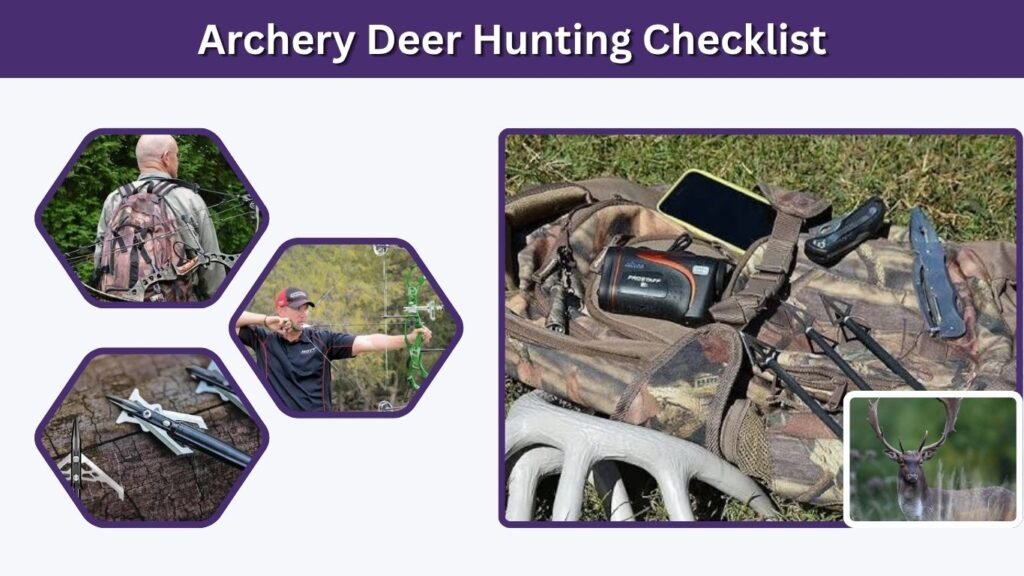
Archery hunters usually need several specialized items that rifle hunters do not carry. Because bowhunting commonly involves closer encounters, equipment reliability becomes particularly important. Check every arrow, broadhead, string, cable, sight, and release before hunting. A small equipment problem can become significant once you are several miles from home or sitting high in a tree.
Archery and Bow Hunting Gear
- Compound bow, recurve bow, or crossbow
- Hunting arrows or bolts
- Broadheads
- Release aid
- Bow sling
- Rangefinder
- Bow hanger where permitted
- Allen wrench or bow tool kit
- Spare release aid
- String wax
- Field points for practice
- Arrow puller if needed
Inspect Your Bow Setup
Check strings and cables for unusual wear, inspect arrows for cracks, and confirm that broadheads are secure. Practice with your hunting setup before opening day.
Bowhunters should also confirm distances around their stand locations whenever possible. Knowing approximate ranges can reduce unnecessary movement when deer approach.
First-Time Deer Hunting Checklist
A first-time deer hunter should focus on essential equipment and preparation rather than trying to carry every hunting accessory available. Understanding local regulations, firearm or bow safety, deer identification, and basic field procedures is more important than owning specialized gear. Preparation with an experienced hunter can make a first hunting season significantly easier.
Learn Before Entering the Field
Review the current hunting regulations for the location where you intend to hunt. Understand season dates, legal hunting methods, tagging procedures, shooting hours, and hunter-orange requirements.
You should also know how to identify legal animals before attempting a shot. Regulations can vary significantly between jurisdictions and may change between seasons.
Practice Basic Hunting Skills
New hunters should spend time practicing shooting, navigation, equipment organization, and basic field dressing before the season begins.
Knowing how your equipment operates reduces confusion under pressure. Practice should also include identifying safe shooting directions and recognizing what lies behind the target.
Whitetail and Mule Deer Hunting Checklist
Whitetail and mule deer hunts often require different approaches. Whitetail hunters frequently use tree stands, ground blinds, or relatively stationary setups, while mule deer hunters may cover much greater distances while glassing open terrain. Your hunting checklist should reflect these differences instead of using exactly the same packing strategy for every deer species.
Whitetail Hunting Gear
Whitetail hunters may benefit from carrying a safety harness, haul rope, seat cushion, rangefinder, scent-control supplies, and compact binoculars.
Stand hunters should also prepare for long periods without movement. Warm layers, hand warmers, snacks, and a thermos can make cold-weather sits much more comfortable.
Mule Deer Hunting Gear
Mule deer hunting commonly involves more walking and glassing, making lightweight equipment especially important.
Quality binoculars, a rangefinder, comfortable boots, hydration equipment, navigation tools, trekking poles, and lightweight game bags can become valuable on longer hunts. Carefully consider backpack weight when hunting steep or remote terrain.
Deer Hunting Camp Checklist
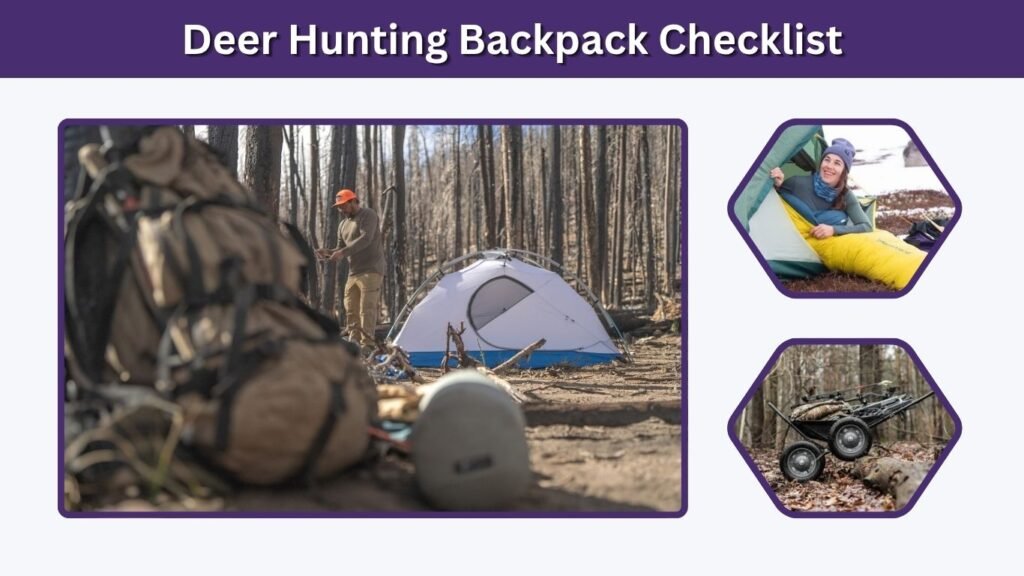
A multi-day trip requires more preparation than a simple morning hunt. Your deer hunting camp checklist should cover shelter, sleeping equipment, food preparation, lighting, hygiene, equipment maintenance, and meat care. Organizing camp supplies separately from your day hunting pack can prevent unnecessary weight while keeping essential field equipment ready each morning.
Camp Preparation
Choose shelter and sleeping equipment suitable for expected temperatures rather than average conditions. A warm sleeping bag, sleeping pad, dry clothing, and reliable shelter become especially important when hunting far from vehicles or buildings.
Prepare meals before the trip whenever possible. Simple foods requiring minimal preparation can save considerable time after a long hunting day.
Plan for Meat Care
Successful hunters should prepare for meat recovery before the hunt starts. Depending on your location and hunting style, this may include game bags, coolers, ice, rope, a game cart, or a hauling system.
Getting meat cooled and protected quickly is an important part of responsible hunting.
Final Deer Hunting Trip Preparation
Completing a hunting checklist several days before departure gives you time to solve problems rather than discovering them in the field. Equipment matters, but organization, safety knowledge, weather preparation, and familiarity with your hunting area are equally important. A short final inspection before leaving home can prevent many common hunting-day problems.
Do a Final Check
Review your license, weapon, ammunition or arrows, backpack, clothing, navigation equipment, water, and emergency supplies before departure.
Check the weather forecast and tell someone where you plan to hunt and when you expect to return, particularly when entering remote areas. A simple preparation routine can make deer hunting safer and considerably more enjoyable.
FAQs
What should be on a basic deer hunting checklist?
A basic deer hunting checklist should include your license and tags, weapon, ammunition or arrows, suitable clothing, boots, binoculars, rangefinder, hunting knife, water, food, headlamp, navigation equipment, first-aid supplies, and emergency gear. Additional equipment should be selected according to weather, terrain, hunting method, and trip duration.
What should a first-time deer hunter bring?
A first-time deer hunter should concentrate on essential equipment: the appropriate hunting weapon, ammunition or arrows, license, weather-appropriate clothing, boots, optics, knife, backpack, water, navigation equipment, and basic emergency supplies. New hunters should also review local regulations and practice shooting before entering the field.
What should I keep in my deer hunting backpack?
Your deer hunting day pack should contain water, snacks, a first-aid kit, navigation tools, flashlight, spare batteries, knife, binoculars, rangefinder, rain protection, additional clothing, emergency blanket, fire starter, portable charger, and game bags. Avoid overpacking equipment that is unlikely to be used during the hunt.
What extra gear is needed for bow hunting deer?
Bowhunters should carry properly inspected arrows, legal broadheads, a release aid when applicable, rangefinder, string wax, and a small bow tool kit. Tree-stand hunters may also require a certified safety harness and haul line. Inspect your bow setup carefully and practice with hunting equipment before the season.
How early should I prepare my deer hunting equipment?
Begin checking major hunting equipment several weeks before the season so there is enough time to repair, replace, sight in, or practice with anything necessary. Complete your actual packing checklist several days before the hunt, then perform one final inspection before leaving home to catch forgotten items.
