
A good thermal monocular can help hunters detect heat signatures, scan dark terrain, and locate animals when ordinary optics struggle. The best thermal monoculars for hunting combine clear thermal resolution, smooth refresh rates, useful detection range, long battery life, and rugged weather-resistant construction. Some models also include digital zoom, recording, smartphone connectivity, and multiple color palettes for easier viewing. In this guide, we review 9 of the best thermal monoculars for hunting, nighttime scouting, wildlife observation, and low-light outdoor use.
1. TOPDON TS004 Thermal Imaging Monocular
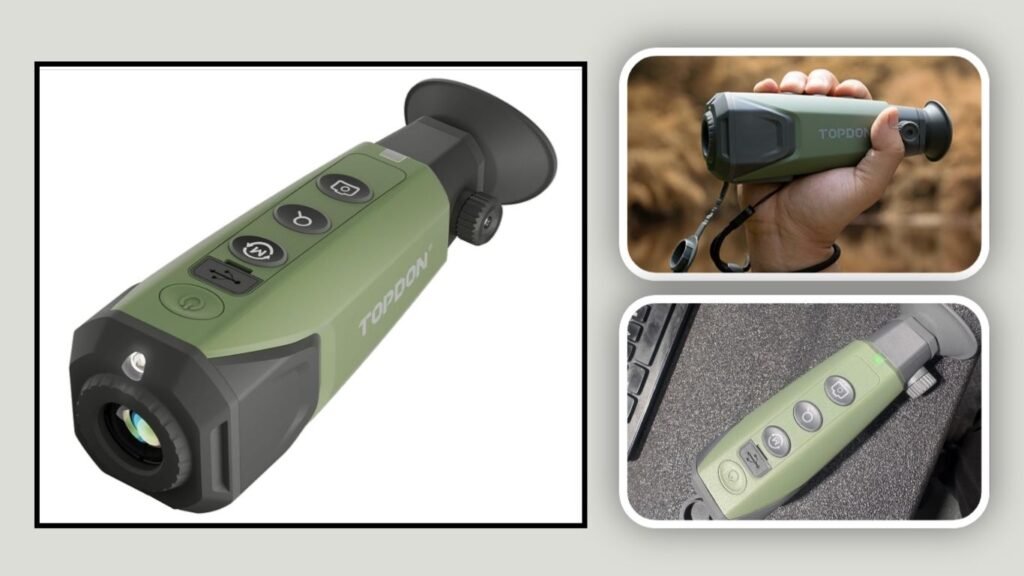
The TOPDON TS004 is a versatile thermal monocular designed for hunters who want dependable heat detection without moving into an overly bulky system. It combines a 256×192 thermal sensor with a 13mm lens, 50Hz refresh rate, and a stated detection range of up to 450 yards. Long battery life, built-in recording, wireless connectivity, and IP67 protection make it particularly well equipped for extended nighttime scouting.
Key Features
- 256×192 thermal resolution
- 13mm objective lens
- 50Hz refresh rate
- Up to 450-yard detection range
- 1x, 2x, 4x, and 8x digital zoom
- Five thermal color palettes
- 640×480 LCOS display
- 32GB built-in storage
- Up to 11-hour battery life
- IP67 weather protection
- Smartphone connectivity
Why It Works Well for Hunting
The TS004 offers a useful combination of detection distance and field portability. Its thermal sensor allows hunters to detect warm animals in complete darkness, while the 50Hz refresh rate keeps moving subjects relatively smooth on the display.
A 13mm lens provides enough reach for scanning fields, woodland edges, trails, and other hunting environments without creating an excessively narrow field of view. Multiple digital zoom settings make it easy to move from broad scanning to a closer inspection of a detected heat source.
Thermal Performance and Field Durability
TOPDON rates the TS004 for detection at up to 450 yards, although actual identification distance is shorter and will depend on target size and environmental conditions. Its five viewing palettes include White Hot, Black Hot, Red Hot, Fusion, and Bird modes, allowing users to adapt the image to different situations.
The 5000mAh battery delivers up to 11 hours of operation, while IP67 protection provides valuable resistance against rain, dust, and challenging field conditions.
Overall Hunting Value
The TOPDON TS004 stands out as a well-rounded choice for hunters who want thermal capability without sacrificing battery endurance or convenience. Recording support and 32GB of internal storage allow users to document wildlife encounters, while smartphone connectivity adds another way to view or manage footage.
Its combination of a 50Hz sensor, 450-yard detection specification, long runtime, digital zoom, and durable housing gives it a strong balance of performance and practicality for nighttime scouting and wildlife observation.
2. RIX POCKET K2 Thermal Monocular
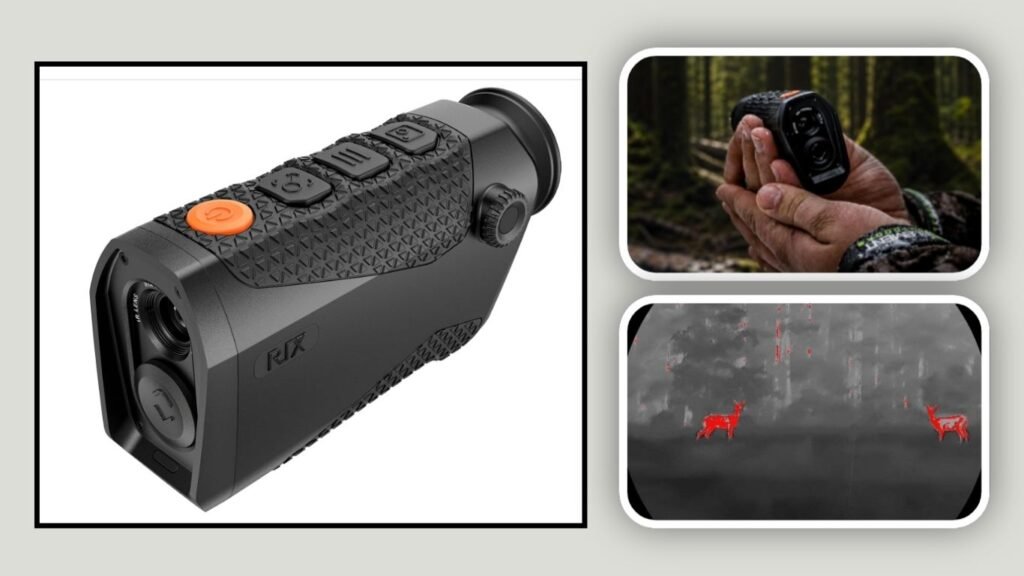
The RIX POCKET K2 focuses heavily on portability. At approximately 200 grams, it is small enough to carry in a pocket while still providing a 256×192 thermal sensor, 50Hz refresh rate, 9mm F1.0 lens, and a stated 468-meter detection range. It also includes an 800×600 OLED display, recording capability, and replaceable battery, making it especially attractive for mobile hunters.
Key Features
- 256×192 VOx thermal sensor
- 12μm pixel pitch
- NETD below 25mK
- 50Hz refresh rate
- 9mm F1.0 lens
- 1.7x base magnification
- 1–4x digital zoom
- 468m stated detection range
- 800×600 OLED display
- 32GB built-in memory
- Replaceable 18650 battery
- IP67 protection
- Approximately 200g weight
Best for Hunters Who Prioritize Portability
The POCKET K2’s strongest advantage is how little equipment it adds to a hunting loadout. At only around 200 grams and 124mm long, it can stay accessible in a jacket pocket or small pouch rather than taking up substantial pack space.
The 1.7x base magnification and relatively wide 19.4° horizontal field of view make it particularly useful for scanning. Instead of concentrating on one distant point, users can sweep larger areas for animal heat signatures.
Image Quality and Scanning Performance
A 256×192 sensor is paired with a thermal sensitivity rating below 25mK and a smooth 50Hz frame rate. These specifications support useful thermal contrast and responsive viewing when animals are moving across the scene.
The 800×600 OLED display provides a higher-resolution viewing screen than the sensor itself, while 1–4x digital zoom gives users additional flexibility after detecting a target.
Its replaceable 18650 battery is another practical field feature. Carrying a spare battery can extend use without requiring hunters to stop and recharge the entire monocular.
Overall Hunting Value
The RIX POCKET K2 is especially compelling for hunters who want thermal scanning capability in a lightweight format. Its 9mm lens favors a wider viewing area, which can be useful for woodland, field-edge, and short-to-medium-range observation.
With IP67 protection, recording capability, 32GB storage, a replaceable battery, and a compact 200g body, the K2 packs a substantial set of thermal features into a highly portable platform.
3. RIX POCKET K3 Thermal Imaging Monocular
The RIX POCKET K3 builds upon the portable K-series design with a higher-resolution 384×288 thermal sensor and a larger 15mm F1.0 objective lens. It adds Electronic Image Stabilization while remaining remarkably compact at approximately 213 grams. A stated 780-meter detection range, 50Hz refresh rate, and 800×600 OLED display make it a stronger choice for hunters wanting greater detail and longer-distance scanning.
Key Features
- 384×288 VOx thermal sensor
- 12μm pixel pitch
- Below 25mK NETD
- 50Hz refresh rate
- 15mm F1.0 objective
- 2x base magnification
- 1–4x digital zoom
- 780m stated detection range
- Electronic Image Stabilization
- 800×600 OLED display
- 32GB internal storage
- IP67 protection
- Replaceable 18650 battery
- Approximately 213g weight
Best for More Detailed Thermal Identification
Moving from 256×192 to 384×288 resolution provides significantly more thermal pixels. In practical terms, this can help reveal better shape definition and improve a hunter’s ability to examine a detected heat source before moving closer.
The 15mm lens and 2x base magnification also give the K3 more reach than the K2, making it better suited to hunters who routinely scan larger fields, agricultural areas, or open countryside.
Image Stability and Field Performance
One particularly useful feature is Electronic Image Stabilization. Higher magnification tends to make hand movement more noticeable, so stabilization can make handheld viewing easier and more comfortable.
RIX specifies a 50Hz frame rate, below-25mK thermal sensitivity, and a 17.5° × 13.1° field of view. The stated detection range reaches 780 meters under suitable conditions.
The IP67 housing, 32GB storage, image/video recording, and operating range down to -20°C further support serious outdoor use.
Overall Hunting Value
The POCKET K3 is a particularly appealing step up for hunters who want more detail than entry-level 256×192 thermal monoculars can provide while maintaining exceptional portability.
Its 384×288 sensor, EIS, 15mm lens, 50Hz refresh rate, and 780-meter detection specification form a strong technical package. At just 213 grams, it remains easy to carry for hours.
For hunters balancing thermal clarity, reach, and compactness, the K3 offers one of the more convincing combinations among these nine monoculars.
4. GOYOJO G210 256×192 Thermal Monocular
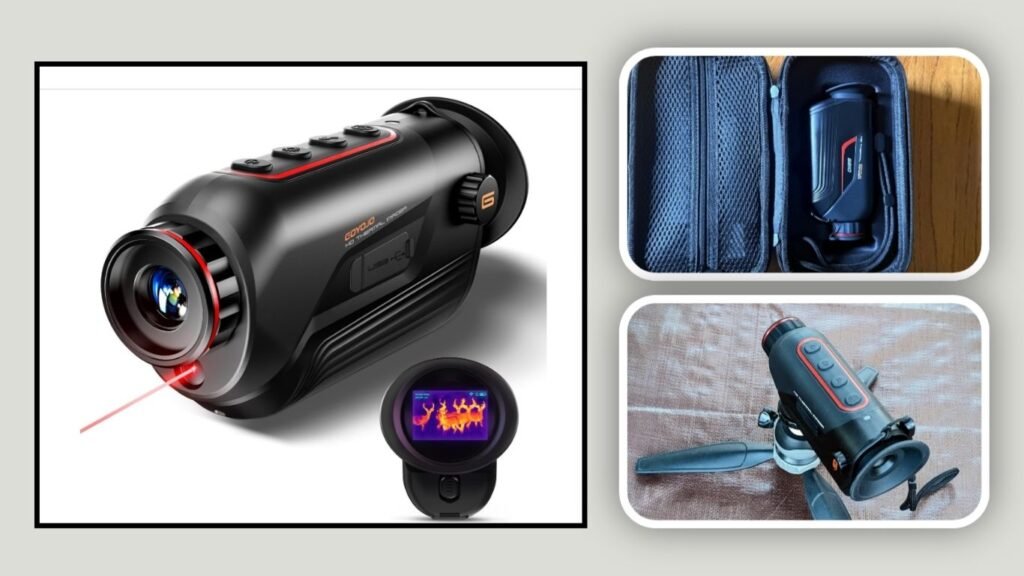
The GOYOJO G210 is positioned as an accessible thermal monocular for hunters who want useful nighttime detection and recording features without an overly complicated design. It uses a 256×192 thermal sensor with a 10mm lens, 12μm pixel pitch, six viewing palettes, digital zoom, and an 800×600 OLED display. Built-in storage and an IP65-rated housing further expand its usefulness outdoors.
Key Features
- 256×192 thermal resolution
- 12μm pixel size
- 10mm objective lens
- Fixed-focus design
- 1x, 2x, and 4x digital zoom
- Six thermal color palettes
- 800×600 OLED display
- 16GB internal storage
- Photo and video recording
- Wi-Fi connectivity
- IP65 weather protection
- Removable 3200mAh battery
Best for Entry-Level Thermal Scouting
The G210 has a relatively wide 17.5° × 13.1° field of view, which works particularly well for searching rather than concentrating immediately on a very small area. That is valuable when scanning woodland edges or fields for heat signatures.
Its fixed-focus 10mm lens also simplifies operation. Hunters can spend more time scanning rather than constantly adjusting focus as different subjects enter the scene.
Six palettes—including White Hot, Black Hot, Red Hot, Rainbow, Iron Red, and Glimmer—provide different ways of distinguishing heat sources from their surroundings.
Recording and Outdoor Performance
The G210 includes 16GB of built-in storage and supports both still images and video. Wi-Fi capability can also be useful for accessing or sharing thermal footage through compatible devices.
GOYOJO lists a human detection distance of up to 944 meters under its specified test conditions, although recognition distance is much shorter at approximately 236 meters. This distinction matters because detecting a heat source is different from positively identifying exactly what it is.
Overall Hunting Value
The GOYOJO G210 offers a practical feature set centered around wide-area thermal detection, easy operation, and recording.
Its 256×192 sensor will not provide the same fine detail as higher-resolution 384-class systems, but the OLED display, six palettes, digital zoom, removable battery, Wi-Fi, and weather-resistant construction make it a versatile nighttime observation tool.
For hunters entering thermal imaging for the first time, its combination of straightforward controls and useful field features gives it considerable appeal.
5. ATN BlazeSeeker 207 Thermal Monocular
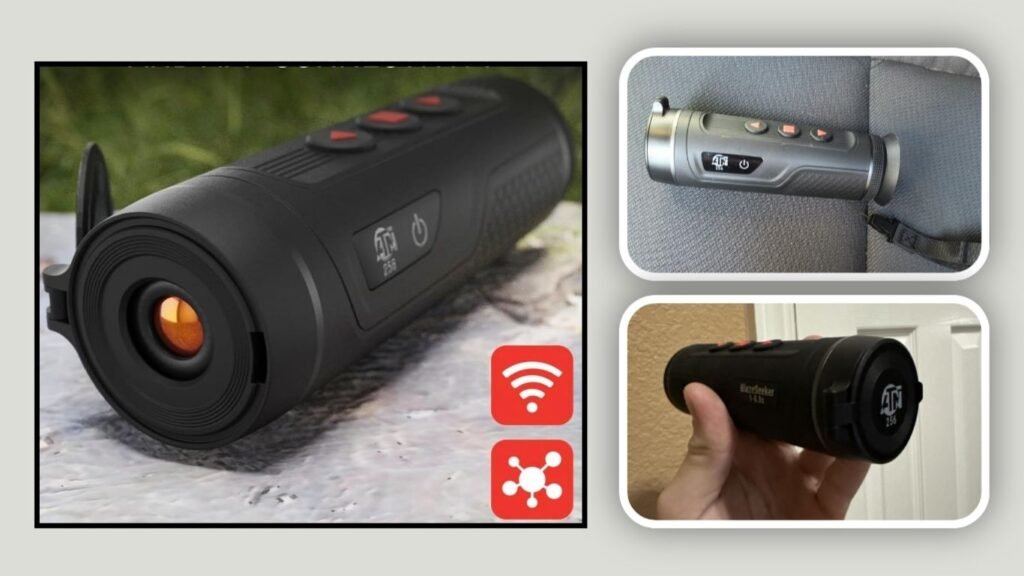
The ATN BlazeSeeker 207 combines a compact body with a 256×192 thermal sensor, 50Hz refresh rate, 7mm lens, and up to 8.8x magnification. It is designed for wide-field thermal scanning, with a 24° × 18° field of view and a stated detection range around 345 yards. Recording, Wi-Fi connectivity, multiple palettes, and IP67 protection make it a feature-rich option for hunting and nighttime observation.
Key Features
- 256×192 thermal sensor
- 12μm pixel pitch
- 50Hz refresh rate
- 7mm objective lens
- 1–8.8x magnification
- Wide 24° × 18° field of view
- 720×540 LCOS display
- Multiple thermal palettes
- Photo and video recording
- Built-in Wi-Fi
- Rechargeable battery
- IP67 weather protection
- Approximately 0.6 lb weight
Best for Wide-Area Night Scanning
A 7mm lens gives the BlazeSeeker 207 a notably wide field of view. This makes it particularly effective for scanning areas where animals may appear at unpredictable locations rather than observing one distant point.
The 50Hz sensor refresh rate also helps when tracking animals that are moving. Motion appears smoother than on low-refresh thermal devices, allowing users to follow a heat signature more naturally.
The available digital magnification provides additional flexibility after an animal or other heat source has been located.
Thermal Viewing and Smart Features
ATN equips the BlazeSeeker 207 with a 256×192 sensor using 12μm pixels and several thermal color palettes. Depending on the version, available modes include White Hot, Black Hot, Iron Red, Alarm, and additional display options.
The monocular can capture photos and videos, while built-in Wi-Fi enables smartphone interaction through ATN’s compatible app. The rechargeable battery is designed for extended field operation, and external power can also be used when necessary.
Overall Hunting Value
The BlazeSeeker 207 is best suited to hunters who prioritize fast scanning, portability, and convenient digital features. Its wide field of view makes it useful for finding animals in darkness, while the 50Hz refresh rate contributes to smoother tracking.
IP67 protection strengthens its suitability for unpredictable outdoor weather, and recording plus wireless connectivity increase its usefulness beyond simple viewing.
For hunters who want a compact thermal monocular that can quickly search broad areas while still providing zoom, recording, and smartphone functionality, the BlazeSeeker 207 delivers a well-balanced set of capabilities.
6. Pulsar Axion XQ19 Compact Thermal Monocular
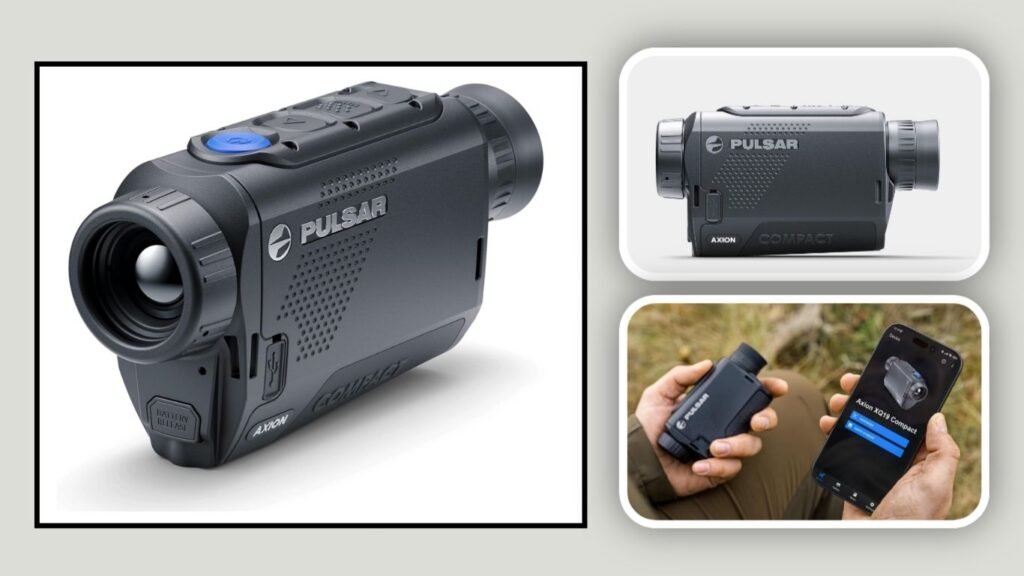
The Pulsar Axion XQ19 Compact is designed for hunters who want higher thermal resolution without carrying a large handheld optic. It combines a 384×288 sensor with a 19mm F1.0 objective, 50Hz refresh rate, and wide 19.5-degree horizontal field of view. Despite its capable thermal hardware, the unit remains compact and lightweight, making it particularly attractive for hunters who spend long periods walking, scouting, and scanning surrounding terrain.
Key Features
- 384×288 thermal sensor
- Below 25mK sensor NETD
- 50Hz refresh rate
- 19mm F1.0 objective lens
- 1.5x base magnification
- Up to 6x magnification
- 750-meter stated detection range
- 640×400 AMOLED display
- 64GB internal memory
- Photo and video recording
- Wi-Fi and Stream Vision 2 support
- IPX7 waterproof rating
- Up to 8-hour runtime
Best for Fast Scanning and Mobile Hunting
One of the Axion XQ19 Compact’s biggest advantages is its wide field of view. At 19.5 degrees horizontally, it allows hunters to examine a broad section of woodland, grassland, or field edge without continually moving the monocular from side to side.
The 1.5x base magnification also favors scanning rather than immediately narrowing the view. Once a heat source appears, digital magnification up to 6x provides a closer look.
Its 384×288 sensor gives it more thermal pixels than common 256×192 entry-level units, helping produce better definition when examining animals and surrounding terrain.
Thermal Clarity and Outdoor Durability
Pulsar pairs the sensor with an F19/1.0 lens and a 50Hz frame rate. The manufacturer lists a detection range of 750 meters and an AMOLED display resolution of 640×400.
The aluminum-alloy housing carries an IPX7 waterproof rating, while the APS3 removable battery is rated for up to eight hours of operation. Built-in 64GB storage provides generous capacity for photos and videos.
Overall Hunting Value
The Pulsar Axion XQ19 Compact makes a strong case for hunters seeking a balance of thermal detail, broad scanning capability, and portability. Its higher-resolution sensor provides a meaningful advantage over many basic thermal monoculars, while the compact body keeps it practical for regular field use.
Features such as Wi-Fi connectivity, recording, substantial storage, waterproof construction, and removable power further improve its versatility. For hunters who frequently cover ground and need to locate heat signatures quickly rather than carry a large long-range thermal unit, the XQ19 Compact is technically very well suited.
7. TESLONG TTS260 Thermal Imaging Monocular
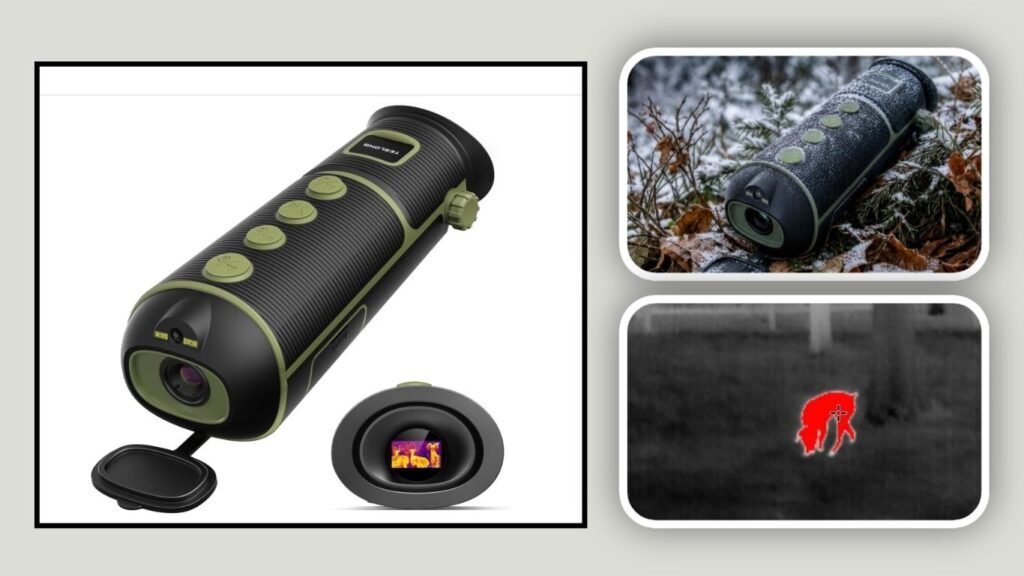
The TESLONG TTS260 is a straightforward thermal monocular aimed at hunters and outdoor users who value simple controls, long runtime, and useful heat detection. It features a 260×200 thermal sensor, 50Hz refresh rate, digital magnification up to 4x, five color palettes, and a rechargeable 4800mAh battery. Its compact format and included storage make it useful for nighttime scouting, wildlife observation, and general outdoor exploration.
Key Features
- 260×200 infrared sensor
- 640×480 image resolution
- 50Hz refresh rate
- 1x, 2x, and 4x digital zoom
- Five thermal palettes
- Up to 1,061-yard stated detection distance
- Up to 266-yard stated recognition distance
- 4800mAh rechargeable battery
- Approximately 7–8 hours of runtime
- 16GB microSD card included
- Photo-capture capability
- USB-C charging
- Portable weather-resistant design
Best for Straightforward Nighttime Scouting
The TTS260 avoids unnecessary complexity. Its thermal image can be viewed using Black Hot, White Hot, Red Hot, Green Hot, or Iron Oxide Red modes, giving users several ways to separate an animal’s heat signature from the background.
The 50Hz refresh rate is particularly useful when tracking moving wildlife because movement appears smoother than it does on slower thermal systems.
Digital zoom up to 4x can also help users examine a detected heat source after initially finding it at wider magnification.
Detection Performance and Battery Life
TESLONG specifies a detection distance of up to 1,061 yards and recognition distance of up to 266 yards under its test conditions. Detection should not be confused with positive identification, since environmental factors and target size can substantially affect real-world results.
The 4800mAh internal battery provides approximately seven to eight hours of operation. USB-C charging makes power management relatively straightforward when traveling with a power bank.
Overall Hunting Value
The TESLONG TTS260 works particularly well for hunters who want functional thermal imaging without a complicated interface. The 260×200 sensor is modest compared with premium 384- or 640-class units, but its 50Hz refresh rate, multiple palettes, useful zoom range, and long battery endurance give it practical field capability.
The included microSD card and photo capture also make it easy to document observations. For nighttime scanning, property observation, camping, or entry-level hunting applications, the TTS260 provides a useful combination of features without becoming excessively elaborate.
8. MiLESEEY TNV10 Pro Thermal Monocular
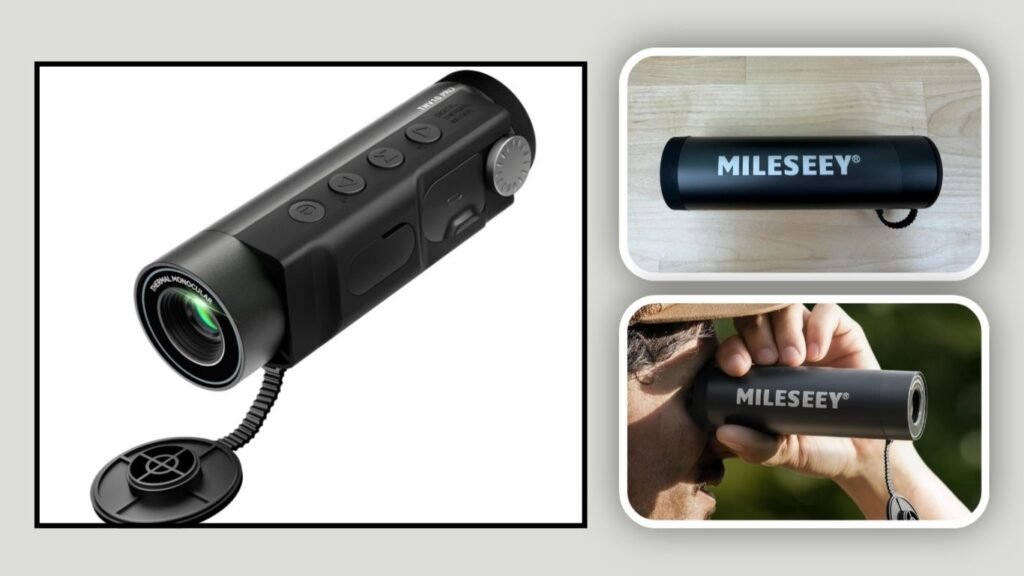
The MiLESEEY TNV10 Pro combines a 320×240 thermal sensor with a 13mm F1.0 germanium lens, 50Hz refresh rate, and an 800×600 OLED display. It is designed around mid-range observation, offering digital zoom, video recording, multiple palettes, and an especially long battery runtime. Its compact one-handed design makes it an appealing option for hunters who want stronger thermal resolution while retaining easy portability.
Key Features
- 320×240 thermal sensor
- 12μm pixel pitch
- 50Hz refresh rate
- 13mm F1.0 germanium lens
- 800×600 OLED display
- 1x, 2x, and 4x digital zoom
- Five thermal palettes
- Picture-in-Picture mode
- Hotspot tracking
- Photo and video recording
- MicroSD support up to 32GB
- USB-C and Mini HDMI connections
- Up to 15-hour listed battery life
- IP65 protection
Best for Extended Hunting Sessions
Battery life can become a major issue during an all-night scouting session, and this is where the TNV10 Pro stands out. MiLESEEY’s detailed support specifications list a 4500mAh battery with up to 15 hours of operation, reducing the likelihood that hunters will need to recharge halfway through an outing.
The 13mm lens and 13.5° × 10.1° field of view create a useful balance between scanning width and observing more distant targets.
Picture-in-Picture mode provides another useful feature by magnifying part of the image while maintaining broader situational awareness.
Image Detail and Detection Capability
The 320×240 thermal resolution gives the TNV10 Pro more sensor detail than typical 256×192 systems. MiLESEEY lists deer detection at up to approximately 1,380 yards and deer identification at approximately 345 yards under suitable conditions.
Five palettes—including White Hot, Black Hot, Red Hot, Iron, and Jungle—allow the thermal image to be adjusted for different environments.
Overall Hunting Value
The TNV10 Pro offers an attractive balance between image quality, runtime, and price-conscious thermal performance. Its 320×240 sensor provides a useful step above entry-level resolution, while the 50Hz refresh rate keeps movement responsive.
Long battery endurance is arguably its most compelling field advantage. Combined with recording capability, hotspot tracking, Picture-in-Picture, several palettes, and a compact body, it is well suited to hunters who spend long periods scanning after dark.
For users who want a capable mid-range thermal monocular without immediately stepping into premium-priced 640-class equipment, the TNV10 Pro offers a technically strong feature set.
9. AGM Taipan V2 19-320 Thermal Monocular
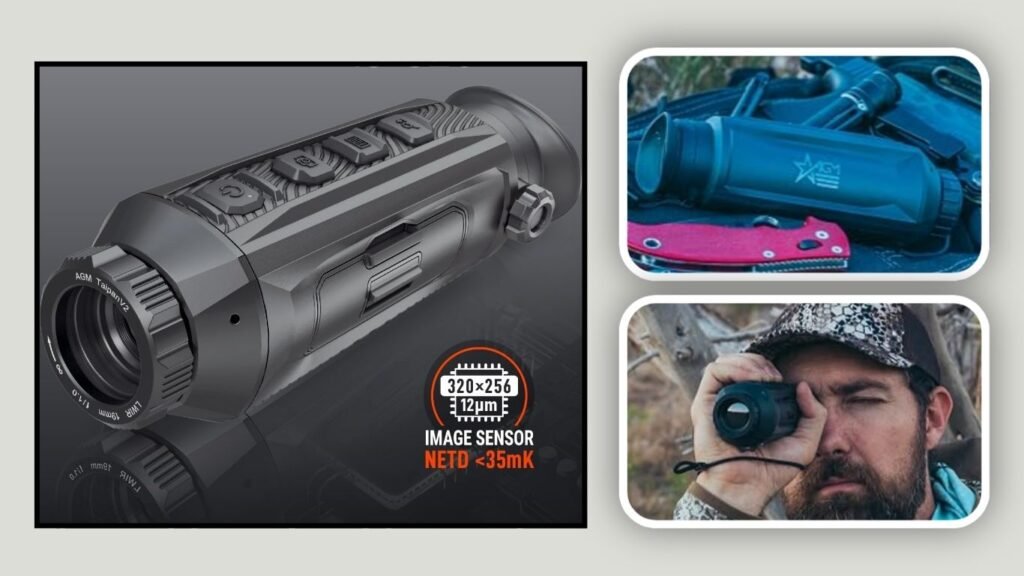
The AGM Taipan V2 19-320 is built for hunters who want greater magnification and longer detection capability in a compact thermal platform. It combines a 320×256, 12-micron sensor with a 19mm F1.0 lens, 50Hz refresh rate, 3x base magnification, and up to 22.5x digital magnification. A high-resolution LCOS display, replaceable batteries, recording, Wi-Fi, and IP67 protection round out an impressive field-oriented feature package.
Key Features
- 320×256 thermal resolution
- 12μm pixel pitch
- Sub-35mK NETD
- 50Hz refresh rate
- 19mm F1.0 lens
- 3x base magnification
- Up to 22.5x digital magnification
- 950-meter stated detection range
- 1280×960 LCOS display
- Picture-in-Picture mode
- Hot tracking
- Four thermal palettes
- 16GB internal storage
- Wi-Fi connectivity
- Replaceable 18650 battery
- IP67 waterproof rating
Best for Longer-Range Thermal Observation
The Taipan V2 19-320 has a noticeably narrower field of view than wide-angle scanning thermals, but that tradeoff comes with stronger base magnification. Its 3x starting magnification and 19mm objective make it particularly appropriate for open fields, larger hunting properties, and locations where targets are commonly observed farther away.
AGM lists a detection range of up to 950 meters for a six-foot target under its specified test conditions.
Digital magnification extends from 3x to 22.5x, although image detail naturally decreases as digital zoom increases.
Image Quality and Field Construction
The 320×256 sensor has sub-35mK thermal sensitivity and operates at 50Hz. The 1280×960 LCOS display provides a detailed viewing interface, while Picture-in-Picture allows users to examine a magnified portion of the image without completely losing the wider view.
AGM also includes 16GB of storage, photo/video recording, Wi-Fi, USB-C external power, and four thermal palettes. The IP67 body offers meaningful weather resistance.
Overall Hunting Value
The AGM Taipan V2 19-320 is particularly well suited to hunters who place greater emphasis on range and magnification than an extremely wide scanning view.
Its 19mm lens, 3x base magnification, 320×256 sensor, and 950-meter detection specification form a capable setup for examining larger areas from a relatively fixed position.
Replaceable 18650 batteries also make extended field use more practical because spare batteries can be carried and exchanged as needed. Combined with recording, Wi-Fi, high-resolution display, and IP67 protection, the Taipan V2 provides a well-developed feature package for demanding nighttime observation.
FAQs
1. What thermal resolution is best for a hunting monocular?
A 256×192 sensor can work well for basic detection and short-to-medium-range scanning. Moving to 320×240 or 320×256 generally provides more recognizable detail, while 384×288 gives hunters an additional improvement when examining animals at greater distances. Higher-resolution 640-class sensors can provide substantially more detail but usually cost more. Resolution should be considered together with lens size, thermal sensitivity, display quality, and intended viewing distance.
2. What detection range should I look for in a thermal monocular?
Detection range depends heavily on where and how you hunt. For woodland and relatively close-range scouting, extremely long detection specifications may provide little practical advantage. Hunters working across large fields or open country may benefit more from longer-range optics. Remember that detection, recognition, and identification are different. A monocular may detect that a warm object exists much farther away than the distance at which you can confidently determine what the object is.
3. Is a 256×192 or 384×288 thermal monocular better?
A 384×288 thermal monocular generally provides greater image detail because the sensor contains substantially more thermal pixels. This can help when evaluating smaller targets or examining animals farther away. However, a quality 256×192 system can still work very effectively for general scanning and detection. A wider lens, better thermal sensitivity, high refresh rate, and good image processing can sometimes make a lower-resolution unit more useful than sensor resolution alone suggests.
4. Can thermal monoculars be used in complete darkness?
Yes. Thermal monoculars detect infrared energy emitted by objects rather than relying on visible light, so they can operate in total darkness. They also work during daylight and can help locate warm animals against cooler backgrounds. However, thermal devices generally cannot see normally through solid objects or glass. Weather, humidity, vegetation, and surrounding temperatures can also influence thermal contrast and effective detection performance.
5. What should I look for when choosing a thermal monocular for hunting?
Start with thermal resolution, NETD sensitivity, lens size, field of view, refresh rate, detection range, battery life, and weather resistance. A wide field of view is valuable for quickly scanning dense terrain, while larger objectives and higher base magnification can favor longer-distance observation. A 50Hz refresh rate is useful for tracking moving animals. Features such as replaceable batteries, recording, Wi-Fi, Picture-in-Picture, hotspot tracking, and multiple palettes can further improve usability. Always check the hunting regulations applicable to your location and intended species before using thermal equipment during a hunt.
