
A duck hunting license is required for most people who hunt wild ducks in the United States. However, a basic state hunting license is usually only one part of the legal requirements. Depending on your age, location, residency, and hunting area, you may also need a state waterfowl permit, Harvest Information Program certification, a Federal Duck Stamp, and a public-land access permit.
Because waterfowl regulations and fees can change each season, hunters should confirm the current requirements through the wildlife agency of the state where they plan to hunt.
What License Do You Need for Duck Hunting?
Duck hunting is regulated by both federal and state authorities. Federal rules apply because ducks are migratory birds, while individual states manage licenses, season dates, hunting zones, and additional permits.
Most adult duck hunters need the following documents:
| Requirement | Purpose |
| State hunting license | Provides basic hunting privileges |
| State waterfowl permit or endorsement | Authorizes hunting ducks and other waterfowl |
| HIP certification | Registers the hunter for migratory-bird harvest monitoring |
| Federal Duck Stamp | Required for most waterfowl hunters aged 16 or older |
| Public-land permit | May be required for state or federal hunting areas |
| Hunter education certificate | Required for certain hunters under state law |
Having only a basic hunting license may not legally authorize you to hunt ducks. Always check whether your state requires a separate migratory-game-bird endorsement or waterfowl stamp.
State Hunting License
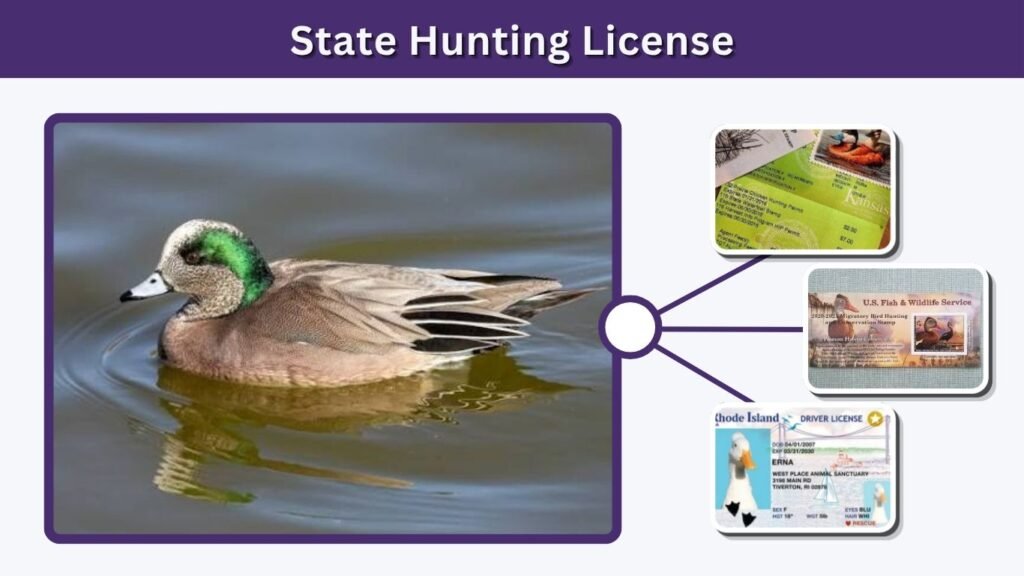
Your first requirement is usually a valid hunting license issued by the state where you will hunt. A license from your home state generally does not give you permission to hunt in another state.
For example, someone who lives in Texas but plans to hunt in Arkansas must normally obtain an Arkansas nonresident hunting license. The hunter must then add any required Arkansas waterfowl stamps, HIP registration, federal stamp, or wildlife-management-area permits.
Resident vs Nonresident Licenses
Residents generally pay less than nonresidents. To qualify as a resident, you may need to have lived in the state for a minimum period and provide proof such as a driver’s license, identification card, tax record, or voter registration.
Nonresident hunters may have several options:
- Annual hunting license
- Short-term license
- Small-game license
- Nonresident waterfowl license
- Three-day or five-day permit
- Public-land waterfowl permit
A short-term license can be useful for a guided trip or weekend hunt, but it may not include every required stamp or endorsement.
Federal Duck Stamp
Waterfowl hunters who are 16 years of age or older generally must purchase and possess a valid Federal Migratory Bird Hunting and Conservation Stamp, commonly called the Federal Duck Stamp.
The physical 2026–2027 Federal Duck Stamp has a face value of $25, although online sellers or state licensing systems may add fulfillment and transaction charges.
Physical and Electronic Duck Stamps
Hunters can purchase a physical stamp through participating post offices, retailers, wildlife refuges, and authorized online sellers. A physical stamp must be signed before it is used for hunting. A normal retail receipt is not a substitute for a valid stamp.
An electronic Federal Duck Stamp provides federally compliant proof of purchase that can be used immediately. Under the modernized system, authorized electronic proof remains valid throughout the waterfowl season, with the physical stamp mailed later. Electronic stamps are sold through participating state agencies and authorized online services.
The Federal Duck Stamp does not replace your state hunting license or state waterfowl permit. It is an additional federal requirement.
Harvest Information Program Certification
Duck hunters must also complete annual Harvest Information Program registration, commonly called HIP certification. The program collects basic information about migratory-bird hunting activity and helps wildlife agencies estimate harvest levels.
HIP registration is required for people who hunt ducks and other migratory game birds. Hunters register through the licensing system of each state in which they plan to hunt.
How HIP Certification Works
During registration, you may be asked whether you hunted migratory birds during the previous season and approximately how many birds you harvested. These questions help federal and state biologists select participants for more detailed harvest surveys.
HIP certification is often free, but it is not always added automatically. When buying your license, clearly indicate that you intend to hunt migratory game birds. Confirm that the HIP validation appears on your printed or digital license before hunting.
State Waterfowl Stamps and Endorsements
Many states require a separate waterfowl stamp, migratory-bird endorsement, or duck permit in addition to the basic hunting license.
Texas, for example, requires migratory-game-bird hunters to have a valid state hunting license. Waterfowl hunters may also need the Texas Migratory Game Bird Endorsement, HIP certification, and Federal Duck Stamp. Certain public hunting areas require another access permit.
Louisiana requires adult residents and nonresidents to hold a Basic Hunting License, while duck hunters also need the applicable waterfowl privileges. Louisiana lists HIP certification separately and requires a Federal Duck Stamp for waterfowl hunters aged 16 or older.
Requirements differ across Arkansas, Missouri, Oklahoma, Minnesota, Oregon, Florida, Michigan, and other popular waterfowl states. Never assume that one state’s license package will meet another state’s requirements.
Public-Land Permits
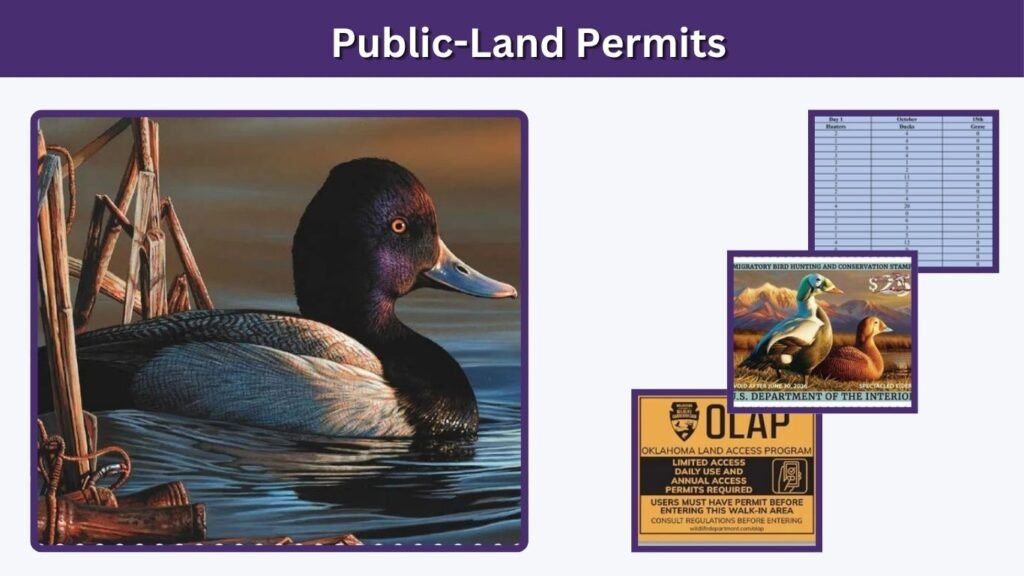
A valid hunting license does not guarantee access to every public hunting area. Wildlife management areas, national wildlife refuges, state parks, and other managed properties may require additional permits.
Possible requirements include:
- Annual public-land access permit
- Daily access permit
- Wildlife management area stamp
- Nonresident waterfowl permit
- Drawn-hunt permit
- Daily check-in
- Reserved blind assignment
- Harvest reporting
Arkansas, for instance, requires certain nonresident hunters to purchase additional permits when hunting waterfowl on designated wildlife management areas during regular duck season. Those permits are separate from the hunting license, state waterfowl stamp, HIP registration, and Federal Duck Stamp.
Some high-demand areas use lotteries or advance reservations. Buying a license does not automatically secure a hunting location.
Hunter Education Requirements
Hunter education laws vary by state. The requirement may depend on the hunter’s birthdate, age, experience, or whether the person will hunt under direct supervision.
A typical hunter education course covers:
- Firearm safety
- Safe shooting zones
- Wildlife identification
- Hunting ethics
- Outdoor survival
- Hunting laws
- Safe firearm transportation
Some states offer apprentice or deferred licenses that allow new hunters to participate under the supervision of an experienced adult. However, these temporary privileges have specific restrictions and should not be confused with permanent hunter education certification.
How Much Is a Duck Hunting License?
There is no single nationwide price for a duck hunting license. Your total cost depends on the state, residency status, age, license duration, hunting location, and required permits.
| Potential expense | How the price varies |
| Basic state license | Resident, nonresident, youth, senior, or military rate |
| State waterfowl permit | Separate fee or included in a package |
| Federal Duck Stamp | $25 face value, plus possible processing fees |
| HIP certification | Often free |
| Public-land access | Daily, seasonal, or area-specific charge |
| Short-term permit | Available in some states |
| Application fee | Possible for lotteries or reserved hunts |
Louisiana demonstrates how these fees can be divided. Its licensing system lists separate prices for the Basic Hunting License, waterfowl privileges, Federal Duck Stamp, HIP certification, and wildlife-management-area access. Resident and nonresident rates are significantly different.
Before paying, review the license description carefully. A cheaper small-game license may authorize duck hunting in one state but may not provide adequate waterfowl privileges in another.
How to Get a Duck Hunting License
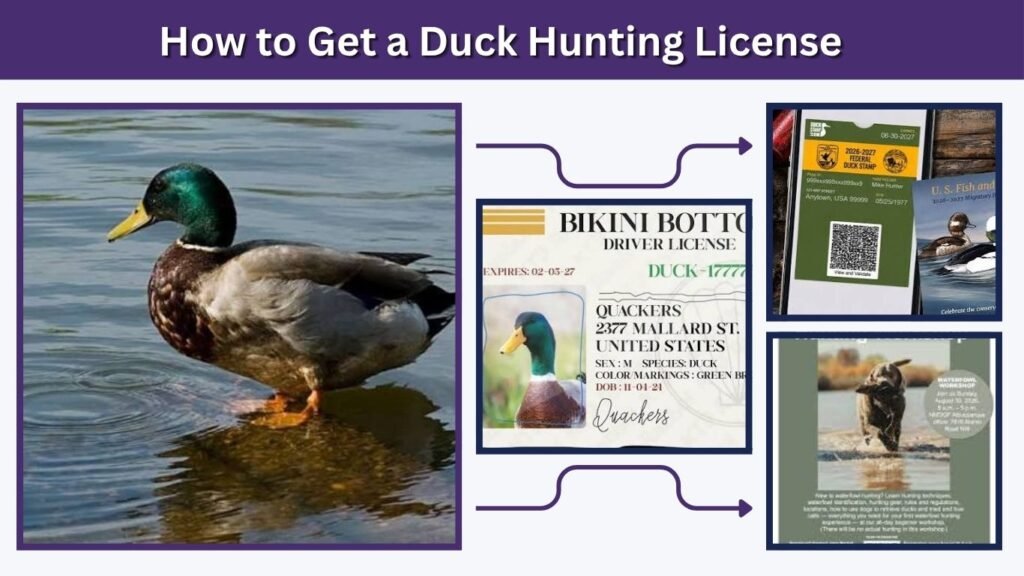
Most states allow hunters to purchase licenses through an official wildlife-agency website, mobile application, licensing office, or authorized retailer.
1. Complete Hunter Education
Finish the required course before purchasing your license unless you qualify for an exemption or supervised apprentice option.
2. Create a Licensing Account
Provide your legal name, date of birth, address, residency information, and government-issued identification. Use information that matches your identification documents.
3. Choose the Correct Hunting License
Select the appropriate resident or nonresident license. Confirm that it covers the dates of your trip and provides the necessary basic hunting privileges.
4. Add Waterfowl Requirements
Purchase the state waterfowl stamp or migratory-bird endorsement, register for HIP, and obtain the Federal Duck Stamp.
5. Add Area-Specific Permits
Check whether your chosen public hunting area requires a daily pass, lottery permit, WMA permit, reservation, or check-in.
6. Save Your Documents
Download or print your license and keep the required identification and proof of purchase accessible while hunting. Do not rely on a mobile document unless the state accepts digital licenses and you can access it without a signal.
Duck Hunting License Checklist
Before leaving for a hunt, verify that you have:
- A current state hunting license
- The correct state waterfowl permit
- Current HIP certification
- A valid Federal Duck Stamp
- Required public-land permits
- Hunter education proof when applicable
- Government-issued identification
- Current season and bag-limit information
Licenses do not give hunters permission to ignore season dates, shooting hours, species restrictions, firearm rules, or daily bag limits. Federal migratory-bird regulations are established annually, while states publish their own seasons within the approved federal framework.
FAQs
Can you hunt ducks with a regular hunting license?
A regular hunting license alone is often insufficient. Most adult hunters also need HIP certification, a Federal Duck Stamp, and a state waterfowl permit or migratory-bird endorsement. Public hunting areas may require another access permit.
How old must you be to need a Federal Duck Stamp?
Federal law generally requires waterfowl hunters aged 16 or older to possess a valid Federal Duck Stamp. Younger hunters may still need a youth license, HIP certification, state permits, or adult supervision depending on the state.
Can I use one duck hunting license in every state?
No. A hunting license is normally valid only in the state that issued it. When traveling to another state, you must obtain that state’s nonresident license and satisfy its waterfowl, HIP, and access requirements.
How long does a duck hunting license last?
Some licenses remain valid for an annual licensing period, while others are available for one, three, five, or several consecutive days. Check both the expiration date and the authorized hunting dates before purchasing.
Can I buy a duck hunting license online?
Most states sell hunting licenses through official online systems. Hunters can often purchase their basic license, waterfowl endorsement, HIP certification, and electronic Federal Duck Stamp during the same transaction, although area-specific permits may require a separate application.
