
Canada is one of North America’s leading destinations for duck and goose hunting. Its prairie potholes, agricultural fields, coastal marshes, inland lakes, and major migration corridors attract mallards, pintails, teal, divers, Canada geese, Snow Geese, and other waterfowl. However, hunters must follow both federal and provincial or territorial regulations. Seasons, bag limits, licence requirements, access rules, and guide requirements vary by location, so every trip should begin with the current regulations for the specific hunting zone.
Can You Hunt Ducks in Canada?
Yes, licensed hunters may hunt designated migratory game birds during an open season. The activity is regulated federally under Canada’s migratory bird laws, while provinces and territories impose additional licensing, land-access, firearm, and local hunting requirements.
For the 2026–2027 season, hunters must carry a valid federal Migratory Game Bird Hunting Permit with a Canadian Wildlife Habitat Conservation Stamp. A provincial or territorial hunting licence is also usually required.
Canadian Duck Hunting Licence Requirements
Most hunters need:
- A federal Migratory Game Bird Hunting Permit
- A Canadian Wildlife Habitat Conservation Stamp
- The applicable provincial or territorial licence
- Recognized hunter education or accreditation
- Permission to hunt on private property
- Any required nonresident or outfitter-issued licence
The federal permit is valid throughout Canada wherever an open migratory game bird season exists. The 2026 permit becomes available on August 1, 2026, remains valid through June 30, 2027, and costs $17 plus applicable taxes, including the conservation stamp.
Non-Canadian hunters should examine provincial requirements carefully. Manitoba, for example, offers non-Canadian residents several fall options, including a seven-day licence purchased through a licensed outfitter or a seven-day licence obtained through an annual draw.
Canada Duck Hunting Season
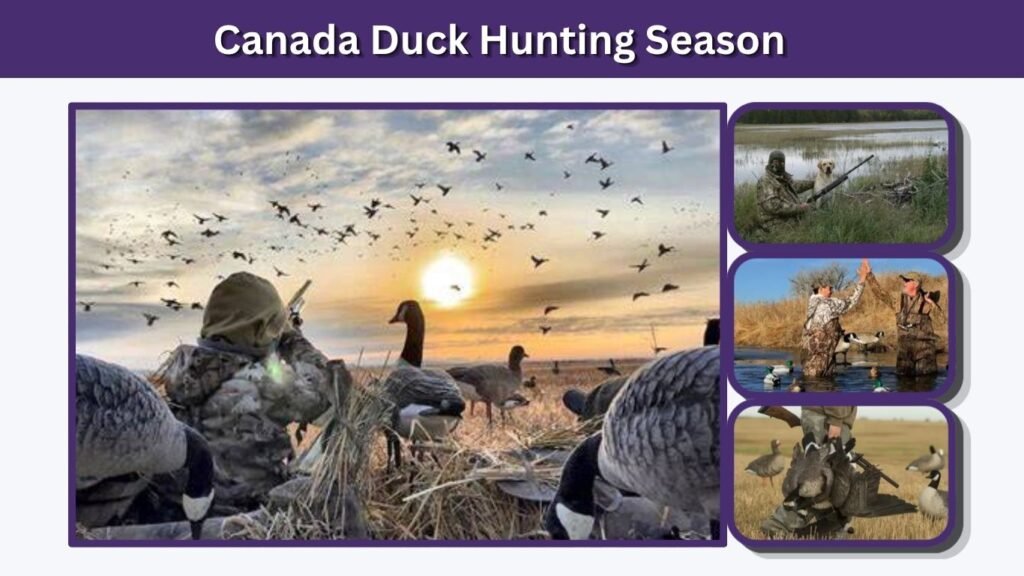
There is no single nationwide duck-season date. Environment and Climate Change Canada publishes separate annual summaries for every province and territory, with dates divided by districts or zones.
Most fall duck seasons begin between September and October and continue into November, December, or January. Northern zones may open earlier because cold weather causes birds to migrate south sooner.
The official 2026–2027 summaries contain each area’s:
- Opening and closing dates
- Daily bag limits
- Possession limits
- Hunting zones
- Species restrictions
- Legal hunting hours
- Ammunition requirements
The 2026–2027 regulations came into force in June 2026, with official provincial and territorial summaries published in July.
Best Time to Hunt Ducks in Canada
Early-season hunting can offer opportunities for locally raised ducks, including teal, mallards, and pintails. Mild weather and immature birds may make this period easier for beginners.
Midseason hunting often produces a wider mixture of resident and migrating birds. Late-season hunting may bring concentrated flocks, cold-weather mallards, and diving ducks, but hunters must prepare for ice, wind, freezing water, and shorter days.
Migration timing changes with temperature, wind, water levels, food availability, and freeze-up. A fixed calendar date cannot guarantee the best hunting conditions.
Best Places for Duck Hunting in Canada
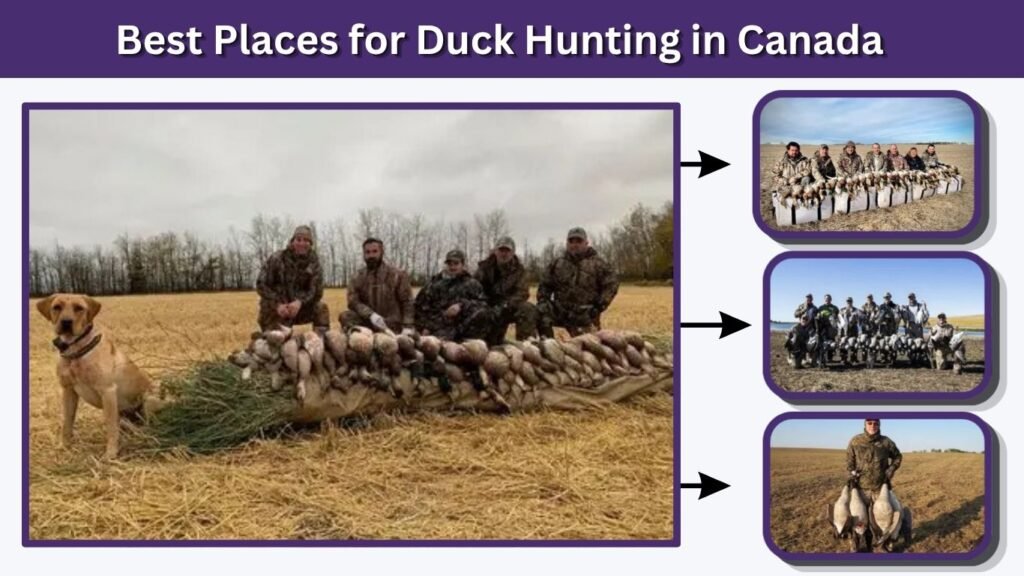
The best destination depends on the species, preferred hunting method, budget, and whether the hunter wants a guided or independent trip.
| Region | Common hunting environments | Typical appeal |
| Saskatchewan | Grain fields, potholes and shallow wetlands | Large mixed waterfowl migrations |
| Alberta | Prairie fields, sloughs and parkland | Field and wetland hunting |
| Manitoba | Potholes, lakes, marshes and agricultural land | Diverse ducks and geese |
| Ontario | Great Lakes, marshes and inland lakes | Dabblers and diving ducks |
| Quebec | River corridors, farmland and coastal areas | Ducks and Canada Geese |
| Atlantic Canada | Salt marshes, bays and coastal waters | Sea ducks and coastal waterfowl |
| British Columbia | Estuaries, coastal marshes and interior lakes | Pacific Flyway species |
Manitoba includes part of the Prairie Pothole Region, extensive boreal lakes, subarctic habitat, and numerous Wildlife Management Areas that support waterfowl and public recreation.
Duck Hunting in Saskatchewan
Saskatchewan is known for prairie potholes, grain fields, staging wetlands, and large fall movements of ducks and geese.
Hunters need the appropriate Saskatchewan game bird licence, Wildlife Habitat Certificate, and federal migratory bird permit. Hunter education requirements also apply. Beginning with regulatory changes announced in March 2026, nonresident game-bird hunters are limited to one five-day spring licence and two five-day fall licences.
Permission is required before hunting on privately owned or occupied land. A licence does not automatically provide access to farms, wetlands, or other private properties.
Duck Hunting in Alberta
Alberta offers prairie, parkland, agricultural, and wetland hunting opportunities. The province is divided into federal migratory bird hunting zones with separate season dates and limits.
Hunters must carry the federal permit and meet Alberta’s provincial licensing requirements. Anyone paying for a guided trip should use a properly licensed guide or outfitter operating under Alberta’s regulatory system.
Duck Hunting in Manitoba
Manitoba supports field hunting, marsh hunting, lake hunting, and mixed duck-and-goose trips. Its habitat ranges from prairie potholes to boreal lakes and northern staging areas.
Non-Canadian residents who purchase their licence through a Manitoba outfitter must hunt using the services of that outfitter or an employed guide. Independent non-Canadian hunters may apply through the province’s annual seven-day licence draw.
Where Can You Duck Hunt?
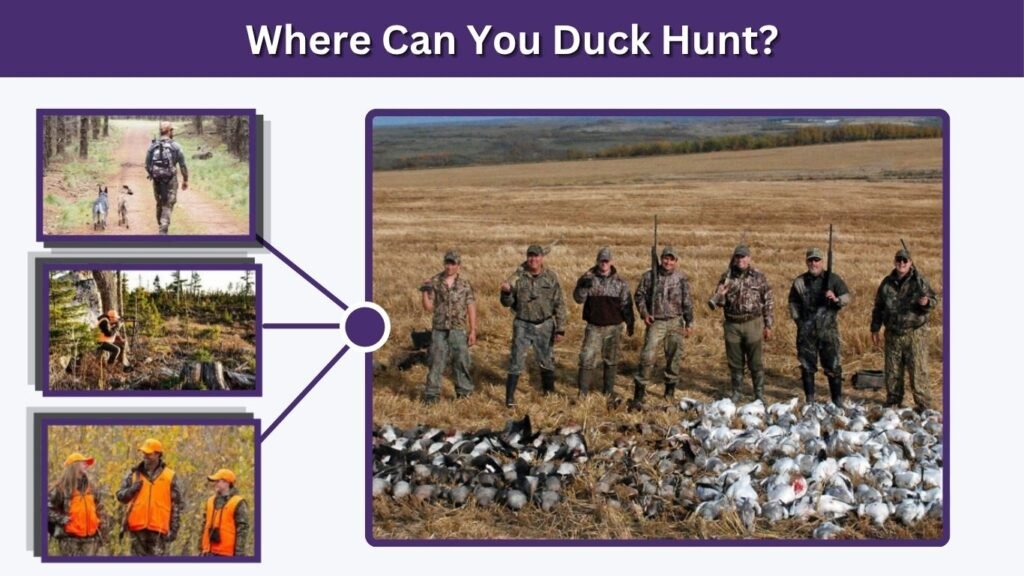
A hunting licence does not allow a person to hunt on every lake, marsh, field, or piece of public land.
Potential hunting locations include:
- Crown or other public land open to hunting
- Provincial Wildlife Management Areas
- Private farmland with permission
- Lakes and marshes where firearm discharge is legal
- Outfitter-controlled or leased hunting areas
- Designated waterfowl management properties
Always check land ownership, local firearm-discharge bylaws, protected-area boundaries, road restrictions, and provincial rules.
Hunting migratory birds is prohibited in Migratory Bird Sanctuaries unless specific authorization applies. Firearms and hunting equipment are also generally restricted within these sanctuaries.
Legal Duck Hunting Hours
South of 60 degrees latitude, federal hunting hours normally run from one-half hour before sunrise until one-half hour after sunset. North of 60 degrees latitude, they generally run from one hour before sunrise until one hour after sunset.
Provinces and territories may impose stricter rules, so hunters must consult their local summary. Hunting ducks at night is not legal.
Can You Hunt Ducks in the Evening?
Yes, evening hunting is generally legal during an open season until the applicable closing time. Evening flights can be productive as ducks return to feeding or roosting locations.
Hunters should stop shooting while enough daylight remains to identify birds accurately and retrieve every downed or injured bird safely.
Can You Duck Hunt From a Boat or Kayak?
Yes, a canoe, kayak, or other boat can be used where local access and hunting rules permit it.
A hunter may hunt from a motorized boat only when it is not moving under motor power. The motor may remain attached, but the boat must have stopped its powered movement before shooting. Motor power can be used to retrieve dead or injured birds, although shooting an injured bird requires the boat to stop again.
A kayak can provide quiet access to shallow marshes, but safety is critical. Hunters should use a personal flotation device, monitor weather, avoid overloading the craft, secure equipment, and never attempt unstable shots.
Shotguns and Ammunition
Canadian federal rules permit shotguns no larger than 10 gauge for migratory game bird hunting. The shotgun must be limited to a total capacity of three cartridges, including the chamber and magazine.
Both 12-gauge and 20-gauge shotguns may therefore be used legally when they satisfy all federal and provincial requirements. A .22-caliber rifle is not an authorized waterfowl-hunting weapon.
Non-toxic shot is required for migratory game bird hunting throughout Canada. Possessing or using lead shot while hunting waterfowl is prohibited.
Can You Hunt Without a Dog or Decoys?
A trained retriever is helpful but not legally required in most situations. Hunters must nevertheless have an adequate and immediate method for retrieving every downed bird.
A boat, waders, trained dog, or combination of methods may be needed depending on water depth and vegetation. Hunters are legally required to retrieve and promptly dispatch injured birds when circumstances allow.
Decoys are also optional. Pass-shooting and hunting natural travel routes may work without them, but decoys often help draw birds into identifiable and responsible shooting range.
Electronic bird calls are generally prohibited for regular migratory bird hunting. Limited exceptions may apply to species officially designated as overabundant.
Baiting and Field Rules
Hunting over bait is illegal. A person cannot hunt migratory birds within 400 metres of deposited bait unless the location has remained completely free of bait for at least seven days. Baiting must stop at least 14 days before the season opens at that location.
Naturally scattered grain or crops produced through normal agricultural operations may be treated differently from deliberately placed bait, but hunters should confirm the status of any questionable field before hunting.
Choosing a Canada Duck Hunting Outfitter
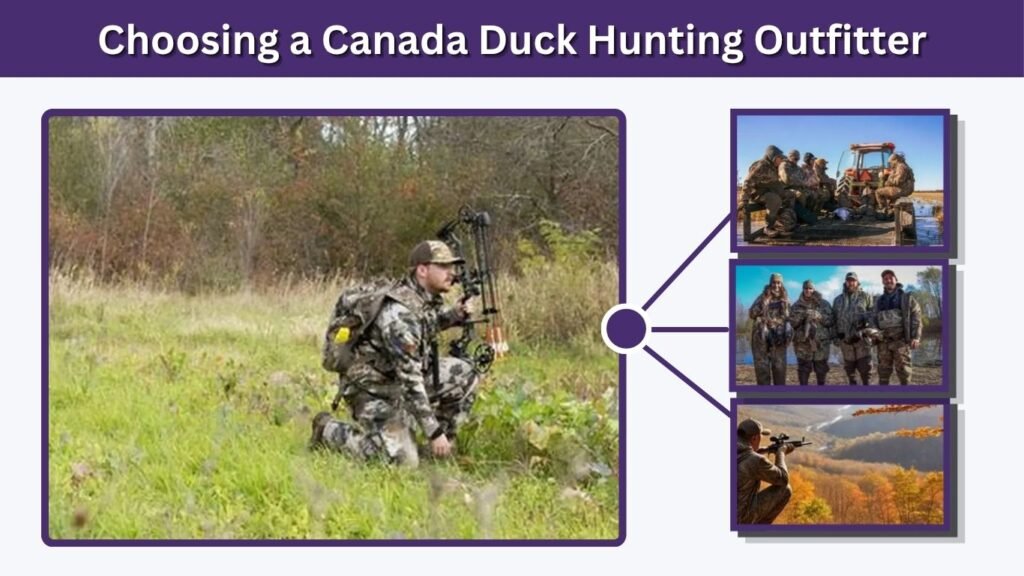
A reputable outfitter can provide land access, scouting, blinds, decoys, transportation, lodging, and guide services.
Before booking, ask for:
- The outfitter’s licence number
- Exact hunt dates and province
- Included licences and permits
- Species commonly targeted
- Lodging and meal details
- Airport or local transportation
- Cancellation policies
- Bird processing arrangements
- References from previous clients
Never assume an “all-inclusive” package covers federal permits, provincial licences, ammunition, gratuities, taxes, or travel costs. Request a written list of everything included.
FAQs
Can nonresidents hunt ducks in Canada?
Yes. Canadian and international visitors can hunt waterfowl when they obtain the required federal permit and provincial or territorial licence. Some provinces impose special licence periods, draws, or outfitter requirements for non-Canadian residents.
Can you duck hunt in the rain?
Yes, provided the season is open and conditions are safe. Rain and wind may keep birds moving, but heavy weather can reduce visibility, create dangerous boating conditions, and make identifying and retrieving ducks more difficult.
Is a 20-gauge shotgun legal for duck hunting in Canada?
Yes. A 20-gauge shotgun is legal under federal migratory bird rules when its total capacity is limited to three cartridges and approved non-toxic ammunition is used.
Can you hunt ducks all day in Canada?
You may hunt throughout the legal daily period, but not at night. South of 60 degrees latitude, federal hours normally extend from one-half hour before sunrise to one-half hour after sunset, subject to stricter local rules.
Do you need a guide for duck hunting in Canada?
Federal migratory bird rules do not universally require a guide, but provincial rules may. Manitoba has special outfitter and draw systems for non-Canadian residents, while other provinces have different licence and access requirements.
